

P0651 on 2016-2018 Cadillac CT6: Sensor Voltage Fault and Oil Pressure Fixes
On a 2016-2018 Cadillac CT6, code P0651 is almost always a companion to code P06DE. The actual problem is typically a faulty Engine Oil Pressure Control Solenoid. Fixing the P06DE issue by replacing the solenoid will clear P0651. Expect a repair cost of $250-$550 at a shop.
- P0651 on a CT6 is a secondary code; the real problem is almost always indicated by code P06DE.
- Do not waste time or money replacing random sensors. Start by diagnosing P06DE.
- The most likely part you'll need to replace is the Engine Oil Pressure Control Solenoid.
- Check your engine oil level and condition immediately, as low or dirty oil can cause this issue.
- This repair is complex and best left to a professional unless you are an experienced DIYer.
What's Unique About the 2016-2018 Cadillac CT6
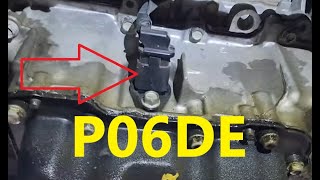
For this generation of Cadillac, P0651 is a classic 'symptom' code. Manufacturer technical service bulletins confirm that it frequently appears with code P06DE, which relates to the variable oil pressure system. The root cause is almost always the Engine Oil Pressure Control Solenoid or its circuit, which happens to be on the 5-volt 'B' reference line. Ignoring P0651 and diagnosing P06DE first 🎬 Watch: Understanding the causes and fixes for the P06DE code is the correct and most efficient path to a fix, as explicitly stated in TSB #PIP5247A.
Diagnostic Flowchart
Tap your situation to follow the diagnostic path that matches what you're seeing on this vehicle.
Symptoms You May Notice
- Check Engine Light is on
- Oil pressure warning light may be on
- Engine runs rough or idles poorly
- Reduced engine power or vehicle entering 'limp mode'
- Engine may stall unexpectedly
- Unusual ticking, rattling, or knocking noises from the engine
- Replacing random sensors (e.g., throttle position, accelerator pedal) just because they might be on the 5V reference circuit.
- Focusing on P0651 and ignoring the primary P06DE code.
- Replacing the ECM without performing thorough wiring and sensor diagnostics.
Most Likely Causes
- Faulty Engine Oil Pressure Control Solenoid 🔴 High Probability This solenoid regulates the two-stage oil pump. It can fail electrically (open windings) or become clogged with debris, causing it to get stuck 'on' or 'off'. As it's powered by the 5V reference 'B' circuit, its failure triggers P0651.
How to confirm: Diagnose the accompanying P06DE code first, as per TSB #PIP5247A. A technician can use a scan tool to command the solenoid on and off to check for a response and monitor oil pressure. The solenoid should have a resistance between 10 and 30 ohms.
Typical fix: Replace the Engine Oil Pressure Control Solenoid. The solenoid is located inside the oil pan. 🎬 See this walkthrough of the oil pressure solenoid repair
Est. part cost: $40-$150 - Wiring Harness or Connector Issue 🟡 Medium Probability The wiring for the oil pressure control solenoid is located near the hot exhaust system, making it vulnerable to heat damage, melting, or corrosion over time.
How to confirm: Visually inspect the wiring harness leading to the oil pressure control solenoid for any signs of damage, chafing, or melting. Test for continuity and proper voltage at the connector.
Typical fix: Repair or replace the damaged section of the wiring harness.
Est. part cost: $10-$50 - Low or Contaminated Engine Oil ⚪ Low Probability Extremely low oil levels or old, sludgy oil can cause the oil pump and control solenoid to malfunction, triggering pressure-related codes.
How to confirm: Check the engine oil level and condition. If the oil is very low, black, or sludgy, this may be a contributing factor.
Typical fix: Perform an oil and filter change using the manufacturer-specified oil viscosity. Top off oil if low and check for leaks.
Est. part cost: $50-$100
Rare But Worth Checking
- Debris in Oil Pump or Oiling System: TSB #PIP5676 for the 2.0L LTG engine mentions that foreign material can get stuck in the oil pump's cold start checkball assembly, causing P06DE. Another TSB, #PIP5247A, notes that pieces of broken plastic piston oil nozzles (squirters) can be found in the oil pan and pickup tube, leading to oil pressure issues.
- Faulty Engine Control Module (ECM): This is very rare. The ECM should only be considered after all other possibilities, including all sensors and wiring on the 'B' circuit, have been exhaustively tested and ruled out.
Diagnosis Steps
- Connect a professional OBD-II scanner and confirm the presence of P0651. Check for any other codes, especially P06DE.
- If P06DE is present, STOP and follow the diagnostic procedure for P06DE as per TSB #PIP5247A. This is the root cause.
- Check engine oil level and condition. Ensure it is full and clean, using the correct viscosity oil.
- Using a scan tool, monitor the 5-volt reference 'B' circuit voltage. It will likely be out of specification.
- Locate the Engine Oil Pressure Control Solenoid. Inspect its wiring connector and harness for damage, especially near the exhaust.
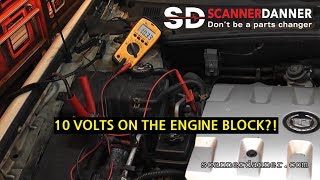
- Test the solenoid's circuit for proper voltage and ground. 🎬 Watch: How to diagnose engine electrical and grounding issues A scan tool can be used to command the solenoid on/off to verify its function.
- If diagnostics lead to oil pan removal, inspect for debris from broken piston oil squirters per TSB #PIP5247A. For 2.0L LTG engines, also inspect the oil pump's cold start checkball for debris per TSB #PIP5676.
- If P0651 appears alone (which is rare), identify all sensors on the 'B' circuit (typically includes Oil Pressure Sensor, Fuel Tank Pressure Sensor, and Accelerator Pedal Position Sensor 2) and unplug them one by one to see if the 5-volt reference returns to normal, which would indicate a shorted sensor.
Parts You'll Likely Need
- Engine Oil Pressure Control Solenoid Valve
(OEM #ACDelco 12670746 (for 2.0L LTG) or ACDelco 12688382 (for 3.6L LGX). Always verify with VIN.)— This is the most common failure point that triggers code P06DE, which in turn causes P0651 on this vehicle. Part numbers vary by engine.
Trusted brands: ACDelco, GM Genuine Parts
OEM price range: $60-$150
Aftermarket price range: $40-$90
Related Codes That Often Appear With This One
- P06DE — This is the primary code for 'Engine Oil Pressure Control Circuit Stuck On'. P0651 is a symptom of the fault in this circuit. This link is confirmed by GM Technical Service Bulletins.
- P0521 — This code for 'Engine Oil Pressure Sensor/Switch Range/Performance' can also appear, further pointing to a fault within the oil pressure monitoring and control system. TSBs link it to P06DE as well.
- P06DD — Indicates 'Engine Oil Pressure Control Solenoid Valve Stuck Off', the opposite failure mode of the same component, which can also trigger a reference voltage fault.
- P06DC — Indicates 'Engine Oil Pressure Control Solenoid Circuit High Voltage', pointing to an electrical fault in the same system and making it a likely companion code.
Technical Service Bulletins (TSBs) & Recalls
- PIP5247A: Instructs technicians to diagnose P06DE when it is present with P0651 and points to checking for broken piston oil squirter debris in the oil pan.
- PIP5676: Notes that for the 2.0L LTG engine, P06DE can be caused by debris in the oil pump's cold start checkball assembly.
Platform-Specific Known Issues
- TSB #PIP5247A: The Primary Diagnostic Guide: This bulletin is critical. It directly addresses finding P0651 with P06DE and instructs technicians to follow the diagnostics for P06DE. It also points to a potential cause being broken piston oil nozzles (squirters) found as plastic debris in the oil pan.
- TSB #PIP5676: Debris in Oil Pump (2.0L LTG): Relevant for the 2.0L LTG engine, this bulletin notes that P06DE can be caused by very small foreign material getting stuck in the oil pump's cold start checkball assembly, which may require pump inspection, cleaning, or replacement.
- Real-World Repair: Broken Piston Oil Squirters: Following TSB guidance for P06DE on a related platform (Cadillac CTS with 2.0L LTG), a technician found plastic debris from a broken piston oil nozzle in the oil pan and pickup tube. The fix was to replace the broken squirter(s) and clean the oiling system, which resolved the codes.
Mechanic-Grade Diagnostic Values
- Engine Oil Pressure Control Solenoid Resistance — expected: 10 to 30 Ω. Failure: A reading of 0 Ω indicates a short; infinite resistance (OL) indicates an open circuit.
- Engine Oil Pressure at Idle (Hot) — expected: 22.6 - 27.8 psi. Failure: Pressure significantly below this range points to a stuck solenoid or mechanical pump issue.
- Engine Oil Pressure at 3500 RPM (Hot) — expected: 52.8 - 56.9 psi. Failure: Pressure significantly outside this range indicates a stuck solenoid or mechanical pump issue.
- Oil Pressure Sensor Low Reference Circuit to ECM — expected: Less than 10 Ω. Failure: Resistance higher than 10 Ω indicates a wiring harness issue between the sensor and the ECM.
Scan Tool Commands That Help
- GDS2 (GM Dealer Scan Tool): Engine Oil Pressure Control Valve Actuator Test — This is the primary bidirectional test. It allows a technician to command the solenoid on and off while watching live oil pressure data. A lack of pressure change (typically 5-15 PSI) when commanded confirms a faulty solenoid or a blockage.
- GDS2 (GM Dealer Scan Tool): Engine Oil Pump Screening Test — This is a guided procedure from GM service literature used to confirm intermittent faults. It cycles the engine through specific RPM ranges (e.g., 2000 RPM to 4000 RPM) to try and force intermittent codes like P06DE or P06DD to set.
Wiring & Ground Locations
- ECM Connector X1, Pin 23 — At the Engine Control Module (ECM).. This is the specific pin for the engine oil pressure sensor's low reference circuit. Testing for continuity between this pin and the sensor connector is a critical step to rule out a wiring harness fault.
- G104 — On the front of the right cylinder head (for 3.6L V6).. This is a primary engine ground point. A GM TSB for a related vehicle (ATS) specifically calls out inspecting G104 for being loose or corroded to resolve intermittent electrical issues, which could manifest as a 5V reference fault like P0651.
- Main Engine Block Ground Cable — A large cable running from the engine block to the vehicle's frame.. On Cadillacs with rear-mounted batteries, the engine block's ground connection to the frame is critical. If this cable breaks or has a corroded connection, the starter and ECM can lose their ground path, causing massive voltage drops and erratic electrical behavior that can be misdiagnosed as a failed ECM.
Real Owner Repair Stories
- Carly Forum User (2017 Cadillac CT6, 110,000 miles) — Losing power and throwing multiple error codes.
❌ Tried (didn't work) Initial diagnosis from a local mechanic pointed to a faulty ECU.
✅ What actually fixed it A second opinion from an automotive electronics specialist found the true cause was a corroded ground wire connection. Repairing the ground connection resolved all issues and restored normal engine performance.
When the Usual Fixes Don't Work
- While the most common cause is the oil pressure control solenoid, a confirmed repair on a 2017 CT6 showed that a corroded main ground wire produced similar symptoms of power loss and multiple error codes. This highlights the importance of verifying main power and ground connections before condemning components, as a faulty ground can mimic ECU or sensor failure.
OEM Part Supersession History
12670746 (2.0L) / 12688382 (3.6L)→No supersession with incompatibility issues found in research.— N/A
Helpful Videos
We Have This Part in Stock



The information in this article is provided for general reference and educational purposes only. Vehicle specifications, procedures, and part compatibility can vary by production date, trim level, and region. Always consult your vehicle's factory service manual and verify part numbers before purchasing or performing repairs. Safety-critical components such as airbags, seat belts, and braking systems should be installed by a qualified professional.
- Cadillac CT6:
- 🎬 Helpful Videos
- 🛍️ Shop This Part
- What's Unique About the 2016-2018 Cadillac CT6
- Diagnostic Flowchart
- Symptoms You May Notice
- Most Likely Causes
- Rare But Worth Checking
- Diagnosis Steps
- Parts You'll Likely Need
- Related Codes That Often Appear With This One
- Technical Service Bulletins (TSBs) & Recalls
- Platform-Specific Known Issues
- Mechanic-Grade Diagnostic Values
- Scan Tool Commands That Help
- Wiring & Ground Locations
- Real Owner Repair Stories
- When the Usual Fixes Don't Work
- OEM Part Supersession History
- 🎟️ Get 5% Off