

P0645 on 2017-2019 Ford Escape: A/C Clutch Relay Circuit Fault Causes and Fixes
On a 2017-2019 Ford Escape with a 1.5L or 2.0L engine, code P0645 is almost always caused by a blown fuse F34 in the under-hood fuse box. The root cause is typically a shorted wiring harness chafing against the engine or frame. Finding and repairing the short and replacing the fuse is the most common fix. This issue is well-documented in Ford Technical Service Bulletins.
- On this specific vehicle, P0645 is rarely a standalone code. Check for other codes first.
- The most important first step is to check fuse F34 in the engine bay fuse box.
- If fuse F34 is blown, the root cause is almost certainly a short circuit in the engine wiring harness, not a faulty A/C compressor.
- Thoroughly inspect the wiring harness for chafing before replacing any components.
- Simply replacing the fuse without finding the short will result in the new fuse blowing immediately.
What's Unique About the 2017-2019 Ford ESCAPE

On the 2017-2019 Ford Escape with 1.5L and 2.0L EcoBoost engines, this code is rarely an isolated issue. It is part of a well-documented problem where multiple components are powered by a single fuse (F34 in the engine bay fuse box). Ford issued several Technical Service Bulletins (TSBs) highlighting that a short circuit in the engine wiring harness is the common culprit, causing this fuse to blow and triggering P0645 along with a dozen other seemingly unrelated codes. The TSBs specifically state the issue is often due to wiring harness retainers not being installed correctly at the factory, allowing the harness to rub and chafe.
Diagnostic Flowchart
Tap your situation to follow the diagnostic path that matches what you're seeing on this vehicle.
Symptoms You May Notice
- Check Engine Light is on
- Air conditioning does not blow cold air or does not work at all
- All-Wheel Drive (AWD) fault warning light may appear on the dashboard
- Traction Control (TC) light may be illuminated
- Radiator fans may run on high speed continuously
- Replacing the A/C compressor without checking for a shorted wire first. This is an expensive mistake, as the root cause is often the wiring harness.
- Replacing the A/C clutch relay without checking fuse F34. If the fuse is blown, a new relay will not solve the problem.
- Repeatedly replacing fuse F34 without finding the source of the short circuit.
- Replacing the PCM when the actual fault is a $1 fuse or a simple wiring short.
Most Likely Causes

- Blown Fuse F34 🔴 High Probability This 10A fuse in the Battery Junction Box (BJB) protects a circuit shared by numerous components, including the A/C clutch relay, wastegate solenoid, and various coolant pumps. A short anywhere in the extensive wiring for this circuit will cause the fuse to blow, as documented in Ford TSBs SSM 48895, SSM 47575, and SSM 47086.
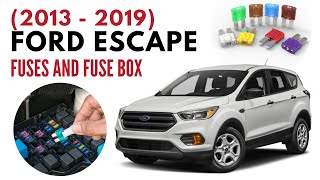
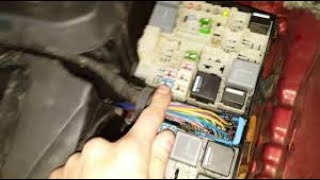
How to confirm: Visually inspect fuse F34 (a 10A mini fuse) in the power distribution box located in the engine compartment. 🎬 Watch: Locate your fuse box and identify fuse F34 If it is blown, a short circuit is present somewhere on that circuit.
Typical fix: Replace the fuse after diagnosing and repairing the underlying short circuit. Simply replacing the fuse without finding the short will result in the new fuse blowing immediately.
Est. part cost: $1-$5 - Shorted Engine Wiring Harness 🔴 High Probability Ford TSB SSM 48895 specifically calls out that wiring harness retainers may not have been installed correctly, allowing the harness to rub against engine or chassis components, eventually causing a short to ground. Common chafe points are under the air cleaner assembly, near the brake vacuum pump, and where the harness passes near sharp edges of the engine block or transmission.
How to confirm: With the battery disconnected, carefully inspect the entire length of the engine wiring harness (Ford base part number 12A690 for 1.5L, 12C508 for 2.0L) running from the battery junction box to the PCM. Look for signs of chafing, melting, or exposed copper wires. Pay extremely close attention to areas where the harness makes a bend or is in proximity to vibrating components.
Typical fix: Isolate the damaged section of wire. Cut out the damaged portion and splice in a new piece of wire of the same gauge using solder and heat-shrink tubing or sealed crimp connectors. Wrap the repaired section and surrounding harness in high-quality, anti-abrasion electrical tape or a protective loom. Secure the harness away from any sharp edges or hot components to prevent recurrence.
Est. part cost: $5-$25 - Faulty A/C Clutch Relay 🟡 Medium Probability
How to confirm: The A/C clutch relay is located in the engine compartment fuse box (BJB). You can swap it with an identical relay from a non-critical system (like the horn) to see if the A/C clutch engages (assuming fuse F34 is good).
Typical fix: Replace the A/C clutch relay. A common Motorcraft part number is F0AB-14B192-AA, but always verify with your vehicle's VIN.
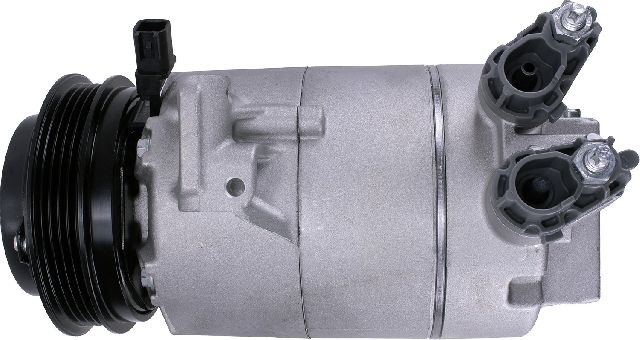
Est. part cost: $15-$40 - Defective A/C Compressor Clutch Coil ⚪ Low Probability
How to confirm: If the fuse, wiring, and relay are all good, the electromagnetic coil on the A/C compressor itself could be shorted or open. Disconnect the compressor clutch connector and check the resistance across its two pins with a multimeter. A healthy coil should have resistance between 2-5 ohms. An open circuit (infinite resistance) or a short to ground (near zero ohms) indicates a bad coil.
Typical fix: Replace the A/C compressor clutch coil or the entire A/C compressor assembly. Replacing the full compressor is often easier and more common.
Est. part cost: $70-$200 for the coil, $400+ for the full compressor assembly.
Rare But Worth Checking
- Faulty Powertrain Control Module (PCM): This is extremely rare and should only be considered after all other possibilities, especially wiring faults, have been exhaustively ruled out. The PCM's internal driver for the A/C relay can fail, but it's much more likely the problem is external to the module.
Diagnosis Steps

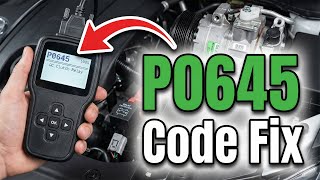
- Scan the PCM for all stored trouble codes. If multiple codes from the 'Often Seen With' list are present along with P0645, immediately suspect a blown fuse F34 as the primary issue.
- Locate the power distribution box (also called Battery Junction Box or BJB) in the engine compartment.
- Inspect fuse F34 (10 Amp mini fuse). If it is blown, proceed to the next step. If it is intact, the problem is likely an isolated relay or wiring issue specific to the A/C circuit.
- If the fuse was blown, do NOT immediately replace it. A persistent short circuit exists. Proceed with harness inspection.
- Disconnect the battery.
- Perform a detailed visual inspection of the engine wiring harness (part number family 12A690 for 1.5L, 12C508 for 2.0L), focusing on the areas mentioned in Ford TSB SSM 48895: the entire path from the BJB to the PCM, especially under the air cleaner housing, and near the brake vacuum pump and other engine-mounted accessories. Look for any signs of chafing, rubbing, melting, or exposed wires.
- If damage is found, repair the wire(s) securely. Use solder and heat-shrink tubing for a durable repair. Wrap the repaired section and surrounding harness in protective anti-abrasion tape or split loom tubing.
- Secure the harness with new zip ties or clips to ensure it cannot rub against any components in the future.
- If no wiring damage is visible after a thorough inspection, you can begin testing individual components on the F34 circuit, starting with the A/C clutch relay. Swap it with a known good relay of the same type from the fuse box.
- If the issue persists, use a multimeter to check for a short to ground on the A/C clutch relay control circuit 🎬 See this walkthrough for troubleshooting the A/C relay circuit wire between the fuse box and the PCM.
- Once the repair is complete, install a new 10A fuse in the F34 slot, reconnect the battery, clear all DTCs, and test the A/C system to confirm the fix.
Parts You'll Likely Need

- Mini Fuse (10 Amp) — Fuse F34 is the most common point of failure due to a short circuit in the harness, as documented by Ford TSBs.
Trusted brands: Bussmann, Littlefuse
OEM price range: $1-$5
Aftermarket price range: $1-$5 - A/C Compressor Clutch Relay
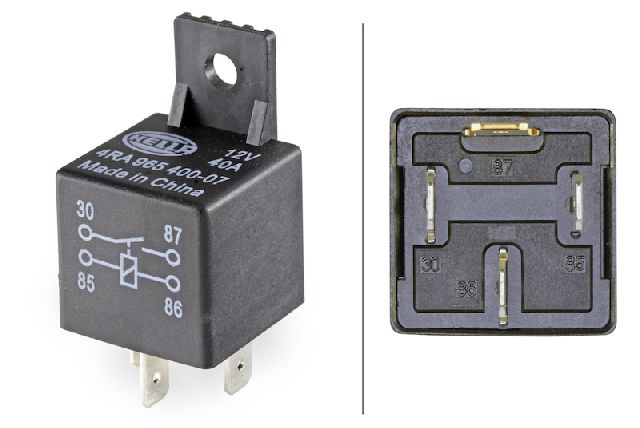
(OEM #F0AB-14B192-AA (Motorcraft))— The relay itself can fail internally, causing an open or shorted control circuit.
Trusted brands: Motorcraft, Standard Motor Products, Bosch
OEM price range: $25-$50
Aftermarket price range: $15-$40 - Wiring Harness Repair Supplies — Needed to fix the common issue of a chafed wire, which is the root cause of the blown fuse. Includes wire, solder, heat shrink, and anti-abrasion tape.
Trusted brands: 3M, Tesa
OEM price range: $10-$30
Aftermarket price range: $5-$20
Related Codes That Often Appear With This One
- P0034 — Turbo/Super Charger Bypass Valve 'A' Control Circuit Low
- P023A — Charge Air Cooler Coolant Pump Control Circuit/Open
- P0245 — Turbo/Super Charger Wastegate Solenoid 'A' Low
- P0480 — Fan 1 Control Circuit
- P0481 — Fan 2 Control Circuit
- P06A0 — Variable A/C Compressor Control Circuit
- P2681 — Engine Coolant Bypass Valve Control Circuit/Open
Technical Service Bulletins (TSBs) & Recalls
- SSM 48895: Addresses a blown fuse F34 and multiple DTCs, including P0645, on 2017-2019 Escapes with 1.5L/2.0L engines due to wiring harness chafing.
- SSM 47575: An earlier version of the bulletin describing
Platform-Specific Known Issues
- A series of Technical Service Bulletins (SSM 48895, SSM 47575, SSM 47086) were issued by Ford for 2017-2019 Escapes with 1.5L or 2.0L engines. These bulletins state that a blown fuse F34, accompanied by P0645 and numerous other codes, is likely due to the engine wiring harness chafing against other components because of improperly installed retainers.
Mechanic-Grade Diagnostic Values
- A/C Clutch Relay Control Circuit to Ground Resistance — expected: Greater than 10,000 ohms. Failure: Resistance less than 10,000 ohms indicates a short to ground.
- A/C Clutch Relay Control Circuit Continuity — expected: Less than 5 ohms. Failure: Resistance greater than 5 ohms indicates an open or high resistance in the circuit between the relay socket and the PCM.
- A/C Clutch Relay Coil Resistance — expected: 50-90 ohms. Failure: A reading outside this range indicates a faulty relay coil.
- Turbocharger Wastegate Solenoid Resistance (1.5L EcoBoost) — expected: Approximately 12.8 ohms. Failure: A significantly different reading could indicate a faulty solenoid. This component shares the F34 fuse, and its failure could be the source of the short.
Scan Tool Commands That Help
- FORScan / Ford IDS: A/C Clutch Command (ACC_CMD) — This bidirectional control allows a technician to manually command the A/C clutch relay on and off directly from the scan tool. It is used to verify if the PCM, relay, wiring, and clutch are capable of functioning when a command is sent, which helps isolate the fault.
Wiring & Ground Locations
- PCM Connector C175B, Pin 12 — This is one of the main connectors at the Powertrain Control Module (PCM), which is typically located in the engine compartment near the firewall.. This specific pin is the termination point for the A/C Clutch Relay Control Circuit, wire CH302 (White/Brown). Technicians test for voltage and resistance at this pin to diagnose shorts or opens in the control circuit directly at the PCM.
- Wire CH302 (WH/BN) — Runs from the Battery Junction Box (BJB) / under-hood fuse box to Pin 12 of PCM connector C175B.. This is the specific wire for the A/C clutch relay control circuit. The TSBs indicate this wire, as part of the larger harness, is prone to chafing and shorting to ground.
- Battery Junction Box (BJB) / Under-hood Fuse Box — Located on the driver's side of the engine compartment, near the battery.. This box contains both the critical Fuse F34 and the A/C Clutch Relay (often in position R11), which are the first components to check.
- Engine Bay Ground Points — There are several key ground points on the chassis frame rails in the engine bay, often near the headlights on either side, where multiple circuits from the main harness connect.. While the common failure is a short to ground, a poor ground connection for the PCM or BJB could cause a variety of electrical issues. Verifying these grounds are clean and tight is a good practice during diagnosis.
Real Owner Repair Stories
- fordescape.org forum user (2017 Ford Escape SE 1.5L) — Check engine light on with multiple codes including P0645, P023A, P0245, P0480, P0481. A/C not working. Found blown 10A fuse F34.
❌ Tried (didn't work) Replacing fuse F34, which blew again immediately.
✅ What actually fixed it The user followed the TSB advice and inspected the wiring harness. They found a spot where the harness had rubbed through against the engine block below the air filter housing. The shorted wires were repaired with solder and heat shrink, then wrapped in protective tape. After the repair, the new fuse F34 did not blow and all codes were cleared.
OEM Part Supersession History
8L8T-14B192-AA→F0AB-14B192-AA— Part number consolidation and revision over time. The F0AB-14B192-AA is a widely used multi-purpose 4-pin relay by Ford.
Heads up: While the base number 14B192 is consistent, always verify the prefix and physical size. Some Ford relays with different prefixes have wider pins or different amperage ratings (e.g., 20A vs 40A) and will not fit or function correctly.
Helpful Videos

Used OEM Parts in Stock
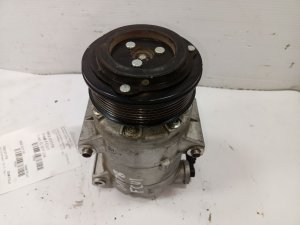
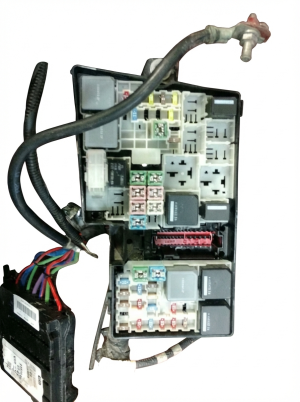
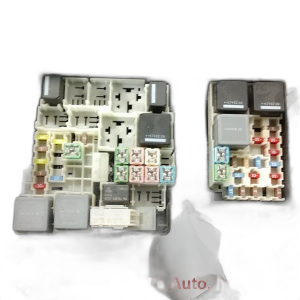


New Aftermarket Parts Available
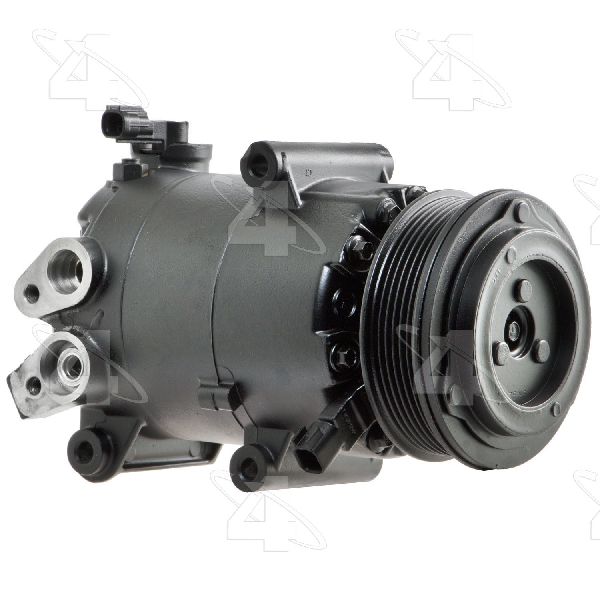

The information in this article is provided for general reference and educational purposes only. Vehicle specifications, procedures, and part compatibility can vary by production date, trim level, and region. Always consult your vehicle's factory service manual and verify part numbers before purchasing or performing repairs. Safety-critical components such as airbags, seat belts, and braking systems should be installed by a qualified professional.
- Ford ESCAPE:
- 🎬 Helpful Videos
- 🛍️ Shop This Part
- What's Unique About the 2017-2019 Ford ESCAPE
- Diagnostic Flowchart
- Symptoms You May Notice
- Most Likely Causes
- Rare But Worth Checking
- Diagnosis Steps
- Parts You'll Likely Need
- Related Codes That Often Appear With This One
- Technical Service Bulletins (TSBs) & Recalls
- Platform-Specific Known Issues
- Mechanic-Grade Diagnostic Values
- Scan Tool Commands That Help
- Wiring & Ground Locations
- Real Owner Repair Stories
- OEM Part Supersession History
- 🎟️ Get 5% Off