

OBD-II Code P0643: Sensor Power Supply 'A' Circuit High
What P0643 means, why it triggers, and how to fix it
- P0643 triggers when the PCM's 5-volt 'A' reference circuit exceeds 5.2 volts, almost always due to a shorted wire or a failed sensor.
- Expect immediate drivability issues like stalling, limp mode, and erratic shifting alongside an illuminated Check Engine Light.
- Diagnose this code by unplugging sensors on the 'A' circuit one by one; if the voltage drops back to 5 volts, the last unplugged sensor is internally shorted.
- Never replace the PCM or secondary sensors until you verify the 5-volt reference circuit; secondary codes are usually symptoms of the P0643 over-voltage, not failed parts.
What Does P0643 Mean?

P0643 means your car's main computer, the Powertrain Control Module (PCM), detects that a specific electrical circuit is receiving too much voltage. This 'A' reference circuit sends a steady 5-volt signal to power several engine sensors. When the PCM sees a voltage higher than its programmed limit (usually above 5.2 volts), it sets this code to protect itself and other components.
Technical definition: The official SAE/OBD-II definition is "Sensor Reference Voltage 'A' Circuit High". This indicates the Powertrain Control Module (PCM) detects voltage on the 5-volt reference circuit designated 'A' above the acceptable threshold. 🎬 Watch: A complete guide to fixing the P0643 code. This circuit is a critical part of the Controller Area Network (CAN) bus, facilitating communication between vehicle sensors and the PCM.
Can I Drive With P0643?
Yes, But With Caution. You can drive short distances in an emergency, but it is not recommended for regular use. This code causes poor engine performance, stalling, or a no-start condition, making the vehicle unreliable and unsafe. Ignoring the code leads to a persistent short circuit causing permanent damage to the Powertrain Control Module (PCM), turning a moderate repair into a $1,500+ expense.
Common Causes

- Shorted Wiring (Very Common) — The 5-volt reference wire is the most common culprit. It gets damaged, melted, or rubs against a 12-volt power wire (short-to-power), causing the circuit voltage to spike. Look for this in areas where the harness is exposed to heat, vibration, or sharp edges.
- Failed Sensor on the 'A' Circuit (Common) — A sensor powered by the 'A' circuit shorts out internally, sending excessive voltage back through the circuit. Common culprits include the Accelerator Pedal Position (APP), Manifold Absolute Pressure (MAP), or Fuel Tank Pressure (FTP) sensor.
- Damaged or Corroded Connectors (Common) — Water intrusion, dirt, or physical damage to electrical connectors at the sensor or PCM creates a short circuit. Even a single bent pin causes this high voltage reading.
- Poor Ground Connection (Less Common) — A loose, corroded, or broken ground wire for the sensor circuit causes unstable, elevated voltage. This points to a compromised chassis ground strap or corroded mounting point.
- Aftermarket Accessory Interference (Less Common) — Incorrectly installed aftermarket parts (remote starters, alarms, stereos) accidentally tapped into the 5-volt reference circuit introduce incorrect voltage.
- Failing Alternator (Rare) — A failing alternator with a bad voltage regulator causes voltage spikes throughout the vehicle. A significant over-voltage condition (>15V) overwhelms the PCM's 5-volt regulator.
- Corrupted Module Software/Calibration Issue (Rare) — A corrupted calibration file within the control module causes it to incorrectly interpret voltage readings. A software re-flash resolves this.
- Faulty Powertrain Control Module (PCM) (Very Rare) — The internal voltage regulator inside the PCM fails, sending out more than 5 volts. Consider this only after exhaustively eliminating all other possibilities.
Symptoms

- Transmission Shifting Issues — If a transmission sensor shares the affected circuit, you experience harsh, delayed, or missing gear shifts.
- Malfunctioning Electronic Accessories — This fault triggers seemingly unrelated issues like dimming lights or erratic power windows and door locks.
- Inoperable 4WD System — On 4x4 vehicles, this code prevents the transfer case from shifting between 2WD and 4WD modes.
- Check Engine Light On (also visible on scanner) — This is the most common and immediate symptom.
- Poor Engine Performance (also visible on scanner) — The engine runs rough, hesitates during acceleration, misfires, stalls, or fails to start.
- Reduced Power or 'Limp Mode' (also visible on scanner) — The PCM intentionally limits engine power to protect the drivetrain, resulting in sluggish acceleration.
- Erratic Gauges or Other Warning Lights (also visible on scanner) — Fuel or temperature gauges behave strangely, and secondary warning lights (ABS, traction control) illuminate.
Diagnostic Flowchart
Tap your situation to follow the diagnostic path that matches what you're seeing on this code.
Common Fixes & Costs
- Repairing Damaged Wiring — Parts: $10 - $50, Labor: $150 - $500, ~2.5 hr book time (Intermediate)
- Replacing a Faulty Sensor — Parts: $30 - $250, Labor: $50 - $150, ~1 hr book time (DIY)
- Replacing a Damaged Electrical Connector — Parts: $20 - $80, Labor: $100 - $250, ~1.5 hr book time (Intermediate)
- Re-flashing or Reprogramming the PCM — Parts: $0, Labor: $100 - $200, ~1 hr book time (Professional)
- Replacing the Powertrain Control Module (PCM) — Parts: $600 - $1,200, Labor: $150 - $250, ~2 hr book time (Professional)
DIY vs Professional
- Replacing a Faulty Sensor — Beginner:
Tools: Basic hand tools (socket set, wrenches), OBD-II scanner (to clear codes). - Repairing Damaged Wiring / Connector — Beginner:
Tools: Digital multimeter, wiring diagram, wire strippers, crimpers, heat shrink tubing, soldering iron (optional), pigtail connector. - Replacing the PCM — Beginner:
Tools: Specialized scan tools for programming, socket set.
Used vs. New Parts: Buying Guide
When a used part is worth it: For a PCM, a used unit from a reputable salvage yard is a cost-effective choice, but only if you verify it will be properly programmed for your vehicle's VIN and security system. For inexpensive sensors, the savings from buying used are minimal and not worth the risk.
Donor-vehicle mileage cap: roughly under 100000 miles for the part to have meaningful remaining life.
Donor quality checklist:
- For a used PCM, match the part number exactly. Superseded numbers may not interchange.
- Try to source the used PCM, security module (SKIM), and ignition key from the same donor vehicle to simplify programming.
- Verify the used part seller offers at least a 90-day warranty.
Decision logic:
- If The faulty part is a sensor (e.g., MAP, Oil Pressure, FTP) → Buy a new OEM or high-quality aftermarket part. The risk of a used sensor failing is too high for the small cost savings.
- If The faulty part is the PCM and the vehicle is over 100k miles → A used, pre-programmed PCM from a specialist is a viable option to save significant money.
- If You cannot find a professional to program a used PCM for your vehicle → Buy a new or remanufactured PCM. An unprogrammed module is useless.
Warranty tradeoff: Used parts typically have a 30-90 day functional warranty. New aftermarket parts often come with a 1-year to limited lifetime warranty. New OEM parts carry a 1-year warranty.
Worst-case if a used part fails: $500-1500 if a used PCM fails after installation, requiring repeat labor for removal, installation, and programming, plus the cost of another replacement part.
What Happens If You Wait — Timeline
- 0-1 month: Check Engine Light is on. Drivability may be normal, or there may be very subtle hesitation. Some features like remote start may be disabled. (MPG impact: 0-5%% · Added cost: $0)
- 1-3 months: Drivability issues become more frequent. Noticeable rough idle, stalling at stops, and poor acceleration. Fuel economy visibly declines. (MPG impact: 5-15%% · Added cost: $50-$150 in wasted fuel)
- 3-6 months: Constant incorrect sensor data (due to the voltage fault) forces a rich or lean fuel mixture, which overheats and damages the catalytic converter's internal structure. (MPG impact: 10-20%% · Added cost: $800 - $2,500 (Catalytic converter replacement becomes a high risk))
- 6+ months: The persistent high voltage from the short circuit overheats and burns out the PCM's internal 5-volt regulator, causing catastrophic PCM failure. The vehicle fails to start. (MPG impact: N/A (Vehicle may be undrivable)% · Added cost: $1,200 - $2,000+ (PCM replacement and programming is now required on top of the original fault))
Cost of Not Fixing It
- 0-1 Month: Worsening drivability issues, including stalling and hesitation. Noticeable drop in fuel economy (5-10%). (Added cost: Negligible, but risk of being stranded increases.)
- 1-6 Months: Potential damage to the catalytic converter due to an incorrect air/fuel mixture from faulty sensor readings. (Added cost: $1200 - $2800)
- 6+ Months: Catastrophic failure of the Powertrain Control Module (PCM) due to prolonged internal stress from the short circuit. (Added cost: $1500 - $2500+)
Diagnosis Steps

- Scan for All Trouble Codes & Freeze Frame Data
Use an OBD-II scanner to read all stored codes and freeze frame data. P0643 often appears with sensor-specific codes (e.g., P0107, P0452), providing valuable clues to identify the problem circuit.
Tools: OBD-II Scanner (Beginner) - Perform a Thorough Visual Inspection
Carefully inspect the wiring harness associated with the 'A' circuit sensors. Look for melted plastic, frayed wires, chafing against hot exhaust or sharp metal, and connector corrosion.
Tools: Flashlight, Inspection Mirror (Beginner) - Identify Sensors on the 'A' Circuit
Consult a vehicle-specific wiring diagram to determine which sensors use the 'A' reference circuit. Common ones include the MAP, APP, Fuel Tank Pressure, and A/C pressure sensors.
Tools: Vehicle Service Manual or Online Repair Database (Intermediate) - Isolate the Fault by Unplugging Sensors
With the key on and engine off, unplug the 'A' circuit sensors one at a time. If the reference voltage returns to a stable 5 volts after unplugging a specific sensor, that sensor is internally shorted.
Tools: OBD-II Scanner, Digital Multimeter (Intermediate) - Check Live Data PIDs for Reference Voltage
Using a professional scan tool, monitor the live data PID for 'Sensor Reference Voltage A'. A healthy circuit displays 4.8V to 5.2V; anything higher confirms the fault.
Tools: Professional OBD-II Scan Tool (Advanced) - Test the Reference Voltage at the Sensor
With the key on, engine off, and sensor unplugged, connect a multimeter's black lead to ground and red lead to the 5-volt reference pin. A reading above 5.2 volts confirms a short to power in the harness.
Tools: Digital Multimeter (Intermediate) - [PRO TIP] Check for a Short to Power in the Harness
If voltage remains high with all sensors disconnected, unplug the PCM. Check for continuity (Ohms) between the 5-volt reference pin and a 12-volt battery power pin. Any reading other than OL indicates a short circuit.
Tools: Digital Multimeter, Wiring Diagram (Advanced) - Test Sensor Resistance
Test the suspected sensor's internal resistance using a multimeter set to Ohms. A reading of OL (Open Loop) or near zero ohms indicates a failed sensor, requiring a service manual for exact pinout specs.
Tools: Digital Multimeter, Service Manual (Advanced) - [PRO TIP] Perform a 'Wiggle Test' for Intermittent Faults
For intermittent faults, monitor the reference voltage while carefully wiggling sections of the wiring harness. Voltage spikes or drops pinpoint the location of the intermittent short or break.
Tools: Digital Multimeter or Oscilloscope (Advanced) - [PRO TIP] Use an Oscilloscope for Definitive Diagnosis
Connect an oscilloscope to the 5V reference circuit for definitive diagnosis. It captures intermittent spikes or noise that a multimeter is too slow to detect.
Tools: Oscilloscope, Wiring Diagram (Professional)
When This Code Triggers (Freeze-Frame Conditions)
- Engine Coolant Temp: 180-200°F (Engine at normal operating temperature.)
- RPM: 1500-2500 (Steady cruise or light acceleration.)
- Engine Load: 30-60% (Maintaining speed on a flat road or slight incline.)
- Vehicle Speed: 35-55 mph (Highway or city expressway driving.)
Related Codes
- P0642 — This is the direct opposite of P0643, indicating the 'A' circuit voltage is too low. P0643 is caused by a short to power, while P0642 is caused by a short to ground or an open circuit.
- P0653 — This code is identical to P0643 but for the 'B' reference circuit, which powers a different group of sensors. If both P0643 and P0653 are present, the likelihood of a PCM fault increases.
- P0107 — This code means Manifold Absolute Pressure (MAP) sensor circuit low input. An internal short in the MAP sensor causes the reference voltage to spike (P0643) while simultaneously sending a low signal to the PCM (P0107).
- P0452 — This code indicates Fuel Tank Pressure (FTP) Sensor circuit low input. A faulty FTP sensor internally shorts the 5V reference circuit, causing the P0643, while the PCM interprets the signal as low input, setting P0452.
Climate & Environmental Factors
- High Humidity & Moisture: In climates with high humidity or heavy rainfall, moisture penetrates poorly sealed connectors. This leads to corrosion and creates unintended electrical pathways (shorts), triggering the P0643 code.
- Cold Climates / Salt Belt: Road salt creates a highly corrosive environment underneath the vehicle. This accelerates the degradation of wiring harnesses and connectors, especially for exposed components like a Fuel Tank Pressure sensor.
- Extreme Temperature Swings: Frequent, large changes in temperature cause electrical connectors and internal solder joints to expand and contract. Over time, this leads to micro-fractures or loose connections, causing intermittent short circuits.
- Rodent Damage: Rodents chew on wiring. Manufacturers using soy-based wire insulation attract animals, leading to chewed wires that easily short to power or ground.
How to Talk to a Mechanic About This Code
Say this: "I have a P0643 code, indicating high voltage on the 5-volt reference 'A' circuit. I'd like to schedule a diagnostic to isolate the specific cause, whether it's a shorted sensor or a wiring harness issue. Please confirm the source of the high voltage before replacing any parts."
This signals you understand P0643 is an electrical circuit fault, not a specific part failure. It directs the technician to perform a proper diagnosis (isolating the short) rather than just replacing the most likely sensor, which prevents you from paying for unnecessary parts.
Avoid saying:
- 'Just fix the Check Engine Light.'
- 'My car is running rough, can you look at it?' (too vague, invites upselling)
- 'I think it's the MAP sensor, just replace it.' (Don't guess, let them diagnose)
Questions to ask before authorizing the repair:
- How did you determine the fault was with this specific wire/sensor?
- Did you find a short-to-power in the harness or an internally shorted sensor?
- If other codes were present, have they cleared after fixing the P0643 fault?
- Can you show me the damaged part or the location of the wiring repair?
- What is the warranty on this diagnosis and repair?
Where to Take It: Dealer vs Independent vs Chain
- Dealer:
Recommended for complex or warranty-covered cases. Their access to proprietary wiring diagrams and TSBs is a major advantage for electrical faults.
Best for: Vehicles under warranty, Complex electrical systems with known TSBs (e.g., Ford, VW, Audi), When you suspect a PCM re-flash or replacement is needed
Downsides: Highest labor rates, typically 1.5x to 2x more than independent shops., May recommend replacing a large, expensive harness assembly instead of repairing a single wire. (Typical cost: +50% vs. baseline) - Independent Shop:
Best fit for most situations, provided you choose a reputable shop with strong electrical diagnostic skills. Ask if they have experience with 5-volt reference circuit issues.
Best for: Out-of-warranty vehicles where cost is a major factor., Common, well-documented issues (e.g., GM FTP sensor wiring)., Finding a shop that specializes in automotive electrical diagnosis.
Downsides: Diagnostic skill varies greatly. Vet the shop by checking for ASE certifications in electrical systems and positive reviews mentioning diagnostic ability. (Typical cost: +0% vs. baseline) - Chain Shop:
AVOID for initial diagnosis. This code requires methodical electrical testing, not just code reading. A chain shop is more likely to use the 'parts cannon' approach, costing you more in the long run.
Best for: Simple, confirmed part replacements (e.g., 'I know the MAP sensor is bad, please replace it').
Downsides: Technician skill varies dramatically; not typically staffed with expert diagnosticians., High pressure to meet sales targets can lead to misdiagnosis or unnecessary upselling., May lack the advanced diagnostic tools or wiring diagrams needed to trace a short efficiently. (Typical cost: -10% vs. baseline)
When to Walk Away From the Repair
If the estimated repair cost exceeds 40-50% of your car's private-party value (check Kelley Blue Book), it's time to seriously consider selling or trading it in.
- Car worth $4000, fix is $1800: Walk away. The repair cost is 45% of the car's value, and a P0643 fix could involve a PCM, which is a major repair on an older vehicle.
- Car worth $15000, fix is $800: Fix it. The repair cost is well below the threshold, preserving the value of a more expensive vehicle.
- Car worth $2500, fix is $500: Borderline, but likely worth fixing. This is a common cost for a wiring repair, and it's much cheaper than a new car payment.
What Scan Tool You Need for This Code

Minimum: An OBD-II scanner that can display live data streams, specifically the voltage PIDs (Parameter IDs).
A basic $20 code reader will only show you the P0643 code. It cannot show you the live voltage on the 5V reference circuit, which is essential for diagnosis. You need to see the voltage change as you unplug sensors to find the fault.
Budget: BlueDriver Pro or similar Bluetooth scanner (~$100) — Connects to your smartphone and the app can display and graph live data, including sensor reference voltage. This is sufficient for a skilled DIYer to perform the unplug-the-sensor diagnostic method.
Mid-range: Foxwell NT604 Elite or Autel AL619 (~$150) — These are handheld units that don't require a phone. They provide robust live data, freeze frame data, and often can read manufacturer-specific codes that might accompany P0643, providing more clues.
Professional: Autel MaxiCOM MK808S (~$500) — Offers full-system, professional-level diagnostics. It provides fast, detailed live data graphing and may have access to wiring diagrams or diagnostic guidance within the tool itself, streamlining the process significantly.
Rent vs buy: Most AutoZone locations will lend you a scan tool for free with a refundable deposit. However, these loaner tools may be basic code readers. For P0643, you need live data, so a purchased Bluetooth or handheld scanner is a better investment for DIY diagnosis.
How to Clear the Code After You Fix It
- Use an OBD-II scan tool to clear all diagnostic trouble codes.
- Reconnect any disconnected components, including the battery if it was removed.
- Perform a complete OBD-II drive cycle to allow the vehicle's readiness monitors to run.
Drive cycle (~30 minutes): From a cold start (engine off for 8+ hours), start and idle for 2-3 minutes. Drive for 15 minutes in a mix of city (stop-and-go) and highway conditions. Include 5 minutes of steady driving at 55 mph. Allow the vehicle to cool down completely.
Readiness monitors affected: Catalyst Monitor, Oxygen (O2) Sensor Monitor, EVAP System Monitor
Before emissions retest: drive at least 100 miles to fully set monitors.
Watch out for:
- Simply disconnecting the battery may not clear codes on modern vehicles and will reset all readiness monitors to 'incomplete'.
- The Check Engine Light will come back on immediately if the underlying electrical fault was not properly repaired.
Will This Fail Emissions / State Inspection?
Yes — this code typically fails an OBD-II emissions inspection.
- California: An illuminated Check Engine Light is an automatic failure. After repair, most readiness monitors must be 'Ready' to pass. For 2001+ model year vehicles, only one non-continuous monitor is permitted to be 'Incomplete'.
- New York: The NYS DMV inspection includes an OBD-II scan. An active P0643 code and illuminated Check Engine Light will result in an automatic test failure.
- Texas: In the 17 counties requiring emissions testing, an active powertrain trouble code like P0643 will cause the vehicle to fail the OBD portion of the inspection.
Most Commonly Affected Vehicles
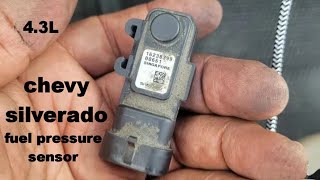
- Chevrolet Silverado (2007-2021) — Often related to a faulty Fuel Tank Pressure (FTP) sensor or its wiring harness near the spare tire, which is prone to damage. The 2014-2018 models in particular are noted for this issue.
- GMC Sierra (2007-2021) — Shares the same platform and common failure points as the Silverado, especially the FTP sensor circuit. TSB 07-06-04-019G addresses related intermittent electrical issues.
- Dodge RAM (2009-2018) — On the 5.7L and 6.7L Cummins diesel, P0643 relates to the 5-volt supply for the Oil Pressure Sensor or Crankshaft Position Sensor. Diagnosis involves checking the voltage at the sensor connector.
- Ford F-150, Focus, Various (2005-2015) — TSB 11-10-10 was issued for 2011-2012 F-150s with the 3.5L engine, where the EPAS (Electronic Power Assisted Steering) rack wiring rubs and shorts. On the Focus, issues with the MAP sensor circuit are common.
- Hyundai Santa Fe, Tucson (2008-2012) — On these models, the code sets when voltage exceeds 5.158V for more than 0.1 seconds. The 'A' circuit often includes the accelerator position sensor (APS) and A/C pressure transducer.
- BMW X3, 3-Series, Various (2006-2019) — Complex electrical systems make diagnosis difficult. Water ingress into connectors, particularly in the engine bay or under the carpet, is a common cause.
- Volkswagen Jetta, Golf (2006-2016) — VW and Audi models are frequently cited for 5-volt reference faults. The cause is often a short within the extensive wiring harness, which is difficult to locate due to chafing or corrosion.
- Audi A4, A3 (2006-2016) — Like their VW counterparts, Audis experience P0643 due to complex electrical systems. A common area for harness chafing is near the engine block or transmission housing.
- Jeep Grand Cherokee, Wrangler (2011-2020) — Often linked to the oil pressure sensor or its wiring harness, which becomes brittle from heat. A failing oil pressure sensor shorts the 5V reference circuit, causing this code along with oil pressure warnings.
Manufacturer-Specific Notes
- General Motors (Chevrolet, GMC): On many GM trucks, the wiring harness for the Fuel Tank Pressure (FTP) sensor, located above the spare tire, is a frequent source of this code. The harness gets damaged by road debris or corrosion, causing a short. TSB 07-06-04-019G addresses intermittent CEL with various codes, including P0643, on 2007-2012 trucks.
- Volkswagen/Audi: These vehicles are particularly sensitive to 5-volt reference circuit faults. The issue is often a short within the extensive wiring harness, which is difficult to locate. Rodent damage to the soy-based wire insulation is also a frequent cause.
- Ford: TSB 11-10-10 was released for 2011-2012 F-150 trucks with the 3.5L GTDI engine for an intermittent P0643 code. The cause was identified as the wiring harness for the Electronic Power Assisted Steering (EPAS) rack rubbing and shorting on the steering gear housing.
- Chrysler/Dodge/Jeep: On vehicles with the 2.4L, 3.6L, and 5.7L engines, the oil pressure sensor is a common failure point that shorts the 5V reference circuit. The sensor is located in a difficult-to-reach area, and its connector becomes contaminated with oil, leading to the fault.
Real Owner Stories
2015 Chevrolet Silverado 1500 at 115K miles
Check Engine Light came on with codes P0643 and P0452. The truck ran fine, but the remote start stopped working.
What they tried:
- Initially ignored the codes as there were no driving issues.
- A shop suggested replacing the entire fuel pump assembly for over $1000.
- Owner researched forums and found the common Fuel Tank Pressure (FTP) sensor issue.
Outcome: Owner inspected the wiring harness above the spare tire and found a chafed wire. He repaired the wire with a butt connector and heat shrink for less than $10. Codes cleared and did not return.
Lesson: With P0643 and P0452 on a GM truck, always inspect the FTP sensor wiring harness above the spare tire before replacing any expensive parts. It's a very common failure point.
2012 Ford F-150 3.5L EcoBoost at 85K miles
Intermittent P0643 code, sometimes accompanied by a brief loss of power steering assist and flickering dash lights, especially on bumpy roads.
What they tried:
- A mechanic could not replicate the issue and cleared the code, which returned a week later.
- Owner suspected a loose connection and performed 'wiggle tests' on various harnesses with no luck.
Outcome: After finding Ford TSB 11-10-10, the owner inspected the Electronic Power Assisted Steering (EPAS) wiring harness where it passes the steering rack. He found the harness had rubbed through on the rack housing, causing a short. He repaired and re-routed the harness, securing it with zip ties. The total cost was under $20, and the problem was permanently fixed.
Lesson: For intermittent electrical issues, always search for vehicle-specific Technical Service Bulletins (TSBs). The manufacturer may have already identified the exact location of a common wiring problem.
2014 Jeep Grand Cherokee 3.6L at 98K miles
Check Engine Light on with P0643 and an oil pressure warning light. The engine ran rough at idle.
What they tried:
- The parts store scanner showed multiple sensor codes, leading the owner to believe the PCM was bad.
- Quoted $1,400 for a PCM replacement at a local shop.
Outcome: Seeking a second opinion, a different technician identified the oil pressure sensor as part of the 'A' reference circuit. Following the proper diagnostic procedure, he unplugged the oil pressure sensor, and the 5V reference returned to normal. Replacing the faulty oil pressure sensor (a $60 part) and clearing the codes resolved all issues.
Lesson: P0643 causes other 'symptom' codes to appear for every other sensor on the same circuit. Don't assume multiple codes mean multiple failed parts or a bad PCM. The root cause is often a single shorted sensor.
How to Prevent This Code From Triggering
- Apply dielectric grease to exposed electrical connectors (During any repair or every 30,000 miles for connectors in splash-prone areas (e.g., near wheels, undercarriage)) — It creates a non-conductive, waterproof seal that prevents moisture and road salt from causing corrosion inside the connector, which is a primary cause of shorts and high resistance faults.
- Secure wiring with high-temperature loom and zip ties (Once, or whenever working on the engine) — Prevents the wiring harness from rubbing against sharp metal edges or melting on hot engine/exhaust components. This physical protection stops chafing that exposes wires and leads to shorts.
- Deter rodents from nesting in the engine bay (Seasonally, especially in fall and winter) — Rodents chew on soy-based wire insulation. Using rodent-repellent tape (laced with capsaicin) on harnesses or placing peppermint oil-soaked cotton balls in the engine bay prevents them from damaging wires and causing shorts.
- Periodically inspect and clean main chassis and engine ground points (Every 50,000 miles or if electrical issues arise) — A corroded or loose ground connection creates unstable voltage levels throughout the vehicle's electrical system, potentially stressing the PCM's voltage regulator and causing erratic sensor readings.
Frequently Asked Questions
What is a 5-volt reference circuit?
It's a clean and stable 5-volt power supply that the car's main computer (PCM) sends out to various sensors. These sensors use this power to take readings and send a signal back to the PCM, which then makes decisions about engine and transmission operation.
What is the most common mistake when diagnosing P0643?
The most common misdiagnosis is immediately replacing sensors based on other trouble codes that are present. P0643 causes other sensors on the circuit to send faulty signals, generating additional codes. The underlying 'A' circuit high voltage issue must be fixed first.
How much does it cost to fix P0643?
Costs depend entirely on the root cause. A simple sensor replacement averages $150-$400, while repairing a shorted wire ranges from $200 to $600. A rare PCM replacement exceeds $1,500.
What if the P0643 code only appears intermittently?
Intermittent faults are almost always caused by a wiring harness that shorts out under specific conditions, like when the engine moves or hits a bump. A technician performs a 'wiggle test'—manipulating the harness while monitoring voltage—to pinpoint the short.
Can I fix P0643 myself?
If the cause is an easily accessible sensor, a DIY repair is possible with basic tools. Properly diagnosing the problem requires a multimeter and the ability to read a wiring diagram. Finding a short in a wiring harness is best left to a professional to avoid frying the PCM.
Can a bad battery cause a P0643 code?
While a failing battery or alternator causes many electrical issues, it is not a direct cause of P0643. This code points specifically to a fault on the PCM's regulated 5-volt circuit, not the main 12-volt vehicle system. However, a severely fluctuating 12V system stresses the PCM's internal regulator over time.
What happens if I ignore P0643?
Ignoring this code leads to worsening drivability problems like stalling, poor fuel economy, and a no-start condition. A persistent short circuit overheats and causes permanent damage to the PCM, turning a moderate repair into a very expensive one.
Will clearing the code fix the problem?
No. Clearing the code only turns the Check Engine Light off temporarily. If the underlying electrical fault still exists, the code returns as soon as the PCM runs its diagnostic check again, often immediately upon the next key cycle.
Key Takeaways
- P0643 triggers when the PCM's 5-volt 'A' reference circuit exceeds 5.2 volts, almost always due to a shorted wire or a failed sensor.
- Expect immediate drivability issues like stalling, limp mode, and erratic shifting alongside an illuminated Check Engine Light.
- Diagnose this code by unplugging sensors on the 'A' circuit one by one; if the voltage drops back to 5 volts, the last unplugged sensor is internally shorted.
- Never replace the PCM or secondary sensors until you verify the 5-volt reference circuit; secondary codes are usually symptoms of the P0643 over-voltage, not failed parts.
Helpful Videos



The information in this article is provided for general reference and educational purposes only. Vehicle specifications, procedures, and part compatibility can vary by production date, trim level, and region. Always consult your vehicle's factory service manual and verify part numbers before purchasing or performing repairs. Safety-critical components such as airbags, seat belts, and braking systems should be installed by a qualified professional.
- 🎬 Helpful Videos
- What Does P0643 Mean?
- Can I Drive With P0643?
- Common Causes
- Symptoms
- Diagnostic Flowchart
- Common Fixes & Costs
- DIY vs Professional
- Used vs. New Parts: Buying Guide
- What Happens If You Wait — Timeline
- Cost of Not Fixing It
- Diagnosis Steps
- When This Code Triggers (Freeze-Frame Conditions)
- Related Codes
- Climate & Environmental Factors
- How to Talk to a Mechanic About This Code
- Where to Take It: Dealer vs Independent vs Chain
- When to Walk Away From the Repair
- What Scan Tool You Need for This Code
- How to Clear the Code After You Fix It
- Will This Fail Emissions / State Inspection?
- Most Commonly Affected Vehicles
- Manufacturer-Specific Notes
- Real Owner Stories
- 2015 Chevrolet Silverado 1500 at 115K miles
- 2012 Ford F-150 3.5L EcoBoost at 85K miles
- 2014 Jeep Grand Cherokee 3.6L at 98K miles
- How to Prevent This Code From Triggering
- Frequently Asked Questions
- What is a 5-volt reference circuit?
- What is the most common mistake when diagnosing P0643?
- How much does it cost to fix P0643?
- What if the P0643 code only appears intermittently?
- Can I fix P0643 myself?
- Can a bad battery cause a P0643 code?
- What happens if I ignore P0643?
- Will clearing the code fix the problem?
- Key Takeaways
- 🎟️ Get 5% Off