

OBD-II Code P0635: Power Steering Control Circuit Malfunction
What P0635 means, why it triggers, and how to fix it
- Code P0635 indicates an electrical fault in the power steering system, instantly disabling power assist and making the steering wheel extremely heavy.
- Over 50% of P0635 codes stem from a weak battery, failing alternator, or corroded ground wire rather than a failed steering rack.
- Driving with an active P0635 is a severe safety hazard; the sudden loss of power assist during a low-speed turn or emergency maneuver causes immediate loss of vehicle control.
- Never replace a $1,500 steering rack without first paying $100-$200 for a professional diagnostic to rule out a simple $15 blown fuse or a failing alternator.
What Does P0635 Mean?

P0635 means the Powertrain Control Module (PCM) detects an electrical problem in the power steering system. The computer cannot communicate with the power steering control module or its related circuit, instantly disabling power assist.
Technical definition: The official definition for P0635 is "Power Steering Control Circuit". This indicates the vehicle's computer (PCM) detects a voltage reading or signal from the power steering control circuit that falls outside the manufacturer's specified operating range.
🎬 Watch: A quick overview of the P0635 diagnostic code.Can I Drive With P0635?
Yes, But With Caution. You can still steer the car, but the power assist is gone, making it extremely difficult to turn the wheel at low speeds. This is a significant safety hazard requiring immediate attention. Sudden increases in steering effort cause loss of control in emergency situations; do not drive the vehicle.
Common Causes

- Power Supply Problems (Battery/Alternator) (Very Common) — Electric power steering requires a steady 12+ volts to work. A weak battery, a failing alternator, or a blown fuse causes this code to appear immediately.
- Wiring and Connector Issues (Very Common) — Damaged wires or corroded, loose connectors interrupt the electrical signals between the power steering module and the rest of the vehicle.
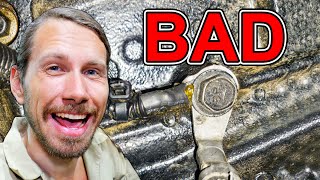
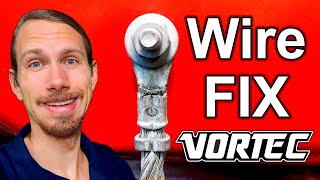
- Bad Ground Connection (Common) — A rusted, loose, or broken ground strap for the control module disrupts the electrical circuit. A poor ground path is a frequent culprit on vehicles with high-speed CAN networks. 🎬 Watch: How to find and fix bad ground connections.
- Faulty Power Steering Control Module (PSCM) (Common) — The electronic module that acts as the 'brain' for the power steering fails internally due to heat, moisture, or age.
- Software / Firmware Glitches (Common) — The fault is sometimes a software issue within the PSCM. The module requires a reset or an update with the latest firmware from the manufacturer to resolve communication errors.
- CAN Bus Network Failure (Less Common) — A fault on the Controller Area Network (CAN) bus, such as a shorted wire or a failed terminating resistor, prevents the PSCM from communicating with the PCM.
- Faulty Power Steering Sensors (Less Common) — A bad power steering pressure, torque, or position sensor sends incorrect data to the computer, triggering the fault.
- Internal Module Contamination (Moisture/Debris) (Less Common) — Moisture enters the Power Steering Control Module, causing corrosion and short circuits. In cold climates, this condensation freezes and prevents internal relays from working.
- Low or Contaminated Power Steering Fluid (Rare) — This applies only to electro-hydraulic systems. Low or dirty fluid causes the pump to work incorrectly and triggers a fault.
Symptoms

- Heavy or Stiff Steering — The steering wheel becomes extremely difficult to turn, mimicking an older car without power steering. This is most noticeable when parking or driving at low speeds.
- Power Steering Warning Light is On — The dashboard displays a warning light, typically a steering wheel icon or the letters "EPS". The Check Engine Light also illuminates.
- Intermittent or Total Loss of Power Assist — The power steering works one moment and cuts out the next. In severe cases, it stops working completely and does not return.
- Erratic or Jerky Steering — The steering feels unpredictable, jerky, or twitchy as the power assist cuts in and out, leading to an unstable driving feel.
- Unusual Noises When Turning — Whining, groaning, or clunking sounds occur when turning the steering wheel, especially if the assist is failing or if fluid is low in a hydraulic system.
Diagnostic Flowchart

Tap your situation to follow the diagnostic path that matches what you're seeing on this code.
Common Fixes & Costs
- Replacing a Failing Alternator or Battery
— Parts: $200-$600, Labor: $200-$450, ~2 hr book time
(Intermediate)
Ford F-150: OEM Varies by engine/year, e.g., BL3Z-10346-A (Alt: Denso, Bosch, Valeo)
Subaru Forester: OEM e.g., 23700AA78A (Alt: Denso, Remanufactured units)
Honda Accord: OEM e.g., 31100-5A2-A01 (Alt: Denso) - Repairing Damaged Wiring or Connectors — Parts: $10-$50, Labor: $100-$250, ~1.5 hr book time (Intermediate)
- PSCM Reprogramming or Software Update — Parts: $0, Labor: $120-$250, ~1 hr book time (Professional)
- Replacing the Power Steering Control Module (PSCM)
— Parts: $500-$900, Labor: $150-$300, ~1.5 hr book time
(Professional)
Subaru Forester (for cold weather issue): OEM 34710SG102 (Updated Module) (Alt: OEM is the standard fix.)
Honda Accord: OEM Varies by VIN, e.g., 39980-T2A-A11 (Alt: Cardone, Dorman.) - Replacing the Entire Electric Steering Rack Assembly
— Parts: $800-$2000+, Labor: $300-$600, ~4 hr book time
(Professional)
Ford F-150 (2011-2014): OEM Varies by configuration, e.g., BL3Z-3504-AE (Alt: Cardone, BBB Industries, Motorcraft (reman).)
DIY vs Professional
- Replacing a Failing Alternator or Battery — Beginner:
Tools: Socket set, wrenches, serpentine belt tool, battery terminal cleaner. - Repairing Damaged Wiring or Connectors — Beginner:
Tools: Multimeter, wire strippers, crimpers, heat shrink, soldering iron (optional). - PSCM Reprogramming or Software Update — Beginner:
Tools: Manufacturer-specific diagnostic tool (e.g., Ford IDS, Honda HDS) and software subscription. - Replacing the Power Steering Control Module (PSCM) — Beginner:
Tools: Socket set, trim removal tools. **Crucially, requires a professional scan tool for post-installation programming.** - Replacing the Entire Electric Steering Rack Assembly — Beginner:
Tools: Vehicle lift, extensive socket/wrench set, ball joint separator, torque wrench, professional scan tool, wheel alignment equipment.
Used vs. New Parts: Buying Guide
When a used part is worth it: For a complete steering rack assembly, a used part from a low-mileage, accident-free donor vehicle offers significant savings. For a separate Power Steering Control Module (PSCM), a used part is risky due to the high likelihood of it needing VIN-specific programming.
Donor-vehicle mileage cap: roughly under 75000 miles for the part to have meaningful remaining life.
Donor quality checklist:
- Verify the donor vehicle's mileage and that it was not scrapped due to an electrical or steering-related issue.
- Match the part number exactly. Superseded or different numbers fail to communicate with the PCM.
- For steering racks, check for signs of physical damage, leaking seals, or corrosion, especially from rust-belt donors.
Decision logic:
- If The fix is a separate PSCM that requires programming → Buy new OEM. A used module is often 'locked' to the donor's VIN and becomes a paperweight.
- If The fix is the entire steering rack assembly and the vehicle is over 100k miles → A low-mileage used assembly is a reasonable choice to save money, but accept the risk of a shorter lifespan.
- If The vehicle is newer or has low mileage (< 80k) → Favor a new OEM or high-quality remanufactured part to maximize longevity and warranty coverage.
Warranty tradeoff: Used parts typically come with a 30-90 day functional warranty on the part only. New aftermarket parts offer a 1-year to limited lifetime warranty. A failed used part means paying the high cost of labor a second time.
Worst-case if a used part fails: $400-$800 if a used steering rack or module fails after installation, representing the repeated labor cost plus the need to buy another part.
What Happens If You Wait — Timeline
- 0-1 month: Intermittent loss of power steering, often triggered by high electrical load (A/C on, low-speed turns) or voltage fluctuations. The steering warning light flickers and goes out. Code P0635 is stored as 'pending' or 'history'. (MPG impact: 0%% · Added cost: $0)
- 1-3 months: The power steering fails more frequently and does not return after a restart. The warning light stays on, and the code is 'active'. If the cause is a failing alternator, the battery is chronically undercharged, shortening its lifespan. (MPG impact: 0-1%% · Added cost: $100-$200 (in diagnostic fees at a shop).)
- 3-6 months: Driving with a failing alternator destroys the battery. The vehicle fails to start, leaving you stranded. The total repair now includes both an alternator and a battery, plus potential towing costs. (MPG impact: 1-3%% · Added cost: $450-$850 (for a new alternator and battery, in addition to the original fault).)
- 6+ months: Catastrophic failure is possible. Persistently unstable voltage from a bad alternator or wiring short damages other sensitive electronics on the CAN bus, such as the PCM or ABS module. A simple P0635 fault cascades into a complex, multi-module failure. (MPG impact: N/A% · Added cost: $1000-$3000+ (for multiple module replacements and complex diagnostic labor).)
Cost of Not Fixing It
- Immediate: Significant safety hazard. The steering becomes extremely heavy without warning, leading to a loss of control during low-speed turns or emergency maneuvers. (Added cost: Potential for accident-related costs.)
- 1-3 months: If the root cause is a failing alternator, continued driving destroys the battery and leaves you stranded. If the cause is a fluid leak in an electro-hydraulic system, the power steering pump runs dry and seizes. (Added cost: $200-$800 (for a new battery and/or pump, in addition to the original repair).)
- 3+ months: Persistently ignoring the fault is extremely dangerous. An underlying wiring short or unstable voltage damages other sensitive electronic modules on the vehicle's data network, leading to complex diagnostics. (Added cost: $1000+ (in a worst-case scenario involving multiple module failures).)
Diagnosis Steps
- Read the Diagnostic Trouble Codes (DTCs)
Use an OBD-II scanner to confirm P0635 is the active code. Look for related codes, like voltage (P0562) or communication (U-codes), as they point to the root cause and must be addressed first.
Tools: OBD-II Scanner (Beginner) - Test the Battery and Charging System
Use a multimeter and a battery tester to check the battery's health and voltage. With the engine off, a healthy battery reads above 12.4V. Start the car and test the alternator output at the battery terminals. A good charging system maintains 13.5V-14.5V at idle. A weak charging system is the most common root cause of this code.
Tools: Multimeter, Battery Tester (Intermediate) - Perform a Basic Visual Inspection
Check the power steering fluid level and condition (if applicable). Check the main power steering fuse in the fuse box. Inspect the battery terminals for corrosion and the main power/ground cables for obvious damage.
Tools: Flashlight (Beginner) - Inspect Wiring and Connectors
Carefully examine the wiring harness going to the Power Steering Control Module (PSCM) and the steering rack. Look for signs of corrosion, damage, loose pins, or frayed wires.
Tools: Flashlight (Intermediate) - Check Ground Connections
Locate the ground strap for the PSCM and ensure it is clean, tight, and free of rust. Use a multimeter to confirm a low-resistance path between the module's ground pin and the chassis ground. The reading must be less than 0.1 Ω.
Tools: Wrench set, wire brush, Multimeter (Intermediate) - Test the Power Steering Control Module (PSCM) Power
Using a vehicle-specific wiring diagram, identify the power and ground pins on the PSCM connector. With the key on, engine off, use a multimeter to verify the module receives full battery voltage (typically 12.2V-12.8V) on the correct pins.
Tools: Multimeter, Vehicle-Specific Wiring Diagram (Advanced) - Pro Tip: Perform a Voltage Drop Test
To find hidden resistance, perform a voltage drop test on the PSCM's power and ground circuits while the system is under load (e.g., have an assistant turn the steering wheel). On the ground side, place one multimeter lead on the PSCM ground pin and the other on the negative battery terminal. A reading above 200-300 millivolts (0.2-0.3V) indicates a poor ground. Perform a similar test on the power side. A significant drop points to a wiring issue.
Tools: Multimeter, Back-pinning probes, Wiring Diagram (Advanced) - Pro Tip: Perform a Parasitic Draw Test
If the battery dies overnight, an internal short in the PSCM is the likely cause. Disconnect the negative battery terminal and connect a multimeter in series set to measure Amps. After letting the vehicle's modules go to sleep (up to 30 minutes), the draw must be below 50 milliamps (0.05A). If higher, pull the fuse for the PSCM. If the draw drops, the module or its circuit is faulty.
Tools: Multimeter (with 10A capability) (Advanced) - Pro Tip: Check CAN Bus Integrity with an Oscilloscope
If communication (U-codes) are present, use an oscilloscope to check the CAN bus signals at the DLC or PSCM connector. A healthy high-speed CAN bus shows CAN-High mirroring CAN-Low. CAN-High toggles between 2.5V and 3.5V, while CAN-Low toggles between 2.5V and 1.5V. A flat line or distorted signal indicates a network wiring problem.
Tools: Oscilloscope, Back-pinning probes (Professional)
When This Code Triggers (Freeze-Frame Conditions)
- Engine Coolant Temp: 180-200°F (The fault is often logged when the engine is fully warmed up and all systems are active.)
- RPM: 800-2500 (The code triggers at idle or during normal driving when the power steering system actively draws power.)
- System Voltage: 11.8-13.0V (This code frequently sets when system voltage drops below the normal operating range (13.5V+) due to a failing alternator or high electrical load.)
- Vehicle Speed: 0-60 mph (The fault occurs at any speed, from parking maneuvers (high assist load) to highway driving (continuous operation).)
Related Codes
- P0562 — This code means 'System Voltage Low'. If seen with P0635, diagnose the charging system FIRST. P0635 is a symptom of the low voltage from a bad battery or alternator. Fixing the P0562 cause resolves the P0635.
- C2532 — Specific to manufacturers like Subaru, this code for 'Power Steering Control Module Malfunction' appears with P0635 during cold-weather failures, pointing directly to the frozen condensation issue within the EPS module.
- P0636 / P0637 — These codes are specific electrical faults. P0636 ('Circuit Low') points to a short to ground, while P0637 ('Circuit High') indicates a short to power. They help narrow the diagnosis to a specific type of wiring failure.
- U-codes (e.g., U0121) — U-codes are for network communication failures and take diagnostic priority. If seen with P0635, the PSCM isn't talking to the rest of the car. You must fix the communication problem first.
Climate & Environmental Factors
- Cold Weather: Cold temperatures are a significant trigger. For electro-hydraulic systems, the fluid thickens, straining the pump. For fully electric systems, condensation freezes inside control modules (a known Subaru issue) or makes electronic components react slowly, reducing assist.
- High Heat: High ambient temperatures, especially combined with low-speed driving, cause overheating in both hydraulic and electric systems. The assist motor overheats and enters a protection mode, reducing or cutting off power assist to prevent damage.
- Humidity / Moisture: High humidity or direct water exposure leads to moisture intrusion into connectors and control modules. This causes corrosion on pins and circuit boards, leading to high resistance, short circuits, and communication failures.
How to Talk to a Mechanic About This Code
Say this: "I have a P0635 code for the power steering control circuit, and the steering is intermittently heavy. I'd like to schedule a diagnostic. Since this code is often caused by electrical issues, please start by testing the battery, alternator, and checking the main PSCM ground and power connections before quoting a new steering rack or module."
This signals you've done your research and understand the common, cheaper root causes. It directs the technician to perform a logical, cost-effective diagnosis instead of immediately jumping to the most expensive conclusion, saving you from a potential misdiagnosis and overselling.
Avoid saying:
- 'My steering feels weird, can you fix it?'
- 'The check engine light is on, just do whatever it takes.'
- 'I think I need a new power steering rack.'
Questions to ask before authorizing the repair:
- What was the battery voltage at rest and with the engine running?
- Did you perform a voltage drop test on the power steering module's power and ground circuits? What were the readings?
- Are there any other codes, especially for low voltage (P0562) or network communication (U-codes)?
- If a module or rack replacement is recommended, can you confirm it requires programming and if your shop can perform it?
- What is the warranty on the parts and labor for this specific repair?
Where to Take It: Dealer vs Independent vs Chain
- Dealer:
Necessary for software updates and programming new modules. A good second stop if a trusted independent shop confirms a module is bad but lacks the software to program the new one.
Best for: Vehicles under warranty, Known manufacturer-specific issues covered by a TSB (like the Subaru cold-weather fault), When the confirmed fix is a module replacement that requires proprietary software for programming.
Downsides: Highest labor rates, Defaults to replacing an entire assembly (e.g., steering rack) when a smaller component or wiring is the issue. (Typical cost: +40% vs. baseline) - Independent Shop:
Best choice for initial diagnosis. A good electrical diagnostician at an independent shop is the most likely to find a cheap wiring or ground fault, saving you a fortune. If they diagnose a bad module, you may still need the dealer for the final replacement and programming.
Best for: Initial diagnosis of electrical systems (battery, alternator, wiring), Out-of-warranty vehicles where the cause is likely a common electrical fault, Replacing parts that don't require programming, like an alternator or repairing a wiring harness.
Downsides: Quality and diagnostic capabilities vary widely. Must find a shop with strong electrical skills., Lacks the expensive, manufacturer-specific tools to program a new PSCM. (Typical cost: +0% vs. baseline) - Chain Shop:
AVOID for diagnosis. Only use for a simple part replacement (like a battery) if you are 100% certain it's the cause. They are not suited to diagnose a complex electrical circuit fault like P0635.
Best for: Simple battery and alternator replacement IF they have been definitively diagnosed as the problem.
Downsides: Not equipped for in-depth electrical or network diagnosis., High pressure to sell parts leads to replacing an alternator or battery without confirming it's the root cause of the P0635 code. (Typical cost: -10% vs. baseline)
When to Walk Away From the Repair
If the estimated repair cost for the P0635 fault exceeds 50% of your car's private-party value, it's time to seriously consider selling or trading it in.
- Car worth $4000, fix is $2200: Walk away. The repair cost is over 50% of the car's value. The risk of other age-related failures is too high to justify this expensive repair.
- Car worth $12000, fix is $700: Fix it. This repair (e.g., an alternator replacement) is well below the threshold and restores a critical safety function.
- Car worth $3000, fix is $1800: Walk away. A nearly $2,000 repair on a $3,000 car is not a sound financial decision.
What Scan Tool You Need for This Code

Minimum: A scanner that reads not just the generic P-code, but accesses the Power Steering Control Module (PSCM) to check for manufacturer-specific codes (C-codes or U-codes) and views live system voltage data.
A basic $20 reader only shows 'P0635'. It cannot tell you if the PSCM is offline, if there's a related network code (U-code), or show you the live alternator voltage that causes the problem. You will be flying blind.
Budget: BlueDriver Pro or Ancel BD310 (~$90) — Connects to a smartphone app to read engine and some module-specific codes. Crucially, it displays live data, allowing you to monitor system voltage from the alternator in real-time to see if it's low, which is a primary cause of P0635.
Mid-range: Foxwell NT604 Elite or Kingbolen S6 Elite (~$140) — These handheld units access more modules, including the PSCM, ABS, and SRS. This is critical for seeing if P0635 is accompanied by other network or sensor codes, which guides the diagnosis. They graph live data and have robust vehicle coverage.
Professional: Autel MaxiCOM MK808S or Innova 5610 (~$320-500) — These offer bidirectional control. This is a game-changer for P0635, as it allows a technician to command the power steering system, test individual sensors, and perform necessary recalibrations or programming after a part replacement. The Innova 5610 is specifically noted for its bidirectional capabilities.
Rent vs buy: For P0635, a rental is a good first step. AutoZone's Loan-A-Tool program allows you to borrow a basic OBD-II scanner for free with a refundable deposit. This confirms the code and checks for other simple P-codes. However, if the issue is complex, you quickly need the advanced features of a mid-range or pro scanner, making a purchase worthwhile for a serious DIYer.
How to Clear the Code After You Fix It
- Use an OBD-II scan tool to confirm the repair and clear any stored fault codes.
- Disconnecting the battery is not recommended as it clears adaptive memory and fails to reset all monitors.
- Perform a complete OBD-II drive cycle to allow the vehicle's readiness monitors to run and confirm the fix.
Drive cycle (~30 minutes): Start with a cold engine (sit for 8+ hours). Idle for 2-3 minutes with A/C and rear defroster on. Drive for 10-15 minutes at a steady highway speed (55-60 mph). Then, drive for 15-20 minutes in stop-and-go city traffic. Allow the vehicle to cool completely before re-checking monitors.
Readiness monitors affected: Catalyst Monitor, EVAP System Monitor, Oxygen (O2) Sensor Monitor, EGR System Monitor
Before emissions retest: drive at least 100 miles to fully set monitors.
Watch out for:
- Clearing the code with a scanner resets the readiness monitors to 'Not Ready', causing an automatic failure at an emissions testing station.
- The code returns immediately if the underlying electrical or communication fault remains unrepaired.
- Not having the fuel tank between 1/4 and 3/4 full prevents certain readiness monitors (like EVAP) from running.
Will This Fail Emissions / State Inspection?
Yes — this code typically fails an OBD-II emissions inspection.
- California: An illuminated Check Engine Light results in an automatic smog check failure. After repairs, you must complete a drive cycle to set the readiness monitors; 2000 and newer vehicles are allowed only the EVAP monitor to be 'incomplete' to pass.
- New York: The NYS DMV inspection includes an OBD-II scan. An active P0635 code and illuminated Check Engine Light causes the vehicle to fail the emissions portion of the inspection.
- Texas: In the 17 counties requiring emissions testing, an illuminated Check Engine Light is an automatic failure. After clearing the code, 2001 and newer vehicles pass with one readiness monitor 'Not Ready'; 1996-2000 models pass with two.
Most Commonly Affected Vehicles
- Ford F-150 (2011-2014) — These model years are known for failures of the entire Electric Power Assist Steering (EPAS) rack, which contains the control module. High heat and component wear are common causes, often requiring a full rack replacement costing over $1500.
- Subaru Forester (2014-2018) — Prone to EPS failure in extreme cold. TSB 04-24-18 identifies that condensation freezes inside the EPS control module, preventing power on and storing code C2532. The fix is an updated, separate module (Part No. 34710SG102).
- Honda Accord (2013-2018) — Cases of P0635 on these models trace to a frayed wiring harness or intermittent failure of the PSCM. A PSCM replacement costs around $750-$800. Misdiagnosis of wiring issues leads to extremely high repair quotes.
- Hyundai / Kia Elantra, Sonata, Optima (2011-2017) — A very common failure is a small, disintegrating plastic coupler inside the EPS motor (OEM Part No. 56315-2K000-FFF), causing a distinct clicking or clunking noise when turning. Earlier 2008-2010 Elantras were subject to a recall for an EPS software update.
- Saturn Vue (2004-2009) — These vehicles are prone to various electrical issues. The P0635 code links to a failing alternator providing unstable voltage or bad ground connections.
- Ford Escape (2013-2018) — Issues range from software glitches requiring reprogramming to fluid contamination in electro-hydraulic systems. Check for available SYNC or PCM software updates. Earlier 2008-2011 models were part of a recall for a faulty torque sensor.
- Chevrolet / GMC Silverado / Sierra (2007-2014) — Problems stem from poor electrical grounds. Key locations to inspect and clean are the main ground straps from the engine block to the firewall and the frame rails. 2015 models were recalled for sudden loss of power steering.
- Dodge / Chrysler Ram 1500 / Town & Country (2011-2016) — Failures relate to the electro-hydraulic power steering pump on some models or the control module and wiring on newer fully electric systems.
Manufacturer-Specific Notes
- Ford: Ford has multiple recalls and extended coverage programs for EPAS failures on models like the Fusion, Escape, and Explorer. On many models, the control module is integrated into the steering rack, meaning a module failure requires replacing the entire expensive assembly, followed by computer reprogramming.
- Hyundai / Kia: Recall Campaign 127 was issued for 2008-2010 Elantras to update the EPS software and prevent assist loss. On many other models, a common source of steering noise is the failure of a small, star-shaped rubber coupler (56315-2K000-FFF) inside the EPS motor assembly.
- General Motors (GM): Recall 14743 affected 2015 Silverado, Sierra, Tahoe, and Yukon models for sudden loss of power steering assist, requiring replacement of the assist motor kit. On many other GM trucks and SUVs, a bad ground connection on the frame rail under the driver's side is a frequent cause of intermittent power steering faults.
- Subaru: For 2014-2018 Foresters, TSB #04-24-18 addresses P0635 in extreme cold. Condensation freezes inside the EPS module, preventing it from powering on. The fix is an updated module (Part No. 34710SG102). A temporary fix is to warm the engine bay for 20 minutes and restart the car.
- General (Multiple): Some manufacturers use the P0635 code specifically to signal an alternator failure, even though the definition points to the steering circuit. If you have this code and a battery light, the alternator is the prime suspect.
Real Owner Stories
2015 Honda Accord with intermittent P0635
Owner reported the power steering randomly became very heavy, and the P0635 code appeared. The issue was most common on rainy days.
Outcome: A second technician found a frayed section of the wiring harness leading to the Power Steering Control Module. Repairing the damaged wires cost around $200. The code did not return.
Lesson: Always start with a thorough inspection of the wiring and connectors before agreeing to replace expensive components like the steering rack or module. Electrical faults are often the true culprit.
2012 Chevrolet Silverado with P0635 and other electrical issues
The truck had intermittent loss of power steering, flickering lights, and a battery that frequently died. Codes P0635 and P0562 (System Voltage Low) were present.
Outcome: Replacing the alternator for approximately $600 (parts and labor) solved all the electrical issues. Once the charging system was stable, the P0635 code was cleared and did not come back.
Lesson: If P0635 is accompanied by a low voltage code (P0562) or other electrical symptoms like dimming lights, the alternator is the most likely cause. Diagnose the charging system before suspecting the power steering hardware.
2016 Subaru Forester with no power steering in winter
On a very cold morning, the owner started the car and had no power steering, with the EPS warning light on and code P0635 stored. The steering worked fine the previous day.
Outcome: The permanent fix was replacing the original Power Steering Control Module with an updated part (No. 34710SG102) designed to prevent moisture buildup. The part cost around $500, plus one hour of labor.
Lesson: For specific models like the Subaru Forester, cold weather-related P0635 is a known issue with a specific fix. Always check for TSBs related to your vehicle's make, model, and symptoms before starting repairs.
How to Prevent This Code From Triggering
- Perform an annual battery and charging system test (Once per year (especially before winter)) — A weak battery or failing alternator is a primary cause of P0635. Identifying a failing component early prevents the unstable voltage that damages sensitive electronics like the PSCM.
- Clean and protect battery terminals and chassis ground points (Every 2 years or during battery replacement) — Corrosion on terminals and ground straps creates high resistance, leading to voltage drops that trigger P0635. Cleaning with a wire brush and applying dielectric grease prevents this.
- Apply dielectric grease to critical electrical connectors (When servicing nearby components) — Applying a small amount of dielectric grease to the seals of connectors for the PSCM or steering rack helps keep out moisture and oxygen, preventing pin corrosion that leads to circuit faults.
- Inspect and protect under-vehicle wiring (During every oil change) — Road debris, salt, and moisture damage the wiring harness leading to the electric steering rack. Visually inspect for damage and use protective conduit or adhesive-lined heat shrink for repairs to prevent water intrusion.
Frequently Asked Questions
What are the most common misdiagnoses for P0635?
A very common mistake is replacing the expensive power steering rack or module without first thoroughly testing the vehicle's electrical foundation. The true cause is often a weak alternator, a failing battery, or a corroded ground wire. Always diagnose U-codes (network) or P0562 (low voltage) first, as they pinpoint the root cause.
Does the Power Steering Control Module (PSCM) need to be reprogrammed after replacement?
Yes, in most modern vehicles. The PSCM is VIN-matched and requires programming to communicate with the PCM and ABS modules. Failure to program a new module leaves it non-functional and triggers the code again.
Can a weak battery cause code P0635?
Yes. Electric power steering systems draw massive electrical current. A weak battery or failing alternator cannot provide the stable 12+ volts required, instantly triggering this code.
Why did my Subaru's power steering stop working in the cold?
This is a known defect on 2014-2018 Foresters where condensation freezes inside the EPS control module, disabling internal relays. Subaru released an updated module (Part No. 34710SG102) to fix this permanently. A temporary workaround is letting the engine bay warm up for 20 minutes to thaw the module.
What is the clicking noise in my Hyundai's steering wheel?
A clicking or clunking noise when turning 2011-2017 Hyundai and Kia models indicates a disintegrated rubber steering coupler. While it does not directly cause P0635, the resulting mechanical play stresses the system and leads to electronic faults over time. The part is cheap but requires 2-3 hours of labor.
Can I just clear the code and keep driving?
You can clear the code, but it will return immediately. P0635 indicates a hard electrical fault, not a temporary glitch. Ignoring it leaves you with non-existent power steering, creating a major safety risk.
How can I prevent P0635 from happening?
Maintain your car's electrical system by ensuring the battery is healthy and terminals are clean. Address any charging system issues immediately. Cleaning and protecting major chassis ground connections prevents the high resistance that triggers electrical faults.
Key Takeaways
- Code P0635 indicates an electrical fault in the power steering system, instantly disabling power assist and making the steering wheel extremely heavy.
- Over 50% of P0635 codes stem from a weak battery, failing alternator, or corroded ground wire rather than a failed steering rack.
- Driving with an active P0635 is a severe safety hazard; the sudden loss of power assist during a low-speed turn or emergency maneuver causes immediate loss of vehicle control.
- Never replace a $1,500 steering rack without first paying $100-$200 for a professional diagnostic to rule out a simple $15 blown fuse or a failing alternator.
Helpful Videos
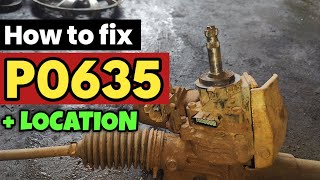




The information in this article is provided for general reference and educational purposes only. Vehicle specifications, procedures, and part compatibility can vary by production date, trim level, and region. Always consult your vehicle's factory service manual and verify part numbers before purchasing or performing repairs. Safety-critical components such as airbags, seat belts, and braking systems should be installed by a qualified professional.
- 🎬 Helpful Videos
- What Does P0635 Mean?
- Can I Drive With P0635?
- Common Causes
- Symptoms
- Diagnostic Flowchart
- Common Fixes & Costs
- DIY vs Professional
- Used vs. New Parts: Buying Guide
- What Happens If You Wait — Timeline
- Cost of Not Fixing It
- Diagnosis Steps
- When This Code Triggers (Freeze-Frame Conditions)
- Related Codes
- Climate & Environmental Factors
- How to Talk to a Mechanic About This Code
- Where to Take It: Dealer vs Independent vs Chain
- When to Walk Away From the Repair
- What Scan Tool You Need for This Code
- How to Clear the Code After You Fix It
- Will This Fail Emissions / State Inspection?
- Most Commonly Affected Vehicles
- Manufacturer-Specific Notes
- Real Owner Stories
- 2015 Honda Accord with intermittent P0635
- 2012 Chevrolet Silverado with P0635 and other electrical issues
- 2016 Subaru Forester with no power steering in winter
- How to Prevent This Code From Triggering
- Frequently Asked Questions
- What are the most common misdiagnoses for P0635?
- Does the Power Steering Control Module (PSCM) need to be reprogrammed after replacement?
- Can a weak battery cause code P0635?
- Why did my Subaru's power steering stop working in the cold?
- What is the clicking noise in my Hyundai's steering wheel?
- Can I just clear the code and keep driving?
- How can I prevent P0635 from happening?
- Key Takeaways
- 🎟️ Get 5% Off