

P0615 on 2006-2011 Cadillac STS: Starter Relay Circuit Fault, Causes, and Fixes
On a 2006-2011 Cadillac STS, P0615 usually means a no-start condition due to a faulty starter relay, a blown 'CRNK' or 'STARTER' fuse, or a wiring issue. The most likely fix is replacing the starter relay (GM Part #19116057) or the 10-amp starter fuse in the engine bay fuse box, costing under $30 for DIY.
- P0615 on your STS will almost certainly cause a no-start condition.
- Always check the easiest and cheapest things first: the 'CRNK' fuse and starter relay in the engine bay fuse box.
- If multiple, unrelated codes appear with P0615, suspect a chafed wiring harness near the transmission as per TSB PIC4740E.
- Starter replacement is a significantly different and more involved job depending on whether you have the V6 or V8 engine.
What's Unique About the 2006-2011 Cadillac STS
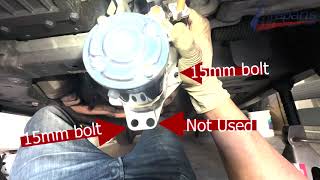
For the 2006-2011 Cadillac STS, which is built on the GM Sigma platform, the P0615 code is often straightforward, pointing to the starter relay or its fuse in the engine bay. However, a key issue specific to this GM platform is the potential for wiring problems. A Technical Service Bulletin (TSB #PIC4740E) confirms that P0615 can appear alongside numerous communication codes, all stemming from a compromised wiring harness near the transmission. This makes it crucial to consider wiring integrity if a simple relay or fuse swap doesn't solve the problem. Furthermore, starter motor replacement is notably different depending on the engine; on the V8 Northstar, the starter is located in the engine valley under the intake manifold, while on the 3.6L V6, it is located on the driver's side of the transmission, often requiring removal of the catalytic converter 🎬 Watch: Detailed walkthrough for replacing the 3.6L V6 starter. or steering linkage for access.
Diagnostic Flowchart
Tap your situation to follow the diagnostic path that matches what you're seeing on this vehicle.
Symptoms You May Notice
- Engine will not crank or start (most common symptom).
- Intermittent no-start condition.
- A single 'click' sound from the engine bay when turning the key, but the engine does not turn over.
- Check Engine Light is on.
- No sound at all when attempting to start.
- In rare cases, the starter motor continues to run after the engine has started (if the relay is stuck closed).
- Replacing the starter motor when the actual fault is a simple, inexpensive relay or fuse.
- Replacing the battery when it is merely drained from repeated failed starting attempts, not the root cause of the no-start condition.
- Overlooking a chafed wire in the harness near the transmission, especially when other communication codes are present.
Most Likely Causes
- Faulty Starter Relay 🔴 High Probability Relays are electromechanical switches with a finite lifespan; they are a common failure point in any vehicle's starting system due to heat and repeated cycles.
How to confirm: Locate the starter relay (labeled 'CRNK' or 'STARTER') in the engine compartment fuse box. Swap it with an identical relay from a non-critical circuit (e.g., the horn or rear defogger relay). If the car starts, the relay is bad. 🎬 Watch: This quick video shows how to swap the relay.
Typical fix: Replace the starter relay. The common OEM part is an ACDelco/GM relay.
Est. part cost: $10-$30 - Blown Starter Fuse 🔴 High Probability An underlying short or voltage spike in the circuit can cause the protective fuse to blow, which is its intended function.
How to confirm: Visually inspect the 'STARTER' or 'STRTR' fuse (typically a 10-amp mini fuse for the control circuit or a 30A J-Case fuse for the solenoid) in the engine compartment fuse box. Use a multimeter or test light to confirm if it has continuity.
Typical fix: Replace the blown fuse with one of the exact same amperage. If it blows again, a short circuit must be diagnosed.
Est. part cost: $1-$5 - Damaged or Corroded Wiring 🟡 Medium Probability GM TSB #PIC4740E specifically points to wiring harness issues near the transmission as a cause for P0615 and other codes on this platform. The harness can chafe against the transmission or other components, leading to shorts or open circuits.
How to confirm: Visually inspect the wiring harness leading to the starter motor and around the transmission for signs of chafing, melting, or corrosion. Check for voltage at the starter relay socket (pin 86) and the starter solenoid signal wire during a crank attempt.
Typical fix: Repair the damaged section of the wiring harness. This may involve soldering in a new wire section and protecting it with loom and heat shrink tubing.
Est. part cost: $5-$50 - Faulty Starter Motor or Solenoid ⚪ Low Probability
How to confirm: Confirm that the starter relay and its circuit are sending full battery voltage to the starter's solenoid 'S' terminal during a crank attempt. If voltage is present but the starter does not engage or only clicks, the starter motor is likely faulty.
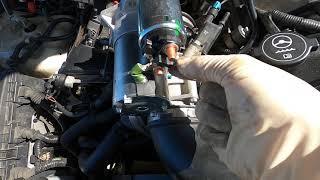
Typical fix: Replace the starter motor assembly. This is a complex job, especially on the Northstar V8 where the starter is under the intake manifold. 🎬 See how to access the starter on a Northstar V8.
Est. part cost: $150-$400
Rare But Worth Checking
- Faulty Powertrain Control Module (PCM): This is very rare. The PCM should only be considered after all other possibilities (relay, fuses, wiring, starter) have been exhaustively tested and ruled out.
- Defective Ignition Switch: While less common for this specific code, a failing ignition switch might not properly send the 'start' signal to the PCM, which could indirectly cause issues in the starter control circuit.
- Poor Ground Connection: A loose or corroded ground strap for the engine (G100/G101) or at the fuse box (G105) can create high resistance in the circuit, causing a voltage drop that the PCM may interpret as a fault.
Diagnosis Steps
- Read all diagnostic trouble codes with an OBD-II scanner. Note any other codes, especially communication (U-prefix) codes, as this points towards the TSB wiring issue.
- Check the battery. Ensure it is fully charged (above 12.4V) and the terminals are clean and tight. A weak battery can cause various electrical issues.
- Locate the engine compartment fuse box on the passenger side.
- Inspect the 'STARTER' or 'STRTR' fuse (usually a 10A mini fuse). Replace if blown.
- Identify the starter relay (usually labeled 'CRNK' or 'STARTER'). Swap it with an identical relay (like the horn or rear defogger relay) to quickly test if the relay is the problem. If the car starts, you've found the issue.
- If the issue persists, use a multimeter to check for voltage at the starter relay socket. With the key in the 'START' position, you should have constant 12V+ at pin 30 (battery feed) and 12V+ at pin 86 (signal from ignition/PCM). Pin 85 should show a good ground (near 0 ohms to chassis ground).
- Thoroughly inspect the wiring harness between the fuse box, starter, and transmission. Pay close attention to the area where the harness passes near the transmission bellhousing for any visible damage, corrosion, or chafing, as per TSB #PIC4740E.
- If all wiring, fuses, and the relay are confirmed good, test for voltage at the starter solenoid's signal terminal (the smaller wire) during a crank attempt. If 12V+ is present but the starter doesn't engage, the starter motor is the likely culprit.
Parts You'll Likely Need
- Starter Relay
(OEM #19116057 (superseded by 13500114))— This is the most common failure point in the circuit and the easiest to replace. It is a multi-purpose relay used in many GM vehicles.
Trusted brands: ACDelco (GM Genuine), Standard Motor Products, Bosch
OEM price range: $15-$30
Aftermarket price range: $10-$25 - Mini Fuse — The protective fuse for the starter control circuit can blow due to a momentary short or voltage spike.
Trusted brands: Bussmann, Littlefuse
OEM price range: $1-$5
Aftermarket price range: $1-$5 - Starter Motor
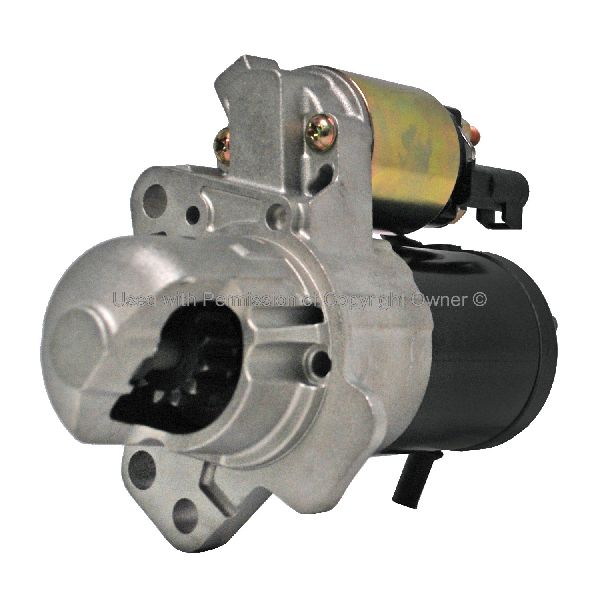
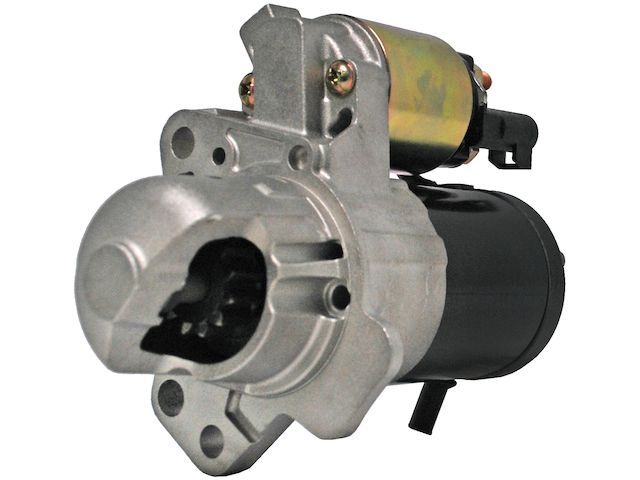
(OEM #Varies by engine (e.g., ACDelco 337-1101 for V8))— If the relay and circuit are working but the engine won't crank, the starter motor itself has likely failed.
Trusted brands: ACDelco, Bosch, Denso
OEM price range: $250-$450
Aftermarket price range: $150-$300
Related Codes That Often Appear With This One
- U0100 — As cited in TSB #PIC4740E, communication codes like U0100 (Lost Communication With ECM/PCM) often appear with P0615 when a wiring harness issue is the root cause.
- P0700 — This code indicates a transmission control system malfunction. Its presence with P0615 reinforces the likelihood of a wiring issue near the transmission, as mentioned in TSB #PIC4740E.
- U-codes (various) — TSB #PIC4740E lists a wide range of U-prefix codes (U0073, U0109, U0121, etc.) that can be set along with P0615 due to the same compromised transmission wiring harness.
Technical Service Bulletins (TSBs) & Recalls
- PIC4740E: Mentions that P0615 can be stored with numerous other codes (C0242, U0100, P0700, etc.) due to communication issues, and advises inspecting the transmission wiring harness for chafing as the root cause.
Platform-Specific Known Issues
- TSB #PIC4740E documents an issue where chafed or damaged wiring near the transmission can cause P0615 along with a variety of other communication and module-related fault codes. An inspection of the transmission harness is recommended if multiple seemingly unrelated codes are present.
- On V8 Northstar models, the starter is located under the intake manifold, making replacement a labor-intensive job that involves removing the fuel rail and intake.
- On 3.6L V6 models, the starter is located on the driver's side, but access is still difficult, often requiring removal of the steering linkage or partial removal of the catalytic converter.
Mechanic-Grade Diagnostic Values
- Starter Relay Socket Pin 30 Voltage — expected: ~12.6V DC (Battery Voltage). Failure: 0V indicates a blown 'STRTR' fuse or a break in the power wire from the battery.
- Starter Relay Socket Pin 86 Voltage — expected: ~12V DC only when the ignition key is turned to the 'START' position.. Failure: 0V indicates a fault in the ignition switch, PCM, or the signal wire.
- Starter Relay Socket Pin 85 Ground Continuity — expected: < 1.0 Ω to chassis ground.. Failure: High or infinite resistance (O.L.) indicates a broken or corroded ground wire for the relay control circuit.
- Starter Relay Coil Resistance (pins 85 and 86 on relay) — expected: Typically 70-100 Ω.. Failure: Infinite resistance (O.L.) indicates a broken coil; very low resistance indicates a shorted coil.
Scan Tool Commands That Help
- GM Tech2 / GDS2: Starter Relay / Crank Request Bidirectional Control — To test the PCM's ability to command the starter relay on and off, isolating the control circuit from the ignition switch. This helps determine if the fault is in the PCM output driver or the wiring to the relay.
Wiring & Ground Locations
- Underhood Fuse Block — Front of the engine compartment on the passenger side of the vehicle.. Contains the 'STARTER' or 'CRNK' relay and the 'STRTR' fuse, which are the primary components of the starter relay circuit.
- G100 / G106 — On the rear side of the right cylinder head.. This is a primary engine ground. A poor connection here can cause a significant voltage drop during cranking, potentially triggering P0615 or a no-start condition.
- G101 — Near the left front strut tower, at the bottom of the inside fender well.. This ground serves the Engine Control Module (ECM) and Transmission Control Module (TCM). A poor connection can cause various powertrain codes, including P0615.
- G105 — At the back of the underhood fuse block.. Provides a ground path for several components and relays within the fuse block. Corrosion or a loose connection here can cause intermittent relay operation.
- Starter Relay Pins — In the underhood fuse block socket for the starter relay.. Pin 30: High-current power from battery. Pin 87: High-current output to starter solenoid. Pin 86: Low-current control signal from PCM/ignition. Pin 85: Low-current ground for relay coil. Knowing the pinout is essential for testing.
Real Owner Repair Stories
- YouTube channel 'dorman products' (2007 Cadillac STS) — No crank, no start condition. The starter had already been replaced but the problem persisted.
❌ Tried (didn't work) Replacing the starter motor.
✅ What actually fixed it The 10-amp 'STARTER' fuse in the underhood fuse box was blown. Replacing the fuse resolved the no-start condition.
OEM Part Supersession History
19116057→13500114— Part consolidation and design update by GM.
Heads up: Part number 13500114 is a direct replacement and is a common multi-purpose relay used across many GM vehicles. It also replaces numerous other part numbers including 12193606, 19115080, and 15328866.
Model Year Variations Within This Range
- 2008-2011: The 2008 model year introduced a significant facelift. The base 3.6L V6 engine (LY7) was updated to the direct-injection LLT version, increasing power to 302 hp. The exterior received a new, larger grille inspired by the Escalade and CTS. Fuse box labels were also slightly updated.
- 2011 only: For the final model year, the 4.6L Northstar V8 engine option was discontinued, making the 3.6L V6 the only available engine.
Helpful Videos

Used OEM Parts in Stock


New Aftermarket Parts Available


The information in this article is provided for general reference and educational purposes only. Vehicle specifications, procedures, and part compatibility can vary by production date, trim level, and region. Always consult your vehicle's factory service manual and verify part numbers before purchasing or performing repairs. Safety-critical components such as airbags, seat belts, and braking systems should be installed by a qualified professional.
- Cadillac STS:
- 🎬 Helpful Videos
- 🛍️ Shop This Part
- What's Unique About the 2006-2011 Cadillac STS
- Diagnostic Flowchart
- Symptoms You May Notice
- Most Likely Causes
- Rare But Worth Checking
- Diagnosis Steps
- Parts You'll Likely Need
- Related Codes That Often Appear With This One
- Technical Service Bulletins (TSBs) & Recalls
- Platform-Specific Known Issues
- Mechanic-Grade Diagnostic Values
- Scan Tool Commands That Help
- Wiring & Ground Locations
- Real Owner Repair Stories
- OEM Part Supersession History
- Model Year Variations Within This Range
- 🎟️ Get 5% Off