

P0615 on 2013-2015 Cadillac ATS: Starter Relay Circuit Fault Causes and Fixes
On a 2013-2015 Cadillac ATS, code P0615 typically indicates a fault in the starter relay circuit, often causing a no-start condition. The most common causes are a bad starter relay or a known wiring harness issue near the transmission, as cited in GM Technical Service Bulletin #PIC4740E. This TSB is critical if other communication codes (U-codes) are present.
- P0615 on a 2013-2015 ATS means there's a problem with the starter relay circuit, usually causing a no-start.
- Before buying any parts, check for other trouble codes. If you see communication codes (U-codes) or a P0700, the problem is very likely the transmission wiring harness, as noted in TSB #PIC4740E.
- If P0615 is the only code, the simplest first step is to swap the starter relay with an identical one in the fuse box to see if that resolves the issue.
- Do not immediately assume the starter is bad; the fault is often in the control circuit (relay or wiring) leading to it.
What's Unique About the 2013-2015 Cadillac ATS
While P0615 can be a simple relay failure on many cars, on the Cadillac ATS and its platform mates, it is frequently linked to a more complex electrical problem. A critical Technical Service Bulletin (TSB), #PIC4740E, connects this code with numerous other communication and module codes. This bulletin points to a specific issue where the transmission wiring harness can have unseated pins or chafe against a bracket on the passenger side where the transmission bell housing meets the engine, causing P0615 and a host of other seemingly unrelated electrical faults.
Diagnostic Flowchart
Tap your situation to follow the diagnostic path that matches what you're seeing on this vehicle.
Symptoms You May Notice
- Engine will not crank or start
- Intermittent no-start condition
- Single clicking sound from the engine bay or fuse box when trying to start.
- Check Engine Light (MIL) is illuminated
- Multiple other warning lights may appear (related to TSB)
- Transmission may shift harshly (related to TSB)
- Door locks may cycle while driving (related to TSB)
- Dash lights and electronics may reset when attempting to crank.
- Replacing the starter motor when the actual fault is in the wiring harness or is a simple relay failure.
- Replacing the battery when the issue is a bad ground or a wiring short causing a parasitic drain.
- Replacing the underhood fuse box when the issue is a loose main ground cable attached near it.
Most Likely Causes
- Wiring Harness Issue at Transmission 🔴 High Probability As documented in TSB #PIC4740E, the transmission harness on the ATS is prone to having unseated connector pins or chafing against a mounting bracket, causing a variety of electrical faults, including P0615. This is especially true if multiple communication (U-series) codes are present.
How to confirm: Visually inspect the main transmission wiring harness connector (X1) for pins that are not fully seated. Also, inspect the harness for any signs of chafing or damage, particularly on the passenger side where the transmission bell housing meets the engine block. A 'wiggle test' on the harness while an assistant tries to start the car may temporarily restore function and confirm the location of the fault.
Typical fix: Reseat any loose pins in the connector. If the harness is chafed, it must be repaired by soldering and heat-shrinking the damaged wires, and then rerouted or protected with loom to prevent future damage.
Est. part cost: $0-$100 - Faulty Starter Relay 🟡 Medium Probability
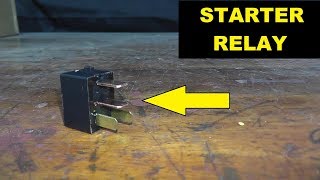
How to confirm: Locate the starter relay (often labeled KR27) in the under-hood fuse box. Swap it with an identical relay from a non-critical circuit 🎬 Watch: A quick guide on how to test and replace relays. (like the horn or rear defogger). If the car starts, the relay is bad.
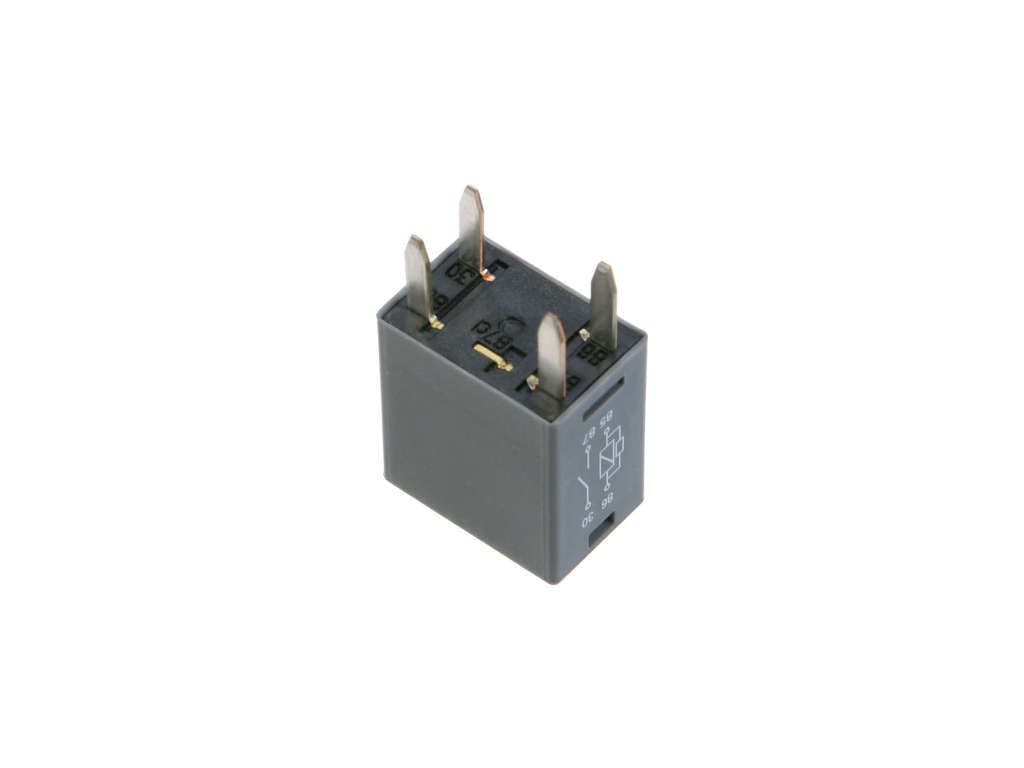
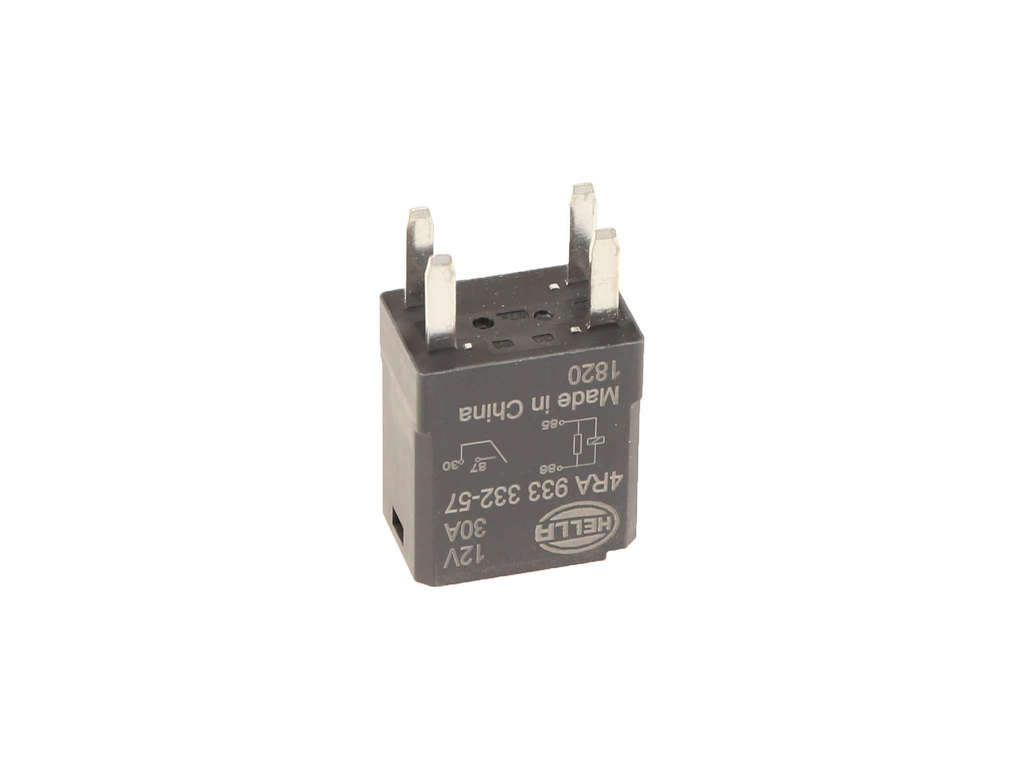
Typical fix: Replace the starter relay. The common part is a 4-pin, 35A, 12V relay.
Est. part cost: $15-$50 - Weak or Faulty Battery / Poor Connections ⚪ Low Probability High electrical demand can expose weak points in the charging and starting system. A loose ground cable is a known issue on this platform.
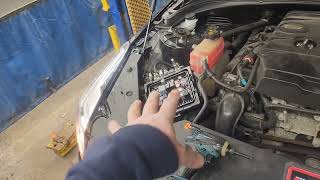
How to confirm: Test the battery voltage; it should be above 12.4V at rest and not drop below 10V during an attempted crank. Check that the battery terminals are clean and tight. Crucially, inspect the main engine ground strap near the fuse box for looseness or corrosion. A loose ground can get extremely hot during a crank attempt 🎬 Watch: This mechanic finds a dangerously hot loose ground cable. and cause a no-start.
Typical fix: Charge or replace the battery. Clean and tighten all battery and ground connections, especially the main engine-to-chassis ground.
Est. part cost: $0-$250 - Faulty Starter Motor or Solenoid ⚪ Low Probability
How to confirm: After confirming the relay and wiring are good, check for 12V at the starter solenoid's signal wire (often a yellow wire) when an assistant tries to start the engine. If voltage is present but the starter doesn't engage, the starter is likely faulty.
Typical fix: Replace the starter motor assembly.
Est. part cost: $200-$450
Rare But Worth Checking
- Faulty Engine Control Module (ECM): This is a last resort. The ECM's internal driver for the starter relay can fail, but all other possibilities (wiring, relay, starter) must be exhaustively ruled out first. This is more likely if the vehicle was subjected to improper jump-starting or had a sketchy aftermarket alarm installed.
Diagnosis Steps
- Read all stored DTCs with a quality OBD-II scanner. Note if any communication (U-codes) or TCM codes (like P0700) are present with P0615. The presence of these codes makes the TSB wiring issue the primary suspect.
- Check the battery. Ensure it is fully charged (12.4V+) and that the terminals and main ground straps are clean and tight. A loose ground near the fuse box is a known issue and can get very hot.
- Locate the starter relay in the under-hood fuse box. Try swapping it with a known-good, identical relay from another circuit (e.g., horn).
- If multiple codes are present, immediately follow the instructions in TSB #PIC4740E. Inspect the transmission wiring harness connector for unseated pins and the harness itself for chafing near the bell housing on the passenger side.
- If P0615 is the only code and the relay is good, inspect the wiring and connector pins at the starter relay socket for corrosion or damage.
- Use a multimeter to check for 12V power at the starter solenoid's signal wire while an assistant attempts to crank the engine. If power is present, the starter is likely bad. If no power is present, the fault is upstream in the wiring, relay socket, or ECM.
- If all else fails, the problem may be with the ECM's starter relay driver circuit, which requires professional diagnosis.
Parts You'll Likely Need
- Starter Relay
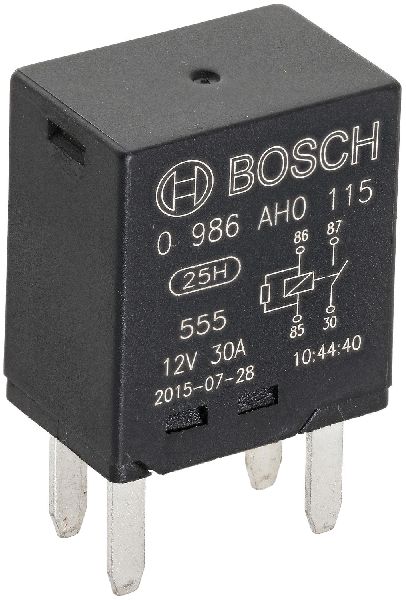
(OEM #ACDelco D1786C (GM 19116057))— This is a common failure point and the easiest part to replace as a first step. It is a multi-purpose relay used in many GM vehicles.
Trusted brands: ACDelco, Bosch, Standard Motor Products
OEM price range: $25-$50
Aftermarket price range: $15-$30 - Starter Motor
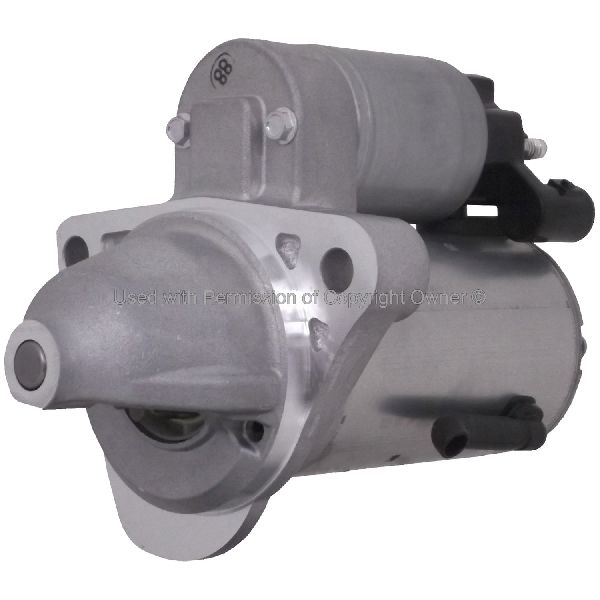
(OEM #12645299 (For 3.6L V6), 12627135 (For 2.0L Turbo with Stop/Start))— If the relay and wiring are confirmed to be good, the starter motor itself is the next logical point of failure. Part numbers vary by engine. 🎬 See this step-by-step walkthrough for replacing the 2.0L starter.
Trusted brands: ACDelco (OEM), Denso, A-Premium
OEM price range: $170-$320
Aftermarket price range: $70-$200
Related Codes That Often Appear With This One
- P0700 — Indicates the Transmission Control Module (TCM) has requested the check engine light. This code is specifically listed in TSB #PIC4740E as appearing with P0615 due to the transmission harness issue.
- U0100, U0101, U0121, U0140 — These are communication loss codes with the ECM, TCM, ABS, and Body Control Module, respectively. Their presence alongside P0615 strongly points to the wiring harness problem described in TSB #PIC4740E.
Technical Service Bulletins (TSBs) & Recalls
- PIC4740E: Addresses conditions like no-crank, multiple warning lights, and communication DTCs (including P0615) caused by a compromised transmission wiring harness. This is the most critical document for diagnosing this code when other faults are present.
Platform-Specific Known Issues
- TSB #PIC4740E documents a known issue where P0615, often accompanied by numerous communication codes, is caused by unseated pins in the transmission connector or a chafed wiring harness near the engine/transmission bell housing.
- A loose main ground cable connection near the underhood fuse box has been identified as a cause for a no-crank condition. The cable can become extremely hot to the touch due to high resistance.
Mechanic-Grade Diagnostic Values
- System Voltage During Crank Attempt — expected: Should remain above 9.5V - 10V.. Failure: A drop below 9.5V indicates a weak battery or excessive current draw from the starter motor.
- Starter Relay Control Circuit Voltage (at relay socket) — expected: Should show battery voltage (approx. 12V) when the ignition is turned to the START position.. Failure: No voltage indicates a problem upstream in the ignition switch, BCM, or ECM circuits.
- Starter Relay Ground Circuit Resistance — expected: Less than 5.0 Ohms, with some sources suggesting less than 0.1 Ohms.. Failure: A reading higher than 5.0 Ohms indicates high resistance or an open in the ground circuit for the relay.
- Starter Relay Coil Resistance — expected: Typically between 20-200 Ohms across terminals 85 and 86.. Failure: A reading of infinity (OL) indicates an open coil, while a reading near zero indicates a shorted coil. The relay should be replaced.
Scan Tool Commands That Help
- GM Tech 2 / GDS2: Starter Relay Command / Output Control — After confirming the relay itself is good, a technician can use a bidirectional scan tool to command the ECM to energize the starter relay. If the relay clicks and provides power to the starter signal wire, it confirms the ECM driver and the relay itself are working, pointing the diagnosis toward the starter motor or its power feed. If the relay does not activate, it points to a wiring issue between the ECM and relay or an internal ECM fault.
Wiring & Ground Locations
- G110 — On the upper rear of the cylinder head (for 2.0L/2.5L) or the left rear of the engine above the exhaust manifold (for 3.6L).. This is a primary engine ground. A poor connection here can cause a variety of issues, including problems with the ECM which controls the starter relay.
- G103 — Located on the cowl in the left rear of the engine compartment, often above the brake booster.. This ground serves multiple modules, including the Body Control Module (BCM) and the Data Link Connector (DLC). A fault here can cause communication issues and problems with the crank request signal that originates from the BCM.
- Main Ground near Fuse Box — A heavy gauge ground cable attached to the chassis near the underhood fuse block/jump start terminal.. This is a high-current ground path. High resistance from a loose or corroded connection here can prevent the starter from drawing enough amperage to crank, and the cable stud may become extremely hot during a start attempt.
- X50A — The main connector block at the underhood fuse block.. This is a central hub for many circuits. Corrosion or unseated pins within this large connector can interrupt power or control signals for the starting circuit.
Real Owner Repair Stories
- YouTube video '2014 Cadillac ATS Won't Crank or Start...1 Click...Fixed...' (2014 Cadillac ATS) — No crank, no start condition with a single click sound. All dash lights worked normally.
❌ Tried (didn't work) Swapping the starter relay with a known-good relay., Replacing the starter relay with a new part., Cleaning battery terminals., Attempting to jump-start the vehicle., Testing the starter solenoid directly with a power probe (it did not engage).
✅ What actually fixed it The final root cause was a loose main ground cable connection near the underhood fuse box. The connection point was getting extremely hot due to high resistance during crank attempts. Tightening this ground connection resolved the no-start issue.
"I Checked Everything" — The Actual Cause
- While a smoke test is not applicable, a similar pattern exists for electrical diagnosis. A technician may confirm the starter relay is good via a swap test and that the starter motor is functional via a bench test or direct power probe. Despite these components testing 'good,' the vehicle still won't crank. The hidden cause, as seen in a real-world repair, was a high-resistance connection at the main ground cable near the fuse box, which only failed under the high-amperage load of a crank attempt and was identified by the heat it generated.
When the Usual Fixes Don't Work
- While the TSB pointing to the transmission harness is a critical diagnostic path, especially with communication codes present, it is not the only possible wiring failure. In a documented case, a 2014 ATS with a no-crank condition had a good relay and no apparent issues at the transmission harness. The actual cause was a loose main ground connection near the underhood fuse block that became hot to the touch during starting attempts. This demonstrates that even if the TSB's specific fault isn't found, other primary power and ground circuits must still be thoroughly inspected before moving to more complex diagnoses.
OEM Part Supersession History
GM 19116057→GM 13500114— Part has been updated by the manufacturer.
Heads up: The new part number is the correct service replacement for the original.GM 12638920, 12601721, 12598756, 12588493→GM 12645298— Consolidation of part numbers for V6 engine applications across multiple GM platforms.
Heads up: While this supersession is for a common GM V6 starter, always verify the exact part number for your specific engine (2.0T, 2.5L, or 3.6L) and options (e.g., Stop/Start) using the vehicle's VIN.
Model Year Variations Within This Range
- 2013-2015: No significant variations related to the P0615 code, starter relay, or its circuit have been documented within this model year range. The underhood fuse block, which contains the starter relay, shares the same layout for these years.
Helpful Videos
Used OEM Parts in Stock


New Aftermarket Parts Available



The information in this article is provided for general reference and educational purposes only. Vehicle specifications, procedures, and part compatibility can vary by production date, trim level, and region. Always consult your vehicle's factory service manual and verify part numbers before purchasing or performing repairs. Safety-critical components such as airbags, seat belts, and braking systems should be installed by a qualified professional.
- Cadillac ATS:
- 🎬 Helpful Videos
- 🛍️ Shop This Part
- What's Unique About the 2013-2015 Cadillac ATS
- Diagnostic Flowchart
- Symptoms You May Notice
- Most Likely Causes
- Rare But Worth Checking
- Diagnosis Steps
- Parts You'll Likely Need
- Related Codes That Often Appear With This One
- Technical Service Bulletins (TSBs) & Recalls
- Platform-Specific Known Issues
- Mechanic-Grade Diagnostic Values
- Scan Tool Commands That Help
- Wiring & Ground Locations
- Real Owner Repair Stories
- "I Checked Everything" — The Actual Cause
- When the Usual Fixes Don't Work
- OEM Part Supersession History
- Model Year Variations Within This Range
- 🎟️ Get 5% Off