

OBD-II Code P0615: Starter Relay Circuit Malfunction
What P0615 means, why it triggers, and how to fix it
- Code P0615 indicates a critical failure in the 12-volt starting circuit, resulting in an immediate no-start condition that will leave you stranded.
- Diagnose the most common cause for free in under 5 minutes by swapping the starter relay with an identical non-essential relay, like the horn.
- Verify your battery maintains at least 12.6V at rest and 10.0V during cranking before replacing any starter circuit components.
- Never replace the $200+ starter motor without first testing the control circuit, as P0615 specifically flags a failure in the low-voltage relay signal.
- Bypass any aftermarket remote starters or alarms spliced into the ignition wiring, as poor connections in these systems frequently trigger P0615.
What Does P0615 Mean?

Code P0615 means the Powertrain Control Module (PCM) detected a fault in the starter relay control circuit. This circuit allows the engine to crank. When it fails, the PCM cannot engage the starter motor, resulting in a no-start condition. The PCM logs this code upon detecting abnormal voltage, high resistance, or an open circuit on the relay's control side.
Technical definition: The SAE/ISO definition for P0615 is "Starter Relay Circuit Malfunction." 🎬 Watch: A complete breakdown of P0615 symptoms and diagnosis. The PCM uses this circuit to send a low-amperage signal to the starter relay, closing a high-amperage circuit to power the starter motor. If the PCM detects voltage outside the specified range during a start command, it triggers P0615.
Can I Drive With P0615?
No — Do Not Drive. If this code is present, your vehicle will likely not start. Even if it starts intermittently, you risk being stranded. Address this critical starting system failure immediately to avoid being left inoperable.
Common Causes

- Faulty Starter Relay (Very Common) — The starter relay is a small electromagnetic switch controlling the high-amperage current to the starter motor. Relays fail from age, internal coil burnout, or stuck contacts, making this the most frequent cause.
- Weak or Failing Battery (Common) — A battery with low voltage causes the PCM to receive an out-of-range voltage reading from the starter relay circuit during a cranking attempt, falsely triggering the P0615 code.
- Blown Fuse or Fusible Link (Common) — A blown fuse in the starter circuit interrupts power and immediately causes this code. This is often a symptom of an underlying short circuit in the wiring or a failing component drawing too much current.
- Wiring or Connector Issues (Common) — Wiring between the ignition switch, PCM, relay, and starter becomes corroded, loose, frayed, or shorted over time. Corrosion at battery terminals or damaged pins creates high resistance and triggers the code.
- Faulty Neutral Safety Switch / Transmission Range Sensor (Common) — This switch ensures the vehicle only starts in Park or Neutral. If it fails, it stops the correct signal from reaching the PCM, preventing starter relay activation and leading to a P0615 code.
- Defective Ignition Switch (Less Common) — The ignition switch sends the initial 'start request' signal. Worn internal contacts prevent a proper signal from reaching the PCM and starter relay, leading to a P0615 code.
- Faulty Aftermarket Remote Starter or Alarm (Less Common) — Improperly installed aftermarket security systems splice into the starter circuit. Poor connections or component failure introduce electrical faults that trigger P0615 and damage the PCM.
- Faulty Starter Motor or Solenoid (Less Common) — A problem within the starter motor or its attached solenoid creates excessive current draw that the PCM interprets as a control circuit fault.
- Powertrain Control Module (PCM) Failure (Rare) — The driver circuit inside the PCM that controls the starter relay fails in rare cases. Suspect this only after meticulously eliminating all wiring, ground, and component possibilities.
Symptoms

- Engine Won't Crank or Start — Turning the key or pressing the start button results in nothing happening, or only a single click from the relay.
- Intermittent Starting — The vehicle fails to start on some attempts but starts normally on others, pointing to a failing relay or a loose connection.
- Clicking Noise From Relay Area — A distinct clicking sound from the fuse box area indicates the relay is attempting to engage but failing to send power to the starter.
- Starter Engages Without Key Input — If starter relay contacts weld shut, the starter motor continues to run without user input, causing severe damage to the starter and flywheel.
- Check Engine Light On (also visible on scanner) — The Malfunction Indicator Lamp (MIL) illuminates on the dashboard.
Common Fixes & Costs
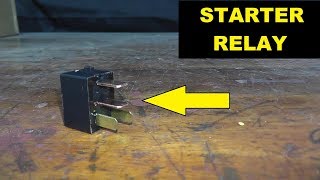
- Replace Starter Relay 🎬 See this walkthrough on how to test and replace relays. — Parts: $20-$50, Labor: $80-$120, ~0.5 hr book time (DIY)
- Replace Blown Fuse — Parts: $1-$5, Labor: $0, ~0.1 hr book time (DIY)
- Repair Wiring or Connectors — Parts: $10-$30, Labor: $50-$150, ~1.5 hr book time (Intermediate)
- Replace Neutral Safety Switch — Parts: $50-$150, Labor: $100-$200, ~1.2 hr book time (Intermediate)
- Replace Starter Motor/Solenoid — Parts: $200-$500, Labor: $150-$300, ~2.5 hr book time (Advanced)
- Replace Powertrain Control Module (PCM) — Parts: $600-$900, Labor: $200-$300, ~1.5 hr book time (Professional)
DIY vs Professional
- Replace Blown Fuse — Beginner:
Tools: Fuse puller or needle-nose pliers - Replace Starter Relay — Beginner:
Tools: None. Usually located in an accessible fuse box. - Repair Wiring or Connectors — Beginner:
Tools: Multimeter, wire strippers, crimpers, heat shrink tubing, soldering iron (optional). - Replace Neutral Safety Switch — Beginner:
Tools: Wrench/socket set, multimeter, vehicle-specific service manual. - Replace Starter Motor/Solenoid — Beginner:
Tools: Jack and jack stands, socket set with extensions, wrenches, safety glasses.
Used vs. New Parts: Buying Guide
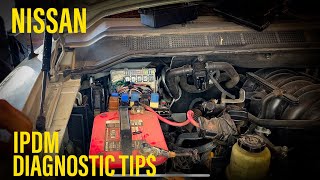
When a used part is worth it: For expensive components like a starter motor on a high-mileage vehicle or a complex module like a TIPM/IPDM 🎬 Watch: Expert tips for diagnosing Nissan IPDM and relay issues., a used or remanufactured part offers significant savings. A used part from a low-mileage, accident-damaged vehicle is often a good value.
Donor-vehicle mileage cap: roughly under 60000 miles for the part to have meaningful remaining life.
Donor quality checklist:
- Verify the part number matches exactly; electronic modules are rarely interchangeable.
- For TIPM/IPDM, favor specialized rebuilders who test and warranty their work over a standard junkyard part.
- For starters, look for remanufactured units from reputable brands (Bosch, Denso, BBB) which include new solenoids and wear items.
Decision logic:
- If The part is a simple relay or fuse → Always buy new; the cost is minimal and the risk of a used part failing is not worth the tiny savings.
- If The part is a starter motor and the vehicle has over 120K miles → A quality remanufactured starter is a good balance of cost and reliability. A used one is a gamble.
- If The part is a TIPM or IPDM and the new OEM part is over $1000 → A professionally remanufactured unit with a warranty is a viable option and saves over 50%.
Warranty tradeoff: Used parts from a salvage yard typically have a 30-90 day warranty. Remanufactured parts often come with a 1-year to lifetime warranty. New OEM parts carry a 1-2 year warranty.
Worst-case if a used part fails: $400-$800 if a used starter or module fails after the warranty period, requiring repeat labor costs plus the price of another part.
What Happens If You Wait — Timeline
- 0-4 weeks: Intermittent no-start. The car fails to crank on the first try but usually starts after a few attempts. A single 'click' might be heard. The P0615 code is stored. (MPG impact: 0%% · Added cost: $0)
- 1-3 months: Failure becomes more frequent. It takes many attempts to start the car, or it fails completely on a cold morning and works later in the day. The risk of being stranded increases significantly. (MPG impact: 0%% · Added cost: $75-$250 for a potential tow service.)
- 3-6 months: Complete and permanent no-start condition. The relay or wiring has failed entirely. Repeated start attempts drain and potentially damage the battery, masking the original P0615 fault. (MPG impact: 0%% · Added cost: $150-$300 for a new battery if it is repeatedly drained and fails, plus the cost of the tow.)
- Immediate to Months (Rare Case): Catastrophic failure where the starter relay contacts weld themselves into the 'ON' position. The starter motor remains engaged even after the engine is running, destroying the starter motor and damaging the flywheel. (MPG impact: 0%% · Added cost: $800-$1500+ for a new starter and flywheel, requiring transmission removal.)
Cost of Not Fixing It
- Immediate: Vehicle may not start, leaving you stranded. This is the most significant and immediate consequence. (Added cost: $75-$250 for a tow service.)
- Days to Weeks: Intermittent starting becomes complete failure. Repeated start attempts with a clicking relay drain the battery, masking the original issue. (Added cost: $150-$300 for a new battery if it's drained excessively and fails.)
- Weeks to Months (Rare Case): If the failure is a 'stuck on' relay, the starter motor remains engaged with the engine running, destroying the starter motor and potentially damaging the teeth on the engine's flywheel. (Added cost: $800-$1500+ for starter and flywheel/flexplate replacement, which requires transmission removal.)
Diagnosis Steps

- Inspect Battery and Cables
Ensure the battery has a full charge. A healthy 12V battery has a resting voltage of 12.6V or higher. During cranking, voltage must not drop below 10.0V. Check terminals and cable ends for corrosion and ensure they are tight. Poor connections cause low voltage and trigger the code.
Tools: Digital multimeter, wrench set, terminal cleaning brush (Beginner) - Swap the Starter Relay
Swap the starter relay with an identical relay from a non-essential circuit in the same fuse box (e.g., horn, wipers). If the car starts after the swap, the original relay is faulty and requires replacement.
Tools: None (Beginner) - Check for Blown Fuses
Locate the fuse box using your owner's manual. Find the fuse(s) for the starter control circuit and starter motor. Visually inspect for a break in the filament. If blown, replace it with a new fuse of the exact same amperage.
Tools: Fuse puller, replacement fuses (Beginner) - Perform a 'Wiggle Test' on Wiring
While an assistant holds the key in the 'start' position, gently wiggle the wiring harness and connectors leading to the starter relay, fuse box, and starter motor. If you hear a click or the starter tries to engage, you have found the loose or corroded connection.
Tools: Flashlight, helper (Intermediate) - Test for Voltage at the Relay Socket
Remove the relay. Use a multimeter to check for voltage at the relay's control circuit terminal in the fuse box when an assistant turns the ignition to 'start'. You should see a command signal (battery voltage or ground, depending on design). No signal points to an upstream problem (ignition switch, neutral safety switch, PCM).
Tools: Digital multimeter, wiring diagram (Intermediate) - Test for Voltage at the Starter Solenoid
Have a helper hold the key in 'start' while you use a multimeter to check for voltage at the small signal wire (S-terminal) on the starter solenoid. If you have 12V here but the starter doesn't engage, the starter motor or solenoid is faulty. If you have 0V, the problem is in the relay or wiring before the starter.
Tools: Digital multimeter, safety glasses, helper (Advanced) - Advanced: Test Relay Coil and Ground Circuit
With the relay removed, measure the resistance between the two coil terminals (usually pins 85 and 86). It should be between 60 and 200 ohms. Next, check the resistance between the ground pin in the relay socket and a clean chassis ground; it should be less than 0.1 ohms. High resistance indicates a faulty relay or bad ground.
Tools: Digital multimeter, service manual (Advanced) - Advanced: Perform a Voltage Drop Test
Connect the positive multimeter lead to the battery's positive post and the negative lead to the starter relay's power supply pin. A reading over 0.2 volts indicates a positive-side wiring problem. Connect the negative lead to the battery's negative post and the positive lead to the relay's ground circuit pin (while activated). A reading over 0.2 volts points to a high-resistance ground.
Tools: Digital multimeter, wiring diagram (Advanced) - Advanced: Backprobe PCM for Output Signal
Using a backprobe pin, test the starter relay control wire at the PCM connector. Have a helper attempt to start the car. You should see the PCM send a voltage or ground signal. If all wiring and components are good but this signal is absent, the PCM's driver circuit is faulty.
Tools: Digital multimeter with backprobe kit, wiring diagram (Professional)
When This Code Triggers (Freeze-Frame Conditions)
- Engine State: Cranking (The fault is logged when the key is turned or the start button is pressed.)
- Engine RPM: 0 RPM (The code sets because the PCM commands the starter, but detects a circuit fault before the engine begins to crank.)
- Battery Voltage: 10.5-12.0V (Voltage is measured during the crank attempt. A reading below 10.0V indicates a weak battery, which also triggers the code.)
- Commanded Starter Relay: ON (Freeze frame shows the PCM was attempting to energize the starter relay when the fault was detected.)
Related Codes
- P0616 — Stands for 'Starter Relay Circuit Low.' This code indicates the PCM detected lower-than-expected voltage. Diagnostically, this points to high resistance from a corroded wire, a poor ground connection, or an open circuit.
- P0617 — Stands for 'Starter Relay Circuit High.' This code means the PCM detected higher-than-expected voltage. This almost always indicates a short to power, where the control circuit receives voltage from another source when it shouldn't.
- P0512 — Stands for 'Starter Request Circuit.' This code relates to the input signal *to* the PCM from the ignition switch or Body Control Module. P0615 relates to the output command *from* the PCM to the relay. If you have P0512, the problem is likely the ignition switch or its wiring.
- BCM Codes (e.g., B1213) — Body Control Module (BCM) codes related to the ignition switch or start request signal accompany a P0615. In many modern cars, the BCM receives the start request first and communicates it to the PCM. A fault in the BCM interrupts this chain of command.
Climate & Environmental Factors
- Cold Weather: Low temperatures increase a battery's internal resistance, reducing its cranking power. This causes system voltage to drop low enough during a start attempt to trigger a P0615 code, even if the starter circuit is otherwise healthy. Cold also makes old wiring and plastic connectors brittle and more likely to crack or fail.
- High Humidity / Salt Belt Regions: Moisture and road salt accelerate corrosion on battery terminals, ground straps, fuse box terminals, and wiring connectors. This corrosion creates high resistance (voltage drops) in the starter relay circuit, which is a primary cause of the P0615 code.
How to Talk to a Mechanic About This Code
Say this: "My car has an intermittent no-start condition and is showing a P0615 code. I'd like to book a diagnostic appointment. Please start by checking the simple things like the starter relay, fuses, and associated wiring before quoting a more expensive part like the starter motor or PCM."
This signals to the shop that you've done your research and understand the common causes. It directs the technician to perform a logical, cost-effective diagnosis, preventing them from immediately suggesting the most expensive repair (like a new starter) which is a common misdiagnosis for this code.
Avoid saying:
- 'My car won't start, just fix it.'
- 'My check engine light is on, can you just look at it?'
- 'I think I need a new starter.'
Questions to ask before authorizing the repair:
- Did you test the starter relay itself, or just swap it?
- Did you check for voltage at the relay socket and at the starter solenoid's signal wire? What were the readings?
- If you're recommending a starter replacement, can you confirm you have 12 volts at the solenoid signal wire but the starter isn't engaging?
- If you're recommending a PCM, can you confirm it is failing to send the 'start' signal even though all wiring and components have tested good?
- What is the warranty on this repair, for both parts and labor?
Where to Take It: Dealer vs Independent vs Chain
- Dealer:
Recommended only if the vehicle is under warranty or has a known, complex, manufacturer-specific module failure that an independent shop cannot program or source.
Best for: Vehicles under warranty., Known complex issues like a Chrysler TIPM or Nissan IPDM failure that require a specific module replacement and programming., Recalls or TSBs related to the P0615 code.
Downsides: Highest labor rates., Defaults to replacing an entire expensive module (like a TIPM) instead of attempting a wiring repair. (Typical cost: +50% vs. baseline) - Independent Shop:
Best fit for most P0615 situations. A good independent technician follows a logical diagnostic path from the cheapest/most common causes (relay, wiring) to the more expensive ones, saving you money.
Best for: Out-of-warranty vehicles., Standard electrical diagnostics like tracing wires, testing relays, and checking for voltage drops., Cost-effective repairs on common vehicles.
Downsides: Quality varies greatly; look for ASE certifications and good reviews., Lacks the expensive, specialized tools to program certain replacement modules. (Typical cost: +0% vs. baseline) - Chain Shop:
Avoid for P0615 diagnosis. While they might replace a battery or a simple relay, they are generally not equipped for the circuit testing required to accurately diagnose this code, increasing the risk of paying for parts you don't need.
Best for: Simple, non-diagnostic work like oil changes or tire rotations.
Downsides: Technician skill is highly variable., Lacks in-depth electrical diagnostic training and equipment., High pressure to sell parts leads to unnecessary replacement of a starter motor without proper diagnosis. (Typical cost: -10% vs. baseline)
When to Walk Away From the Repair
If the estimated repair cost exceeds 40-50% of your car's private-party value, pause and consider your options.
- Car worth $4000, fix is $250: Fix it. A $250 repair for a new relay and labor is well below the threshold and restores a functional vehicle.
- Car worth $4000, fix is $1800: Walk away. A $1800 repair for a new TIPM module and programming is 45% of the car's value. This money could be a down payment on a more reliable vehicle.
- Car worth $12000, fix is $1800: Fix it. While expensive, the repair is only 15% of the car's value and is likely worth the investment.
What Scan Tool You Need for This Code
Minimum: A basic OBD-II code reader that can read and clear codes and show freeze-frame data.
A basic $20 reader only confirms the P0615 code exists. It cannot show live data like system voltage during a crank attempt, which is crucial for diagnosing a weak battery versus a circuit fault. It also lacks bi-directional control for active tests.
Budget: BlueDriver Pro (~$120) — Connects to your smartphone via Bluetooth. It reads the code, shows freeze-frame data, and displays live data for system voltage, which helps differentiate a battery problem from a circuit problem.
Mid-range: Foxwell NT510 Elite (~$150) — A handheld unit that offers deeper, manufacturer-specific diagnostics. For P0615, its key feature is bi-directional control, allowing you to command the starter relay ON or OFF directly from the tool to test the circuit's integrity without needing to turn the ignition key.
Professional: Autel MaxiCOM MK808S (~$450) — A professional-level tablet scanner with full bi-directional control for active tests on the starter relay and other components. It provides fast, all-system scanning to quickly identify any related codes in other modules (like the BCM or ignition switch) that contribute to the problem.
Rent vs buy: For a one-time diagnosis, use the free 'Loan-A-Tool' program from a store like AutoZone. You pay a deposit, borrow a scanner to read the code, and get a full refund when you return it. Buy a scanner only if you plan to diagnose your car more than once or twice a year.
How to Clear the Code After You Fix It
- Perform the necessary repair (e.g., replace starter relay).
- Reconnect the battery if it was disconnected for the repair.
- Use an OBD-II scan tool to clear the P0615 code and any other related codes.
- Start the vehicle to confirm the no-start condition is resolved.
Drive cycle (~20 minutes): After clearing the code, a general drive cycle is needed to set the emissions readiness monitors. A typical cycle involves: a cold start, 2-3 minutes of idling, 10-15 minutes of mixed city and highway driving (reaching speeds of 55 mph), and a cool-down period.
Readiness monitors affected: Catalyst Monitor, Evaporative System Monitor, O2 Sensor Monitor
Before emissions retest: drive at least 50 miles to fully set monitors.
Watch out for:
- Simply disconnecting the battery does not guarantee the code is cleared from permanent memory and resets all readiness monitors to 'Not Ready'.
- The code returns immediately if the underlying electrical fault has not been properly repaired.
- Failing to perform a complete drive cycle results in an emissions test failure due to 'Not Ready' monitors.
Will This Fail Emissions / State Inspection?
Yes — this code typically fails an OBD-II emissions inspection.
- California: An illuminated Check Engine Light results in an automatic failure of the smog inspection. After repair, a full drive cycle must be completed to set readiness monitors before a re-test is possible.
- New York: The NYS inspection includes an OBD-II scan for all 1996 and newer vehicles. A P0615 code causes an automatic failure.
- Texas: In the 17 counties requiring emissions testing, an illuminated Check Engine Light is an automatic failure. The OBD-II system is scanned, and this code prevents the vehicle from passing.
Most Commonly Affected Vehicles
- Chevrolet Silverado (2007-2013) — Reports indicate a higher frequency of starter relay circuit issues in this popular truck line, often traced back to the relay or wiring harness chafing.
- Chevrolet Equinox / Cruze (2010-2017) — These GM models are commonly cited for P0615, often related to wiring or relay failure. In some cases, a faulty aftermarket alarm installation is the root cause.
- Ram 1500 (2020-2022) — A known issue, confirmed by TSB S2208000113, points to an 'open' in the starter control circuit. The fault is often more noticeable when the engine is cold and requires repairing the wiring harness or replacing the relay.
- Ford F-150 / Taurus (2009-2014) — The F-150 is susceptible to starter circuit faults. The Taurus with push-button start also has specific diagnostic procedures for this code related to the Body Control Module communication.
- Hyundai / Kia Sonata / Optima (2011-2019) — These popular sedans experience P0615, with causes ranging from the starter relay to wiring issues in the engine bay harness.
- BMW Various (e.g., 3-Series E90) (2006-2013) — A P0615 code often requires in-depth diagnostics beyond a simple relay swap, sometimes involving the CAS (Car Access System) module which authorizes the start.
- Honda Civic / Accord (2006-2011) — Known to experience problems with the starter relay circuit that trigger the P0615 code, often due to a failing relay in the under-hood fuse box.
- Jeep Wrangler / Grand Cherokee (2007-2018) — Prone to issues with the TIPM (Totally Integrated Power Module), which houses the starter relay. A P0615 on these models often points to an internal TIPM failure.
- Nissan Altima / Titan (2005-2015) — Many Nissan models use an Intelligent Power Distribution Module (IPDM) containing the starter relay. A P0615 code is often caused by a failure of this non-serviceable relay inside the IPDM itself, requiring replacement of the entire module.
Manufacturer-Specific Notes
- General Motors (GM): On GM vehicles like the Chevy Equinox and Cruze, this code is a known issue. Technicians check for specific wiring harness rub points or faulty relays first. A botched aftermarket alarm installation is also a frequent cause. Several Technical Service Bulletins (TSBs) exist for intermittent crank/no-start conditions related to this circuit.
- Ford: On certain Ford models with push-button start, a faulty transmission range sensor or brake pedal switch prevents the starter relay from getting the correct signal, triggering a P0615 even if the relay itself is good. Some F-150 models have a separate, frame-mounted relay prone to corrosion.
- Chrysler/Dodge/Jeep/Ram: The Totally Integrated Power Module (TIPM) in many Chrysler/Jeep products contains a non-serviceable, integrated starter relay. A P0615 code on these vehicles points to an internal failure of the TIPM itself, a costly repair. For 2020-2022 Ram 1500s, TSB S2208000113 specifically addresses an open in the starter control circuit.
- Nissan: Nissan vehicles use an Intelligent Power Distribution Module (IPDM) located in the engine bay. The starter relay is soldered directly onto the IPDM's circuit board and is not separately replaceable. A P0615 code on a Nissan frequently means the entire IPDM needs replacement.
Real Owner Stories
2013 Chevy Cruze, 110K miles, sudden no-start
The car suddenly wouldn't start, with the P0615 code appearing. No prior symptoms. The owner heard a single click when turning the key.
Outcome: The car started immediately after swapping the relays. The owner purchased a new relay (part number 13500114) for $25 and replaced the faulty one, resolving the issue completely.
Lesson: Always try the simplest fixes first. A 'relay swap' is a free diagnostic step that identifies a common cause of P0615 in minutes, without tools.
2012 Jeep Wrangler with intermittent no-start
Owner experienced an intermittent no-start condition. Sometimes it started fine, other times just a click. The P0615 code was present. The battery tested good.
Outcome: Instead of replacing the entire TIPM for over $1000, the owner used an external relay kit designed to bypass the faulty internal relay. The fix was permanent and cost-effective.
Lesson: On Chrysler/Jeep/Dodge vehicles, P0615 often points to a known TIPM failure. Research TSBs and common issues for your specific model before replacing parts.
2010 Nissan Titan with P0615 after being stored
After sitting for several months, the truck would not crank and threw a P0615 code. The owner noticed visible corrosion on several electrical components in the engine bay.
Outcome: The IPDM connector and pins were thoroughly cleaned with electrical contact cleaner and a small brush. After applying dielectric grease, the truck started normally.
Lesson: Wiring and connection issues are just as likely as a bad relay. A thorough visual inspection for corrosion at main fuse boxes is critical before replacing expensive parts.
2020 Ram 1500 with intermittent no-start when cold
A new Ram 1500 experienced an intermittent no-start on cold mornings. The dealer diagnosed a P0615 code, referencing Technical Service Bulletin (TSB) S2208000113.
Outcome: The TSB indicated a potential 'open' or break in the wiring harness. The technician located a faulty section of the wire, performed a repair, and cleared the code under warranty.
Lesson: For newer vehicles, always check for manufacturer TSBs related to your code. A TSB confirms a known issue and provides a specific diagnostic path, saving time.
How to Prevent This Code From Triggering
- Clean Battery Terminals and Ground Straps Annually (Once per year, especially before winter) — Corrosion on battery terminals and engine/chassis ground points creates high resistance, causing voltage drops that trigger a P0615 code and prevent starting. Cleaning with a wire brush and applying a protective gel prevents this buildup.
- Apply Dielectric Grease to Critical Connectors (Whenever a connector is disconnected for service) — Applying a thin layer of non-conductive dielectric grease to the rubber seals of connectors prevents moisture and oxygen intrusion, stopping corrosion before it starts.
- Perform a Battery Health Test Every Oil Change (Every 6 months or 5,000-7,500 miles) — A weak battery is a common hidden cause of electrical codes. Low voltage during cranking causes the PCM to misread the starter circuit's status. Most auto parts stores test battery health for free.
- Inspect Wiring Harnesses for Chafing (During any under-hood maintenance) — Visually inspect wiring near sharp metal edges or hot exhaust components. Plastic loom wears through over time, allowing wires to rub, short out, and cause circuit faults like P0615. Securing loose harnesses prevents future damage.
- Use Heat-Shrink Connectors for Any Wiring Repairs (When repairing any external wiring) — Using butt connectors with built-in heat-shrink tubing creates a weatherproof seal. This prevents moisture from wicking into the wire and causing the corrosion that leads to future circuit failures.
Frequently Asked Questions
What's the most common mistake when diagnosing P0615?
The most common and expensive mistake is immediately replacing the starter motor without proper diagnosis. Code P0615 specifically points to a fault in the control circuit, not the starter itself. Always diagnose the cheapest parts first: fuses, the starter relay, and wiring.
Can an aftermarket remote starter or alarm cause a P0615 code?
Yes. A poorly installed or failing aftermarket device tapped into the ignition or starter wiring is a known cause. These devices create poor connections or short out, sometimes damaging the PCM.
Can a bad battery cause a P0615 code?
Yes, a weak battery causes this code. If system voltage drops below 10.0V during a starting attempt, the PCM misinterprets this as a starter relay circuit fault. Always ensure your battery maintains 12.6V+ at rest before diving into deeper diagnostics.
Can a bad ground cause a P0615 code?
Yes. A corroded ground connection for the PCM or starter relay circuit creates high resistance. The PCM interprets this voltage drop as a circuit fault, triggering P0615 even if all components work correctly.
What's the difference between a starter relay and a starter solenoid?
The starter relay is a small, low-power switch in the fuse box that takes a low-current signal from the PCM to switch on power to the starter solenoid. The starter solenoid is a large, high-power electromagnetic switch mounted directly on the starter motor. It handles the high current needed to spin the motor and physically pushes the starter gear to engage the engine's flywheel.
What is the difference between P0615, P0616, and P0617?
P0615 is a general 'Circuit Malfunction.' P0616 ('Circuit Low') sets when voltage is below the expected range, often due to an open wire or high resistance. P0617 ('Circuit High') sets when voltage is above the expected range, usually caused by a short to a power source.
I replaced the starter relay but the code came back. What now?
If a new relay fails to fix it, the problem lies elsewhere in the circuit. Re-check the fuses, then perform a visual inspection and 'wiggle test' of all related wiring for damage. Next, use a multimeter to test for correct voltage at the relay socket and starter solenoid signal wire to pinpoint the signal loss.
How much does it cost to diagnose a P0615 code?
A professional diagnostic fee for a Check Engine Light typically costs between $100 and $165. Shops often credit this fee toward the final repair cost if you authorize them to perform the work.
Key Takeaways
- Code P0615 indicates a critical failure in the 12-volt starting circuit, resulting in an immediate no-start condition that will leave you stranded.
- Diagnose the most common cause for free in under 5 minutes by swapping the starter relay with an identical non-essential relay, like the horn.
- Verify your battery maintains at least 12.6V at rest and 10.0V during cranking before replacing any starter circuit components.
- Never replace the $200+ starter motor without first testing the control circuit, as P0615 specifically flags a failure in the low-voltage relay signal.
- Bypass any aftermarket remote starters or alarms spliced into the ignition wiring, as poor connections in these systems frequently trigger P0615.
Helpful Videos

The information in this article is provided for general reference and educational purposes only. Vehicle specifications, procedures, and part compatibility can vary by production date, trim level, and region. Always consult your vehicle's factory service manual and verify part numbers before purchasing or performing repairs. Safety-critical components such as airbags, seat belts, and braking systems should be installed by a qualified professional.
- 🎬 Helpful Videos
- What Does P0615 Mean?
- Can I Drive With P0615?
- Common Causes
- Symptoms
- Common Fixes & Costs
- DIY vs Professional
- Used vs. New Parts: Buying Guide
- What Happens If You Wait — Timeline
- Cost of Not Fixing It
- Diagnosis Steps
- When This Code Triggers (Freeze-Frame Conditions)
- Related Codes
- Climate & Environmental Factors
- How to Talk to a Mechanic About This Code
- Where to Take It: Dealer vs Independent vs Chain
- When to Walk Away From the Repair
- What Scan Tool You Need for This Code
- How to Clear the Code After You Fix It
- Will This Fail Emissions / State Inspection?
- Most Commonly Affected Vehicles
- Manufacturer-Specific Notes
- Real Owner Stories
- 2013 Chevy Cruze, 110K miles, sudden no-start
- 2012 Jeep Wrangler with intermittent no-start
- 2010 Nissan Titan with P0615 after being stored
- 2020 Ram 1500 with intermittent no-start when cold
- How to Prevent This Code From Triggering
- Frequently Asked Questions
- What's the most common mistake when diagnosing P0615?
- Can an aftermarket remote starter or alarm cause a P0615 code?
- Can a bad battery cause a P0615 code?
- Can a bad ground cause a P0615 code?
- What's the difference between a starter relay and a starter solenoid?
- What is the difference between P0615, P0616, and P0617?
- I replaced the starter relay but the code came back. What now?
- How much does it cost to diagnose a P0615 code?
- Key Takeaways
- 🎟️ Get 5% Off