

OBD-II Code P0613: Transmission Control Module Processor Error
What P0613 means, why it triggers, and how to fix it
- Code P0613 indicates a critical internal failure in the Transmission Control Module (TCM), making the vehicle unsafe to drive due to sudden power loss or unpredictable shifting.
- Test the battery and check for manufacturer software updates (TSBs) before replacing the TCM, as low voltage or software glitches cause over 50% of these codes.
- Driving with a P0613 code forces the vehicle into 'limp mode' (stuck in 2nd or 3rd gear) and rapidly destroys internal transmission components like clutch packs.
- Replacing a TCM costs between $800 and $1,500 and requires professional J2534 programming tools to sync the new module's software with your vehicle's VIN.
What Does P0613 Mean?

Code P0613 means the Transmission Control Module (TCM) detected a serious internal processor error during its startup self-check. This failure prevents the TCM from reliably managing transmission shifts, line pressure, and torque converter lockup.
Technical definition: SAE/OBD-II defines P0613 as "Transmission Control Module (TCM) Processor Error". This indicates a malfunction within the TCM's internal microprocessor, support circuitry, memory, or programming.
Can I Drive With P0613?
No — Do Not Drive. Do not drive with this code. You risk unpredictable shifting, getting stuck in gear, sudden power loss, or a complete no-drive condition. Continuing to drive causes secondary mechanical damage inside the transmission, escalating a software issue into a multi-thousand dollar rebuild.
Common Causes

- Low Battery Voltage or Charging System Failure (Very Common) — Control modules require stable voltage. A weak battery, corroded terminals, or a faulty alternator provides fluctuating voltage, causing processor errors and memory loss.
- TCM Software Corruption or Error (Very Common) — TCM software becomes corrupted or encounters logic bugs. Manufacturers frequently release Technical Service Bulletins (TSBs) with software updates (reflashes) to fix this exact code.
- Faulty Transmission Control Module (TCM) (Common) — The TCM hardware fails due to cracked solder joints, internal grounding failures, moisture damage, or overheating. This requires physical module replacement.
- Wiring Harness or Connector Issues (Less Common) — Damaged wires, corroded connector pins, or a poor chassis ground interrupt power or data signals to the TCM. Bad grounds are a frequent, overlooked cause.
- Communication Bus Disruption (CAN Bus Fault) (Less Common) — A short or open circuit in the Controller Area Network (CAN) bus prevents the TCM from communicating with the ECM, triggering an internal processor fault code.
- Voltage Spikes (Rare) — Improperly jump-starting the vehicle sends a voltage spike through the electrical system, instantly destroying the TCM's sensitive microprocessor.
- Aftermarket Performance Tunes (Rare) — Improperly written aftermarket engine or transmission tunes conflict with the TCM's processor logic, triggering P0613.
Symptoms

- Harsh, Erratic, or Delayed Shifting — The transmission shifts violently, hesitates, or slips between gears, creating a jarring driving experience.
- Engine Stalling or No-Start Condition — A failing TCM interferes with the Powertrain Control Module (PCM), causing the engine to stall, idle poorly, or fail to crank.
- Inoperable Speedometer or Odometer — Because the TCM processes vehicle speed data, a processor fault causes the speedometer to drop to zero or behave erratically.
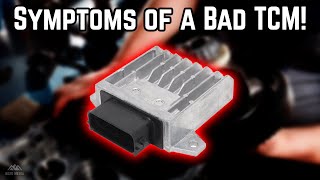
- Check Engine Light or Transmission Warning Light On 🎬 Watch: Common signs and symptoms of a failing TCM (also visible on scanner) — The primary and immediate indicator that the onboard diagnostics detected a critical transmission fault.
- Vehicle Enters 'Limp Mode' or Gets Stuck in Gear (also visible on scanner) — The computer intentionally limits engine power and locks the transmission into a single gear (usually 2nd or 3rd) to prevent catastrophic mechanical damage.
Diagnostic Flowchart

Tap your situation to follow the diagnostic path that matches what you're seeing on this code.
Common Fixes & Costs
- Replacing the Car Battery
— Parts: $150-$250, Labor: $0-$50, ~0.5 hr book time
(DIY)
Ford Focus (2012-2016): OEM BXT-96R-590 (Alt: Duralast 96R-EFB, DieHard 96R) - Reprogramming the TCM (Software Reflash) — Parts: $0, Labor: $150-$250, ~1.0 hr book time (Professional)
- Repairing Damaged Wiring or Grounds — Parts: $20-$50, Labor: $150-$400, ~2.5 hr book time (Intermediate)
- Replacing the Transmission Control Module (TCM)
— Parts: $300-$900, Labor: $250-$500, ~3.0 hr book time
(Professional)
Ford Focus (2012-2016): OEM AE8Z-7Z369-F (Alt: A2C30743104, Dorman (varies))
Nissan Altima (2004-2016): OEM 31036-8J001, ETC31-120N A1 (Alt: Cardone, Rostra) - Replacing the Alternator
— Parts: $200-$400, Labor: $150-$300, ~2.0 hr book time
(Intermediate)
Dodge Grand Caravan (2007-2014): OEM Check with dealer (Alt: Carquest Premium (12585028), Bosch)
Used vs. New Parts: Buying Guide
When a used part is worth it: A used TCM is rarely a viable DIY option. It requires professional J2534 programming tools to overwrite the donor VIN and anti-theft data.
Donor-vehicle mileage cap: roughly under 60000 miles for the part to have meaningful remaining life.
Donor quality checklist:
- Part number must be an exact match.
- Verify the donor vehicle was not scrapped due to a transmission or electrical fire.
- Obtain the donor VIN for reprogramming verification.
Decision logic:
- If You are a DIY mechanic without professional programming tools → Buy a reputable remanufactured TCM pre-programmed to your vehicle's VIN.
- If A remanufactured, pre-programmed unit is available → This offers the best value, combining lower costs than new OEM with a warranty and plug-and-play installation.
- If The vehicle is very old and has low value → A professional shop can attempt to flash a used TCM, but labor costs often negate the parts savings.
Warranty tradeoff: Used parts carry a 30-90 day warranty excluding labor. Remanufactured TCMs offer 1-year to lifetime warranties. New OEM parts carry a 1-year warranty.
Worst-case if a used part fails: $400 - $1000. If a used TCM fails or rejects programming, you pay for diagnostic time, repeat labor, and a replacement module.
What Happens If You Wait — Timeline
- First Occurrence: Check Engine Light illuminates, P0613 is stored. Driving symptoms are non-existent or limited to a single harsh shift. (MPG impact: 0-1%% · Added cost: $0. The issue is purely electronic.)
- Days to Weeks: Erratic shifting occurs intermittently. The vehicle occasionally enters 'limp mode' but resets after restarting the engine. (MPG impact: 2-5%% · Added cost: $100-$300 in potential towing costs.)
- Weeks to Months: Harsh shifts damage clutch packs and bands. The vehicle is reliably stuck in gear, making it unsafe to drive. (MPG impact: 5-15%% · Added cost: $500 - $1,500. The electronic fault causes mechanical damage requiring valve body or solenoid work.)
- Several Months: Catastrophic failure. Continued driving destroys the transmission, resulting in a permanent no-drive condition. (MPG impact: N/A (Vehicle is undrivable)% · Added cost: $3,000 - $7,000+. Requires a complete transmission rebuild.)
Cost of Not Fixing It
- Immediate: Vehicle enters 'limp mode,' severely limiting speed. Unpredictable shifting creates immediate safety hazards and leaves you stranded. (Added cost: Potential towing costs ($100-$300).)
- Weeks to Months: Uncontrolled, harsh shifting causes premature wear on internal transmission clutches, bands, and the valve body. (Added cost: $0 if fixed immediately, but risk of mechanical damage increases daily.)
- Several Months: Catastrophic mechanical failure requiring a complete transmission rebuild or replacement. (Added cost: $3,000 - $7,000+)
Diagnosis Steps
- Scan for All Trouble Codes
Use a professional OBD-II scanner to confirm P0613. Check for related codes. Communication codes (U-series) or low voltage codes (P0562) dictate the diagnostic direction.
Tools: Advanced OBD-II Scanner (Beginner) - Check for Technical Service Bulletins (TSBs)
Search for P0613 TSBs for your specific make and year. Manufacturers often release software updates to fix this code, bypassing the need for parts replacement.
Tools: Internet Access, Vehicle Information (Beginner) - Test the Battery and Charging System
Check the battery's state of charge and alternator output. A healthy battery reads 12.6V (engine off) and 13.7-14.7V (engine running). Low voltage is a primary cause of module errors.
Tools: Multimeter or Battery Tester (Beginner) - Inspect Wiring and Grounds
Visually inspect the TCM harness for damage, corrosion, or loose pins. Trace and clean the main ground connections from the TCM to the chassis.
Tools: Flashlight, Basic Hand Tools, Electrical Contact Cleaner (Intermediate) - Load Test Power and Ground Circuits
Disconnect the TCM connector. Use a load tool (like a 55W headlight bulb) to draw current through the power and ground pins. If the bulb is dim, high resistance exists in the circuit. A multimeter drawing milliamps will miss this.
Tools: Headlight Bulb with Wires or Circuit Load Tool, Multimeter, Wiring Diagram (Advanced) - Analyze Live Data PIDs
Monitor live data from the TCM. Watch the TCM supply voltage PID. It must remain steady between 13.7-14.7V with the engine running. Erratic readings indicate internal module or wiring issues.
Tools: Advanced OBD-II Scanner (Advanced) - Attempt TCM Reprogramming
If wiring and voltage are perfect, have a dealer or qualified shop reflash the TCM with the latest manufacturer software to resolve logic glitches.
Tools: Professional Scan Tool, J2534 Pass-Thru Device (Professional) - Perform CAN Bus Network Test
Connect an oscilloscope to the CAN High and CAN Low pins. A healthy CAN bus shows a mirror-image square waveform. Distorted waveforms indicate network interference triggering the code.
Tools: 2-Channel Oscilloscope, Wiring Diagram (Professional)
When This Code Triggers (Freeze-Frame Conditions)
- Module Voltage: < 10.5V or > 15.5V (Indicates a low battery or charging system fault during the key-on self-test.)
- Key Cycle Count: 0 or 1 (Sets immediately on the first or second key cycle after the fault occurs.)
- Vehicle State: Key-On, Engine Off (The TCM performs a processor integrity check upon power-up, setting P0613 before the engine starts.)
- Ambient Temperature: Any (Extreme heat contributes to hardware failure, but the code triggers based on internal electronic logic, not external temperature.)
Related Codes
- P0700 — P0700 is a generic 'Transmission Control System Malfunction' code. It is an informational flag set by the ECM to turn on the Check Engine Light when the TCM stores a specific fault like P0613.
- U0100 — U0100 means 'Lost Communication With ECM/PCM'. If present with P0613, the TCM is completely offline. This points to a catastrophic TCM failure, total power/ground loss, or a severed CAN bus wire.
- P0614 — P0614 means 'ECM / TCM Incompatible'. This indicates a software mismatch, often seen after replacing a TCM without properly programming it to the vehicle's VIN.
- P060A — P060A means 'Internal Control Module Monitoring Processor Performance'. This is diagnostically identical to P0613. Seeing both confirms a severe internal module fault.
Climate & Environmental Factors
- High Humidity / Water Intrusion: Moisture from failed seals or deep puddles corrodes connector pins and seeps into the TCM housing, causing short circuits on the printed circuit board.
- Extreme Temperatures (Heat): TCMs mounted directly on the transmission (common in Mazda and GM) suffer from heat and vibration. Heat cycles crack solder joints and degrade internal components, causing processor faults.
- Extreme Cold: Cold temperatures increase electrical resistance, causing a borderline weak battery or corroded ground connection to fail under load during a cold start, triggering a voltage-related P0613.
How to Talk to a Mechanic About This Code
Say this: "I have a P0613 Transmission Control Module Processor Error code. Before assuming the TCM needs replacement, I authorize one hour of diagnostic time to check for TSBs, test the battery under load, and verify power and grounds at the TCM connector."
This directs the mechanic to perform a proper electrical diagnosis, preventing the common mistake of replacing a good TCM when the real issue is a bad ground or software glitch.
Avoid saying:
- 'My transmission is acting weird, can you fix it?'
- 'My check engine light is on, just do whatever it takes.'
- 'A friend told me I need a new transmission computer.'
Questions to ask before authorizing the repair:
- Did you check for software updates or TSBs related to P0613 for my vehicle?
- What were the voltage and ground resistance readings at the TCM connector?
- Does the quoted price for a replacement TCM include programming and adaptation procedures?
- What is the warranty on the new module and the labor?
Where to Take It: Dealer vs Independent vs Chain
- Dealer:
Recommended. The dealer is the most reliable choice for software updates and guarantees access to the correct programming tools required for this code.
Best for: Vehicles covered by a recall or extended warranty (e.g., Ford Focus/Fiesta)., Vehicles with known software glitches (e.g., Chrysler/Dodge) requiring a proprietary reflash., Complex diagnostics on European vehicles where specialized tools are mandatory.
Downsides: Highest labor rates., May default to module replacement instead of in-depth electrical diagnosis. (Typical cost: +50% vs. baseline) - Independent Shop:
Viable with caution. Choose a top-rated shop that explicitly confirms they have advanced diagnostic and module programming capabilities for your specific make.
Best for: Out-of-warranty vehicles where the cause is a common failure (bad battery, wiring)., Shops specializing in transmission or electrical diagnostics.
Downsides: May lack the latest J2534 programming tools or subscriptions for all makes., Diagnostic capability varies widely. (Typical cost: +0% vs. baseline) - Chain Shop:
Avoid for diagnosis. Only use for a simple part replacement if you are 100% certain it is the cause.
Best for: Simple fixes like battery replacement after a proper diagnosis is made elsewhere.
Downsides: Not equipped for complex electrical diagnosis or module programming., High risk of misdiagnosis. (Typical cost: -10% vs. baseline)
When to Walk Away From the Repair
If the estimated repair cost for the P0613 code exceeds 50% of your car's current private-party market value, consider selling or trading it in.
- Car worth $3500, fix is $1800: Walk away. The repair cost is over 50% of the car's value. The risk of further complications is too high.
- Car worth $10000, fix is $1500: Fix it. The repair cost is 15% of the vehicle's value and restores its primary function and safety.
- Car worth $5000, fix is $2200: Borderline. Get a second opinion. If a cheaper fix like a reflash is possible, proceed. If a full TCM replacement is required, consider selling.
What Scan Tool You Need for This Code
Minimum: A scanner that reads manufacturer-specific transmission codes and views live data, specifically TCM supply voltage.
A basic $20 code reader only shows a generic P0700 code. It cannot access the TCM directly to check for specific faults or view the critical live voltage data needed to diagnose power issues.
Budget: BlueDriver Pro (~$100) — Reads transmission-specific DTCs, provides freeze-frame data, and graphs live data like module voltage to spot power supply issues.
Mid-range: Foxwell NT510 Elite (~$180) — Offers OE-level diagnostics for a specific car make. Reads and clears codes from all modules, views live data, and performs bidirectional controls like a transmission 'quick learn'.
Professional: Autel MaxiCOM MK808 / MK900 series (~$450-700) — Full-system scanner with extensive bidirectional controls. Higher-end models support full ECU programming when paired with a J2534 device.
Rent vs buy: Buy. A free scan from a parts store only pulls generic engine codes. Diagnosing P0613 requires a capable tool to investigate live data and transmission-specific faults.
How to Clear the Code After You Fix It
- Ensure the battery is fully charged and stable (12.6V+).
- Use an OBD-II scan tool to command a 'Clear/Erase Codes' function from both the ECM and TCM.
- Perform a complete OBD-II drive cycle to reset readiness monitors.
Drive cycle (~30 minutes): Start with a cold engine. Idle for 2-3 minutes with electrical loads on (A/C, defroster). Drive for 15-20 minutes in mixed city/highway conditions, cruising steadily between 55-60 mph for at least 5 minutes. Coast down without braking where safe. Come to a complete stop and idle before shutting down.
Readiness monitors affected: Comprehensive Component Monitor, Catalyst (CAT) Monitor, Evaporative (EVAP) System Monitor, Oxygen (O2) Sensor Monitor
Before emissions retest: drive at least 50 miles to fully set monitors.
Watch out for:
- Disconnecting the battery does not clear the code on modern vehicles and causes memory loss in other modules.
- The code returns immediately if the root cause (bad wiring, faulty module) remains unfixed.
- Failing to complete a full drive cycle leaves readiness monitors 'Not Ready', causing an automatic emissions failure.
Will This Fail Emissions / State Inspection?
Yes — this code typically fails an OBD-II emissions inspection.
- California: An illuminated Check Engine Light is an automatic failure. For model years 2001 and newer, only one readiness monitor is permitted to be incomplete.
- New York: The NYS DMV inspection includes an OBD-II check. P0613 causes an immediate test failure.
- Texas: In the 17 Texas counties requiring emissions testing, an illuminated Check Engine Light fails the inspection.
Most Commonly Affected Vehicles
- Ford Focus / Fiesta (2012-2016) — DPS6 transmission TCMs were subject to recalls and warranty extensions (14M02). Failure causes shuddering and loss of gear engagement. An updated TCM part is available.
- Nissan Quest, Altima, Maxima (2004-2016) — P0613 points directly to an internal TCM processor failure on CVT models, requiring module replacement. Service manuals explicitly link this code to hardware failure.
- Chrysler / Dodge / Jeep Grand Caravan, Town & Country (2007-2014) — Frequently caused by a software glitch rather than hardware failure. A dealer reflash is a highly effective first step before replacing the combined PCM/TCM unit.
- Subaru BRZ (2022) — TSB 16-138-22 addresses P0613. It provides a TCM software update (part number 30319JB151.pfc) to fix a logic error in the self-diagnostic program that falsely triggers the code.
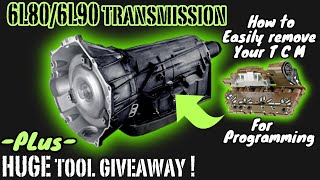
- General Motors Various (Silverado, Sierra, Tahoe) (2007-2014) — Common in 6L80/6L90 transmissions where the TCM (T43) is located inside the transmission on the valve body. Replacement requires draining fluid and removing the pan.
- Mazda 3 (2006-2014) — The TCM is mounted directly on the transmission, exposing it to extreme heat and vibration, leading to a high failure rate and P0613 codes.
- Audi A4, A6 (2002-2008) — Water intrusion into the module is a known issue on these models, causing internal short circuits and processor failure.
Manufacturer-Specific Notes

- Ford: On 2012-2016 Focus and 2011-2015 Fiesta models, Ford extended the TCM warranty to 10 years or 150,000 miles under program 14M02. Always check warranty eligibility before paying out of pocket.
- Subaru: TSB 16-138-22 for the 2022 BRZ provides a specific TCM reprogramming file to fix a logic error that falsely triggers P0613.
- General Motors: On 6L80/6L90 transmissions, the TCM is a 'mechatronic' unit bolted to the valve body inside the oil pan. Replacement requires transmission fluid service, increasing labor costs.
- Chrysler/Dodge/Jeep: P0613 is frequently a software glitch. A dealer reflash using a J2534 pass-thru device is the standard first step and often permanently resolves the issue.
Real Owner Stories
2012 Ford Focus at 110K miles
Car shuddered, Check Engine Light illuminated, and transmission stuck in gear.
What they tried:
- A general mechanic quoted $1200 for a TCM replacement.
Outcome: The owner found Ford's Customer Satisfaction Program 14M02. A Ford dealer confirmed the issue and replaced the TCM for free under the extended warranty.
Lesson: Always check for recalls or warranty extensions before paying for a repair on vehicles known for specific problems.
2008 Dodge Grand Caravan at 155K miles
Check engine light on with P0613. Transmission shifted harshly and entered limp mode.
What they tried:
- A shop quoted $900 for a new TCM/PCM.
Outcome: The owner requested a TCM reflash at a dealership. The dealer updated the software for $150. The code cleared and shifting normalized.
Lesson: On Chrysler/Dodge products, a software reflash is a highly effective, inexpensive fix that must be attempted before replacing the module.
2005 Nissan Altima at 130K miles
Intermittent no-start, erratic shifting, and P0613 code.
What they tried:
- Replaced the battery and checked fuses.
Outcome: A mechanic found a heavily corroded main ground wire near the transmission. Cleaning and securing the ground wire resolved all symptoms permanently.
Lesson: A bad ground mimics a complete module failure. Thoroughly testing power and ground circuits prevents unnecessary TCM replacement.
How to Prevent This Code From Triggering
- Maintain Battery Health and Connections (Annually) — A weak battery causes unstable voltage, triggering module processor errors. Clean terminals and replace the battery proactively every 3-5 years.
- Use Proper Jump-Starting Procedures (As needed) — Incorrect jumper cable connections cause voltage spikes that destroy the TCM. Always connect the final negative cable to a chassis ground to prevent surges.
- Change Transmission Fluid per Manufacturer's Schedule (Every 30,000-60,000 miles) — For TCMs located inside the transmission, clean fluid is essential for cooling. Dirty fluid retains heat, accelerating electronic breakdown.
Frequently Asked Questions
Can a weak battery really cause a transmission code like P0613?
Yes. The TCM's microprocessor requires a stable and specific voltage to operate correctly. Low voltage from a dying battery or a failing alternator causes the processor to malfunction, lose its memory, or incorrectly report an internal failure.
What is the most common misdiagnosis when dealing with P0613?
The most costly mistake is immediately replacing the TCM without performing a full electrical diagnosis. Technicians often fail to check for software updates (TSBs) or test the battery and charging system under load. A simple software reflash or fixing a corroded ground wire resolves the code for a fraction of the cost.
If I buy a used TCM from a junkyard, can I just plug it in?
No. Modern TCMs are programmed with a specific Vehicle Identification Number (VIN), anti-theft data, and software configuration. A used module will not work until it is professionally reprogrammed to match your car's specific systems using specialized tools.
Can a bad sensor cause a P0613 code?
Not directly. The P0613 code specifically refers to an error within the TCM's processor itself, not the data it receives from a sensor. However, a sensor with an internal short can send a voltage spike that damages the TCM's circuitry, leading to the code.
What does it mean when my car is in 'limp mode'?
'Limp mode' is a protective fail-safe where the vehicle's computer intentionally restricts engine power and locks the transmission into a single gear (usually second or third). This allows you to drive to a safe location without causing catastrophic mechanical damage to the transmission.
Will clearing the P0613 code with a scanner fix the problem?
No. Clearing the code only erases the fault from the computer's memory temporarily. Because P0613 indicates a persistent internal hardware or critical software fault, the code returns immediately upon the next key cycle when the TCM runs its self-test.
How much does it cost to fix a P0613 code?
Costs vary dramatically based on the root cause. A software reflash costs $150-$250, while a new battery is $150-$300 installed. The most expensive fix is a full TCM replacement, ranging from $800 to $1,500 including the part and mandatory programming.
Key Takeaways
- Code P0613 indicates a critical internal failure in the Transmission Control Module (TCM), making the vehicle unsafe to drive due to sudden power loss or unpredictable shifting.
- Test the battery and check for manufacturer software updates (TSBs) before replacing the TCM, as low voltage or software glitches cause over 50% of these codes.
- Driving with a P0613 code forces the vehicle into 'limp mode' (stuck in 2nd or 3rd gear) and rapidly destroys internal transmission components like clutch packs.
- Replacing a TCM costs between $800 and $1,500 and requires professional J2534 programming tools to sync the new module's software with your vehicle's VIN.
Helpful Videos



The information in this article is provided for general reference and educational purposes only. Vehicle specifications, procedures, and part compatibility can vary by production date, trim level, and region. Always consult your vehicle's factory service manual and verify part numbers before purchasing or performing repairs. Safety-critical components such as airbags, seat belts, and braking systems should be installed by a qualified professional.
- 🎬 Helpful Videos
- What Does P0613 Mean?
- Can I Drive With P0613?
- Common Causes
- Symptoms
- Diagnostic Flowchart
- Common Fixes & Costs
- Used vs. New Parts: Buying Guide
- What Happens If You Wait — Timeline
- Cost of Not Fixing It
- Diagnosis Steps
- When This Code Triggers (Freeze-Frame Conditions)
- Related Codes
- Climate & Environmental Factors
- How to Talk to a Mechanic About This Code
- Where to Take It: Dealer vs Independent vs Chain
- When to Walk Away From the Repair
- What Scan Tool You Need for This Code
- How to Clear the Code After You Fix It
- Will This Fail Emissions / State Inspection?
- Most Commonly Affected Vehicles
- Manufacturer-Specific Notes
- Real Owner Stories
- 2012 Ford Focus at 110K miles
- 2008 Dodge Grand Caravan at 155K miles
- 2005 Nissan Altima at 130K miles
- How to Prevent This Code From Triggering
- Frequently Asked Questions
- Can a weak battery really cause a transmission code like P0613?
- What is the most common misdiagnosis when dealing with P0613?
- If I buy a used TCM from a junkyard, can I just plug it in?
- Can a bad sensor cause a P0613 code?
- What does it mean when my car is in 'limp mode'?
- Will clearing the P0613 code with a scanner fix the problem?
- How much does it cost to fix a P0613 code?
- Key Takeaways
- 🎟️ Get 5% Off