

OBD-II Code P0610: Control Module Vehicle Options Error
The Ultimate Expert Guide to Diagnosing and Fixing P0610
- P0610 indicates a software configuration error in the Powertrain Control Module (PCM), requiring a professional re-flash costing $150 to $300 in 80% of cases.
- Test your battery voltage first; a drop below 11.5V during startup corrupts PCM memory and triggers this code without any actual hardware failure.
- Never replace transmission solenoids or sensors based on secondary codes until you resolve the P0610 error, as the PCM's confusion causes false mechanical symptoms.
- Address this code immediately to prevent the transmission from locking into 'limp mode' or the engine stalling in heavy traffic.
What Does P0610 Mean?

P0610 means the Powertrain Control Module (PCM) detects a mismatch between its programmed configuration and the vehicle's actual hardware. During startup, the PCM verifies factory-installed options like engine size, transmission type, and trim features. If the internal memory data contradicts the physical hardware it detects, the PCM sets this code. This confusion disrupts network communication and severely degrades drivability.
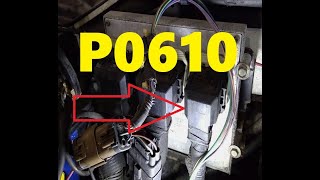
Technical definition: The official SAE/OBD-II definition for code P0610 is "Control Module Vehicle Options Error. 🎬 Watch: A quick overview of P0610 causes and common fixes." This indicates the Powertrain Control Module (PCM) or another module on the Controller Area Network (CAN) bus detects a mismatch between the vehicle's actual equipment and the options programmed into the PCM's memory. This internal configuration error is identified during a self-test, typically at ignition on, compromising communication and control over essential vehicle systems.
Can I Drive With P0610?
Yes, But With Caution. You can take short trips, but prolonged driving is unsafe. This code causes unpredictable stalling, harsh shifting, or a sudden no-start condition. Driving with erratic engine performance dumps unburnt fuel into the exhaust, which destroys the catalytic converter—an $800 to $2,500 repair. Avoid highways and heavy traffic until you fix the issue.
Common Causes

- Corrupted or outdated PCM software (Very Common) — The software inside the main computer (PCM) becomes corrupted or outdated due to glitches or voltage spikes, causing it to lose track of the vehicle's correct configuration. This is the most frequent cause of a P0610 code.
- Low battery voltage or charging system faults (Common) — Control modules require a stable voltage (11.5V-14.5V) to maintain memory. A weak battery, failing alternator, or poor connections cause voltage drops that corrupt data and trigger a P0610 code.
- Incorrect PCM programming or software mismatch (Common) — If the PCM was recently replaced or a software update was interrupted, it contains the wrong information for your specific vehicle (e.g., wrong VIN, transmission type). This also happens if the ECM and TCM have mismatched software versions after an update.
- Aftermarket modifications or performance tunes (Common) — Installing aftermarket performance chips, tunes, or electronic accessories conflicts with the factory PCM programming, 🎬 Watch: How to uninstall an aftermarket tune and reflash your PCM. causing the module to report a configuration error.
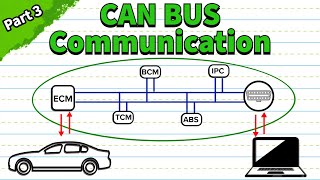
- Wiring, CAN bus, or ground faults (Less Common) — Damaged wires, corroded connectors, or loose ground straps interrupt signals on the CAN bus network. This causes unpredictable electrical behavior and communication errors between modules. 🎬 See how to troubleshoot and diagnose CAN bus wiring issues.
- Blown fuse or faulty PCM power relay (Less Common) — A blown fuse or a failing relay that supplies power to the PCM causes intermittent power loss, leading to memory and configuration errors.
- Internal PCM failure (Rare) — The PCM itself fails internally due to a cracked solder joint, failed processor, or thermal stress. This requires complete module replacement.
Symptoms

- Check Engine Light is on — The Malfunction Indicator Lamp illuminates immediately on the dashboard.
- Erratic engine performance — The engine runs rough, hesitates, stalls unexpectedly, or suffers a significant drop in fuel economy.
- Transmission shifting problems — The transmission shifts harshly, delays shifts, or locks into a single gear (limp mode).
- Vehicle features not working — Optional equipment like cruise control, remote start, keyless entry, or programmable seat memory stops working.
- Car won't start or cranks but won't start — The PCM's configuration confusion prevents the engine from cranking or firing.
- Instrument cluster warnings — The instrument cluster or infotainment screen displays a "Vehicle Options Error" or "Option Data Error" message.
- Failed emissions test (also visible on scanner) — An active P0610 code results in an automatic failure of an OBD-II emissions test.
Diagnostic Flowchart
Tap your situation to follow the diagnostic path that matches what you're seeing on this code.
Common Fixes & Costs
- Reprogramming or updating the PCM software — Parts: $0, Labor: $150-$300, ~1.5 hr book time (Professional)
- Replacing the vehicle's battery — Parts: $150-$250, Labor: $50-$100, ~0.5 hr book time (DIY)
- Cleaning or repairing ground straps — Parts: $5-$20, Labor: $50-$150, ~0.8 hr book time (DIY)
- Repairing damaged wiring or connectors — Parts: $20-$100, Labor: $150-$400, ~2.5 hr book time (Intermediate)
- Replacing the PCM — Parts: $800-$1500+, Labor: $200-$300, ~2.5 hr book time (Professional)
DIY vs Professional
- Reprogramming or updating the PCM software — Beginner:
Tools: Manufacturer-specific scan tool (e.g., Ford IDS, Mopar wiTECH), stable power supply, software subscription. - Replacing the vehicle's battery — Beginner:
Tools: Wrench set, socket set, battery terminal cleaner, memory saver (optional but recommended). - Cleaning or repairing ground straps — Beginner:
Tools: Wrench/socket set, wire brush, sandpaper, dielectric grease. - Repairing damaged wiring or connectors — Beginner:
Tools: Multimeter, wire strippers, wire cutters, heat shrink tubing, soldering iron or quality crimp connectors. - Replacing the PCM — Beginner:
Tools: Basic hand tools for removal/installation, plus professional programming equipment.
Used vs. New Parts: Buying Guide
When a used part is worth it: A 'used' (unprogrammed) PCM from a junkyard is never a good idea due to VIN mismatch and anti-theft system conflicts. A 'remanufactured' PCM pre-programmed to your vehicle's VIN by a reputable seller is the best cost-effective alternative to a new OEM unit.
Donor-vehicle mileage cap: roughly under 50000 miles for the part to have meaningful remaining life.
Donor quality checklist:
- Ensure the seller offers VIN programming as part of the service.
- Verify the part number is an exact match for your vehicle's original PCM.
- Choose a seller that provides a lifetime warranty.
- Avoid sellers who cannot guarantee the part is free from prior flood or fire damage.
Decision logic:
- If The fix is a simple software update to your existing PCM → Do not replace the hardware; pay a professional to reprogram it.
- If A remanufactured, pre-programmed PCM is available with a lifetime warranty → Buy this to save hundreds over a new OEM part.
- If You buy a used PCM from a junkyard without programming → Expect the vehicle not to start and to pay a professional for programming, negating any initial savings.
Warranty tradeoff: Used junkyard parts have a 30-90 day warranty and do not cover labor. Remanufactured PCMs from reputable suppliers come with a limited lifetime warranty. New OEM parts carry a 1-2 year warranty but cost significantly more.
Worst-case if a used part fails: 400-800. This represents the cost of repeat diagnostic and programming labor, plus towing fees if an improperly programmed module fails after installation.
What Happens If You Wait — Timeline
- 0-1 month: Code is stored, Check Engine Light is on. You notice subtle issues like a slightly rougher idle or a non-functional cruise control. (MPG impact: 0-2%% · Added cost: $0-$20 in wasted fuel)
- 1-3 months: Symptoms become noticeable. Erratic or harsh shifting occurs. A measurable drop in fuel economy begins, and the vehicle hesitates during acceleration. (MPG impact: 5-10%% · Added cost: $50-$150 in wasted fuel and premature wear on transmission components)
- 3-6 months: Severe drivability problems emerge. The engine stalls intermittently. The transmission locks into 'limp mode' (a single gear). (MPG impact: 10-20%% · Added cost: $200-$500 in wasted fuel. Continued poor engine management damages O2 sensors and the catalytic converter.)
- 6+ months: Catastrophic failure occurs. A complete no-start condition leaves you stranded. The confused PCM causes cascading electrical problems, destroying the catalytic converter from unburnt fuel. (MPG impact: 20%+% · Added cost: $800-$2500+ to replace a damaged catalytic converter, other modules, and address the original P0610 fault.)
Cost of Not Fixing It
- Short-Term (0-1 month): Erratic shifting causes premature wear on transmission clutches and bands. A noticeable drop in fuel economy (5-15%) occurs. (Added cost: 50-150)
- Medium-Term (1-6 months): Continued driving with poor engine management dumps unburnt fuel into the exhaust, overheating and destroying the catalytic converter and oxygen sensors. (Added cost: 800-2500)
- Long-Term (6+ months): Severe drivability issues, such as stalling in traffic or a complete no-start condition, pose a safety risk and leave you stranded. (Added cost: 2500+)
Diagnosis Steps

- Read Codes and Freeze Frame Data
Use a professional OBD-II scanner to confirm the P0610 code and document any other stored codes. Analyze the freeze frame data to see the vehicle's operating conditions when the code was set. Prioritize P0610, as it causes other false codes.
Tools: OBD-II Scanner (Beginner) - Check for Technical Service Bulletins (TSBs)
Search for TSBs related to P0610 for your vehicle's specific make, model, and year. Manufacturers frequently release software updates to fix this exact code.
Tools: Online TSB Database Access (Beginner) - Inspect the Battery and Charging System
Verify the battery has a static charge of at least 12.6 volts with the key off. With the engine running, use a multimeter to verify the alternator output is stable between 13.5 and 14.5 volts. Low or fluctuating voltage is a primary cause of module errors.
Tools: Multimeter, Battery Terminal Cleaner (Beginner) - Visually Inspect Wiring, Grounds, and Fuses
Inspect all fuses related to the PCM, ECM, and TCM. Thoroughly inspect the wiring harnesses connected to the PCM for chafed or corroded wires. Locate the main ground straps for the engine and PCM, ensuring they are clean, tight, and free of corrosion.
Tools: Multimeter, Flashlight, Wire Brush (Intermediate) - Live Data Analysis
Using a professional scan tool, monitor specific Parameter IDs (PIDs) related to module configuration. Look for PIDs like 'Option-Module Status' or 'Vehicle Options'. A value of '00' or 'FF' indicates the module is not responding correctly. Verify the programmed VIN matches the vehicle's actual VIN.
Tools: Professional Scan Tool (Advanced) - Verify PCM Software and Configuration
Connect a professional bidirectional scan tool to the PCM to verify the programmed vehicle options match the car's actual equipment. Check for available manufacturer software updates.
Tools: Professional Scan Tool, Manufacturer Software (Advanced) - Perform CAN Bus Network Test
With the ignition off and battery disconnected, use a multimeter to check the resistance between the CAN High (Pin 6) and CAN Low (Pin 14) terminals on the OBD-II port. A healthy network reads approximately 60 ohms. 120 ohms suggests a break in the circuit; 0 ohms indicates a short.
Tools: Multimeter, Vehicle-Specific Wiring Diagram (Advanced) - Advanced Voltage Checks
Back-probe the PCM connector to verify stable power supply (11.5V-14.5V). Check the CAN bus signal voltages with the key on, engine off. CAN High should be ~2.7V and CAN Low should be ~2.3V. Deviations point to wiring faults or a failing module.
Tools: Multimeter with back-probe pins, Professional Scan Tool, Wiring Diagram (Advanced) - Isolate the Faulty Module
If the CAN bus wiring checks out and the PCM software is correct, another module on the network is causing interference. Systematically disconnect other modules (ABS, TCM, BCM) one by one and re-check for the P0610 code to isolate the faulty component.
Tools: Professional Scan Tool, Wiring Diagram (Advanced)
When This Code Triggers (Freeze-Frame Conditions)
- Fault Trigger: Key-On or Startup (The P0610 code sets when the PCM performs its initial self-test immediately after the ignition is turned on.)
- Engine Coolant Temp: Ambient or 180-210°F (Since the fault occurs at startup, the ECT matches ambient temperature. If triggered while driving, it reads normal operating temperature.)
- Engine RPM: 0 or 600-800 RPM (If the code sets with the key on but engine off, RPM is 0. If it sets during engine cranking or immediately after starting, it reads idle speed.)
- Vehicle Speed: 0 mph (As an internal self-test error, it triggers before the vehicle is in motion.)
- Control Module Voltage: 11.5V - 12.6V (Freeze frame data logs the module voltage at the time of the fault; low voltage during startup is a primary trigger for this code.)
Related Codes
- P0600-P0605 — These are general internal control module error codes. If you see codes like P0605 (ROM Error) or P0604 (RAM Error) alongside P0610, it strongly suggests the PCM's internal memory is failing, requiring PCM replacement rather than just a reprogram.
- P0606 — This code means 'PCM Processor Fault.' While P0610 is a memory/configuration error, P0606 indicates a severe failure of the PCM's central processor. Seeing both means the PCM has failed and needs replacement.
- U-codes (e.g., U0100, U0101) — U-codes indicate a loss of communication between modules. If P0610 appears with U-codes, the root cause is a physical network problem, such as a damaged CAN bus wire, a loose connector, or a bad ground, rather than an internal PCM software issue.
- P0611 — Refers to a Fuel Injector Control Module (FICM) Performance issue. P0610 indicates the PCM is confused about the vehicle's overall configuration. Seeing both means the PCM's configuration error is preventing it from properly controlling the FICM.
Climate & Environmental Factors
- Cold Weather: Extreme cold causes marginal electrical connections or cracked solder joints within a module to contract and lose contact, triggering a fault code. Once the module warms up, the problem disappears, leading to an intermittent P0610 code.
- High Humidity: Moisture penetrates non-sealed connectors or damaged wire insulation, leading to corrosion on pins and terminals. This corrosion increases resistance and disrupts sensitive data signals on the CAN bus, triggering a P0610 code.
How to Talk to a Mechanic About This Code
Say this: "I have a P0610 code, which I know is a 'Vehicle Options Error.' I'd like to book a diagnostic appointment. I've already checked the battery and fuses, which seem fine. My primary interest is in confirming if this is a software issue that needs a reflash or if there's a deeper communication or module problem."
This language shows you've done your homework. It directs the technician away from basic, unnecessary checks you've already done and focuses them on the most likely, complex causes (software, module communication). It signals you're an informed customer, reducing the likelihood of a shop suggesting unrelated, expensive repairs.
Avoid saying:
- My check engine light is on, can you just fix it?
- My car is acting weird, I think it's the transmission.
- Just do whatever you think is necessary.
Questions to ask before authorizing the repair:
- Did you find any Technical Service Bulletins (TSBs) for this code on my vehicle?
- If you are recommending a PCM reflash, are you using the latest manufacturer-certified software?
- If you are recommending PCM replacement, have you definitively ruled out wiring, ground, and communication issues first?
- What is the warranty on the programming labor and/or the replacement module?
Where to Take It: Dealer vs Independent vs Chain
- Dealer:
Recommended. The dealer has guaranteed access to the latest, manufacturer-specific software and programming tools (like Ford IDS or Mopar wiTECH) required for the most common P0610 fix. This is one of the few codes where dealer expertise is worth the premium.
Best for: Vehicles under warranty, Complex, manufacturer-specific programming issues, When a known Technical Service Bulletin (TSB) exists for the P0610 code
Downsides: Typically the highest labor rates, Defaults to expensive module replacement over more nuanced software or wiring repairs (Typical cost: +50% vs. baseline) - Independent Shop:
Viable, but requires vetting. Ask specifically if they have J2534 pass-thru capabilities and experience reprogramming PCMs for your vehicle's brand. A well-equipped independent shop is a great alternative, but a shop without these tools cannot properly fix a software-related P0610.
Best for: Out-of-warranty vehicles where cost is a major factor, Diagnosing and fixing clear-cut electrical issues like bad grounds or wiring
Downsides: May not have the specific, up-to-date programming tools or software subscriptions for all makes/models, Quality and capability vary widely (Typical cost: +0% vs. baseline) - Chain Shop:
AVOID. These shops are not equipped to handle the software and communication-level diagnostics required for P0610. They are highly likely to misdiagnose the problem or be unable to perform the necessary reprogramming.
Best for: Simple, unrelated maintenance like oil changes or tire rotations
Downsides: Technicians lack the specialized training and equipment for complex module diagnostics and programming, High potential for misdiagnosis, leading to unnecessary replacement of parts based on symptoms (Typical cost: -10% vs. baseline)
When to Walk Away From the Repair
If the total estimated repair cost for the P0610 code (which could be a PCM replacement) exceeds 50% of your car's current private-party market value, it's time to seriously consider your options.
- Car worth $4000, fix is $2200: Walk away. The repair cost is over half the car's value. The risk of future unrelated repairs on an aging vehicle is high.
- Car worth $15000, fix is $1800: Fix it. The repair cost is a small fraction of the vehicle's value and restores its drivability and safety.
- Car worth $3000, fix is $800: Borderline, but likely worth fixing. This is a significant percentage, but it's still much cheaper than replacing the car. Get a firm quote before proceeding.
What Scan Tool You Need for This Code

Minimum: A basic OBD-II code reader only confirms the P0610 code exists. It cannot diagnose the root cause, which is essential for this code.
A simple code reader is insufficient for P0610. This code requires a tool that reads manufacturer-specific data, checks communication between modules, and performs software updates or programming. A basic reader leaves you guessing at the repair.
Budget: BlueDriver Pro (~$119) — Reads the P0610 code, views freeze frame data, and accesses some manufacturer-specific live data. It helps confirm the code and see the conditions when it set, but it cannot perform the programming or deep network tests needed for a full diagnosis.
Mid-range: Foxwell NT909 or Innova 5610 (~$250-400) — These bidirectional tools communicate with multiple modules (PCM, BCM, TCM). They allow you to perform network tests, read manufacturer-specific codes, and view live data from different systems, helping determine if the fault is in the PCM, wiring, or another module.
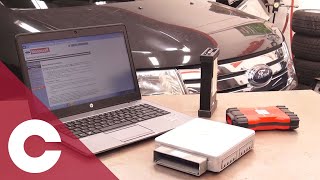
Professional: Autel MaxiCOM MK808 / MK906BT or Launch X431 series (~$500-1500) — Essential for a potential P0610 fix. These professional-grade scanners offer advanced ECU coding and programming capabilities (often via a J2534 pass-thru device). They re-flash the PCM with updated software, program a new PCM, and perform deep network diagnostics to isolate the fault definitively.
Rent vs buy: For P0610, a rented scanner from an auto parts store is only useful for the initial step of reading the code. Since the most common fix is reprogramming—which these tools can't do—you ultimately need a professional with advanced equipment. Buying a pro-level scanner is only cost-effective for serious DIYers or those managing a fleet.
How to Clear the Code After You Fix It
- Ensure the battery is fully charged and reconnected.
- Use a compatible OBD-II scan tool to erase the P0610 and any related fault codes.
- Perform a complete drive cycle to allow the vehicle's readiness monitors to run their self-tests.
Drive cycle (~30 minutes): A general drive cycle includes a cold start (engine off for 8+ hours), 2-3 minutes of idling, 10-15 minutes of mixed city driving (stops, starts, varied speeds), followed by 10 minutes of steady driving at highway speeds (55-60 mph), and then allowing the engine to cool down.
Readiness monitors affected: Comprehensive Component Monitor, Misfire Monitor, Catalyst Monitor, Oxygen Sensor Monitor
Watch out for:
- Taking the vehicle for an emissions test before all readiness monitors are set to 'Ready' results in an automatic failure.
- Disconnecting the battery does not properly clear the code from permanent memory and resets the readiness monitors incorrectly.
- The code returns immediately if the underlying electrical or software fault is not repaired.
Will This Fail Emissions / State Inspection?
Yes — this code typically fails an OBD-II emissions inspection.
- California: An active P0610 code with an illuminated MIL is an automatic smog check failure. All OBD readiness monitors must be set to 'Ready' before a re-test, requiring 50-100 miles of driving after the repair.
- New York: The NYS vehicle safety/emissions inspection includes an OBD-II scan. A P0610 code causes the vehicle to fail the emissions portion of the inspection.
- Texas: In the 17 counties requiring emissions testing, a vehicle with an illuminated Check Engine Light for P0610 fails the inspection. Readiness monitors must also be complete to pass.
Most Commonly Affected Vehicles
- Ford F-150 (2015-2018) — Sets this code due to software mismatches between the ECM and TCM, especially after one module is updated and the other is not.
- Dodge Hornet (2024) — TSB 21-045-24 addresses a P0610 code that appears after a BCM reset on vehicles built before April 15, 2024. The official fix is to reprogram the Transmission Control Module (TCM).
- Chevrolet / GMC Silverado, Sierra (2007-2018) — Commonly reported on GM trucks, often related to PCM programming faults, bad grounds, or CAN bus communication errors.
- Nissan Titan, Armada, Frontier (2004-2012) — P0610 stems from software issues, electrical interference, or a failing Intelligent Power Distribution Module (IPDM).
- Subaru Outback, Forester (2010-2018) — Sets this code due to programming errors or internal module faults, sometimes related to the Body Integrated Unit (BIU).
- Mazda RX-8 (2004-2011) — Frequently points to PCM configuration errors. A faulty ABS module sends corrupt data over the CAN bus, triggering a P0610 in the PCM.
- Hyundai Elantra (2016-2021) — Noted for having known PCM configuration and CAN bus tendencies that lead to P0610.
- Jeep Wrangler, Grand Cherokee (2007-2015) — Frequently related to communication issues between the PCM and transmission modules or after installing aftermarket electronics.
Manufacturer-Specific Notes
- Dodge/Chrysler/Jeep: For the 2024 Dodge Hornet, TSB 21-045-24 was issued for a P0610 code that appears after a BCM reset on vehicles built before April 15, 2024. The fix is to reprogram the Transmission Control Module (TCM) with updated software via wiTECH.
- Ford: A P0610 triggers after a software update if the Engine Control Module (ECM) and Transmission Control Module (TCM) versions become mismatched. Both modules must be updated to the same software level.
- Mazda: This code is triggered by a fault in an auxiliary module, such as the ABS controller, which causes a configuration error to be logged by the PCM.
- General Motors (GM): It takes up to eight consecutive drive cycles with a detected error before the P0610 code is stored and the Check Engine Light is commanded on.
Real Owner Stories
2005 Mazda 3 with ~100K miles
Check Engine Light on with P0610, but only when the ambient temperature was below 50°F (10°C). The speedometer and odometer stopped working. After the engine warmed up, restarting the car restored the gauges, but the CEL remained.
What they tried:
- Heated the instrument cluster PCB and fuses before starting - no change.
- Replaced the battery - no change.
- Replaced the air filter - no change.
Outcome: A forum user diagnosed the issue as a temperature-sensitive flash memory chip on the PCM. The owner used a FORScan tool to read the 'hot' (correct) configuration data and rewrote that same data back to the PCM while it was cold. This refreshed the data on the faulty chip, resolving the cold-start issue.
Lesson: For intermittent, temperature-related P0610 codes, the root cause is often an aging memory chip within the PCM. Before replacing the entire module, a software re-flash provides a permanent fix.
2007 Jeep Cherokee 2.8 CRD
Vehicle was a non-runner. Initially showed a P2294 code. After clearing, a persistent P0610 code appeared, and the engine cranked but would not start.
What they tried:
- Attempted a PCM reset by disconnecting the battery and grounding the positive terminal for 30 seconds - code returned.
- Disconnected and reset all connections to the PCM and reseated the fuel pump relay.
Outcome: The immediate outcome was unsuccessful, pointing toward a hard communication issue. The final fix required reflashing the PCM, as it had lost its configuration data and assumed it was paired with a manual transmission instead of an automatic.
Lesson: A P0610 causing a no-start condition is a hard fault related to bad connections, grounds, or incorrect module programming. Always check physical connections before condemning the PCM.
Various GM, Ford, and Dodge models
Owners experience harsh shifting, a drop in fuel economy, and an illuminated Check Engine Light with code P0610.
What they tried:
- Replaced transmission solenoids or fluid, which did not fix the issue.
- Replaced the battery, which occasionally worked if low voltage was the root cause.
Outcome: The most common successful repair reported across models is a PCM software update or re-flash performed by a dealer or qualified shop. The second most common fix is cleaning a corroded ground strap.
Lesson: Don't replace expensive mechanical parts based on symptoms alone. P0610 is a 'brain' problem, not a 'muscle' problem. Address the P0610 code first by checking the battery, grounds, and getting a software re-flash.
How to Prevent This Code From Triggering
- Keep module connectors clean and apply dielectric grease (During any related repair) — Prevents moisture intrusion and corrosion on the sensitive pins of the CAN bus and module connectors, ensuring uninterrupted communication.
- Ensure battery terminals and ground straps are clean and tight (Every oil change) — Stable voltage is critical for control modules. Poor connections cause voltage drops that corrupt the PCM's memory and lead to configuration errors.
- Check for and install manufacturer software updates (Annually or when issues arise) — Manufacturers release software patches to fix known bugs that cause codes like P0610. A yearly check prevents software-related faults.
- Use a battery maintainer during long-term storage (Any storage longer than 2 weeks) — Prevents the battery from discharging to a point where the PCM loses its volatile memory settings, triggering configuration errors on startup.
- Avoid using high-current accessories without a surge protector (When using winches, high-power audio, etc.) — Large, unregulated current draws cause significant voltage spikes or drops, permanently corrupting sensitive control module memory.
Frequently Asked Questions
What is the most common misdiagnosis when dealing with P0610?
The biggest mistake is replacing mechanical parts based on symptoms without diagnosing the P0610 code first. For example, replacing a transmission solenoid for a shifting issue wastes money when the root cause is a PCM configuration error. Always address the P0610 code before tackling secondary symptoms.
Can a weak battery really cause the P0610 code?
Yes, control modules are highly sensitive to voltage fluctuations. A weak battery or failing alternator causes voltage drops below 11.5V during startup, which corrupts the PCM's memory and triggers a P0610 code. Always test the battery and charging system before assuming the PCM is dead.
What is the most common fix for P0610?
The most common solution is updating or reprogramming the PCM's software. This corrects corrupted data or configuration mismatches causing the error. This repair requires professional J2534 pass-thru equipment and manufacturer software.
Will clearing the code make it go away?
No, clearing the code with a scanner only turns off the Check Engine Light temporarily. The PCM runs a self-test every time you start the car. As soon as it detects the underlying configuration error, the code returns immediately.
Do I have to go to the dealer to fix this?
Not necessarily. Many reputable independent auto repair shops have the advanced scan tools (like Autel or Snap-on) and software subscriptions required to perform a J2534 pass-thru re-flash. Call ahead to verify they have the specific software for your vehicle's make.
Can I install a used PCM to fix this?
This is strongly discouraged because a used PCM is programmed with the donor vehicle's VIN and specific options. Installing it guarantees a P0610 code and often causes a no-start condition due to anti-theft system conflicts. You must program a new or remanufactured PCM specifically for your car.
Will a P0610 code fail an emissions test?
Yes. If the Check Engine Light is illuminated due to a P0610 code, the vehicle automatically fails an OBD-II emissions inspection. You must fix the issue and complete a full drive cycle to reset the readiness monitors before retesting.
What are the very first things I should check myself for a P0610?
First, ensure your battery terminals are clean, tight, and the battery outputs at least 12.6 volts. Second, check the fuses and relays for the PCM/ECM in your vehicle's under-hood fuse box. A bad connection or blown fuse is a frequent, simple cause of this communication error.
Key Takeaways
- P0610 indicates a software configuration error in the Powertrain Control Module (PCM), requiring a professional re-flash costing $150 to $300 in 80% of cases.
- Test your battery voltage first; a drop below 11.5V during startup corrupts PCM memory and triggers this code without any actual hardware failure.
- Never replace transmission solenoids or sensors based on secondary codes until you resolve the P0610 error, as the PCM's confusion causes false mechanical symptoms.
- Address this code immediately to prevent the transmission from locking into 'limp mode' or the engine stalling in heavy traffic.
Helpful Videos

The information in this article is provided for general reference and educational purposes only. Vehicle specifications, procedures, and part compatibility can vary by production date, trim level, and region. Always consult your vehicle's factory service manual and verify part numbers before purchasing or performing repairs. Safety-critical components such as airbags, seat belts, and braking systems should be installed by a qualified professional.
- 🎬 Helpful Videos
- What Does P0610 Mean?
- Can I Drive With P0610?
- Common Causes
- Symptoms
- Diagnostic Flowchart
- Common Fixes & Costs
- DIY vs Professional
- Used vs. New Parts: Buying Guide
- What Happens If You Wait — Timeline
- Cost of Not Fixing It
- Diagnosis Steps
- When This Code Triggers (Freeze-Frame Conditions)
- Related Codes
- Climate & Environmental Factors
- How to Talk to a Mechanic About This Code
- Where to Take It: Dealer vs Independent vs Chain
- When to Walk Away From the Repair
- What Scan Tool You Need for This Code
- How to Clear the Code After You Fix It
- Will This Fail Emissions / State Inspection?
- Most Commonly Affected Vehicles
- Manufacturer-Specific Notes
- Real Owner Stories
- 2005 Mazda 3 with ~100K miles
- 2007 Jeep Cherokee 2.8 CRD
- Various GM, Ford, and Dodge models
- How to Prevent This Code From Triggering
- Frequently Asked Questions
- What is the most common misdiagnosis when dealing with P0610?
- Can a weak battery really cause the P0610 code?
- What is the most common fix for P0610?
- Will clearing the code make it go away?
- Do I have to go to the dealer to fix this?
- Can I install a used PCM to fix this?
- Will a P0610 code fail an emissions test?
- What are the very first things I should check myself for a P0610?
- Key Takeaways
- 🎟️ Get 5% Off