

P0607 on 2019-2020 Ram 3500 6.7L Cummins: ECU Performance Fault Causes and Fixes
On a 2019-2020 Ram 3500 with the 6.7L Cummins, P0607 is most often caused by a software glitch in the Powertrain Control Module (PCM), not a failed computer. The most common fix is a software update from a dealer, which typically costs $150-$300 and can resolve this code and other related faults. Before any repair, check for other codes, as P0607 is frequently a secondary fault caused by issues in the emissions or fuel system.
- P0607 on a 2019-2020 Ram 3500 almost always points to a software issue, not a failed computer.
- Before replacing any parts, contact a Ram dealer to see if your truck needs a PCM software update, as this is the most common fix documented in multiple TSBs.
- Always check for other trouble codes. P0607 is often a symptom of a problem in the diesel emissions (DEF/DPF) or fuel systems.
- Verify the battery is healthy and all PCM power and ground connections are clean and tight before assuming the PCM is faulty.
What's Unique About the 2019-2020 Ram 3500

For the 2019-2020 Ram 3500 with the 6.7L Cummins engine, P0607 is rarely a sign of a failed PCM. Instead, it frequently appears as a secondary or 'consequential' code caused by a software calibration issue. Manufacturer Technical Service Bulletins (TSBs) show that this code, when appearing with other emissions or fuel system codes, is often resolved by a simple PCM software update (a "reflash") rather than expensive hardware replacement. These TSBs, like 18-066-23, address a long list of seemingly unrelated codes simultaneously, confirming the root cause is flawed PCM logic.
Diagnostic Flowchart

Tap your situation to follow the diagnostic path that matches what you're seeing on this vehicle.
Symptoms You May Notice
- Check Engine Light is on
- Vehicle may stall while driving, especially when returning to idle
- Engine may not start at all, or have trouble starting
- Reduced engine performance and power ('limp mode')
- Decreased fuel economy
- Tachometer bouncing at idle with no actual change in engine RPM
- Harsh downshift clunk, especially during exhaust brake deceleration
- Idle instability or surging, particularly when the A/C compressor cycles
- Replacing the PCM before performing a software update. The numerous TSBs indicate a reflash is the first and most common required repair.
- Replacing sensors related to other codes (e.g., DPF or DEF sensors) without realizing the P0607 indicates a central software issue is the likely root cause for all the codes appearing together.
Most Likely Causes

- PCM Software Requires Update 🔴 High Probability Multiple TSBs (including 18-066-23 and 18-067-23) were released by Ram to address P0607 and over 20 other codes via a single PCM software update, indicating the original software logic was flawed. These updates were sometimes released as Rapid Service Update (RSU) campaigns like 21-028.
How to confirm: A Ram dealership or a qualified shop with a wiTECH diagnostic tool can check your vehicle's VIN for applicable TSBs and available PCM software updates. This is the most critical first step.
Typical fix: Reprogramming (reflashing) the PCM with the latest manufacturer software. This is a service performed at a dealership or qualified shop.
Est. part cost: $150-$350 for a dealer reflash service. - Underlying Emissions or Fuel System Fault 🟡 Medium Probability The 6.7L Cummins has a complex emissions system. 🎬 See this overview of the 6.7 Cummins emissions system layout. TSBs repeatedly link P0607 with codes for DPF restriction (P2463), DEF reductant pressure (P20E8), and cylinder misfires (P030x). The PCM may set P0607 due to the processing stress of managing these other critical faults, not because it has failed itself.
How to confirm: Scan for all diagnostic trouble codes. If codes like P2463, P20E8, or misfire codes are present, they are likely the root cause that needs to be addressed first.
Typical fix: Diagnose and repair the primary fault (e.g., service the DPF system, repair the DEF system). The P0607 code may resolve on its own or require a reflash after the primary repair.
Est. part cost: $200-$2500+ depending on the specific emissions component that has failed. - Poor Battery, Charging System, or Ground Connection ⚪ Low Probability All control modules require stable voltage to operate correctly. Low or fluctuating voltage from a weak battery, failing alternator, or corroded ground can cause the PCM to fail its internal self-tests. These trucks have critical ground points from the battery to the body and engine block that must be clean and tight.
How to confirm: Test the battery voltage with the engine off (should be ~12.4-12.6V) and running (should be ~13.5-14.5V). Inspect main battery terminals and the PCM ground straps for corrosion and tightness. On the 6.7L Cummins, the PCM is located on the driver's side of the engine block; its critical ground pins are on the C2 (gray) connector, specifically pins 2, 4, and 6.
Typical fix: Clean or tighten battery terminals and ground connections. A specific ground strap for the ECU is Mopar part #68092086AA (superseded by 68603870AA). Replace the battery or alternator if they fail testing.
Est. part cost: $20-$600
Rare But Worth Checking
- Faulty Powertrain Control Module (PCM): While the code directly points to an internal fault, actual hardware failure is the least likely cause on this platform. This should only be considered after all software, wiring, and voltage-related issues have been completely ruled out by a professional. Diagnosis is a process of exclusion.
- Aftermarket Performance Tuners: Improperly flashing the PCM with an aftermarket tune can corrupt the software and cause a P0607 code. The 2019+ models require a specific PCM unlock service before tuning, and an error in this process can trigger the fault. Returning the vehicle to the stock tune is a critical diagnostic step.
Diagnosis Steps
- Scan for all stored diagnostic trouble codes. Note any other codes present, as they provide critical context and are likely the primary fault.
- Using the vehicle's VIN, check with a Ram dealer or use a professional service with a wiTECH tool to see if any TSBs (like 18-066-23 or 18-067-23) or software updates are available. This is the most critical step for this platform.
- Inspect the battery and charging system. Ensure battery terminals are clean and tight. Test voltage with the engine off (~12.6V) and running (~13.5-14.5V).
- Thoroughly inspect the PCM wiring harness and its connectors for damage, moisture, or corrosion. The PCM is on the driver's side of the engine block.
- Inspect and verify all major power and ground connections, including the main engine-to-chassis ground straps and the specific PCM ground pins (2, 4, and 6 on the gray C2 connector).
- If a software update is available, have the PCM reflashed by a dealer or qualified shop. Ensure the battery is on a charger maintaining 13.2-13.5 volts during the flash process.
- If other codes are present (e.g., for the DPF or DEF system), diagnose and repair those issues first. Clearing the primary fault may prevent P0607 from returning.
- If the vehicle has an aftermarket tune, flash it back to the stock file and see if the code disappears.
- If all other steps fail to resolve the issue, the PCM may be faulty and require professional testing and likely replacement and programming.
Parts You'll Likely Need
- Powertrain Control Module (PCM) Software Update — This is a service, not a physical part. It is the most common fix specified by Ram's own TSBs to resolve flawed logic in the original software that causes false P0607 codes.
Trusted brands: Mopar (dealer service)
OEM price range: $150-$350
Aftermarket price range: N/A - Powertrain Control Module (PCM)
(OEM #68363277AA)— This part is only needed in the rare case of actual hardware failure after all other diagnostic steps (software, wiring, grounds) have been completed. It comes blank and requires dealer programming to the vehicle's VIN.
Trusted brands: Mopar
OEM price range: $1000-$2800
Aftermarket price range: $500-$1200
Related Codes That Often Appear With This One
- P20E8 — Reductant Pressure Too Low. This code is frequently cited alongside P0607 in Ram TSBs (like 18-008-24), with the fix being a PCM software update.
- P2463 — Diesel Particulate Filter Restriction. This DPF code is also commonly linked with P0607 in TSBs (like 18-066-23) that are resolved by a PCM reflash.
- P0301-P0306 — Cylinder Misfire codes. These can be falsely triggered by the PCM's internal performance issue, as noted in several TSBs where a software update is the specified fix.
- P0506 — Idle Control System RPM Lower Than Expected. This code is also mentioned in TSBs alongside P0607 as being resolved by a software update.
- P0604 — Internal Control Module RAM Error. This is another internal self-test failure that can be set along with P0607 and is often resolved by the same software update.
- P0299 — Turbocharger Underboost. TSB 18-066-23 lists this code as one of many fixed by a PCM software update.
Technical Service Bulletins (TSBs) & Recalls

- 1800824 (also 18-008-24): Addresses P0607 along with misfire, idle, and reductant pressure codes on 2020 models.
- 1800724: Addresses P0607 with misfire, idle, and reductant pressure codes on 2019 models.
- 1810222REVA (also 18-102-22 REV. A): Cites P0607 with DPF, injection timing, and misfire codes on 2020 models. This TSB supersedes 18-102-22 and was also released as RSU 21-027.
- 1806623 (also 18-066-23): Cites P0607 with DPF, injection timing, and misfire codes on 2019 models. This TSB supersedes 18-101-22 REV. A and was also released as RSU 21-028.
- 1810122REVA (also 18-101-22 REV. A): Superseded by TSB 18-066-23, this bulletin also addressed P0607 with a software update.
Platform-Specific Known Issues
- Ram has issued multiple Technical Service Bulletins (e.g., 18-066-23, 18-067-23) for 2019-2020 models that explicitly state a PCM reflash is required to fix P0607 when it appears with a host of other codes.
- This code is frequently a consequential or 'ghost' code, triggered by the PCM struggling to manage faults in the DPF or DEF systems. Owners often report P0607 appearing only after another emissions component fails, reinforcing its status as a secondary fault.
Mechanic-Grade Diagnostic Values
- PCM Power Pin Voltage (Key On, Engine Off) — expected: 12.2 V ± 0.5 V. Failure: Low voltage at the PCM's power pins points to a wiring or power supply issue before the module.
- PCM Ground Pin Resistance — expected: Below 0.1 Ω. Failure: Resistance higher than 0.1 Ω indicates a poor ground connection, which can cause erratic module behavior and false codes.
- Charging System Voltage (Engine Running) — expected: ~13.5V - 14.5V. Failure: Voltage outside this range indicates a problem with the alternator or voltage regulator, leading to unstable power for the PCM.
- Battery Voltage (Engine Off) — expected: ~12.4V or higher. Failure: Voltage below 12.4V indicates a weak or discharged battery that can cause module errors during self-test.
- High-Pressure Fuel Rail Pressure (Cranking) — expected: Approximately 4,000 PSI. Failure: Significantly lower pressure during cranking indicates a potential leak in the high-pressure system (injectors, relief valve) or a weak high-pressure pump, which can stress the PCM.
- Low-Pressure Fuel Supply (Lift Pump) Pressure at Idle — expected: 8-10 PSI (stable). Failure: Unstable or low pressure from the in-tank lift pump can cause drivability issues and trigger various fuel-related codes that may lead to a secondary P0607.
Hidden / Shadow Codes Worth Checking
- P0604-00 - Internal Control Module RAM Error: Indicates a failure in the PCM's internal Random Access Memory (RAM) self-test. It is often set along with P0607. (see via A professional scan tool like wiTECH. TSB 18-066-23 lists this as one of the codes resolved by the same PCM software update.)
- P061B-00 - Internal Control Module Torque Calculation Performance: Indicates an error in the PCM's internal calculations for monitoring engine torque, pointing to a software or processing fault. (see via A professional scan tool like wiTECH. This code is also listed in TSB 18-066-23 as being resolved by a PCM software update.)
Scan Tool Commands That Help
- wiTECH: View/Clear DTCs — To read all active and stored codes, including the specific sub-codes, which is the essential first step in diagnosis.
- wiTECH: ECU/PCM Reprogramming — To perform the software reflash as specified by TSBs like 18-066-23. This is the most common fix for P0607 on this platform.
- wiTECH: Module, Engine Control (ECM) - Perform Quicklearn Routine — After reprogramming or replacing the PCM, this function may be required to relearn various parameters for components like the transmission (if equipped with 68RFE).
- wiTECH: Fuel Injector Cutoff Test — To help diagnose individual cylinder misfires if P030x codes are present alongside P0607. TSB 18-066-23 includes a fix for this test's functionality.
Wiring & Ground Locations

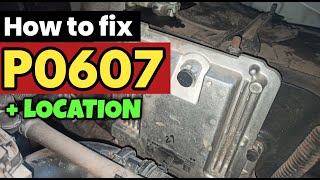
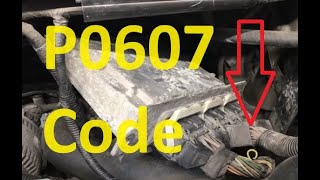
- Powertrain Control Module (PCM/ECM) — Located on the driver's side of the engine block, below the intake horn. It has two large electrical connectors (C1 and C2).. This is the module setting the code. Its location makes it susceptible to heat and vibration, and its connectors are a primary point for inspection.
- PCM Connector C2 (Gray, 96-pin) — The gray connector on the PCM.. Pins 2, 4, and 6 are the critical ground circuits for the PCM. High resistance or a loose connection on these specific pins can directly cause a P0607 code.
- Main Engine Ground Strap — A large braided strap connecting the battery negative terminal directly to the engine block.. This is the primary ground path for the PCM and all engine electronics. Corrosion or looseness here can cause widespread, intermittent electrical issues that trigger a P0607.
- Body Grounds Near Batteries — Located on the body sheet metal near the dual battery locations.. Poor body grounds can contribute to overall electrical system instability, affecting module performance.
Real Owner Repair Stories
- Reddit user redmon09 on r/Diesel (2009 Ram 2500 6.7L Cummins (Note: Older model but demonstrates a key diagnostic principle)) — Intermittent low fuel pressure codes.
❌ Tried (didn't work) Replaced the lift pump, Replaced the fuel filter, Replaced the fuel pressure regulator
✅ What actually fixed it A technician found massive voltage fluctuations. The fix was cleaning all four battery terminals and properly clearing the original stored codes from the module's memory. The dealership had quoted $16,500 to replace the entire fuel system, but the actual cause was purely electrical.
"I Checked Everything" — The Actual Cause
- On the 2019-2020 Ram 3500, a technician may investigate secondary codes like P20E8 (Reductant Pressure Too Low) or P2463 (DPF Restriction) and find no physical leaks or faults in those systems. The actual cause, as documented in multiple TSBs, is often a software logic error within the PCM that falsely reports these issues along with the P0607. The correct procedure is not to chase phantom emissions faults but to reflash the PCM with updated software that corrects the flawed logic.
OEM Part Supersession History
Not specified, multiple revisions exist→68363277AA (Mopar) / 4384696 (Cummins)— Standard part updates for reliability and software compatibility.
Heads up: The PCM for 2019-2021 models is a distinct hardware/software generation. It is notably used by the aftermarket tuning community to install on 2022-2024 trucks, as the newer PCMs cannot be easily calibrated, highlighting a significant change after the 2021 model year.
Model Year Variations Within This Range
- 2019+: Starting in 2019, Ram implemented a Security Gateway Module (SGW). This module prevents direct access to the PCM via the OBD-II port for tasks like software flashing or bidirectional commands. A specialized bypass cable and compatible scan tool (like wiTECH) are required, making diagnosis and repair more complex than on pre-2019 models.
Helpful Videos
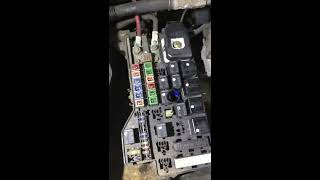
We Have This Part in Stock


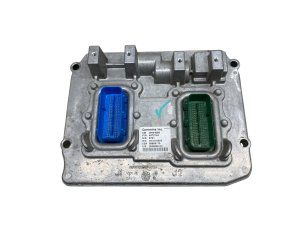

The information in this article is provided for general reference and educational purposes only. Vehicle specifications, procedures, and part compatibility can vary by production date, trim level, and region. Always consult your vehicle's factory service manual and verify part numbers before purchasing or performing repairs. Safety-critical components such as airbags, seat belts, and braking systems should be installed by a qualified professional.
- Ram 3500:
- 🎬 Helpful Videos
- 🛍️ Shop This Part
- What's Unique About the 2019-2020 Ram 3500
- Diagnostic Flowchart
- Symptoms You May Notice
- Most Likely Causes
- Rare But Worth Checking
- Diagnosis Steps
- Parts You'll Likely Need
- Related Codes That Often Appear With This One
- Technical Service Bulletins (TSBs) & Recalls
- Platform-Specific Known Issues
- Mechanic-Grade Diagnostic Values
- Hidden / Shadow Codes Worth Checking
- Scan Tool Commands That Help
- Wiring & Ground Locations
- Real Owner Repair Stories
- "I Checked Everything" — The Actual Cause
- OEM Part Supersession History
- Model Year Variations Within This Range
- 🎟️ Get 5% Off