

P0607 on 2019-2020 Ram 2500: Control Module Performance Causes and Fixes
On a 2019-2020 Ram 2500 with the 6.7L Cummins, P0607 almost always indicates a software issue, not a failed engine computer. The most common fix is a dealer-performed software update (reflash) per manufacturer TSBs, costing around $150-$300. Before replacing any parts, verify battery health, check main ground connections, and have a dealer check for applicable software updates for your VIN.
- P0607 on a 2019-2020 Ram 2500 with the 6.7L Cummins is most likely a software issue, not a failed computer.
- Before any repairs, check with a Ram dealer for software updates (reflashes) related to TSBs #18-066-23, #18-102-22, and others.
- Always test the battery, alternator, and check all PCM power and ground connections before condemning the expensive PCM.
- This code is often accompanied by other emissions or fuel system codes; this strengthens the case for a software update being the correct fix.
- Due to the need for proprietary software to reflash the PCM, this is a job best left to a dealership or qualified repair shop.
What's Unique About the 2019-2020 Ram 2500
For the 2019-2020 Ram 2500 with the 6.7L Cummins engine, P0607 is rarely a simple case of a 'bad PCM'. Instead, it frequently appears as a secondary or 'ghost' code caused by a software calibration issue. Manufacturer Technical Service Bulletins (TSBs) show that when this code appears with other emissions or fuel system codes (like P20E8 or P2463), it is often resolved by a simple PCM software update, not expensive hardware replacement. The updates correct logic flaws that cause the PCM to set the code erroneously while managing other complex systems. Additionally, 2019+ models feature an encrypted PCM and a Security Gateway Module (SGW), which complicates diagnostics and requires dealer-level tools for programming.
Diagnostic Flowchart
Tap your situation to follow the diagnostic path that matches what you're seeing on this vehicle.
Symptoms You May Notice
- Check Engine Light (Malfunction Indicator Lamp) is on.
- Vehicle may enter a reduced power or 'limp mode'.
- Engine may stall, run rough, hesitate, or fail to start.
- Harsh or erratic transmission shifting, including a 'clunk' during deceleration.
- Tachometer may bounce at idle with no actual change in engine RPM.
- Unstable idle, especially when the A/C compressor cycles.
- Inaccurate Diesel Exhaust Fluid (DEF) gauge readings.
- Replacing emissions components (like DEF pumps or DPF sensors) when codes like P20E8 or P2463 appear alongside P0607. The TSBs indicate the root cause is often PCM software logic, not the components themselves.
Most Likely Causes
- PCM Software Requires Update 🔴 High Probability Multiple TSBs (18-066-23 for 2019, 18-067-23 for 2020) explicitly call for a PCM software update to resolve P0607 when it appears with other codes, indicating flaws in the original software logic. These updates were also released as Rapid Service Updates (RSU) like 21-027 and 21-028.
How to confirm: A Ram dealership or a qualified shop with a wiTECH diagnostic tool can check your vehicle's VIN for applicable TSBs and available PCM software updates. This is the most critical first step.
Typical fix: Reprogramming (reflashing) the PCM with the latest manufacturer software. Owners on Reddit report dealer costs of $100-$175 for this service.
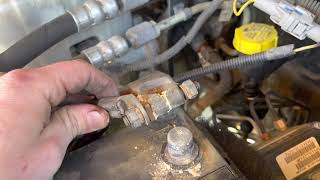
Est. part cost: $0 - Poor Battery, Charging System, or Ground Connection 🟡 Medium Probability Modern control modules require perfectly stable voltage. The dual-battery system in the Cummins Ram adds complexity. Low voltage, a failing alternator, or a bad ground can cause voltage irregularities that trigger a false P0607 code. Forum users have found corroded or loose grounds to be a common culprit.
How to confirm: Test both batteries individually (should be ~12.6V engine off) and the charging system (~13.5-14.5V running). Inspect all battery terminals and major ground straps for corrosion and tightness. Key grounds are on the passenger side fender (G105) and the driver's side engine compartment (G104). A critical ECU ground strap is Mopar part #68092086AA (superseded by 68603870AA).
Typical fix: Clean or tighten battery terminals and ground connections. Replace the battery or alternator if they fail testing.
Est. part cost: $150-$600 - Faulty Powertrain Control Module (PCM) ⚪ Low Probability While the code directly points to an internal module fault, actual hardware failure is far less common than software or voltage issues on this platform. It should only be suspected after all other possibilities, especially TSBs and electrical checks, are exhausted.
How to confirm: This is a diagnosis of exclusion. If a software update has been performed and all power/ground circuits test perfectly (resistance below 0.1 Ω), but the code persists, the PCM is likely faulty. A dealer can also command an ECU self-test with wiTECH; a failure here points to the hardware.
Typical fix: Replace the Powertrain Control Module and program it to the vehicle's VIN.
Est. part cost: $1000-$2500
Rare But Worth Checking
- Aftermarket Performance Tuner:
- Damaged Wiring Harness:
Diagnosis Steps
- Scan for all stored Diagnostic Trouble Codes (DTCs). Note any other codes present, as they provide critical context for TSB application.
- Check for applicable Technical Service Bulletins (TSBs) and Recalls using the vehicle's VIN. This is the most important step for this specific problem. A dealer or shop with wiTECH can do this definitively.
- If a TSB directs a software update for the codes present, this is the primary fix. Contact a dealership to have the PCM reflashed.
- Thoroughly test the dual-battery and charging system. Ensure both batteries are healthy, terminals are clean, and the alternator output is between 13.5V and 14.5V when running.
- Inspect the PCM wiring harness and its connectors for any signs of damage, corrosion, or looseness. Pay special attention to the main power and ground connections, including the G104 and G105 grounds and the harness area behind the driver's side wheel well.
- If an aftermarket tuner is installed, return the vehicle to its stock tune and re-test.
- If all TSBs are complete, the electrical system is healthy, and the wiring is intact, the PCM itself may be faulty and require replacement.
Parts You'll Likely Need
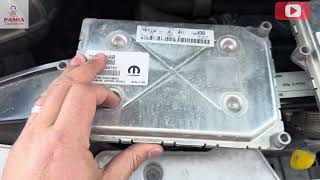
- Powertrain Control Module (PCM)
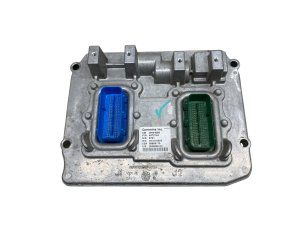
(OEM #68363277AA (Mopar) / 4384696 (Cummins))— This is the part that gets replaced if a software reflash and electrical checks do not solve the issue. It is the last resort. Must be programmed to the vehicle's VIN.
Trusted brands: Mopar
OEM price range: $1200-$2800
Aftermarket price range: $800-$1500
Related Codes That Often Appear With This One
- P20E8 — Reductant Pressure Too Low. This code is frequently listed with P0607 in TSBs that are resolved by a PCM software update.
- P2463 — Diesel Particulate Filter Restriction. This is another code often cited in TSBs alongside P0607, pointing to a software calibration issue rather than a physically clogged filter.
- P0301-P0306 — Cylinder Misfire codes. These can be triggered as a result of the PCM's instability and are mentioned in the same TSBs as P0607.
- P0604 — Internal Control Module RAM Error. This is a more specific internal memory error that can accompany P0607 and is also addressed by the same PCM software updates.
- P0299 — Turbocharger Underboost. TSB 18-066-23 adds this to the list of codes that can be resolved with the PCM reflash, further confirming the software-centric nature of the issue.
Technical Service Bulletins (TSBs) & Recalls
- 18-066-23: For 2019 models, lists P0607-00 with over 20 other DTCs that are resolved by a PCM software update. Also includes improvements for idle stabi
Platform-Specific Known Issues
- A series of Technical Service Bulletins, including #18-066-23 for 2019 models and #18-067-23 (which supersedes 18-102-22) for 2020 models, explicitly state that a Malfunction Indicator Lamp (MIL) with P0607-00 set alongside other codes can be fixed by reprogramming the PCM with updated software.
- These TSBs are critical because they redirect diagnosis away from replacing expensive components (like DEF system parts for P20E8) and toward a simple software update as the primary fix.
- The software updates listed in the TSBs also address other owner complaints like harsh downshifts, idle instability, and inaccurate DEF gauge readings, making the reflash a valuable update even if P0607 is the only code.
Mechanic-Grade Diagnostic Values
- PCM Power Pin Voltage (Key On, Engine Off) — expected: 12.2 V to 12.7 V. Failure: Voltage below 12.2V suggests a problem with the battery, wiring, or fuse supplying power to the PCM.
- PCM Ground Circuit Resistance — expected: Below 0.1 Ω. Failure: Resistance higher than 0.1 Ω indicates a poor ground connection, which can cause erratic module behavior and false codes.
- Alternator Output Voltage (Engine Running) — expected: 13.5 V to 14.5 V. Failure: Voltage outside this range points to a failing alternator or voltage regulator, leading to unstable power for the PCM.
- PCM Ground Pin Continuity Check — expected: Continuity to ground (Below 0.1 Ω). Failure: High resistance on pins 2, 4, or 6 of the C2 (gray) connector indicates a compromised main ground for the PCM.
Hidden / Shadow Codes Worth Checking
- P061B-00: Internal Control Module Torque Calculation Performance. This is another internal self-check code that can be set along with P0607, pointing more specifically to a software calculation error. (see via Dealer-level scan tool like wiTECH. It is listed in TSB #18-066-23.)
- P0604-00: Internal Control Module RAM Error. This code indicates a specific failure in the PCM's Random Access Memory and is often resolved by the same software updates that fix P0607. (see via Dealer-level scan tool like wiTECH. It is listed in TSB #18-066-23.)
Scan Tool Commands That Help
- wiTECH (FCA OEM Tool): Module Self-Test / Diagnostic Routine — Use this after verifying software is up-to-date and all power/ground circuits are good. A failure of this commanded self-test is a strong indicator that the PCM hardware has failed and requires replacement.
- wiTECH (FCA OEM Tool): Transmission 'Quicklearn' Procedure — This procedure is required after reprogramming the PCM on vehicles equipped with the 68RFE automatic transmission, as per TSB #18-066-23. It resets transmission shift adapts.
- wiTECH (FCA OEM Tool): Oil Life Restore — This must be performed after a PCM reflash to prevent the oil life monitor from being reset, as noted in TSB #18-066-23.
Wiring & Ground Locations
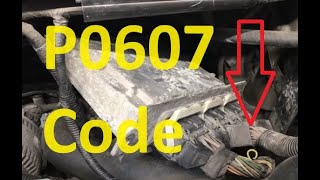
- PCM C2 Connector (Gray) — This is one of the main connectors on the Powertrain Control Module, located on the driver's side of the engine block.. Pins 2, 4, and 6 on this connector are critical ground circuits for the PCM. High resistance on these specific pins can cause a P0607 code.
- G104 — Located in the left (driver's side) front of the engine compartment.. This is a primary engine bay ground point. Corrosion or looseness here can affect multiple systems, including the PCM's power stability.
- G105 — Located on the passenger side fender or inner wheel well area.. This is another key ground point in the engine bay. A poor connection here can cause voltage irregularities that trigger a false P0607.
- Valve Cover Gasket Harness — The fuel injector harness is integrated into the valve cover gasket on the 6.7L Cummins.. A service manual specifically warns that high resistance, opens, or shorts in this harness can cause a P0607 code, sometimes without setting a specific fuel injector DTC.
Real Owner Repair Stories
- Go-Parts article citing owner reports (Ram 2500 with 6.7L Cummins, specific year not mentioned but relevant to the platform.) — Check Engine Light with code P0607.
❌ Tried (didn't work) Initial diagnosis was unclear.
✅ What actually fixed it The code appeared after installing an aftermarket Edge tuner. The owner took it to the dealer, who found the ECM had 'lost the VIN'. The dealer reflashed the ECM back to the stock configuration, which resolved the P0607 code.
"I Checked Everything" — The Actual Cause
- On the 2019-2020 Ram 2500, it's common for P0607 to appear with emissions codes like P20E8 (Reductant Pressure Too Low) or P2463 (DPF Restriction). A technician might follow standard procedure, test the DEF pump or DPF pressure sensors, and find no mechanical faults. The actual cause, documented in multiple TSBs, is a software logic error in the PCM. The fix is not to repair or replace emissions components, but to reflash the PCM with updated software that corrects the false reporting.
OEM Part Supersession History
68363277AA (Mopar)→Not specified, but this is the current service part number.— This is the OEM replacement part for a failed PCM.
Heads up: The Cummins cross-reference part number is 4384696. The module comes blank and must be programmed by a Ram dealer using wiTECH.
Model Year Variations Within This Range
- 2019+: The introduction of the Security Gateway Module (SGW) starting in 2019 adds a layer of complexity. It prevents direct OBD-II port access for writing software or performing certain commands without a specialized bypass cable and authenticated diagnostic tools like wiTECH, making diagnosis and module replacement more difficult than on pre-2019 models.
Helpful Videos
We Have This Part in Stock



The information in this article is provided for general reference and educational purposes only. Vehicle specifications, procedures, and part compatibility can vary by production date, trim level, and region. Always consult your vehicle's factory service manual and verify part numbers before purchasing or performing repairs. Safety-critical components such as airbags, seat belts, and braking systems should be installed by a qualified professional.
- Ram 2500:
- 🎬 Helpful Videos
- 🛍️ Shop This Part
- What's Unique About the 2019-2020 Ram 2500
- Diagnostic Flowchart
- Symptoms You May Notice
- Most Likely Causes
- Rare But Worth Checking
- Diagnosis Steps
- Parts You'll Likely Need
- Related Codes That Often Appear With This One
- Technical Service Bulletins (TSBs) & Recalls
- Platform-Specific Known Issues
- Mechanic-Grade Diagnostic Values
- Hidden / Shadow Codes Worth Checking
- Scan Tool Commands That Help
- Wiring & Ground Locations
- Real Owner Repair Stories
- "I Checked Everything" — The Actual Cause
- OEM Part Supersession History
- Model Year Variations Within This Range
- 🎟️ Get 5% Off