

P0607 on 2013-2020 Ram 1500: Control Module Performance Causes and Fixes
P0607 on a 2013-2020 Ram 1500 indicates an internal performance error in the Powertrain Control Module (PCM). Before replacing the expensive PCM, check for PCM software updates via a TSB, as a reflash is the most common fix. Also, verify the battery, its connections, and the charging system are healthy, as unstable voltage is a primary trigger for this code on these trucks.
- P0607 on a Ram 1500 is a serious code, but do not assume the PCM has failed.
- The most critical first step is to check for available PCM software updates (reflashes) related to TSBs for your specific year.
- Always test the battery and charging system thoroughly. Unstable voltage is a common trigger for this code.
- Only consider replacing the PCM after a professional has ruled out software, power supply, and grounding issues.
What's Unique About the 2013-2020 Ram 1500

On the 2013-2020 Ram 1500, P0607 is rarely a straightforward 'bad PCM' diagnosis. Manufacturer Technical Service Bulletins (TSBs) show this code often appears alongside other faults, especially on newer models with eTorque hybrid systems or those with complex emissions controls. The most common factory-specified fix is not replacing the hardware, but updating the PCM's software to correct overly sensitive error reporting or logic flaws. This suggests the PCM is often overwhelmed by other issues, such as voltage irregularities or conflicting data from other modules, rather than being faulty itself.
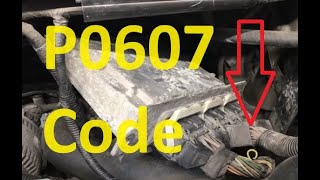
🎬 Watch: Understanding common causes and fixes for the P0607 code.Diagnostic Flowchart

Tap your situation to follow the diagnostic path that matches what you're seeing on this vehicle.
Generation note: This range covers the end of the 4th generation (2013-2018) and the beginning of the 5th generation (2019-2020). The 5th gen models, especially those with the eTorque mild-hybrid system, have specific TSBs linking P0607 to hybrid powertrain faults, which is less common on the 4th gen. The 4th gen trucks are particularly noted in TSBs for needing software updates to resolve P0607 when it appears with other seemingly unrelated codes like EVAP leaks or fuel trim issues.
Symptoms You May Notice

- Check Engine Light is on
- Vehicle may enter limp mode (reduced power)
- Engine stalling or hesitation, sometimes when coming to a stop
- Harsh or erratic transmission shifting
- Failure to start, where the engine cranks but does not fire
- Multiple other warning lights may appear on the dash, including the electronic throttle control (lightning bolt) light
- Vehicle may not shut off immediately when the ignition is turned off
- Decreased fuel economy
- Replacing the PCM immediately without checking for software updates or thoroughly testing the battery, alternator, and ground connections. This is an expensive mistake, as a simple reflash, a new battery, or cleaning a ground strap often solves the problem.
Most Likely Causes

- Outdated PCM Software 🔴 High Probability Multiple TSBs across this year range (for 2013, 2015, 2019, 2020 models) specify that a PCM software update is the fix for P0607 when it appears with a host of other codes. This is the manufacturer's most common recommended first step.
How to confirm: A Ram dealer or a qualified shop with a subscription to Mopar's wiTECH diagnostic software can check your vehicle's VIN for available PCM updates.
Typical fix: Flashing the PCM with the latest manufacturer-approved software calibration. This often resolves false positives and adjusts sensor parameter tolerances.
Est. part cost: $0 - Weak Battery or Failing Alternator 🟡 Medium Probability Control modules require a stable voltage (typically 13.5-14.5V when running) to operate correctly. Voltage drops or spikes from a bad battery or alternator can corrupt the PCM's internal self-check and trigger a P0607. This is a very common trigger on these trucks.
How to confirm: Test the battery with a digital multimeter or electronic tester; it should read ~12.6V when off. With the engine running, voltage should be between 13.5V and 14.5V. A load test is recommended, as a battery can show good voltage but fail under load.
Typical fix: Replace the battery and/or alternator.
Est. part cost: $150-$600 - Poor Power or Ground Connections 🟡 Medium Probability
How to confirm: Visually inspect the battery terminals for corrosion. Trace and inspect the main engine and PCM ground straps for tightness and corrosion. Key locations include straps from the rear of the cylinder heads to the firewall and from the frame to the engine block. A voltage drop test on the power and ground circuits to the PCM can confirm high resistance.
Typical fix: Clean battery terminals and cable ends. Clean, tighten, or replace corroded or broken ground straps.
Est. part cost: $5-$50 - Faulty Powertrain Control Module (PCM) ⚪ Low Probability While possible, this is often the last resort after all other causes are eliminated. The TSBs and extensive owner reports strongly suggest other issues are more likely.
How to confirm: This is a process of elimination. If the software is up to date, power and grounds are perfect, and no other DTCs are present that could cause this, the PCM itself may be faulty.
Typical fix: Replace the PCM. This requires programming the new unit to the vehicle's VIN and security information.
Est. part cost: $800-$1500
Rare But Worth Checking
- Aftermarket Performance Tuner: Installing a non-factory engine tune can sometimes corrupt the PCM software or cause performance the factory calibration doesn't understand, leading to a P0607 code. One owner reported this code appeared after flashing a tune and was resolved by having the dealer reflash the ECM back to stock.
- Wiring Harness Damage: Damage to the wiring harness leading to the PCM from chafing, heat, or rodents can cause shorts or open circuits, disrupting power and data signals.
- Faulty Intelligent Battery Sensor (IBS): The IBS, located on the negative battery terminal, monitors the battery's state of charge. A failing IBS can send incorrect voltage data or disrupt the charging system, leading to voltage instability that can trigger a P0607 code. If battery and alternator test good, the IBS is a potential suspect.
Diagnosis Steps
- Scan for all DTCs. If other codes are present, diagnose and fix them first, as P0607 is often a secondary code triggered by another system's fault.
- Check for Technical Service Bulletins (TSBs). Contact a Ram dealer or use a professional diagnostic database to see if a PCM software update is available for your VIN. This is the most common fix.
- Perform a full battery and charging system test. Ensure the battery is healthy (load test it) and the alternator output is stable and within the 13.5V-14.5V range when running.
- Inspect all PCM power and ground connections. Clean any corrosion from battery terminals. Visually inspect and physically check the tightness of ground straps from the engine block to the frame and from the cylinder heads to the firewall.
- Perform a voltage drop test on the main power and ground wires to the PCM to check for hidden resistance in the circuit.
- If an aftermarket tuner is installed, return the vehicle to the stock factory tune and see if the code disappears.
- If all previous steps check out, the issue may be the PCM itself. This should be the last step in the diagnosis.
Parts You'll Likely Need
- Powertrain Control Module (PCM) Reflash — As documented in numerous TSBs for the 2013-2020 Ram 1500, updating the PCM software is the most common required fix to prevent the false triggering of P0607.
Trusted brands: Mopar (dealer service)
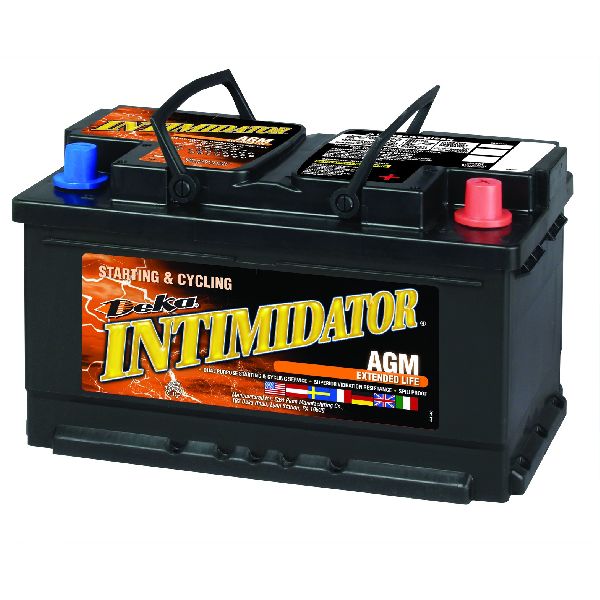
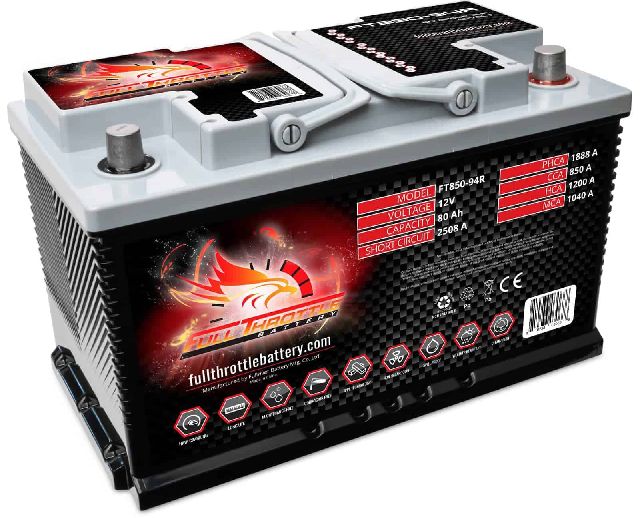
OEM price range: $150-$250 - Battery — A weak or failing battery provides unstable voltage, which is a primary cause of control module performance codes.
Trusted brands: Mopar, Interstate, DieHard
OEM price range: $200-$350
Aftermarket price range: $150-$250 - Powertrain Control Module (PCM)
(OEM #68243305AB (Example for 2016-2018 5.7L w/ 6-speed))— This is the fix only when all other possibilities (software, power, grounds) have been definitively ruled out.
Trusted brands: Mopar
OEM price range: $1000-$1500
Aftermarket price range: $250-$800
Related Codes That Often Appear With This One
- U0140 — TSB #1810316 for 2013 models lists P0607 with U0140 (Lost Communication With Body Control Module), suggesting a PCM software update can fix both.
- P0456 — TSB #18-103-16 REV. B for 2015 models shows P0607 appearing with EVAP leak codes, again pointing to a software update as the solution.
- P0300 — On 2015 models, P0607 can be set along with a multiple cylinder misfire code, which may be resolved by a PCM reflash per TSB #18-103-16 REV. B.
- U0594, P1B03, P0A3F — On 2020 models with the eTorque system, P0607 is cited in TSB #08-014-21 along with several hybrid-specific codes, indicating the issue is related to the hybrid control system.
- P2096 / P2098 — TSB #1807714 for 2013 models and #18-103-16 REV. B for 2015 models list P0607 alongside fuel trim codes, with the prescribed fix being a PCM software update.
Technical Service Bulletins (TSBs) & Recalls
- 08-014-21: For 2020 models, lists P0607 with hybrid system DTCs.
- 1807022: For 2019 models, lists P0607 with hybrid and crankcase ventilation codes.
- 18-103-16 REV. B: For 2015 models, lists P0607 with a wide variety of other codes fixed by a PCM update.
- 1810316: For 2013 models, lists P0607 with a BCM communication code, fixed by a PCM update.
- 21-011-20: For 2019 models, lists P0607 with various speed sensor and performance codes.
- 1807714: For 2013 models, links P0607 with fuel trim codes (P2096, P2097, etc.) and points to a software fix.
Platform-Specific Known Issues
- TSB #18-103-16 REV. B notes that on 2015 models, P0607 can be falsely set along with codes for misfires, EVAP leaks, and fuel trim issues, with the solution being a software update. A forum user confirmed this TSB addressed multiple codes on their truck.
Mechanic-Grade Diagnostic Values
- PCM Power Pin Voltage (Key On, Engine Off) — expected: 12.2 V ± 0.5 V. Failure: Voltage below this range indicates a power supply issue from the battery or wiring before it reaches the PCM.
- PCM Ground Circuit Resistance — expected: Below 0.1 Ω. Failure: Resistance higher than 0.1 Ω signifies a poor ground connection, which can cause voltage instability and module glitches.
- Alternator Output Voltage (Engine Running at Idle) — expected: 13.5V - 14.5V. Failure: Voltage that is unstable, too low, or too high points to a failing alternator or voltage regulator, a primary cause of P0607.
- Minimum Cranking Voltage — expected: Above 9.0V. Failure: A voltage dip below 9.0V during engine cranking can cause the PCM to reset or glitch, logging a P0607 code.
Scan Tool Commands That Help
- wiTECH (or equivalent): ECU/PCM Internal Self-Test — This command forces the PCM to run its internal diagnostic routines on demand. A failure here strongly suggests an internal hardware fault, but it should only be used after verifying all power and ground circuits are perfect.
- wiTECH (or equivalent): Restore Vehicle Configuration — This function is mandatory after replacing a PCM. It programs the new module with the vehicle's VIN, security information (SKIM), and other vehicle-specific options.
- wiTECH (or equivalent): Check for PCM Software Updates — This should be one of the very first steps in diagnosis for a P0607. It checks Chrysler's servers for any available firmware updates (reflashes) for the specific VIN, which often resolve this code.
Wiring & Ground Locations
- Engine to Firewall Ground Straps — Braided ground straps located at the rear of the cylinder heads (on Hemi models) connecting to the vehicle's firewall.. These are critical grounds for the engine's sensor network. Corrosion or looseness here can introduce electrical noise and cause erratic sensor readings, potentially leading the PCM to fail its self-test.
- PCM Bracket Ground — A ground strap is often fastened directly to the bracket holding the PCM.. A poor ground at this location can directly affect the PCM's internal voltage regulation and stability, making it a prime suspect for a P0607 code. A forum user noted this strap had rotted off on their 2014 model.
- Radiator Support / Fender Grounds — Multiple ground points are typically located on the radiator core support and on the inner fenders in the engine bay.. These grounds serve various components, including lighting and sensors. While not a direct PCM ground, high resistance in these areas can affect the overall electrical stability of the vehicle. Cleaning these grounds has been reported to solve unexplained electrical issues.
Real Owner Repair Stories
- RamForum.com user (2019 Ram 1500 Laramie 5.7L Hemi) — Unspecified electrical glitches and codes.
❌ Tried (didn't work) Initial diagnosis pointed toward complex module issues.
✅ What actually fixed it The owner proactively disconnected, cleaned, and re-secured the ground wires on the fenders and radiator support, which resolved the problems. - RamForum.com user (2014 Ram 1500 5.7L) — Owner was performing a cam/lifter job and could not find the ground strap.
✅ What actually fixed it The user eventually found the ground strap, which fastens to the back of the head and the PCM bracket, had fallen and was rotted. The implied fix is to replace this broken ground strap to ensure proper PCM grounding.
Model Year Variations Within This Range
- 2013: The 2013 model year was the first to widely feature the ZF 8-speed transmission (8HP45/8HP70) in the 1500. TSBs like #1807714 and #0807214 are specific to these early models, addressing software issues related to P0607 that could also affect transmission shifting and BTSI (Brake Transmission Shift Interlock) control.
- 2013+: Starting around 2013, Ram began implementing the Intelligent Battery Sensor (IBS) on the negative battery terminal. A failure of this sensor can cause erratic charging behavior and voltage instability, which is a known trigger for P0607. This adds an extra diagnostic step (checking the IBS) that would not be present on older, non-IBS vehicles.
- 2019-2020: The 5th generation (DT) platform introduced the eTorque mild-hybrid system. TSBs #08-014-21 and #1807022 specifically link P0607 to other hybrid powertrain DTCs (U0594, P1B03, etc.), indicating a different diagnostic path is required for these models compared to the non-hybrid 4th generation trucks.
Helpful Videos

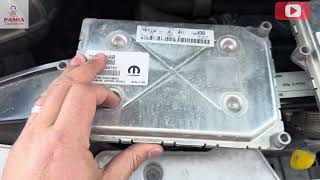
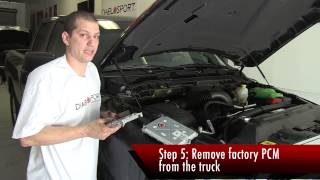
Used OEM Parts in Stock
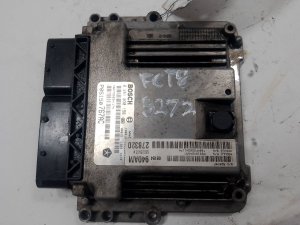


New Aftermarket Parts Available


The information in this article is provided for general reference and educational purposes only. Vehicle specifications, procedures, and part compatibility can vary by production date, trim level, and region. Always consult your vehicle's factory service manual and verify part numbers before purchasing or performing repairs. Safety-critical components such as airbags, seat belts, and braking systems should be installed by a qualified professional.
- Ram 1500:
- 🎬 Helpful Videos
- 🛍️ Shop This Part
- What's Unique About the 2013-2020 Ram 1500
- Diagnostic Flowchart
- Symptoms You May Notice
- Most Likely Causes
- Rare But Worth Checking
- Diagnosis Steps
- Parts You'll Likely Need
- Related Codes That Often Appear With This One
- Technical Service Bulletins (TSBs) & Recalls
- Platform-Specific Known Issues
- Mechanic-Grade Diagnostic Values
- Scan Tool Commands That Help
- Wiring & Ground Locations
- Real Owner Repair Stories
- Model Year Variations Within This Range
- 🎟️ Get 5% Off