

P0607 on 2005-2010 Pontiac Vibe: Control Module Fault Causes and Fixes
On the 2005-2010 Pontiac Vibe, code P0607 is most often caused by a clogged A/C evaporator drain tube dripping water onto an oxygen sensor connector, not a failed computer. The fix is to clear the drain tube and dry the connector, which is a very low-cost DIY repair. The second most common cause, a truly failed ECM, was subject to a recall on 2005-2008 models.
- Before suspecting an expensive computer failure, your first step should be to check for a clogged A/C drain tube.
- This code is often accompanied by P0138 and the VSC/TRAC warning lights.
- The fix is often simple and cheap: clear the drain tube and apply dielectric grease to the O2 sensor connector.
- If the ECM has failed, a replacement must be programmed to your car's VIN, which is not typically a DIY job.
- Symptoms like stalling are a serious safety concern, so the issue should be addressed promptly.
What's Unique About the 2005-2010 Pontiac VIBE

The Pontiac Vibe is a mechanical twin to the Toyota Matrix, sharing its engines and electronics. While P0607 usually points to a failed computer, on this specific platform, it is very frequently a false alarm. A GM Technical Service Bulletin (TSB #10-06-04-010A) reveals that a clogged air conditioner drain can cause water to drip onto the downstream oxygen sensor's electrical connector. This creates a path for current to flow from the sensor's heater circuit to its signal circuit, causing a short that makes the computer *think* it has an internal fault. This is a well-documented quirk and the first thing you should check.
Diagnostic Flowchart
Tap your situation to follow the diagnostic path that matches what you're seeing on this vehicle.
Generation note: This guide covers the first generation (2005-2008) and second generation (2009-2010) of the Pontiac Vibe. The primary cause, a clogged A/C drain, is covered by a TSB that applies to models from 2003-2010. First-generation models (2005-2008) with the 1.8L 1ZZ-FE engine were also part of a GM recall (NHTSA #10V389000) for potential ECM circuit board cracks, which corresponds to a similar campaign on the Toyota Matrix and Corolla.
Symptoms You May Notice

- Check Engine Light is on
- Vehicle Stability Control (VSC) or Traction Control (TRAC) light is on, often flashing
- Engine may stall unexpectedly, sometimes in traffic
- Engine runs rough or has reduced power
- Harsh or erratic automatic transmission shifting
- Car may crank but fail to start
- Symptoms are worse in high humidity, after rain, or after the car sits overnight in damp conditions
- Symptoms are triggered specifically when the A/C is running in high ambient temperatures
- Replacing the PCM/ECM without first checking for the clogged A/C drain tube, which is a much more common and cheaper fix for this specific vehicle.
- Replacing the oxygen sensor when the actual problem is water in its electrical connector. The sensor itself is often fine.
Most Likely Causes

- Clogged A/C Evaporator Drain Tube 🔴 High Probability This is a known design issue documented in GM TSB #10-06-04-010A. The drain gets blocked by debris or even insect nests, and condensation from the A/C system overflows inside the cabin, dripping directly onto the downstream O2 sensor's electrical connector. The water shorts the heater and signal circuits in the connector, triggering the false P0607 code.
How to confirm: Check for moisture on or around the O2 sensor connector. To access it, remove the small plastic side panel cover to the right of the accelerator pedal, then pull back the carpet to expose the wiring harnesses. The connector will be located there. Even if the carpet isn't wet, the connector itself may be. Also, check if the A/C drain tube under the vehicle (passenger side firewall) is dripping water when the A/C is on. If it's not, it's clogged.
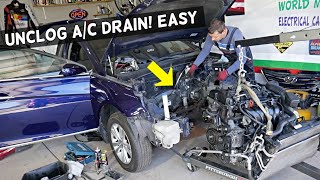
Typical fix: Clear the evaporator drain tube. This can be done by forcing compressed air up the drain hose from underneath the car, or by carefully feeding a flexible wire or zip tie in to break up the clog. 🎬 See this quick guide on unclogging your AC drain plug Disconnect the O2 sensor electrical connector, dry it thoroughly with compressed air, apply dielectric grease to the terminals to waterproof it, and reconnect.
Est. part cost: $5-$15 - Failing Powertrain Control Module (PCM/ECM) 🟡 Medium Probability GM issued a recall (NHTSA #10V389000) for 2005-2008 Vibe models with the 1.8L 1ZZ-FE engine due to improperly manufactured ECMs. Internal solder joints could crack, causing stalling, harsh shifting, or a no-start condition. This corresponds to Toyota's TSB EG042-07 for the same issue on the Corolla and Matrix.
How to confirm: This is a diagnosis of exclusion. If the A/C drain leak, wiring, and power/grounds have all been definitively ruled out, the PCM is the likely culprit. A professional scan tool may fail to communicate with the module, confirming the failure.
Typical fix: The PCM must be replaced. The replacement unit must be programmed to the vehicle's VIN and security system. This typically requires a dealer or specialized shop with a GM Tech2 or Toyota Techstream scan tool.
Est. part cost: $200-$800 - Poor Battery Voltage or Bad Grounds ⚪ Low Probability
How to confirm: Test the battery voltage with a multimeter; it should be above 12.4V with the engine off and 13.5V-14.5V with the engine running. Inspect main ground connections for tightness and corrosion, especially G104 (on the rear of the cylinder head), G102 (on the right inner fender), and G103 (at the left front strut tower).
Typical fix: Clean corroded terminals with a wire brush, tighten loose ground bolts, or replace a weak battery or failing alternator.
Est. part cost: $10-$250
Rare But Worth Checking
- Damaged Oxygen Sensor Wiring: Physical damage to the oxygen sensor wiring harness can short the sensor's heater and signal circuits, which can send erratic signals to the PCM and trigger a P0607 code. This can also be caused by an internal short in the O2 sensor itself.
Diagnosis Steps

- Scan for other codes. If P0138 (or P0136) is present with P0607, the A/C drain leak is highly probable.
- Turn on the A/C to its maximum setting and check underneath the vehicle on the passenger side firewall. A steady drip of water from the drain tube is normal. No drip indicates a clog.
- Access the downstream O2 sensor connector. Remove the passenger-side interior kick panel (to the right of the accelerator pedal) and pull back the carpet.
- Inspect the connector and surrounding area for any signs of moisture or corrosion. If wet, you have found the likely cause.
- If the area is wet, clear the A/C drain tube using compressed air or a flexible wire from under the car. Disconnect, dry the connector thoroughly, apply dielectric grease, and reconnect it. Clear the codes and test drive.
- If the connector is dry and the code returns, check the vehicle's charging system. Test the battery and alternator output with a multimeter (should be ~13.5-14.5V when running).
- Inspect the main power and ground connections. Check battery terminals for corrosion. Inspect and tighten chassis grounds, particularly G104 on the cylinder head and G102/G103 on the inner fenders.
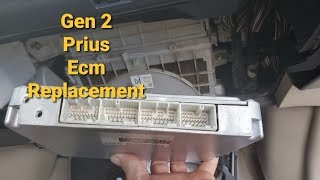
- If all previous steps check out and the code persists (especially on a 2005-2008 1.8L model), the PCM is likely faulty per the GM recall and requires professional diagnosis and probable replacement. 🎬 Watch: Step-by-step walkthrough for a Gen 2 ECM replacement
Parts You'll Likely Need

- Dielectric Grease — Used to waterproof the oxygen sensor electrical connector after cleaning and drying it, preventing the issue from recurring.
Trusted brands: Permatex, CRC
OEM price range: $5-$15
Aftermarket price range: $5-$10 - Engine Control Module (ECM/PCM)
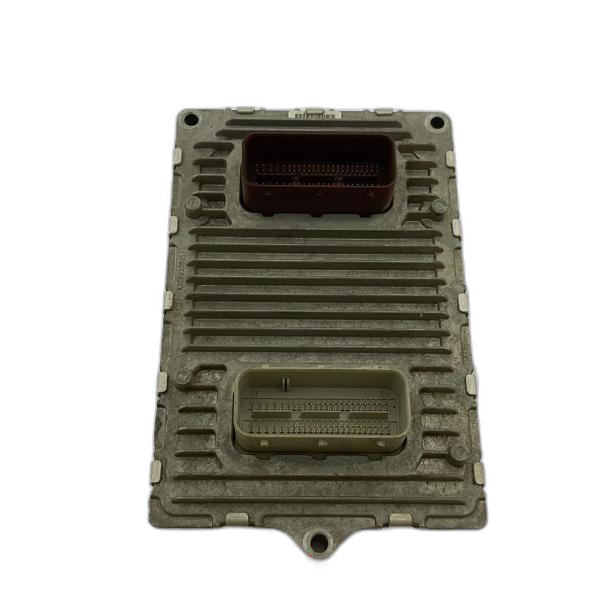
(OEM #Varies by year/engine. Examples: 88973585 (2005 1.8L), 89661-02V51, 89661-02L21 (2009 2.4L).)— This is the fix if the module has truly failed internally, which is the second most likely cause after the water leak. A replacement is required when it cannot be reprogrammed or has an internal short.
Trusted brands: ACDelco (GM), Denso (Toyota OE)
OEM price range: $650-$800
Aftermarket price range: $200-$500 (Remanufactured)
Related Codes That Often Appear With This One
- P0138 — This code (O2 Sensor Circuit High Voltage Bank 1 Sensor 2) is explicitly mentioned in TSB #10-06-04-010A as appearing alongside P0607. The water dripping on the connector shorts the heater circuit to the signal circuit, causing a high voltage reading.
- C1201 — This code indicates a fault in the engine control system. The Vehicle Stability Control (VSC) system sets this code and turns itself off as a safety precaution whenever a critical powertrain code like P0607 is active.
Technical Service Bulletins (TSBs) & Recalls

- Bulletin #10-06-04-010A: Addresses intermittent Check Engine Light, P0607 and/or P0138, and drivability issues caused by a clogged evaporator drain leaking water onto an electrical connector.
- Toyota TSB EG042-07: Addresses P0601/P0606/P0607 or a no-start condition on 2005-2007 Corolla and Matrix models with the 1ZZ-FE engine, calling for ECM replacement. This is the Toyota equivalent of the GM recall for the Vibe.
Platform-Specific Known Issues
- A clogged A/C evaporator drain tube is a known issue that causes water to leak onto the downstream O2 sensor connector, triggering a false P0607 code. This is documented in TSB #10-06-04-010A.
- The ECM in 2005-2008 models with the 1.8L 1ZZ-FE engine was subject to GM recall #10V389000 for potential internal circuit board cracks that could cause stalling or a no-start condition.
Mechanic-Grade Diagnostic Values
- Battery Voltage, Engine Off — expected: ~12.6V. Failure: Below 12.4V indicates a weak or discharged battery which can cause module errors.
- Charging System Voltage, Engine Running — expected: 13.5V - 14.5V. Failure: Voltage that is too low or fluctuating can indicate an alternator problem, starving the ECM of stable power.
Scan Tool Commands That Help
- Toyota Techstream: Active Test: Control the Injection Volume for A/F Sensor — This function allows a technician to manually alter the fuel trim and observe the reaction of the downstream O2 sensor (O2S B1S2). It can help confirm if the O2 sensor is responding correctly or if its signal is compromised, which could falsely trigger a P0607.
- Toyota Techstream: Utility: All Readiness — After a repair, this function is used to check the status of the DTC judgment for P0607 (and related codes like P0138) after performing a specific confirmation drive pattern. It helps verify if the fix was successful without waiting for the MIL to come back on.
Wiring & Ground Locations

- G104 — On the rear of the cylinder head (2005-2008 models). For 2009+ models, it is located on the top or left rear of the engine, depending on engine size (1.8L vs 2.4L).. This is a primary engine-to-chassis ground. A loose or corroded connection here can cause widespread electrical issues, including erratic behavior from the ECM.
- G102 — On the right inner fender for 2005-2008 models. On the left front of the engine compartment for 2009+ models.. This is a key grounding point for the engine room main harness, which includes power and signal wires for the ECM.
- G103 — At the left front strut tower for 2005-2008 models. On the right front of the engine compartment for 2009+ models.. Another critical chassis ground point in the engine bay that ensures a stable ground reference for various electronic modules.
- Downstream O2 Sensor Connector — Inside the cabin, to the right of the accelerator pedal, under the carpet. Accessed by removing a small plastic side panel.. This is the specific connector that gets wet from a clogged A/C evaporator drain, shorting the sensor circuits and triggering the false P0607 code as described in TSB #10-06-04-010A.
Real Owner Repair Stories
- Toyota Tundra Forum user (Toyota Tundra (similar Toyota electronics)) — P0607 code appeared after noticing someone had attempted to steal the catalytic converters and damaged wiring.
❌ Tried (didn't work) Replacing the O2 sensors on the passenger side.
✅ What actually fixed it The ECM had to be replaced. The user suspected that the frayed and damaged O2 sensor wires shorted out the ECM, as there is no fuse between the sensor wiring and the ECM.
OEM Part Supersession History
89661-02V51→89661-02V53— Standard part revision by the manufacturer (Toyota).
Heads up: This ECM is used in 2009-2011 Toyota Matrix models with both 1.8L and 2.4L engines, and is the corresponding part for the 2009-2010 Pontiac Vibe. The new part number (89661-02V53) is the direct replacement.
Model Year Variations Within This Range

- 2009-2010: Second-generation Vibe models offered the 2.4L 2AZ-FE engine alongside the 1.8L. The 2AZ-FE is also known to trigger a false P0607 when an O2 sensor fails or has a wiring issue, a behavior documented in its sister platform, the Toyota Matrix. The diagnostic logic points to checking for O2 sensor codes (P0136, P0137, P0138) first before condemning the ECM.
Helpful Videos

We Have This Part in Stock



The information in this article is provided for general reference and educational purposes only. Vehicle specifications, procedures, and part compatibility can vary by production date, trim level, and region. Always consult your vehicle's factory service manual and verify part numbers before purchasing or performing repairs. Safety-critical components such as airbags, seat belts, and braking systems should be installed by a qualified professional.
- Pontiac VIBE:
- 🎬 Helpful Videos
- 🛍️ Shop This Part
- What's Unique About the 2005-2010 Pontiac VIBE
- Diagnostic Flowchart
- Symptoms You May Notice
- Most Likely Causes
- Rare But Worth Checking
- Diagnosis Steps
- Parts You'll Likely Need
- Related Codes That Often Appear With This One
- Technical Service Bulletins (TSBs) & Recalls
- Platform-Specific Known Issues
- Mechanic-Grade Diagnostic Values
- Scan Tool Commands That Help
- Wiring & Ground Locations
- Real Owner Repair Stories
- OEM Part Supersession History
- Model Year Variations Within This Range
- 🎟️ Get 5% Off