

P0607 on 2019-2020 Jeep Renegade: Control Module Performance Causes and Fixes
On a 2019-2020 Jeep Renegade, code P0607 is most often caused by a software glitch in the Powertrain Control Module (PCM). The most common fix is a software update performed by a Jeep dealer, as outlined in multiple Technical Service Bulletins. Before suspecting PCM failure, also check for a weak or failing battery and inspect major power and ground connections, as voltage irregularities are a known trigger.
- For a 2019-2020 Jeep Renegade, P0607 is very likely a software issue that a dealer must fix by reprogramming the PCM.
- Before assuming the PCM has failed, always test the battery and check for clean, tight ground connections.
- This code is serious and can cause stalling or a no-start condition, so it should be addressed promptly.
- Other codes, especially P2110 and P2173, are usually symptoms of the P0607 fault, not separate problems.
What's Unique About the 2019-2020 Jeep RENEGADE
For the 2019-2020 Jeep Renegade, this code is very frequently a software issue rather than a hardware failure. Jeep issued specific Technical Service Bulletins (TSBs) to address this problem. TSB #18-006-23 explicitly states the fix is to reprogram the PCM with updated software. This update also changes the code's sensitivity from a one-trip to a two-trip fault, indicating the original programming was too sensitive and could falsely trigger the P0607 code during transient conditions, like a hot restart. This issue is not unique to the Renegade and also affects platform mates like the Jeep Compass.
Diagnostic Flowchart
Tap your situation to follow the diagnostic path that matches what you're seeing on this vehicle.
Symptoms You May Notice
- Check Engine Light is on.
- Poor or reduced engine performance.
- Engine may stall unexpectedly, sometimes while driving or at idle.
- Intermittent no-crank or no-start condition, especially when the engine is hot (above 122°F / 50°C).
- The automatic Engine Stop/Start (ESS) feature does not work as expected or is automatically deactivated.
- Vehicle may enter 'limp mode,' with severely limited power.
- Erratic shifting or other transmission problems.
- Replacing the PCM before checking for software updates. The TSBs clearly indicate a software update is the primary fix.
- Replacing throttle body or other sensors. While codes like P2110 and P2173 may appear alongside P0607, they are often symptoms of the PCM's internal fault, not the root cause. The PCM triggers these codes as part of its limp-mode strategy.
Most Likely Causes
- Outdated Powertrain Control Module (PCM) Software 🔴 High Probability Manufacturer TSBs #1800623 and #18-006-23 directly state that the fix for P0607 is to reprogram the PCM with the latest software, indicating the original software was faulty or overly sensitive. This is a known issue across several Jeep models.
How to confirm: A Jeep dealership or a qualified shop with a subscription to FCA's tech portal (DealerCONNECT) can check if the vehicle's PCM has the latest software version installed by referencing its VIN against applicable TSBs.
Typical fix: Reprogramming (flashing) the PCM with the updated software version using a wiTECH scan tool. 🎬 Watch: How a technician programs a blank PCM using wiTECH. The process requires a stable power supply to the vehicle.
Est. part cost: $0-$250 - Weak or Failing Battery 🟡 Medium Probability Modern control modules are highly sensitive to voltage. A battery providing less than 12 volts at rest or dropping below 9.6V during cranking can cause unpredictable behavior and trigger internal performance codes. Forum users on similar Jeep platforms frequently report a new battery resolves mysterious electrical codes like P0607, even on brand new vehicles.
How to confirm: Test the battery with a multimeter or a digital battery tester. A healthy, resting battery should read approximately 12.6 volts. A load test is crucial; check the voltage during cranking. If it drops below 9.6 volts, the battery is weak and should be replaced.
Typical fix: Replace the vehicle's 12V battery.
Est. part cost: $150-$350 - Poor Power or Ground Connections ⚪ Low Probability Vibrations and exposure to the elements can lead to loose or corroded ground straps and power connections to the PCM. A specific real-world fix reported on a Jeep forum for P0607 was cleaning factory paint off a ground connection bolt to ensure a bare-metal connection. Bad grounds are a common source of electrical issues on many vehicles.
How to confirm: Visually inspect the battery terminals, main engine/chassis ground straps, and the wiring harness connectors at the PCM for looseness, corrosion, or damage. Perform a voltage drop test on the ground circuit to confirm its integrity.
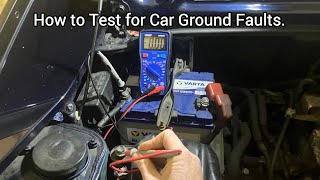
Typical fix: Clean the affected terminals and connection points with a wire brush and ensure all connections are tight. Scrape any paint or corrosion from grounding points to ensure bare metal contact. 🎬 Watch: A quick and easy way to test for ground faults. Apply dielectric grease to prevent future corrosion.
Est. part cost: $5-$20
Rare But Worth Checking
- Faulty Powertrain Control Module (PCM): While the code points to the PCM, actual hardware failure is rare compared to software issues or external electrical problems. This should only be considered after all other possibilities, especially software updates and thorough electrical checks, have been exhausted. One owner on a forum reported having the PCM replaced only for the code to return, indicating a deeper issue.
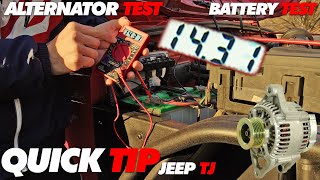
- Charging System Fault (Alternator): An over-charging (above 14.5V) or under-charging (below 13.5V) alternator can create voltage instability, confusing the PCM and causing it to log a performance code. The charging system should be tested along with the battery. 🎬 See this quick tip for checking your alternator and battery.
Diagnosis Steps
- Scan the vehicle for all stored trouble codes. Note any other codes that appear with P0607, as they are often symptoms.
- Check for applicable Technical Service Bulletins (TSBs) for your vehicle's VIN. This is the most critical first step. Specifically, reference TSBs #1800623, #18-006-23, #1805723, and #1801621 for P0607 on this model.
- Test the battery thoroughly. Ensure it has a full charge (approx. 12.6V) and can hold a load during cranking (above 9.6V). A simple voltage check is not enough; a load test is required.
- Inspect the charging system. With the engine running, check the alternator output, which should be stable at around 13.5-14.5 volts.
- Inspect all PCM power and ground connections. Check for clean, tight, and corrosion-free connections at the battery terminals, PCM connectors, and main chassis/engine grounds. A forum user fixed a P0607 by cleaning paint from a ground bolt.
- If all electrical inputs are good, have a Jeep dealer or qualified shop perform the PCM software update as specified in the TSBs. The dealer will use a wiTECH tool and must maintain stable battery voltage during the flash.
- If the code persists after the software update and all electrical checks are confirmed good, the PCM may have an internal hardware failure and require replacement.
Parts You'll Likely Need
- Powertrain Control Module (PCM) Software Update — This is the most common and manufacturer-recommended fix for P0607 on this specific vehicle, as documented in multiple TSBs.
Trusted brands: Mopar (dealer service)
OEM price range: $150-$250
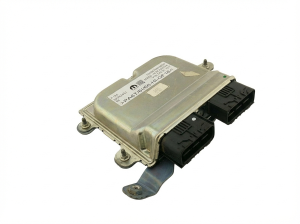
Aftermarket price range: N/A - Powertrain Control Module (PCM)
(OEM #68342094AA (example for 2.4L))— This is the last resort if a software update and electrical checks do not resolve the code, indicating a hardware failure within the module. Must be programmed to the vehicle's VIN.
Trusted brands: Mopar
OEM price range: $600-$1200
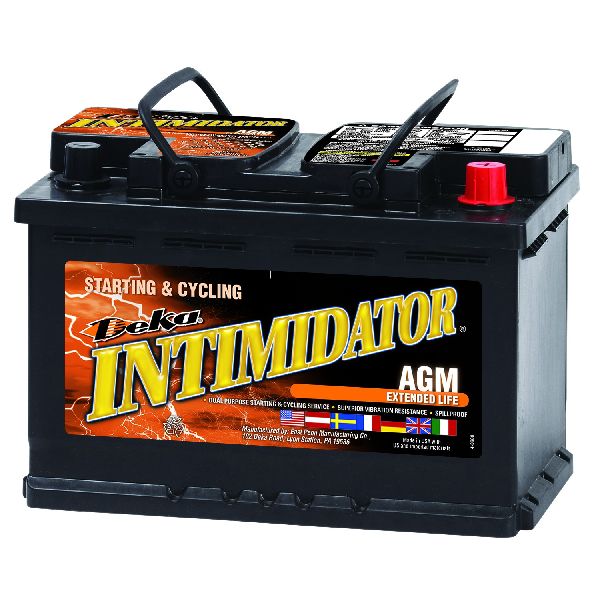
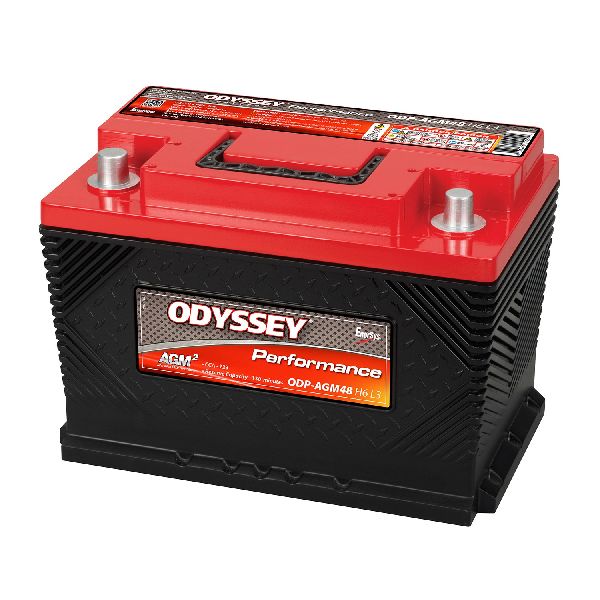
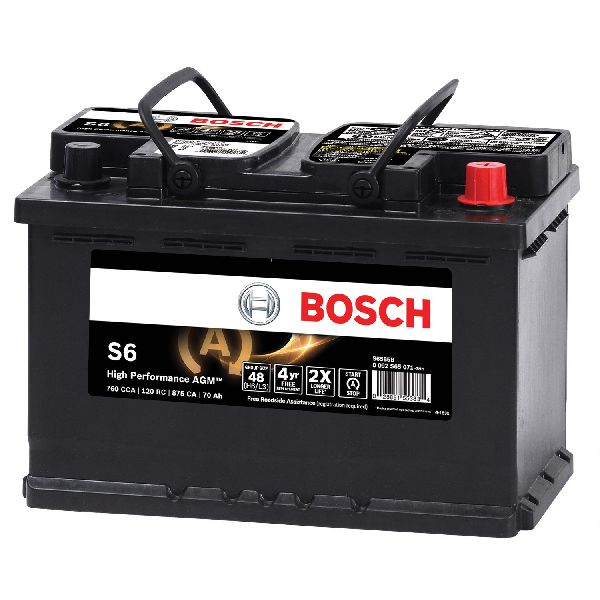
Aftermarket price range: $400-$700 - 12V Battery — A weak or failing battery is a common cause of various electronic module faults, including P0607, due to voltage instability.
Trusted brands: Mopar, Interstate, DieHard
OEM price range: $250-$400
Aftermarket price range: $150-$350
Related Codes That Often Appear With This One
- P2110 — This code for 'Throttle Actuator Control System - Forced Limited RPM' is often triggered as a direct result of the P0607 fault. The PCM detects its own internal error and puts the engine into a limited power mode as a safety precaution. This is mentioned in TSBs #1805723, #1801621, and #18-016-21 REV. A.
- P2173 — This code for 'High Airflow/Vacuum Leak Detected' can also be a symptom of the P0607. The PCM's faulty calculations may lead it to misinterpret airflow data, causing it to incorrectly flag a vacuum leak. This is cited in TSBs #1805723 and #1801621.
- U0100 — This code for 'Lost Communication With ECM/PCM' can appear alongside P0607, as noted in TSB #18-006-23. If the PCM is malfunctioning internally, it may intermittently fail to communicate on the vehicle's CAN bus network.
Technical Service Bulletins (TSBs) & Recalls
- 1800623: Addresses intermittent no-crank and changes P0607 to a two-trip fault, recommending a PCM software update.
- 18-006-23: A duplicate of the above TSB, filed under a different vehicle system category, which also lists U0100 as a related code.
- 1805723: Links P0607 with other codes (P2110, P2173) and symptoms like the Stop/Start system not working.
- 1801621: Connects P0607 with poor engine performance and codes P2110 and P2173.
- 18-016-21 REV. A: Also links P0607 with codes P2110 and P2173.
Platform-Specific Known Issues
- TSB #1800623 / #18-006-23 notes that Jeep changed the logic for P0607 from a one-trip fault to a two-trip fault via a software update. This was done to reduce instances of the code being set prematurely due to transient glitches, such as a hot restart.
- TSB #1805723 links P0607 to failures in the Engine Stop/Start system, a common complaint from owners.
- TSB #1801621 connects the P0607 code directly to customer complaints of poor engine performance.
- A real-world fix documented on a Jeep forum involved a dealer technician cleaning factory paint from a ground connection bolt to ensure a bare-metal connection, which resolved the P0607 code.
Mechanic-Grade Diagnostic Values
- PCM Power Pin Voltage — expected: 12.2 V ± 0.5 V (Key On, Engine Off). Failure: Voltage below this range indicates a power supply issue to the PCM.
- PCM Ground Circuit Resistance — expected: Below 0.1 Ω. Failure: Resistance higher than 0.1-1.0 Ω indicates a poor ground connection, which can cause intermittent module errors.
- Battery Voltage (Resting) — expected: ~12.6 Volts. Failure: A reading below 12.4V indicates a discharged battery; below 12.0V suggests a deeply discharged or faulty battery.
- Charging System Voltage (Engine Running) — expected: Stable between 13.5 and 14.5 Volts. Failure: Voltage below 13.5V indicates an undercharging condition; above 14.5V indicates an overcharging condition. Both can trigger a P0607.
Scan Tool Commands That Help
- wiTECH 2.0 (OEM Dealer Tool): PCM Replace / Flash Programming — Used when installing a new or used PCM. For a new module, it flashes the correct software. For a used module, the 'PCM Replace' function is initiated to write the vehicle's VIN and security data from the Wireless Control Module (WCM) or Body Control Module (BCM) into the donor PCM.
- wiTECH 2.0 (OEM Dealer Tool): Check PCM VIN / PCM Odometer Write — These are miscellaneous functions used after programming to verify the correct VIN has been written and to synchronize the vehicle's mileage with the new module.
- AlfaOBD (Aftermarket): Write VIN / Copy SKIM to PCM — This is an advanced aftermarket tool function used to program a used PCM. It can write the correct VIN and transfer the Sentry Key Immobilizer Module (SKIM) data, allowing the engine to start. This is often used to bypass the Secure Gateway Module (SGM) without requiring an OEM subscription.
Wiring & Ground Locations
- PCM Case Ground — A wire or braided strap connecting the metal case of the PCM directly to the chassis or a dedicated grounding stud in the engine bay.. The PCM relies on a clean, solid ground for its internal processors to function correctly. Corrosion, looseness, or paint on this connection can create electrical noise and voltage discrepancies, triggering an internal performance fault like P0607.
- Main Battery to Chassis Ground — The main negative battery cable connection point on the vehicle's frame or strut tower.. This is the primary ground for the entire vehicle's electrical system. If this connection is corroded or loose, all modules, including the PCM, can experience erratic behavior and trigger various faults.
- Engine/Transmission to Chassis Ground Strap — A braided metal strap connecting the engine block or transmission case to the vehicle's chassis.. This ground ensures that all sensors mounted on the engine block have a stable ground reference back to the PCM and battery. A faulty strap can cause floating grounds and incorrect sensor readings, potentially confusing the PCM.
Real Owner Repair Stories
- Jeep Wrangler Forums (JL / JLU) (Jeep Wrangler (New)) — Check Engine Light with code P0607 on a brand new vehicle.
❌ Tried (didn't work) Owner checked battery terminals.
✅ What actually fixed it The dealership service department found a ground connection bolt that still had factory paint on it. A technician cleaned the paint off to create a bare-metal connection for the ground terminal, which cleared the code permanently.
"I Checked Everything" — The Actual Cause
- While a smoke test is not applicable for P0607, an equivalent scenario is when basic electrical tests pass but a hidden issue remains. A common example is a ground connection that has continuity but is compromised by paint or light corrosion. It may test fine with a multimeter (no load), but under electrical load, the high resistance causes voltage drops that make the PCM malfunction. The real-world fix of cleaning paint off a ground bolt is a perfect example of this pattern.
When the Usual Fixes Don't Work
- While a PCM software update or replacement is the most common fix, it is not always successful. In one documented case for a 2020 Jeep Wrangler with a persistent P0607, the dealership replaced both the PCM and the battery, yet the Check Engine Light returned. This indicates that in some vehicles, the root cause may be a more elusive underlying issue in the wiring harness or another connected module that is not resolved by the standard high-probability fixes.
OEM Part Supersession History
Multiple→Multiple— Various part numbers exist for the 2019-2020 Jeep Renegade PCM (e.g., 68342094AA, 68350434AC) depending on engine (1.3L vs 2.4L), drivetrain, and emissions calibration.
Heads up: Public-facing part catalogs do not provide a clear supersession history. It is critical to order a replacement PCM using the vehicle's VIN to ensure compatibility. A physically identical module from another vehicle may not be programmable if its base hardware is incorrect.
Model Year Variations Within This Range
- 2018-2020: These models are equipped with a Secure Gateway Module (SGM). This module prevents unauthorized access to the vehicle's network. As a result, programming a new or used PCM requires either an authenticated OEM wiTECH 2.0 scan tool with a valid subscription or specific aftermarket tools like AlfaOBD paired with a bypass device to write VIN and security information.
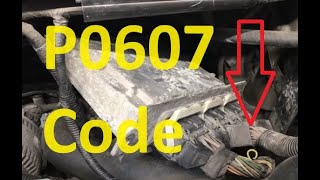
Helpful Videos
Used OEM Parts in Stock

New Aftermarket Parts Available


The information in this article is provided for general reference and educational purposes only. Vehicle specifications, procedures, and part compatibility can vary by production date, trim level, and region. Always consult your vehicle's factory service manual and verify part numbers before purchasing or performing repairs. Safety-critical components such as airbags, seat belts, and braking systems should be installed by a qualified professional.
- Jeep RENEGADE:
- 🎬 Helpful Videos
- 🛍️ Shop This Part
- What's Unique About the 2019-2020 Jeep RENEGADE
- Diagnostic Flowchart
- Symptoms You May Notice
- Most Likely Causes
- Rare But Worth Checking
- Diagnosis Steps
- Parts You'll Likely Need
- Related Codes That Often Appear With This One
- Technical Service Bulletins (TSBs) & Recalls
- Platform-Specific Known Issues
- Mechanic-Grade Diagnostic Values
- Scan Tool Commands That Help
- Wiring & Ground Locations
- Real Owner Repair Stories
- "I Checked Everything" — The Actual Cause
- When the Usual Fixes Don't Work
- OEM Part Supersession History
- Model Year Variations Within This Range
- 🎟️ Get 5% Off