

P0607 on 2020-2022 GMC Yukon: BCM Performance Fault Causes and Fixes
On a 2020-2022 GMC Yukon, code P0607 almost always indicates a software glitch in the Body Control Module (BCM), not a major engine computer failure. The most common fix is a BCM software update performed by a GM dealer, as outlined in Technical Service Bulletin #22-NA-044. Before visiting a dealer, a specific fuse-pull reset procedure detailed in the TSB can be attempted.
- P0607 on a 2020-2022 Yukon is a Body Control Module (BCM) issue, not an Engine Control Module (ECM) problem.
- The most common cause is a known software glitch documented in GM TSB #22-NA-044.
- Do not replace any expensive hardware. The first and most likely fix is a BCM software update performed by a dealer, which may be covered by warranty.
- Before going to a dealer, a specific reset procedure involving pulling BCM fuses F49DR and F4DR for five minutes can be attempted.
- This repair is not DIY-friendly beyond the fuse pull and requires specialized equipment for module reprogramming.
- Before seeking professional help, ensure your vehicle's battery and charging system are in excellent condition, as low voltage can cause similar issues.
What's Unique About the 2020-2022 Gmc YUKON
The 2021-2022 Yukon uses GM's newer Vehicle Intelligence Platform (VIP) or "Global B" electrical architecture. On these advanced platforms, the Body Control Module (BCM) has more responsibilities and can trigger a Check Engine Light for its own internal faults. GM has specifically acknowledged in TSB #22-NA-044 that a software anomaly within the BCM can cause it to set a P0607 code, a situation that is unique to this and other related GM VIP/Global B vehicles.
Diagnostic Flowchart
Tap your situation to follow the diagnostic path that matches what you're seeing on this vehicle.
Generation note: This range covers the end of the 4th generation (2020) and the start of the 5th generation (2021-2022). The issue is primarily documented for the 5th generation's new VIP/Global B electrical architecture, but TSBs also include the 2020 model year for some platform mates like the Cadillac CT4, indicating the fix applies across this range.
Symptoms You May Notice
- Check Engine Light (Malfunction Indicator Lamp) is illuminated.
- Message on the Driver Information Center (DIC). [NHTSA TSB #22-NA-044]
- Potentially erratic behavior of BCM-controlled systems (e.g., interior/exterior lighting, keyless entry, climate controls).
- Remote start may be disabled.
- Replacing the Engine Control Module (ECM) or Powertrain Control Module (PCM). On this vehicle, TSB #22-NA-044 confirms P0607 is specifically flagged by the BCM, and replacing the ECM/PCM will not solve the problem.
Most Likely Causes
- Body Control Module (BCM) Software Anomaly 🔴 High Probability This is a known issue acknowledged by GM in TSB #22-NA-044 for this specific vehicle platform and its mates.
How to confirm: A GM dealer or a shop with GM-specific diagnostic tools can check the current BCM software version against the latest available updates. The presence of the code set by the BCM is the primary indicator.
Typical fix: First, attempt a hard reset of the BCM as per TSB #22-NA-044: remove fuses F49DR (vbatt 1) and F4DR (vbatt 2) 🎬 Watch: Locate your fuse box and identify these specific fuses. for five minutes, then reinstall. If the code returns, the BCM requires reprogramming with updated software at a dealership. The TSB explicitly states not to replace the BCM unless reprogramming fails.
Est. part cost: $0 - Low Battery Voltage or Weak Charging System 🟡 Medium Probability Modern vehicles with complex electrical systems like the VIP/Global B platform are highly sensitive to voltage fluctuations. A weak battery or failing alternator can cause various control modules to report performance errors.
How to confirm: Test the battery's state of charge and health with a digital battery tester. With the engine running, check the alternator output voltage (typically 13.5-14.5 volts).
Typical fix: Recharge or replace the battery. Replace the alternator if its output is out of specification.
Est. part cost: $150-$400 - Faulty Body Control Module (BCM) ⚪ Low Probability While far less common than a software issue for this specific code, the module itself can fail internally due to heat, vibration, or component failure.
How to confirm: This is a diagnosis of exclusion. If a BCM software update does not fix the code and the electrical system is healthy, the module itself is the likely culprit. This must be confirmed by a professional.
Typical fix: Replace the Body Control Module and program the new unit to the vehicle's VIN using GM's Service Programming System (SPS).
Est. part cost: $250-$500
Rare But Worth Checking
- Poor Ground Connection: A loose or corroded ground strap for the BCM or main chassis can cause unpredictable electrical faults that mimic module failure. Always worth a visual inspection, as noted by mechanics in general P0607 diagnosis. GM has a specific bulletin (PIT5562) regarding poor ground connections and specifies a torque of 9 Nm (80 lb in) for ground bolts.
Diagnosis Steps
- Verify the code with an OBD-II scanner and confirm that the code was set by the Body Control Module (BCM).
- Check for active Technical Service Bulletins (TSBs). TSB #22-NA-044 directly addresses this issue.
- Perform a complete vehicle electrical system test. Check the battery's state of health and the alternator's output to rule out voltage issues.
- Inspect all power and ground connections to the BCM for tightness and lack of corrosion. Per GM bulletin PIT5562, ground bolts should be torqued to 9 Nm (80 lb in).
- As a primary step, perform the specific BCM reset outlined in TSB #22-NA-044: disconnect the battery, then remove BCM fuses F49DR and F4DR for at least five minutes. Reinstall the fuses, reconnect the battery, and clear all DTCs.
- If the code returns after the fuse-pull reset, take the vehicle to a GM dealer or qualified independent shop for BCM software diagnostics.
- Request the shop to reprogram the BCM with the latest software calibration using the GM Service Programming System (SPS2). This is often covered under the 8yr/80k mile federal emissions warranty.
- If the code still returns after the software update, the BCM itself may have a hardware fault. Replacement and programming of the BCM would be the final step.
Parts You'll Likely Need
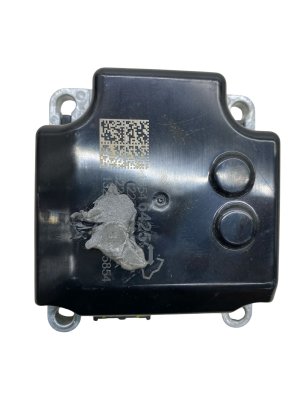
- Body Control Module (BCM)
(OEM #13548775 (supersedes 13536380, 13541808, 13546978) or 13557470. VIN verification is required.)— This part is only needed if the primary fix, a software update, fails to resolve the code. It is the module that sets the code due to an internal fault.
Trusted brands: ACDelco (GM Genuine)
OEM price range: $270-$500
Aftermarket price range: $170-$350
Technical Service Bulletins (TSBs) & Recalls
- 22-NA-044: States that the Check Engine Light may be illuminated and DTC P0607 may be set in the BCM due to a software anomaly. Advises a specific fuse-pull reset procedure and, if that fails, reprogramming. Explicitly warns against immediate BCM replacement. This TSB applies to the Yukon/XL, Tahoe, Suburban, Escalade/ESV, Corvette, CT4, CT5, and Envision.
- PIE0672B: Engineering information request regarding DTC P0607 set in the BCM to determine the root cause, showing GM's early investigation into this specific fault. [NHTSA TSB #PIE0672B]
Platform-Specific Known Issues
- TSB #22-NA-044 documents that an internal BCM software anomaly can cause DTC P0607 to set and illuminate the check engine light. The recommended fix is a software update, not module replacement.
- Owner discussions on forums for platform-mates like the Chevy Tahoe confirm that dealers are aware of the issue and typically perform the BCM reprogram under warranty.
Mechanic-Grade Diagnostic Values
- Engine Torque Variation (GDS2 Live Data) — expected: Less than +/- 25 Nm variation during steady state. Failure: Variation greater than +/- 25 Nm when no gear shift is active and throttle is steady can indicate an engine-related issue rather than a transmission shudder.
Scan Tool Commands That Help
- GDS2 (Global Diagnostic System 2): Module Diagnostics > Body Control Module > Control Functions — Used to perform bidirectional tests on BCM-controlled components (e.g., commanding lights, locks, or windows) to verify if the BCM hardware is capable of controlling outputs, helping to isolate a software vs. hardware fault.
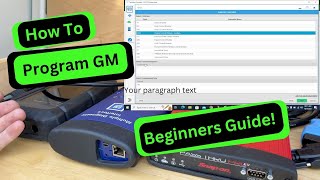
- SPS2 (Service Programming System): BCM Programming / Reprogramming — This is the specific function required to perform the software update fix outlined in TSB #22-NA-044. It is part of the Techline Connect suite and requires a subscription. 🎬 Watch: A professional walkthrough on how to start programming with SPS2.
Wiring & Ground Locations
- BCM Ground Path — On related GM platforms, BCM ground paths are routed through the Left Instrument Panel Junction Block. Extreme care must be taken when servicing this area.. GM Bulletin 07-08-47-004D explicitly warns that the BCM can be permanently damaged if its ground path is removed while the module is powered. The negative battery cable MUST be disconnected first.
- Chassis Ground Bolts — Various locations on the frame and body.. A poor BCM ground can cause erratic behavior and codes like P0607. GM Bulletin PIT5562 specifies that if a ground eyelet is found to be loose, the bolt should be replaced (P/N 11588337) and torqued to 9 Nm (80 lb in).
- BCM to Gateway Module (Global B) — For bench testing/diagnostics: BCM connector X4 Pin 19 connects to Gateway connector X1 Pin 18. BCM connector X4 Pin 20 connects to Gateway connector X1 Pin 17.. These are the specific AUTOSAR communication lines between the BCM and the central Gateway Module on the Global B architecture, critical for advanced diagnostics and confirming communication integrity.
When the Usual Fixes Don't Work
- Extensive searches for real-world repair stories on forums (TahoeYukonForum, GM-Trucks) and Reddit for P0607 on this specific vehicle range did not yield any confirmed fixes that deviated from the official TSB. The overwhelming consensus among owners and technicians who have encountered this code is that the fuse-pull reset and subsequent dealer BCM reprogram is the correct and final solution. This lack of alternative fixes strongly supports the Pass 2 conclusion that this is a software issue, not a typical component failure.
Model Year Variations Within This Range
- 2021-2022: These model years use the new GM Vehicle Intelligence Platform (VIP) or "Global B" architecture. This platform's complexity and the increased role of the BCM are the primary reasons for this specific software-related P0607 fault.
- 2020: The 2020 model is the last of the 4th generation, which does not use the Global B architecture. However, TSB #22-NA-044 still includes it, suggesting the BCM used in the final year of the generation may share software characteristics or be susceptible to a similar software anomaly that is fixed with a reprogram.
Helpful Videos

We Have This Part in Stock



The information in this article is provided for general reference and educational purposes only. Vehicle specifications, procedures, and part compatibility can vary by production date, trim level, and region. Always consult your vehicle's factory service manual and verify part numbers before purchasing or performing repairs. Safety-critical components such as airbags, seat belts, and braking systems should be installed by a qualified professional.
- Gmc YUKON:
- 🎬 Helpful Videos
- 🛍️ Shop This Part
- What's Unique About the 2020-2022 Gmc YUKON
- Diagnostic Flowchart
- Symptoms You May Notice
- Most Likely Causes
- Rare But Worth Checking
- Diagnosis Steps
- Parts You'll Likely Need
- Technical Service Bulletins (TSBs) & Recalls
- Platform-Specific Known Issues
- Mechanic-Grade Diagnostic Values
- Scan Tool Commands That Help
- Wiring & Ground Locations
- When the Usual Fixes Don't Work
- Model Year Variations Within This Range
- 🎟️ Get 5% Off