

P0607 on 2015-2022 Dodge Charger: Control Module Performance Causes and Fixes
P0607 on a Dodge Charger indicates an internal error with the main engine computer (PCM). Before replacing the expensive PCM, check for software updates via TSBs, test the battery and alternator, and inspect all PCM power and ground connections, as these are common, cheaper fixes. The issue is particularly noted in TSBs for supercharged models.
- Do not immediately assume the PCM is bad. P0607 is frequently caused by external issues.
- Your first step should be to check for any available software updates (TSBs) from a Dodge dealer.
- Thoroughly test the battery and inspect all power and ground connections to the PCM before considering replacement.
- A PCM replacement is expensive and requires professional programming to your car's VIN.
What's Unique About the 2015-2022 Dodge CHARGER
On this generation of Dodge Charger, the P0607 code is frequently cited in manufacturer Technical Service Bulletins (TSBs) alongside a cluster of other seemingly unrelated codes, particularly on models with supercharged engines. This often points to a software logic issue that can be resolved with a PCM software update (a "reflash") at a dealership, rather than an immediate hardware failure. This makes checking for available TSBs a critical first diagnostic step before condemning the PCM, as a software update is a far less expensive repair. Furthermore, models from 2015-onward use GPEC2A or later PCMs which have enhanced security, and 2018+ models include a Secure Gateway (SGW) module that complicates diagnostics and programming without specific bypass tools.
Diagnostic Flowchart
Tap your situation to follow the diagnostic path that matches what you're seeing on this vehicle.
Symptoms You May Notice
- Check Engine Light is on
- Engine may stall intermittently or shut down while driving
- Vehicle may not start, or has difficulty starting
- Vehicle may enter a reduced-power "limp mode"
- Noticeable loss of engine power and sluggish acceleration
- Reduced fuel economy
- Erratic or harsh transmission shifting
- Other warning lights (e.g., ABS, Traction Control) may appear due to communication loss with the PCM
- Replacing the PCM without first checking for software updates or verifying power and ground integrity. Many owners spend over a thousand dollars on a new PCM when the fix was a simple software reflash, a new battery, or cleaning a ground strap.
Most Likely Causes
- PCM Software Requires Update 🔴 High Probability Multiple TSBs (e.g., #18-061-17, #18-047-16) list P0607 as part of a group of codes that are resolved by reprogramming the PCM with updated software. These TSBs specifically call out codes related to the MAF sensor and Supercharger Bypass Valve, indicating this is a known issue on supercharged models.
How to confirm: A Dodge dealership or a properly equipped independent shop using a tool like wiTECH can check for and perform available PCM software updates based on the vehicle's VIN.
Typical fix: Reprogramming (reflashing) the PCM with the latest manufacturer software. The process involves connecting a battery charger to maintain stable voltage 🎬 Watch: Professional PCM programming and reflashing using WiTech during the flash.
Est. part cost: $0 - Weak or Failing Battery 🟡 Medium Probability Modern Chargers have a high electrical demand. Control modules require a stable voltage (typically above 12.2V) to operate correctly. Voltage drops during cranking or from a weak battery can cause the PCM's self-test to fail, falsely triggering a P0607 code.
How to confirm: Test the battery with a digital multimeter or an electronic battery tester. A healthy, fully charged battery should read approximately 12.6 volts with the engine off and 13.7-14.7 volts with the engine running. A load test is the most definitive way to confirm battery health.
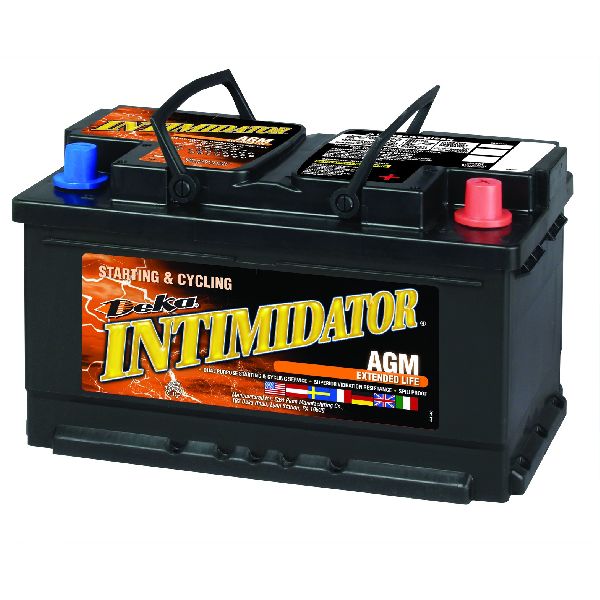
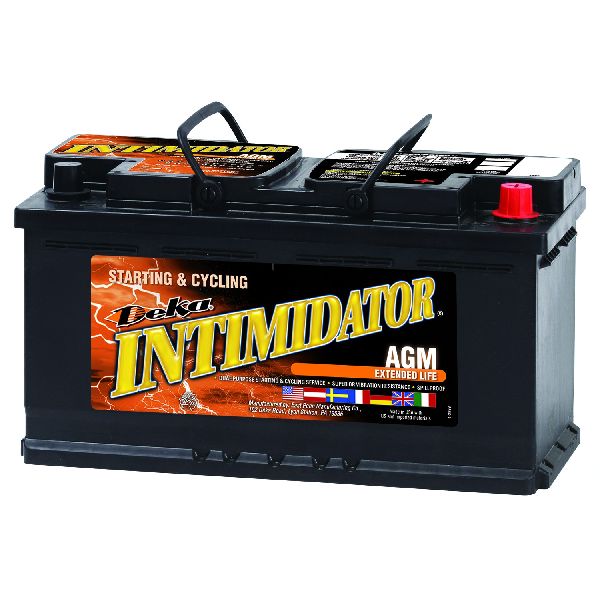
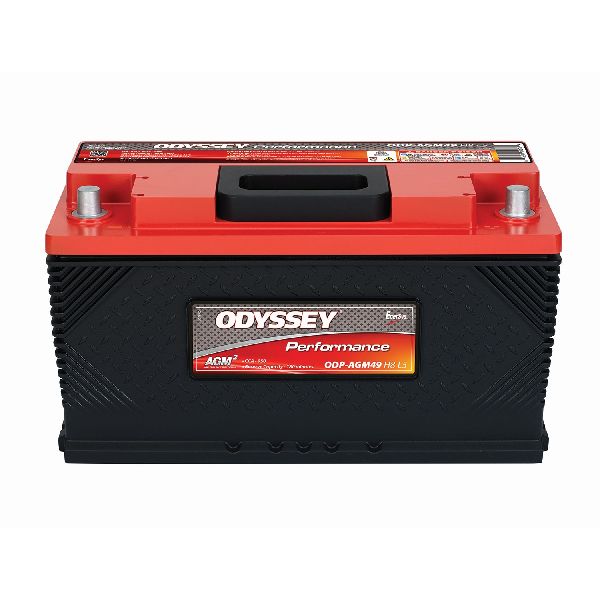
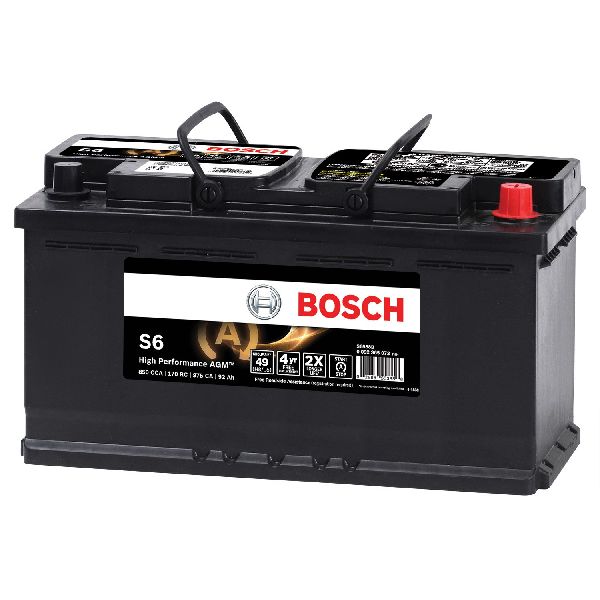
Typical fix: Replace the vehicle's battery. An AGM (Absorbent Glass Mat) battery is recommended due to the vehicle's electronics.
Est. part cost: $150-$300 - Poor PCM Power or Ground Connections 🟡 Medium Probability Corrosion or loose connections at the PCM, engine block, or battery terminals can create high resistance, leading to voltage drops that mimic a failing module. The main engine-to-chassis ground strap and the battery-to-chassis ground in the trunk are common culprits.
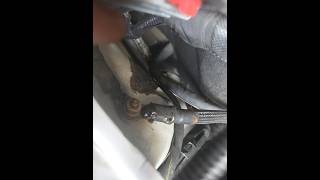
How to confirm: Visually inspect and physically check all battery terminals, main engine/body ground straps, and the electrical connectors at the PCM for looseness, corrosion, or damage. A multimeter can be used to check for ground resistance, which should be below 0.1 Ω. On some Chargers, a key ground strap runs from the engine block to the chassis frame rail. 🎬 See how to replace a worn engine ground wire
Typical fix: Clean the ground connection points and battery terminals until they are bright metal. Tighten all connections to manufacturer specifications. Replace any corroded ground straps or connector pins.
Est. part cost: $10-$50 - Failing Powertrain Control Module (PCM) ⚪ Low Probability While it's the direct definition of the code, actual internal failure is often the last resort after external factors are eliminated. Thermal cycling and moisture intrusion can cause internal solder joints or components to fail over time.
How to confirm: This is a process of elimination. If all software updates are applied, and power/ground circuits are verified to be perfect (stable voltage, low resistance), the PCM itself is the likely culprit. A dealership-level scan tool may be able to confirm the internal fault with a self-diagnostic routine.
Typical fix: Replace the PCM. The new unit must be programmed by a dealer or specialist with the vehicle's VIN and configuration.
Est. part cost: $680-$1500
Rare But Worth Checking
- Aftermarket Engine Tuner/Programmer: Improperly installed or removed aftermarket performance tunes can corrupt the PCM's software, leading to this code. Always ensure the stock file is correctly restored before assuming the PCM has failed. Some owners on forums have reported this issue after using handheld tuners. The GPEC2A PCM used from 2015+ requires a special 'unlocking' service before it can be tuned.
- Failing Alternator: An alternator producing unstable voltage (AC ripple, or voltage that is too high or too low) can disrupt the PCM's operation and trigger a performance code.
- Internal PCM Fuse Failure: In some rare cases, an internal fuse on the PCM's circuit board can blow due to a short circuit elsewhere. This is an advanced repair that involves opening the PCM case to inspect and replace the fuse, as demonstrated in some repair videos for other makes.
Diagnosis Steps
- Scan the system for any other DTCs. Note if codes like P0102, P0103, P060E, or P1610 are present, as this strongly suggests a TSB-related software issue.
- Check with a Dodge dealer for any open recalls or applicable TSBs for your vehicle's VIN, specifically mentioning PCM updates for P0607.
- Charge and load test the battery to ensure it is in excellent health. Voltage should be ~12.6V engine off and 13.7-14.7V engine running. A voltage drop below 9V during cranking can trigger the code.
- Perform a 'hard reset' by disconnecting the negative battery terminal for at least 30 minutes to clear any temporary glitches in the module's memory.
- Disconnect the battery again. Inspect and thoroughly clean the battery terminals and cable ends.
- Locate and inspect the main engine-to-chassis and battery-to-chassis ground straps. Remove, clean the contact surfaces to bare metal, and securely re-install. Check for resistance under 0.1 Ohms.
- Inspect the electrical connectors at the PCM (often located in the engine bay near the firewall) for any signs of corrosion, moisture, or pushed-out pins.
- If all the above steps do not resolve the issue, the most likely cause is an internal PCM failure requiring replacement and programming.
Parts You'll Likely Need
- Powertrain Control Module (PCM)
(OEM #Varies by VIN (e.g., 68317735AA for 2017 5.7L, 05150869AD for 2015-17 V8s))— This is the part that is replaced if the module has truly failed internally after all other causes are ruled out.
Trusted brands: Mopar, Flagship One (Remanufactured), Flashmasters (Remanufactured)
OEM price range: $750-$1200
Aftermarket price range: $250-$800 (Remanufactured, pre-programmed) - Automotive Battery (AGM Type Recommended) — A weak or failing battery is a common trigger for this code due to unstable voltage.
Trusted brands: Duralast, DieHard, Interstate
OEM price range: $200-$350
Aftermarket price range: $150-$300
Related Codes That Often Appear With This One
- P0102 — MAF sensor circuit low. This code is listed in TSBs #18-061-17, #18-047-16, and #18-035-15 REV-B alongside P0607, indicating a potential software glitch is the root cause for the group of codes.
- P0103 — MAF Sensor Circuit High. Also listed in the same TSBs as P0607, pointing towards a required software update. [TSB #18-061-17, TSB #18-047-16, TSB #18-035-15 REV-B]
- P060E — TPS Sensor Coherency Check failure. Also listed in the same TSBs as P0607, suggesting a common software-related fix. [TSB #18-061-17, TSB #18-047-16, TSB #18-035-15 REV-B]
- P1610 — Supercharger Bypass Valve Position Sensor Circuit Low. Also listed in the same TSBs as P0607, part of a known group of codes fixed by a PCM reflash on supercharged models. [TSB #18-061-17, TSB #18-047-16, TSB #18-035-15 REV-B]
Technical Service Bulletins (TSBs) & Recalls
- 18-061-17: For 2015 models, addresses P0607 and other codes (P0102, P0103, P060E, P1610) related to MAF and supercharger sensors, resolved by a PCM software update.
- 18-047-16: Also lists P0607 with other codes for 2015 models, pointing to a PCM reflash as the solution.
- 18-035-15 REV-B: An earlier bulletin for 2015 models that also groups P0607 with other codes, indicating a known software issue.
Platform-Specific Known Issues
- TSB #18-061-17, #18-047-16, and #18-035-15 REV-B all indicate that a PCM software update may be required to fix an issue that causes P0607 to be stored along with other diagnostic codes, particularly on 2015 models with supercharged engines.
Mechanic-Grade Diagnostic Values
- PCM Power Supply Voltage — expected: 12.2 V ± 0.5 V. Failure: Voltage below 11.7V at the PCM connector with Key On, Engine Off.
- PCM Ground Circuit Resistance — expected: Below 0.1 Ω. Failure: Resistance higher than 0.1 Ω between the PCM ground pin and a clean chassis ground point.
- Charging System Voltage — expected: 13.5 V to 14.5 V. Failure: Voltage below 13.5V or above 14.7V with the engine running, indicating an alternator issue.
- Battery Voltage During Cranking — expected: Above 9.0 V. Failure: Voltage dropping below 9.0V while the engine is cranking.
Scan Tool Commands That Help
- wiTECH (Dealer Tool) or high-end bidirectional scanner: PCM Reprogramming/Flash — Used to apply software updates from TSBs that are known to resolve a group of false codes, including P0607.
- Specialized Bench Programming Tools: PCM Cloning — When replacing a PCM, a service can clone the data from the original (if readable) to a replacement unit, which can avoid the need for dealer programming. For 2018+ models, this requires bypassing the SGW module.
- HP Tuners or similar: PCM Unlocking Service — For performance tuning. The GPEC2A PCM used in 2015+ models must be physically sent to a specialist to be unlocked before custom tunes can be applied. This is not for standard repair but is a critical detail for modified vehicles.
Wiring & Ground Locations
- Battery to Chassis Ground — In the trunk, near the battery. A ground cable runs from the negative battery terminal to a bolt on the chassis.. A loose or corroded ground bolt at this location can cause widespread electrical issues, including flickering lights, no-start conditions, and module communication errors that can trigger P0607.
- Engine to Chassis Ground Strap — In the engine bay, a braided or solid wire strap connecting the engine block to the vehicle's frame/chassis rail.. This is a primary ground path for the engine's electrical system. Corrosion or breakage of this strap is a known issue and can cause stalling, power loss, and trigger PCM performance codes as the module struggles with an unstable ground reference.
- PCM Ground Pins — On a related Mopar platform (Ram with Cummins), critical PCM grounds are located at pins 2, 4, and 6 of the C2 (gray) connector.. While pin numbers may vary slightly, this indicates that the PCM has multiple, dedicated ground pins within its main connectors. A wiring diagram is essential to test these specific pins for integrity during advanced diagnosis.
Real Owner Repair Stories
- YouTube user 'Mopar Mike' (2016-2019 Dodge Charger) — Stalling, sudden loss of power.
❌ Tried (didn't work) Initially suspected fuel injectors or fuel pump.
✅ What actually fixed it The user identified a corroded factory ground wire in the engine bay. The final fix involved replacing one Mopar-specific wire and splicing the other smaller wires that shared the same corroded connection point into a new, solid ring terminal. - YouTube user 'Steven's DIY Auto Repair' (2016 Dodge Charger SRT 392) — Vehicle was hesitant to start, lights flickered when wiggling the negative battery cable, and eventually would not start.
❌ Tried (didn't work) Charging the battery provided only a temporary, intermittent fix.
✅ What actually fixed it The ground bolt securing the negative battery cable to the chassis in the trunk had become loose. This caused a wire to get pinched and melt. The fix was to tighten the ground bolt securely and repair the damaged wire.
OEM Part Supersession History
Varies by VIN→Varies by VIN— Mopar regularly updates PCM hardware and software, leading to superseded part numbers. For example, 68259136AA was replaced by a newer part.
Heads up: Always use a VIN-specific part number. While a PCM from another vehicle may have the same connectors, its internal programming will be incorrect, causing a no-start condition or other major issues.
Model Year Variations Within This Range
- 2015+: Introduction of the GPEC2A (and later) Powertrain Control Module. Unlike earlier PCMs, these are locked from the factory and require a specialized service to physically unlock them before aftermarket tuning (e.g., with HP Tuners) is possible.
- 2018+: Implementation of a Secure Gateway (SGW) module. This module acts as a firewall, preventing direct diagnostic commands from the OBD-II port to critical controllers like the PCM. A bypass cable or a registered diagnostic tool with an AutoAuth subscription is required for functions beyond basic code reading, such as clearing certain codes, running bidirectional tests, or programming.
Helpful Videos

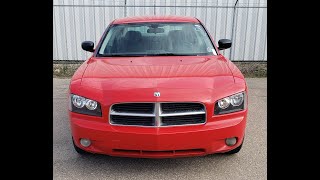
Used OEM Parts in Stock


New Aftermarket Parts Available


The information in this article is provided for general reference and educational purposes only. Vehicle specifications, procedures, and part compatibility can vary by production date, trim level, and region. Always consult your vehicle's factory service manual and verify part numbers before purchasing or performing repairs. Safety-critical components such as airbags, seat belts, and braking systems should be installed by a qualified professional.
- Dodge CHARGER:
- 🎬 Helpful Videos
- 🛍️ Shop This Part
- What's Unique About the 2015-2022 Dodge CHARGER
- Diagnostic Flowchart
- Symptoms You May Notice
- Most Likely Causes
- Rare But Worth Checking
- Diagnosis Steps
- Parts You'll Likely Need
- Related Codes That Often Appear With This One
- Technical Service Bulletins (TSBs) & Recalls
- Platform-Specific Known Issues
- Mechanic-Grade Diagnostic Values
- Scan Tool Commands That Help
- Wiring & Ground Locations
- Real Owner Repair Stories
- OEM Part Supersession History
- Model Year Variations Within This Range
- 🎟️ Get 5% Off