

P0607 on 2021-2022 Alfa Romeo STELVIO: Control Module Performance Explained
P0607 on a 2021-2022 Alfa Romeo Stelvio indicates a 'Control Module Performance' error, meaning the main engine computer (PCM) has detected an internal fault. Before replacing the expensive PCM, thoroughly check the battery, charging system, and all power/ground connections, as voltage issues from corroded terminals or a failed ground strap are common culprits on this platform. If P0607 appears with a specific cluster of fuel and sensor codes, the TSBs point directly to PCM failure.
- P0607 on a Stelvio means the main engine computer (PCM) has detected an internal error.
- Do not drive the vehicle. The engine could stall at any time, which is a major safety hazard.
- Before assuming the PCM is bad, always test the battery, alternator, and check all main power and ground connections.
- This code often appears with other fuel and sensor codes on the Stelvio; P0607 is the primary fault to address.
- Replacing the PCM requires special programming (Proxy Alignment) and should be done by a professional.
What's Unique About the 2021-2022 Alfa Romeo STELVIO
On the Alfa Romeo Stelvio and its platform-mate, the Giulia, P0607 is notable because it frequently appears alongside a specific group of other fault codes, as documented in manufacturer Technical Service Bulletins (TSBs). This pattern (including codes for fuel pressure, fuel injectors, and ambient air temperature sensors) is a strong indicator of internal PCM failure. The TSBs specify that when this exact cluster of codes is present, the solution is to re-flash or replace the PCM, not to chase the other codes individually. Additionally, the platform is known for electrical sensitivity, where issues like a corroded battery terminal or a failed chassis ground strap can cause voltage drops that trigger a P0607 code.
Diagnostic Flowchart
Tap your situation to follow the diagnostic path that matches what you're seeing on this vehicle.
Symptoms You May Notice
- Check Engine Light is on
- Engine stalling or shutting off while driving
- No-start condition (engine cranks but won't fire)
- Reduced engine power or sluggish acceleration (Limp Mode)
- Erratic or harsh transmission shifting
- Flashing odometer, indicating a module communication issue or a new, unprogrammed module
- Multiple other warning lights may appear on the dashboard
- In cases of a severe ground strap failure, a no-start condition may be accompanied by smoke from the driver's side wheel well as the starter motor attempts to ground through smaller wires.
- Replacing fuel injectors, fuel pressure sensors, or ambient air temperature sensors when they have codes stored alongside P0607. These are often symptoms of the PCM failure, not the root cause, as confirmed by TSB #18-013-25.
Most Likely Causes
- Failing Powertrain Control Module (PCM) 🔴 High Probability Internal component fatigue from heat and vibration can lead to processor or memory failure. The TSBs for this model specifically identify a pattern of codes that, when present with P0607, point directly to a faulty PCM requiring replacement.
How to confirm: This is typically a diagnosis of exclusion. After confirming all power, ground, and network circuits are functioning perfectly, the PCM is condemned. If the specific cluster of codes from TSB #18-013-25 is present, the PCM is the confirmed cause.
Typical fix: Replace the PCM and perform a 'Proxy Alignment' procedure to program the new module to the vehicle.
Est. part cost: $400-$1200 - Low Battery Voltage or Failing Alternator 🟡 Medium Probability Modern control modules are highly sensitive to voltage. These vehicles are known for developing corrosion on the battery posts due to their location and time spent in transit, which can cause voltage drops. A weak battery or failing alternator can cause the PCM's internal self-tests to fail, triggering a P0607 code even if the module itself is not faulty.
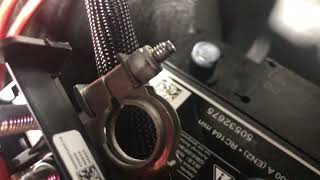
How to confirm: Perform a complete battery and charging system test. The battery should be load-tested, and the alternator output should be checked at idle and under load to ensure it's between 13.5 and 14.5 volts. Carefully inspect battery terminals for any white or gray patina. 🎬 Watch: How to inspect your battery posts for corrosion.
Typical fix: Replace the weak battery or faulty alternator. Clean battery posts and terminals thoroughly and apply a non-corrosive gel.
Est. part cost: $200-$700 - Poor Power or Ground Connections 🟡 Medium Probability Corroded or loose battery terminals are a known issue. Furthermore, the main chassis ground strap, located on the driver's side under the car near the transmission, is exposed to the elements and is a common failure point due to corrosion. This high-resistance ground can cause voltage drops that mimic a module failure.
How to confirm: Visually inspect all battery terminals and the main ground strap for corrosion and tightness. Perform a voltage drop test on the PCM's power and ground circuits to check for excessive resistance.
Typical fix: Clean or tighten terminals. Replace the corroded ground strap. Alfa Romeo has an updated part with a protective sheath.
Est. part cost: $20-$150 - PCM Software Corruption ⚪ Low Probability Though less common for this specific code cluster, a software glitch or an incomplete update can cause the PCM to report an internal performance error. TSBs for other issues on this platform often involve a software re-flash as the solution.
How to confirm: A dealership or specialized shop can check the current software calibration of the PCM against the latest version available from Alfa Romeo using the wiTECH tool.
Typical fix: Re-flash the PCM with the latest manufacturer software. TSB #18-013-25 for the 2.9L engine specifically calls for reprogramming both the primary and secondary ECMs. This may resolve the code without replacing the hardware.
Est. part cost: $0-$250 (Labor)
Rare But Worth Checking
- Corroded/Failed Main Ground Strap:
Diagnosis Steps
- Scan for all DTCs. Pay close attention to any other codes stored alongside P0607. If codes P304D, P304E, P02D2, P0072, or P0073 are present, suspect PCM failure as per TSBs.
- Perform a thorough battery and charging system test. Ensure battery voltage is above 12.4V with the engine off and that the alternator is charging correctly (13.5V-14.5V) with the engine running.
- Inspect all battery terminals, power cables, and main ground straps. The battery terminals are known to corrode even on new vehicles. The main ground strap is located under the car on the driver's side and is prone to failure.
- Locate the PCM and inspect its connectors for corrosion, moisture, or damage. Ensure they are fully seated.
- Using a wiring diagram, perform a voltage drop test on the PCM's main power and ground circuits to ensure there is no excessive resistance.
- If all external power, ground, and network connections are verified to be good, the fault is highly likely to be internal to the PCM.
- Consult a dealership to check for any available PCM software updates (re-flashing) before proceeding with replacement. TSBs for the 2.9L engine specifically mention this as a fix.
- If a re-flash does not work or is not available, the PCM must be replaced and programmed to the vehicle using the 'Proxy Alignment' procedure.
Parts You'll Likely Need
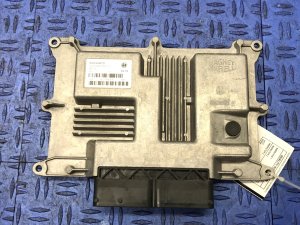
- Powertrain Control Module (PCM/ECM)
(OEM #50544870 (For 2.0L models, verify by VIN))— This is the most common definitive fix for a P0607 code after all external electrical issues have been ruled out, especially when the TSB code cluster is present.
Trusted brands: Bosch, Magneti Marelli, Mopar (OEM)
OEM price range: $800-$1200
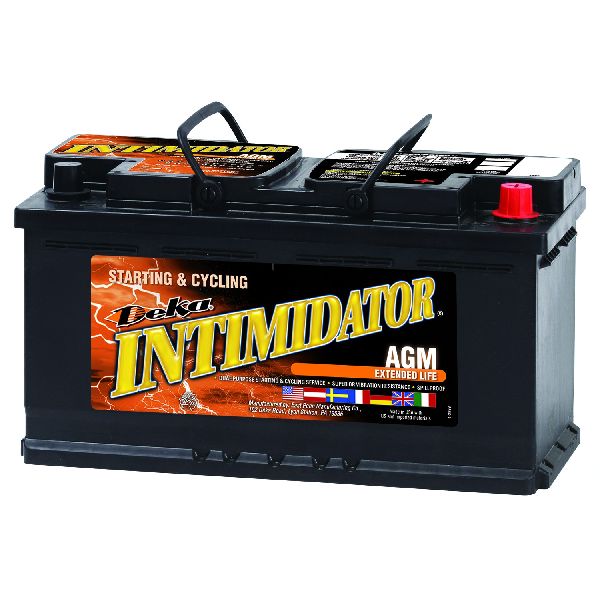
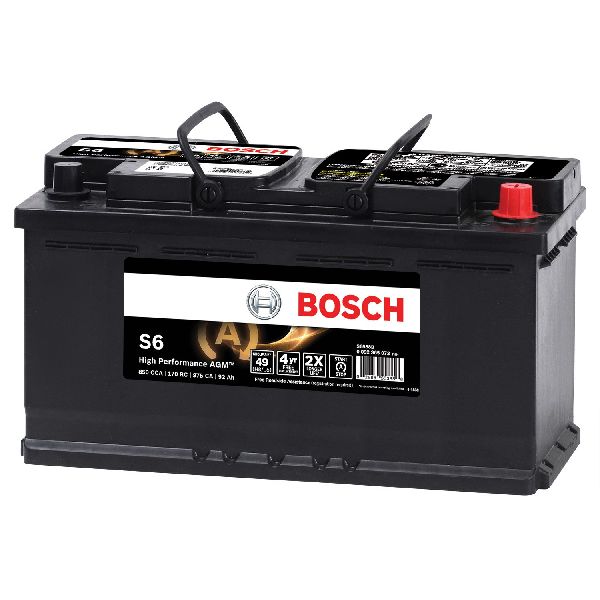
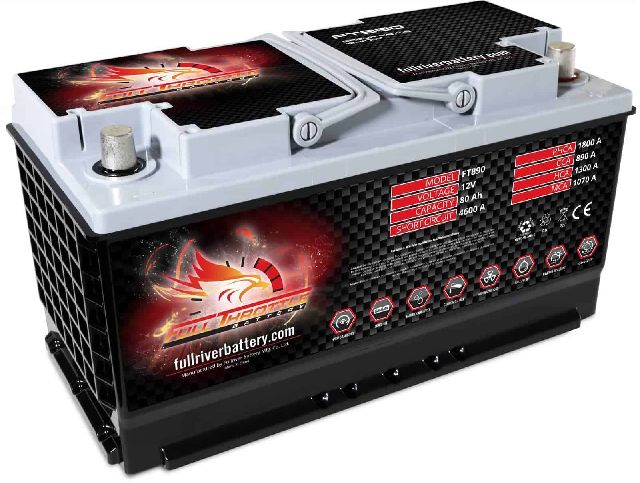
Aftermarket price range: $400-$800 (Remanufactured) - Battery — A weak or failing battery is a frequent cause of voltage-related module performance codes on these sensitive vehicles.
Trusted brands: Interstate, DieHard, Mopar (OEM)
OEM price range: $250-$400
Aftermarket price range: $200-$300 - Main Ground Strap — A known failure point on the Giorgio platform due to corrosion, leading to a wide range of electrical issues including no-start conditions that can be misdiagnosed.
Trusted brands: Mopar (OEM)
OEM price range: $50-$110
Related Codes That Often Appear With This One
- P304D-00 — Fuel Rail Pressure Sensor 1-Out Of Range High. Often triggered as a consequence of the PCM's internal fault, as seen in TSB #18-013-25.
- P304E-00 — Fuel Rail Pressure Sensor 2-Out Of Range High. Often triggered as a consequence of the PCM's internal fault, as seen in TSB #18-013-25.
- P02D2-00 — Cylinder 4 Fuel Injector Offset Learning At Min Limit. This injector control fault can be a symptom of the PCM's inability to properly manage its outputs. (TSB #18-013-25)
- P0072-00 / P0073-00 — Ambient Air Temperature Sensor Circuit Low/High. These sensor circuit codes can be falsely set by the failing PCM. (TSB #18-013-25)
Technical Service Bulletins (TSBs) & Recalls
- 18-013-25: Documents P0607-00 'Control Module Performance' appearing with fuel pressure, injector, and ambient air sensor codes on 2022 models. For the 2.9L V6, the prescribed fix is to reprogram both the primary and secondary ECMs with the latest software.
- 18-007-25: Documents the same pattern of P0607 appearing with other codes on 2021 models.
- 1804323: Also lists P0607-00 with the same set of related codes for 2022 models.
- 2101723: Confirms the code cluster issue for 2021 models.
Platform-Specific Known Issues
- On 2021-2022 Stelvio models, P0607 is frequently accompanied by a cluster of other codes including P304D, P304E, P02D2, P0072, and P0073, as documented in multiple Technical Service Bulletins. This indicates a known failure pattern where the PCM fault triggers numerous other system codes. The official fix is PCM replacement or re-flash. [Bulletin #18-013-25, #18-007-25]
Mechanic-Grade Diagnostic Values
- PCM Power Supply Voltage (Key On) — expected: 12.2 V ± 0.5 V. Failure: Voltage below 11.7V or unstable readings can trigger module performance codes.
- PCM Ground Circuit Resistance — expected: Below 0.1 Ω. Failure: Resistance higher than 0.1 Ω indicates a poor ground connection, which is a common cause of P0607.
- Alternator Output Voltage (Engine Running) — expected: 13.5 V to 14.5 V. Failure: Voltage outside this range indicates a charging system problem that can cause module errors.
- Battery Voltage (Engine Off) — expected: ~12.6V. Failure: A reading below 12.4V suggests a weak or discharged battery that needs testing or replacement.
Scan Tool Commands That Help
- wiTECH 2.0 (Dealer Tool): Proxy Configuration Alignment — This procedure is mandatory after replacing the PCM, BCM, or other major control modules. It synchronizes the configuration of all modules on the vehicle's network. Failure to perform it results in a flashing odometer and system malfunctions.
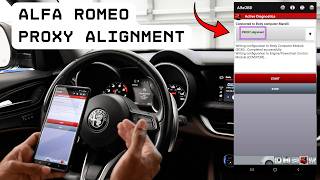
- MultiECUScan / AlfaOBD (Aftermarket): Proxy Alignment — Used for the same purpose as the dealer tool: to align modules after replacement or to resolve a flashing odometer caused by a configuration mismatch. The procedure involves connecting to the Body Computer, selecting the 'Proxy Alignment' function, and following on-screen instructions to cycle the ignition.
- wiTECH 2.0 (Dealer Tool): Reset ETM / Radio — After a proxy alignment, it may be necessary to reset the Entertainment and Telematics Module (ETM) or radio module to clear any lingering communication faults.
Wiring & Ground Locations
- Main Engine-to-Chassis Ground Strap — Located under the car on the driver's side, connecting the transmission to the chassis, near the rear of the transmission.. This strap is a notorious failure point due to corrosion. A high-resistance or failed ground here can cause unstable voltage to all modules, including the PCM, directly triggering a P0607 code or causing a catastrophic cascade failure where the starter current melts other parts of the wiring harness.
- Battery Terminals — In the trunk/boot, under the floor panel.. These terminals are known to develop subtle corrosion that impedes current flow, causing voltage drops that can lead to a P0607 code. Thorough cleaning is a critical first step.
- Remote Jump Start Posts — In the engine bay. The positive (+) post is under a protective flap, often near the engine stabilizer bar. The negative (-) post is an exposed stud on the upper frame rail, near the passenger side hood lock.. These provide a convenient point for testing battery and alternator voltage without accessing the battery in the trunk.
- Body Control Module (BCM) — Typically located under the dashboard in the driver's side footwell area, near the steering column.. While P0607 points to the PCM, a failing BCM can cause widespread, erratic electrical issues and communication faults on the CAN bus that could potentially be misdiagnosed or contribute to PCM errors.
Real Owner Repair Stories
- Reddit user u/NoEntertainer2665 (2018 Alfa Romeo Stelvio TI Sport) — Car acted like the battery was low, would not start (went to auxiliary mode only). After three start attempts, a large cloud of white smoke came from the driver's side wheel well.
❌ Tried (didn't work) Initial assumption was a dead battery.
✅ What actually fixed it The root cause was a corroded main ground strap under the car. The starter motor current, unable to find a proper ground, overloaded a smaller ground wire in the wheel well, melting it and other sections of the main engine wiring harness. The final repair required replacing both the ground strap and the entire engine wiring harness, at a cost of over $6,000. - Reddit user u/nonfading (Alfa Romeo Stelvio) — Sudden no-start condition while stuck in snow. Attempting to restart produced smoke from the front wheel arch area with a bad smell.
❌ Tried (didn't work) Multiple start attempts.
✅ What actually fixed it The main ground cable had failed due to corrosion. The owner was lucky that, despite the smoke, no other parts of the wiring harness were damaged. The fix was to replace the ground strap preventatively.
OEM Part Supersession History
Unknown (un-sheathed version)→68648999AA— The original main ground strap was an unprotected braided cable prone to rapid corrosion. The updated part includes a protective sheath to prevent moisture and salt intrusion.
Heads up: Installing a new wiring harness without also installing this updated ground strap will likely lead to a repeat failure of the harness.
Helpful Videos
Used OEM Parts in Stock

New Aftermarket Parts Available


The information in this article is provided for general reference and educational purposes only. Vehicle specifications, procedures, and part compatibility can vary by production date, trim level, and region. Always consult your vehicle's factory service manual and verify part numbers before purchasing or performing repairs. Safety-critical components such as airbags, seat belts, and braking systems should be installed by a qualified professional.
- Alfa Romeo STELVIO:
- 🎬 Helpful Videos
- 🛍️ Shop This Part
- What's Unique About the 2021-2022 Alfa Romeo STELVIO
- Diagnostic Flowchart
- Symptoms You May Notice
- Most Likely Causes
- Rare But Worth Checking
- Diagnosis Steps
- Parts You'll Likely Need
- Related Codes That Often Appear With This One
- Technical Service Bulletins (TSBs) & Recalls
- Platform-Specific Known Issues
- Mechanic-Grade Diagnostic Values
- Scan Tool Commands That Help
- Wiring & Ground Locations
- Real Owner Repair Stories
- OEM Part Supersession History
- 🎟️ Get 5% Off