

P0606 on 2006-2010 Toyota RAV4: ECM Fault or a Faulty Sensor?
While P0606 means 'ECM/PCM Processor Fault,' on a 2006-2010 Toyota RAV4 with either the 2.4L or 3.5L engine, the actual cause is almost always a failing Air/Fuel Ratio (A/F) or Oxygen (O2) sensor, not the engine computer itself. Replacing the correct sensor, which costs about $75-$190, usually resolves the code and the accompanying VSC/4WD lights.
- Do not rush to replace the ECM for a P0606 code on a 2006-2010 RAV4.
- The most likely cause is a faulty downstream (post-catalyst) Oxygen sensor.
- Always check for other codes first. If you have any O2 or A/F sensor codes, they are the primary problem.
- Diagnose by watching the sensor's live data on a scan tool before buying any parts.
- Replacing the correct sensor is a DIY-friendly job that can save you over a thousand dollars compared to an unnecessary ECM replacement.
What's Unique About the 2006-2010 Toyota RAV4
For the 2006-2010 RAV4 (XA30 generation), Toyota issued a Technical Service Bulletin (T-SB-0001-10 Rev1) acknowledging that a P0606 code can be set due to incorrect Oxygen Sensor operation. This is a critical distinction, as the standard diagnostic procedure for P0606 on many other vehicles is to replace the expensive ECM. Owner complaints and mechanic experiences online overwhelmingly confirm that replacing the ECM often fails to fix the issue, while replacing the correct sensor does. The ECM's diagnostic logic is so sensitive that a voltage glitch or incorrect impedance reading from a sensor can make the computer believe it is the source of the fault.
Diagnostic Flowchart
Tap your situation to follow the diagnostic path that matches what you're seeing on this vehicle.
Symptoms You May Notice
- Check Engine Light is on
- VSC (Vehicle Stability Control) and 4WD/AWD warning lights are on.
- Engine may hesitate, misfire, or lack power
- Vehicle may stall, especially when coming to a stop or returning to idle
- Potential for improper automatic transmission shifting
- Decrease in fuel economy
- Replacing the Engine Control Module (ECM) without first thoroughly testing the Air/Fuel Ratio and Oxygen sensors. This is a very common and expensive mistake, as documented by TSBs and countless real-world repair stories from technicians and owners.
Most Likely Causes
- Faulty Downstream Oxygen (O2) Sensor 🔴 High Probability Toyota TSB T-SB-0001-10 Rev1 directly links P0606 to incorrect O2 sensor operation on this platform. The sensor's internal heater or sensing element can fail intermittently, sending erratic voltage signals that the ECM misinterprets as an internal fault. Technicians report that wiggling the sensor's wiring harness can often reproduce the voltage glitch on a live data graph, confirming the sensor is the culprit.
How to confirm: Scan for other codes like P0137 (Low Voltage) or P0138 (High Voltage). 🎬 See how to diagnose if the ECM is actually bad. Use a scan tool to graph the downstream O2 sensor's voltage; look for it to be stuck high (above 0.9V), have no activity, or show erratic jumps when wiggling the sensor wiring. A YouTube video by 'geeksauthority' shows a successful DIY replacement for this exact issue. 🎬 Watch: DIY fix for P0137 and P0606 sensor replacement.
Typical fix: Replace the faulty downstream (Bank 1 Sensor 2 or Bank 2 Sensor 2) oxygen sensor. The connector is often located inside the cabin, under the carpet near the center console.
Est. part cost: $75 - $150 - Faulty Upstream Air/Fuel (A/F) Ratio Sensor 🟡 Medium Probability The same TSB also notes that incorrect A/F sensor response can cause related codes that appear alongside P0606. A failing A/F sensor can skew fuel trims, and the resulting abnormal exhaust chemistry is detected by the downstream O2 sensor, which can contribute to the ECM setting the P0606. Technicians have also fixed a P0606 on a platform-mate Lexus ES350 by replacing the A/F sensor after finding abnormal impedance values in the freeze-frame data.
How to confirm: Check for codes like P2195 or P2197 (Stuck Lean). Monitor the A/F sensor's voltage with a scan tool; it should fluctuate rapidly around a central point (typically 3.3V for these Toyotas). A stuck or slow-to-respond sensor is faulty.
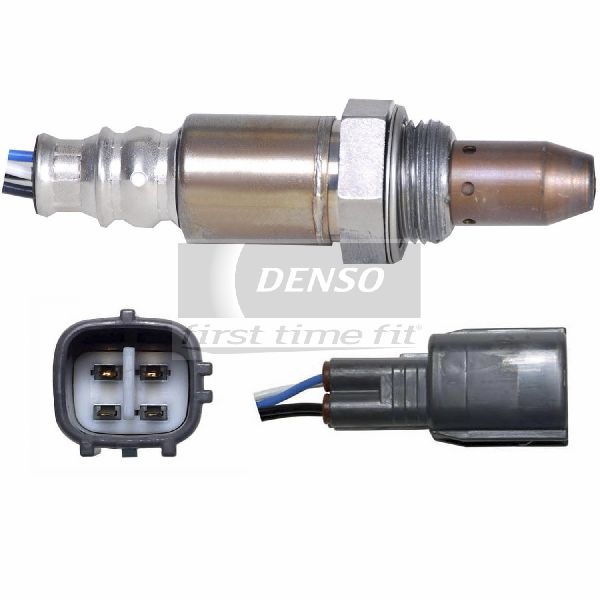
Typical fix: Replace the faulty upstream (Bank 1 Sensor 1 or Bank 2 Sensor 1) Air/Fuel Ratio sensor. Using an OEM-spec brand like Denso is highly recommended, as these vehicles can be sensitive to aftermarket sensor values.
Est. part cost: $100 - $190 - Damaged Wiring or Connectors ⚪ Low Probability Wiring to the O2/A/F sensors is exposed under the vehicle and can be damaged by road debris, heat, or corrosion, causing shorts or open circuits. A technician on iATN fixed a P0606 on a 2007 Camry 3.5L (same engine family) by finding that moving the O2 sensor wiring caused voltage to change erratically.
How to confirm: Visually inspect the wiring harness leading to the A/F and O2 sensors for any signs of melting, chafing, or corrosion. Perform a 'wiggle test' on the harness while watching the sensor's live data on a scan tool.
Typical fix: Repair the damaged section of the wiring harness or clean/replace the connector.
Est. part cost: $10 - $50 - Faulty Engine Control Module (ECM) Very Low Probability While the code definition points to the ECM, it is rarely the actual point of failure on this vehicle for this specific code. An owner complaint filed with the NHTSA (ODI #10384313) notes that a dealer replaced the ECM, but the P0606 code returned just 10 minutes later, strongly indicating the ECM was not the root cause.
How to confirm: This should be the absolute last resort. All other possibilities, especially A/F and O2 sensors and their wiring, must be exhaustively tested and ruled out first. The factory service manual procedure for a standalone P0606 is to replace the ECM, which is what leads to misdiagnosis.
Typical fix: Replace the ECM and have it programmed to the vehicle's VIN and immobilizer system.
Est. part cost: $200 - $1000+
Rare But Worth Checking
- Failing Alternator:
- Poor ECM Ground Connection:
- Loose Gas Cap:
Diagnosis Steps
- Scan the ECM for all stored trouble codes. Note any codes that accompany P0606, especially sensor-related codes like P0137, P0138, P2195, etc.
- If any codes for Air/Fuel (A/F) or Oxygen (O2) sensors are present, diagnose and fix them FIRST. This is the most likely root cause.
- Using a scan tool with live data, graph the voltage of the downstream O2 sensor(s). The voltage should fluctuate. If it's stuck high (above 0.9V), low (below 0.1V), or doesn't respond, the sensor is likely bad.
- While graphing the sensor data, carefully wiggle the wiring harness for the suspect sensor. If the voltage reading jumps erratically, you have found a fault in the sensor or its wiring.
- Visually inspect the wiring and connectors for all A/F and O2 sensors. Look for any signs of damage, melting on the exhaust, or corrosion.
- If sensor codes are present and the wiring is intact, replace the corresponding sensor. Using an OEM brand like Denso is strongly recommended.
- After replacement, clear all codes. To verify the fix quickly, you can put the ECU in "Check Mode" which bypasses the multi-trip detection logic and can confirm a fix faster.
Parts You'll Likely Need
- Oxygen Sensor (Downstream)
(OEM #89465-42170 (for 2.4L I4), 89465-0R010)— This is the most frequent cause of P0606 on this RAV4, as identified by Toyota's own service bulletin and numerous owner accounts.
Trusted brands: Denso (e.g., 234-4622 for 2.4L I4; 234-4261 for V6 Bank 2 Sensor 2; 🎬 Watch: How to replace the downstream sensor on V6 models. 234-4501 for V6 Bank 1 Sensor 2)
OEM price range: $150-$250
Aftermarket price range: $75-$150 - Air/Fuel Ratio Sensor (Upstream)
(OEM #89467-42120 (for 2.4L I4))— A faulty upstream A/F sensor is the second most likely cause, often setting lean codes that accompany the P0606.
Trusted brands: Denso (e.g., 234-9049 for 2.4L I4; 234-9022 for V6)
OEM price range: $180-$280
Aftermarket price range: $100-$190 - Engine Control Module (ECM)
(OEM #89661-42F73 (Example for 2006 V6, many variations exist))— This is the part the code technically points to, but it should only be replaced after all sensor-related issues have been completely ruled out.
Trusted brands: Toyota (OEM)
OEM price range: $700-$1100
Aftermarket price range: $200-$500 (Remanufactured)
Related Codes That Often Appear With This One
- P0137 — O2 Sensor Circuit Low Voltage (Bank 1 Sensor 2). This code directly points to a fault with the downstream oxygen sensor, which is a primary cause of P0606 on this vehicle.
- P0138 — O2 Sensor Circuit High Voltage (Bank 1 Sensor 2). This is another common companion code, also indicating a fault in the downstream O2 sensor.
- P2195 / P2197 — A/F Sensor Signal Stuck Lean. These codes point to the upstream Air/Fuel ratio sensor and are mentioned in the TSB as being potentially present with this condition.
- C1201 — Engine Control System Malfunction. This code is set by the ABS/VSC module when it detects a fault in the engine management system (like a P0606) and disables stability control as a precaution, illuminating the VSC and 4WD lights.
Technical Service Bulletins (TSBs) & Recalls
- T-SB-0001-10 Rev1: 'MIL "ON" DTC P0138, P0158 and/or P0606 Diagnostic Tips' - This bulletin is the primary source indicating that P0606 can be caused by faulty O2 or A/F sensors on the 2006-2010 RAV4, Avalon, Camry, and Highlander.
Platform-Specific Known Issues
- NHTSA Technical Service Bulletin #T-SB-0001-10 Rev1 explicitly states that for the 2006-2010 RAV4 (and other models), a P0606 DTC may be present due to incorrect Oxygen Sensor operation, and may appear with A/F sensor codes like P2197.
- A real-world owner complaint to the NHTSA (ODI #10384313) for a 2006 RAV4 V6 reported that a dealer replaced the ECM to fix a P0606 code, but the check engine light and the same fault code returned just 10 minutes later, strongly suggesting the ECM was not the root cause.
- A technician on the International Automotive Technicians Network (iATN) fixed a P0606 on a 2006 RAV4 3.5L after finding that wiggling the Bank 2 Sensor 2 O2 sensor wire caused the voltage to glitch on a scan tool. Replacing the sensor fixed the problem, avoiding a costly and incorrect ECM replacement.
- A YouTube video from 'Car Problems, Explained' demonstrates diagnosing a P0606 and P0138 on a 2006 RAV4 2.4L, confirming that replacing the rear O2 sensor resolved both codes and the live data returned to normal.
Mechanic-Grade Diagnostic Values
- Upstream Air/Fuel (A/F) Ratio Sensor Voltage — expected: Fluctuates rapidly around a 3.3V center point.. Failure: Stuck at a specific voltage, or slow to respond to throttle changes.
- Downstream Oxygen (O2) Sensor Voltage — expected: Relatively steady voltage between 0.5V and 0.7V when the engine is at operating temperature and steady RPMs.. Failure: Stuck high (above 0.9V), stuck low (below 0.1V), or fluctuating rapidly like an upstream sensor.
- O2 Sensor Heater Circuit Resistance — expected: Typically a low resistance value (consult service manual for exact spec).. Failure: An open circuit or a resistance of many thousands of Ohms, which can be intermittent and visible in freeze frame data.
- Alternator Output Voltage at Battery — expected: Stable between 13.5V and 14.5V with the engine running.. Failure: Voltage is significantly higher, lower, or fluctuates wildly.
Hidden / Shadow Codes Worth Checking
- Abnormal O2S Impedance B2S2 in Freeze Frame: This is not a separate DTC, but a value stored in the freeze frame data when P0606 sets. An abnormally high impedance value points directly to a failing oxygen sensor heater circuit, even if a specific heater code isn't present. (see via A professional scan tool like Toyota Techstream capable of reading detailed freeze frame data.)
Scan Tool Commands That Help
- Toyota Techstream: Check Mode — After replacing a sensor, putting the ECU in 'Check Mode' allows for faster verification of the repair. It shortens the diagnostic drive cycle, allowing the ECU to confirm the fix without needing multiple trips for the code to clear from history.
- Toyota Techstream: Freeze Frame Data Analysis — This is a critical first step. Before replacing any parts, analyze the freeze frame data for clues like abnormal sensor voltage or impedance values at the exact moment the P0606 code was triggered.
Wiring & Ground Locations
- Engine Ground (2GR-FE V6) — There are two primary harness grounds on top of the valve covers. One wire goes from each valve cover to a point on the frame near the strut tower.. A poor engine ground can cause unstable voltage references for sensors and the ECM, leading to erratic behavior and false processor fault codes.
- ECM Ground (2GR-FE V6) — The ECM itself has ground connections via its wiring harness. The main body ground points for the ECM harness are typically labeled E1, E2, E3, etc., in the factory wiring diagram and are located on the engine block and chassis.. Direct ECM grounds are essential for its internal processing. A loose or corroded ground pin (like on connector B30) can directly cause a P0606.
- Ground Points A1, A2, A3, A4 (Engine Bay) — These are primary ground points located in the engine compartment on the left and right sides, connecting various components including the ECM and sensors.. Corrosion at these shared ground points can introduce electrical noise and voltage drops, affecting multiple systems and potentially confusing the ECM into setting a P0606.
Real Owner Repair Stories
- iATN (International Automotive Technicians Network) (2007 Toyota Camry 3.5L (Same 2GR-FE engine and a common issue)) — Check Engine Light with code P0606.
❌ Tried (didn't work) The technician noted the factory service manual's only step for a standalone P0606 was 'Replace ECM'.
✅ What actually fixed it The technician graphed the rear O2 sensors on a scanner and wiggled the wiring. Wiggling the Bank 2, Sensor 2 harness caused the voltage to glitch erratically. Replacing the B2S2 oxygen sensor resolved the P0606 code. - YouTube channel 'geeksauthority' (2006 Toyota RAV4 2.4L 2AZ-FE) — Check Engine Light, VSC light, and Traction Control light on.
✅ What actually fixed it The vehicle had codes P0138 (O2 Sensor Circuit High Voltage) and P0606. The video documents replacing the downstream oxygen sensor (Bank 1 Sensor 2). After replacement and clearing the codes, the problem was resolved. The video also demonstrates using 'Check Mode' to verify the fix quickly.
When the Usual Fixes Don't Work
- While the vast majority of P0606 cases on this platform are sensor-related, Toyota did issue a Technical Service Bulletin (EG051-04) for the 2003-2004 Camry and Solara with the 2AZ-FE engine (the same 4-cylinder as the RAV4) that recommended replacing the ECM for a P0606 code. This suggests that while extremely rare on the 2006-2010 RAV4, a true internal ECM failure is not entirely impossible, but it should remain the absolute last diagnostic step after all sensor and wiring possibilities have been exhausted.
OEM Part Supersession History
89467-42060, 89467-42090→89467-0R020— Part consolidation and potential design updates.
Heads up: These are for the 3.5L V6, Front Right (Bank 1, Sensor 1) A/F Sensor. Always verify with VIN.89467-42050, 89467-42080→89467-0R010— Part consolidation and potential design updates.
Heads up: These are for the 3.5L V6, Front Left (Bank 2, Sensor 1) A/F Sensor. Always verify with VIN.N/A→Denso 234-4501— Common aftermarket replacement.
Heads up: This is a widely cited aftermarket part number for the downstream sensor (Bank 1 Sensor 2) on the 2.4L I4 and 3.5L V6 models.
Helpful Videos

Used OEM Parts in Stock


New Aftermarket Parts Available


The information in this article is provided for general reference and educational purposes only. Vehicle specifications, procedures, and part compatibility can vary by production date, trim level, and region. Always consult your vehicle's factory service manual and verify part numbers before purchasing or performing repairs. Safety-critical components such as airbags, seat belts, and braking systems should be installed by a qualified professional.
- Toyota RAV4:
- 🎬 Helpful Videos
- 🛍️ Shop This Part
- What's Unique About the 2006-2010 Toyota RAV4
- Diagnostic Flowchart
- Symptoms You May Notice
- Most Likely Causes
- Rare But Worth Checking
- Diagnosis Steps
- Parts You'll Likely Need
- Related Codes That Often Appear With This One
- Technical Service Bulletins (TSBs) & Recalls
- Platform-Specific Known Issues
- Mechanic-Grade Diagnostic Values
- Hidden / Shadow Codes Worth Checking
- Scan Tool Commands That Help
- Wiring & Ground Locations
- Real Owner Repair Stories
- When the Usual Fixes Don't Work
- OEM Part Supersession History
- 🎟️ Get 5% Off