

P0606 on 2022-2024 Subaru BRZ: ECM Processor Fault Causes & Fixes
For the 2022-2024 Subaru BRZ, the P0606 code is most often a software issue within the Engine Control Module (ECM). A Subaru Technical Service Bulletin (TSB) confirms a fix is available via a dealer-performed software update (reprogram). This issue is also present on its twin, the Toyota GR86.
- The most likely cause of a P0606 code on a 2022-2024 BRZ is a software glitch, not a failed part.
- Contact a Subaru dealer to check if TSB #09-135-25 applies to your vehicle; a simple software update is the official fix.
- Do not immediately replace the expensive Engine Control Module (ECM); this should be the last resort.
- Driving with this code is unsafe due to the risk of stalling or sudden, severe power loss.
- Ensure your battery and charging system are healthy, as low or unstable voltage can trigger this code.
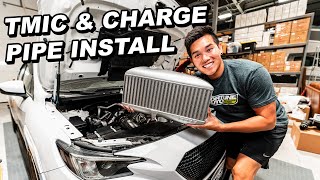
- Aftermarket modifications that affect airflow (like a poorly installed charge pipe) or cause electrical interference (like an exhaust touching the chassis) can trigger P0606.
What's Unique About the 2022-2024 Subaru BRZ
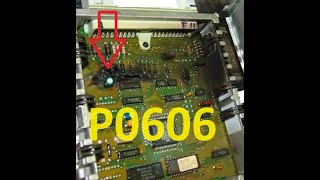
What's unique for the 2022-2024 BRZ is that Subaru has officially issued a Technical Service Bulletin (TSB #09-135-25) specifically to address this code. [⭐ MANUFACTURER TSB — highest authority] This is a strong indicator that the problem is a known software flaw that requires a specific dealer update, rather than a random hardware failure. 🎬 Watch: Understanding the common causes and fixes for P0606 codes This is different from older Subarus where P0606 was often linked to battery disconnections, though unstable voltage can still be a contributing factor and a specific reset procedure may be required.
Diagnostic Flowchart
Tap your situation to follow the diagnostic path that matches what you're seeing on this vehicle.
Symptoms You May Notice
- Check Engine Light (MIL) illuminated
- Vehicle entering 'limp mode' with severely reduced engine power. Specifically, the engine may refuse to rev past ~2000 RPM.
- Engine stalling or shutting off unexpectedly
- Rough, unstable idling or poor engine performance
- Vehicle may fail to start
- Replacing the ECM without first checking for the software update specified in TSB #09-135-25.
- Replacing other engine sensors when the root cause is the control module itself.
- Ignoring a weak battery or failing to perform the proper reset procedure after a battery replacement.
Most Likely Causes
- ECM Software Requires Update 🔴 High Probability Subaru has officially identified a software issue and released a TSB (#09-135-25) with updated programming files to correct the logic that causes this DTC. The fault is believed to be a 'torque and throttle plausibility check' that is too sensitive.
How to confirm: Contact a Subaru dealership and provide your vehicle's VIN. They can verify if TSB #09-135-25 is open for your car and if the reprogram has been performed.
Typical fix: A Subaru dealer will reprogram the Engine Control Module (ECM) with the updated software.
Est. part cost: $0 - $200 - Failing or Discharged Battery 🟡 Medium Probability Modern ECMs are highly sensitive to voltage. Low voltage during startup or unstable power from a weak battery or faulty alternator can cause the ECM to fail its internal self-check and trigger a P0606 code. This is a well-documented issue on many Subaru models.
How to confirm: Test the battery with a digital multimeter or a professional battery analyzer. A healthy, resting battery should be at approximately 12.6 volts. With the engine running, voltage should be between 13.5 and 14.5 volts. If the code appeared immediately after a battery replacement or jump-start, this is the likely cause.
Typical fix: Replace the weak or faulty battery. Ensure battery terminals are clean and tight. After replacing, perform a specific reset: with the new battery installed, clear the code, turn the ignition ON, then OFF, and wait for at least 60 seconds before turning the ignition ON again. This allows the self-shutoff relay to reset properly.
Est. part cost: $150 - $350 - Faulty Engine Control Module (ECM) ⚪ Low Probability
How to confirm: This is a diagnosis of exclusion. If the TSB reprogram has been performed and the battery/charging system is confirmed to be in perfect health, but the code persists, the ECM itself may have an internal hardware failure.
Typical fix: Replace the Engine Control Module. The new module will require programming to the vehicle's specific VIN and security information.
Est. part cost: $800 - $1500
Rare But Worth Checking
- Poor ECM Ground Connection: A loose, corroded, or damaged ground wire for the ECM can cause erratic behavior and internal fault codes. It's a simple check that can prevent a costly misdiagnosis of a bad ECM.
Diagnosis Steps
- Check for TSBs: The first step is to acknowledge TSB #09-135-25. Contact a Subaru dealer with your VIN to see if this update applies to your vehicle.
- Perform Software Update: If the TSB is applicable, have the dealer perform the ECM reprogram. This is the most likely solution.
- Inspect Battery and Charging System: If the code returns or the TSB is not applicable, thoroughly test the battery's state of health and the alternator's output. Ensure battery terminals are clean and secure.
- Perform ECM Hard Reset: If the battery was recently disconnected or replaced, clear the DTCs, turn the ignition ON then OFF, and wait a full 60 seconds before turning it back ON. This can resolve glitches caused by improper power cycling.
- Check ECM Power and Grounds: Verify that the ECM is receiving stable voltage and has a solid, clean ground connection. Inspect the wiring harness for any visible damage.
- Diagnose ECM: If all other steps fail to resolve the issue, the ECM itself is the likely culprit and may need replacement.
Parts You'll Likely Need
- Engine Control Module (ECM) Reprogram — This is the official fix documented by Subaru in TSB #09-135-25 to correct the software logic that triggers the P0606 code.
Trusted brands: Subaru
OEM price range: $0 - $200
Aftermarket price range: N/A - Engine Control Module (ECM)
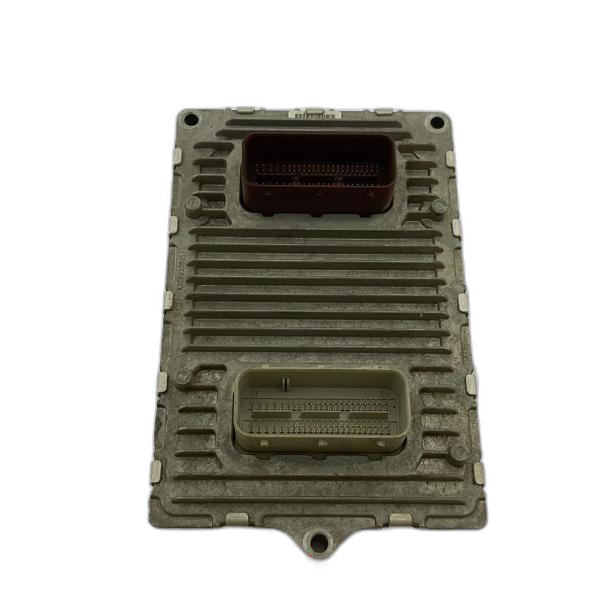
(OEM #Varies by year/transmission/features. Examples: 22765AR290 (2022 M/T w/o EyeSight), 22765AT541 (2023-24 w/ EyeSight), 22765AU510 (2024).)— In the rare case that a software update and battery check do not resolve the code, the ECM itself may have an internal hardware failure and require replacement.
Trusted brands: Subaru (OEM)
OEM price range: $950 - $1500
Aftermarket price range: $600 - $1000
Technical Service Bulletins (TSBs) & Recalls
- 09-135-25: Announcing new reprogramming files to address cases of DTC P0606 (Control Module Processor) detected by the Engine Control Module (ECM).
- 07-75-13R: While for older turbo models, this TSB establishes the precedent for P0606 being triggered by improper battery disconnection/reconnection procedures, a principle that still applies.
Platform-Specific Known Issues
- Subaru has issued Technical Service Bulletin #09-135-25, dated May 20, 2024, which announces the availability of new ECM reprogramming files specifically to address DTC P0606 on these vehicles. [⭐ MANUFACTURER TSB — highest authority]
Mechanic-Grade Diagnostic Values
- Battery State of Charge (Engine Off) — expected: 12.4V - 12.6V. Failure: A reading below 12.0V indicates a discharged or failing battery.
- Charging System Voltage (Engine Running at Idle) — expected: 13.5V - 14.5V. Failure: Voltage below 13.5V or above 14.5V suggests a fault with the alternator or voltage regulator.
Hidden / Shadow Codes Worth Checking
- Permanent DTC (PDTC): This is not a different code number, but a state where the P0606 code cannot be cleared by a standard scan tool or by disconnecting the battery. The ECU must see that the underlying fault condition is resolved over one or more drive cycles before it will clear the code itself. (see via A standard OBD-II scanner will show the code but will fail to clear it. The inability to clear the code is the primary indicator.)
Scan Tool Commands That Help
- Subaru Select Monitor (SSMIII/SSM4): Clear Memory — This function is the first step in the official Subaru procedure (per TSB 07-75-13R, which established the principle) for a P0606 caused by power loss. It is used to clear the fault from the ECM's memory before performing the mandatory 60-second ignition cycle reset.
Wiring & Ground Locations
- Engine Control Module (ECM) — Located in the passenger-side footwell, typically behind or above the glove box.. This is the component setting the code. Physical inspection for water intrusion or connector damage is a valid step, and its location is needed for replacement. 🎬 Watch: Step-by-step walkthrough for replacing the BRZ control module
- Main Engine Ground Straps — There are three primary straps: one on each side of the front bottom of the engine connecting to the frame rail, and one from the passenger-side top-rear of the engine/transmission to the transmission tunnel.. A poor engine ground can cause voltage discrepancies and electrical noise, confusing the ECM and leading it to report an internal processor fault.
- Direct Injection (DI) Driver Ground — The DI driver unit itself provides its own ground path where it is mounted.. A loose DI driver can cause an inadequate ground, which has been noted as a potential source of electrical issues on this platform.
Real Owner Repair Stories
- Reddit user on r/wrx_vb (FA24 Engine) (Tuned 2022+ Subaru WRX (VB Chassis)) — P0606 code and limp mode would trigger consistently during high-load pulls after installing a new aftermarket exhaust.
❌ Tried (didn't work) Re-flashing the tune file, Reverting to a previous version of the tune
✅ What actually fixed it The owner discovered the aftermarket exhaust was vibrating and physically touching the car's chassis at certain RPMs. This intermittent contact created an electrical anomaly (grounding issue or static discharge) that the ECM interpreted as a processor fault. Adjusting the exhaust to create proper clearance permanently solved the problem. - Reddit user on r/wrx_vb (FA24 Engine) (2022+ Subaru WRX with Cobb Stage 2 Tune) — P0606 code appeared during pulls in 5th or 6th gear. The car was only making 17.4 PSI of boost, which was lower than expected for the tune.
❌ Tried (didn't work) Resetting the code with an Accessport, Performing the 60-second ignition cycle reset procedure
✅ What actually fixed it The charge pipe was not seated correctly on the compressor, causing a massive boost leak. The large discrepancy between the torque/airflow the ECU expected and what was actually being measured likely triggered the 'plausibility check' fault. Reseating the charge pipe properly resolved the boost leak and eliminated the P0606 code.
OEM Part Supersession History
22765AT540→22765AT541— Part revision or update by the manufacturer. Specific changes are not documented in public-facing parts catalogs.
Helpful Videos


We Have This Part in Stock


The information in this article is provided for general reference and educational purposes only. Vehicle specifications, procedures, and part compatibility can vary by production date, trim level, and region. Always consult your vehicle's factory service manual and verify part numbers before purchasing or performing repairs. Safety-critical components such as airbags, seat belts, and braking systems should be installed by a qualified professional.
- Subaru BRZ:
- 🎬 Helpful Videos
- 🛍️ Shop This Part
- What's Unique About the 2022-2024 Subaru BRZ
- Diagnostic Flowchart
- Symptoms You May Notice
- Most Likely Causes
- Rare But Worth Checking
- Diagnosis Steps
- Parts You'll Likely Need
- Technical Service Bulletins (TSBs) & Recalls
- Platform-Specific Known Issues
- Mechanic-Grade Diagnostic Values
- Hidden / Shadow Codes Worth Checking
- Scan Tool Commands That Help
- Wiring & Ground Locations
- Real Owner Repair Stories
- OEM Part Supersession History
- 🎟️ Get 5% Off