

P0606 on 2015-2018 Jeep Renegade: PCM Processor Fault Causes and Fixes
On a 2015-2018 Jeep Renegade, code P0606 indicates a Powertrain Control Module (PCM) processor fault. The most common fixes are a software update for shifting issues on 2015 models (per TSB 21-054-15), a complete PCM replacement for stalling/no-start conditions on 2018 models covered by recall U87, or a 'Proxy Alignment' procedure after a battery change to resolve module communication errors.
- P0606 on a Jeep Renegade is a serious internal PCM fault.
- Before replacing any parts, check for open recalls (especially U87 for 2018 models) and TSBs.
- For 2015 models stuck in Park, the most likely fix is a software update, not a new shifter or PCM.
- For stalling or no-start issues, especially on 2018 models, a faulty PCM is a very high probability.
- Diagnosis and repair require professional tools for software flashing and module programming; this is not a simple DIY fix.
What's Unique About the 2015-2018 Jeep RENEGADE
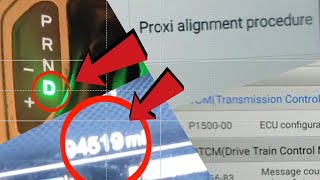
On the Jeep Renegade, P0606 is not a straightforward 'replace the computer' code. There are three very distinct, well-documented issues. For 2015 models built on or before September 30, 2015, the code often appears with an inability to shift out of Park, which is typically fixed with a software update per TSB #21-054-15. 🎬 Watch: How to fix a Renegade stuck in Park. For 2018 models with the 2.4L engine, this code can be caused by a hardware failure within the PCM due to a faulty voltage regulator, which was subject to safety recall U87 requiring PCM replacement. Finally, on 2015 models, a dead battery followed by a replacement or jump start can cause communication issues between modules, leading to a flashing odometer, a 'stuck in park' condition, and various codes that can be resolved with a 'Proxy Alignment' procedure.
Diagnostic Flowchart
Tap your situation to follow the diagnostic path that matches what you're seeing on this vehicle.
Symptoms You May Notice
- Check Engine Light is on.
- Vehicle will not shift out of Park.
- Engine stalls intermittently, sometimes while driving.
- Engine cranks but does not start, or fails to crank at all.
- Erratic or poor automatic transmission shifting performance.
- Reduced engine power and poor acceleration.
- Decrease in fuel economy.
- Flashing odometer after a battery change or jump start.
- Replacing the gear shifter assembly for a 'stuck in Park' issue on a 2015 model, when the actual fix is a software update (TSB #21-054-15) or a Proxy Alignment procedure after a battery change.
- Replacing fuel system or ignition components in response to a no-start or stalling condition without first verifying PCM health and checking for applicable recalls.
Most Likely Causes
- Outdated Module Software 🔴 High Probability Specifically for 2015 models built on or before September 30, 2015, a software glitch can cause P0606 along with a 'stuck in Park' symptom, as documented in TSB #21-054-15.
How to confirm: A dealer or qualified shop can check the vehicle's current software calibration against the latest available version from the manufacturer using a tool like wiTECH.
Typical fix: Reprogramming (flashing) the Electronic Shift Module (ESM) with updated software.
Est. part cost: $0 - Faulty Powertrain Control Module (PCM) 🔴 High Probability 2018 models with the 2.4L engine were part of NHTSA recall U87 (18V-524) for a faulty voltage regulator chip inside the PCM that could fail, causing stalling or a no-start. This recall affected over 12,000 FCA vehicles. Outside of the recall, the PCM can fail like any electronic component.
How to confirm: After ruling out software, wiring, and power/ground issues, the PCM is condemned. If the code returns immediately after clearing, it's a strong sign of a hard internal failure.
Typical fix: Replace the PCM and program the new unit to the vehicle's VIN and specific configuration.
Est. part cost: $200-$600 - Module Communication Error (Proxy Alignment Needed) 🟡 Medium Probability On these vehicles, replacing a dead battery or jump-starting can sometimes cause the Body Control Module (BCM) and PCM to lose synchronization. This results in a flashing odometer, inability to shift from park, and multiple error codes.
How to confirm: Symptoms (flashing odometer, stuck in park) appear immediately after a battery-related event. A scan tool will likely show multiple communication codes alongside P0606 or configuration mismatch codes like P1500.
Typical fix: Performing a 'Proxy Alignment' procedure with a capable bidirectional scan tool to re-synchronize all vehicle modules. In some cases, an ECU reset may also be required.
Est. part cost: $0 - Poor PCM Power or Ground Connections ⚪ Low Probability
How to confirm: Visually inspect the PCM connectors for corrosion or damage. Use a multimeter to verify stable battery voltage and solid ground connections at the PCM harness according to the vehicle's wiring diagram.
Typical fix: Clean or repair the PCM connectors, ground straps, or associated wiring.
Est. part cost: $5-$50 - Low Battery Voltage ⚪ Low Probability A dead or failing battery is a common precursor to the 'stuck in park' issue on 2015 models, which can then lead to communication errors and various codes, including P0606, after a jump or replacement.
How to confirm: Test the battery's state of charge and health with a digital battery tester. A battery struggling to provide adequate voltage, especially during cranking, can cause modules to set internal fault codes.
Typical fix: Charge or replace the vehicle's 12V battery.
Est. part cost: $150-$300
Diagnosis Steps
- Check for active recalls, especially NHTSA recall U87 (18V-524) for 2018 models with the 2.4L engine.
- Scan for all Diagnostic Trouble Codes (DTCs). Note any other codes that appear alongside P0606, especially communication or configuration codes.
- If the odometer is flashing and the vehicle is stuck in Park after a recent battery change or jump start, suspect a module communication issue. Attempt a 'Proxy Alignment' with a capable scan tool before replacing parts.
- For 2015 models built on or before Sept 30, 2015 that are stuck in Park, consult TSB #21-054-15. The primary diagnostic step is to check the software version and reflash the ESM/PCM if an update is available.
- Test the vehicle's battery and charging system to ensure stable voltage (13.2-13.5V during flashing) is being supplied to all modules.
- Perform a thorough visual inspection of the PCM wiring harness and connectors. Look for any signs of corrosion, damage, or loose connections.
- Verify the integrity of the PCM's main power and ground circuits using a wiring diagram and a multimeter.
- If all software updates have been performed and wiring/power is confirmed to be good, the PCM is highly suspect.
- Replace and reprogram the Powertrain Control Module. This must be done with a compatible scan tool (like wiTECH) to write the VIN and sync the new module with the vehicle's security systems.
Parts You'll Likely Need
- Powertrain Control Module (PCM)
(OEM #68240752AA, 68349208AB)— This is the part that fails internally, either due to a hardware defect (as in recall U87) or general electronic failure. It is the ultimate fix when software and wiring are ruled out.
Trusted brands: Mopar
OEM price range: $400-$700
Aftermarket price range: $200-$500
Related Codes That Often Appear With This One
- P0340 — TSB #1805420 links P0606 with the Camshaft Position Sensor code (P0340) in a no-start scenario, suggesting the PCM fault may be related to processing sensor inputs.
- P0016 — TSB #1805420 also links P0606 with the Crankshaft/Camshaft Timing Misalignment code (P0016), indicating a potential PCM failure mode related to engine timing calculations.
- P1500 — This code for 'ECU Configuration Mismatch' can appear alongside a flashing odometer and P0606 after a battery replacement, indicating a need for a Proxy Alignment.
- C2502-64 — This chassis code for 'ECM TC Fail' can also be present with a flashing odometer and stuck-in-park condition, pointing towards a configuration issue solvable by a Proxy Alignment and/or ECU reset.
Technical Service Bulletins (TSBs) & Recalls
- 21-054-15: Addresses a no-shift from Park condition on 2015 models, potentially with DTC P0606, fixed by a software flash.
- 1805420: Links P0606 to no-start conditions and timing-related codes (P0340, P0016) on the 2.4L engine.
Platform-Specific Known Issues
- NHTSA Recall U87 (18V-524): PCM Failure: Affects some 2018 Renegade models with the 2.4L engine. A faulty voltage regulator chip on the PCM circuit board can fail, leading to an engine stall or a no-start condition. The remedy is to replace the PCM free of charge.
- TSB #21-054-15: Stuck in Park (2015 Models): Addresses an issue on 2015 models (built on or before 09/30/2015) where the vehicle won't shift out of Park and may set code P0606. The specified fix is to update the Electronic Shift Module (ESM) software, not replace hardware.
- Post-Battery Change 'Proxy Alignment': Owners report that after a battery dies and is replaced or jump-started, the vehicle may get stuck in park with a flashing odometer. This is often not a failed PCM but a communication loss between modules. A 'Proxy Alignment' procedure using a diagnostic tool is required to restore function. One owner on YouTube documented this exact scenario and fixed it with a proxy alignment and ECU reset.
- TSB #1805420: No-Start Condition: Notes that on vehicles with the 2.4L (ED6) engine, a periodic no-start condition may be accompanied by codes P0606, P0340, and P0016, pointing to the PCM as a potential root cause.
Mechanic-Grade Diagnostic Values
- Battery State of Charge (Key Off) — expected: 12.4V to 12.6V. Failure: A reading below 12.0V indicates a bad battery; a drop of exactly 2.1V (e.g., to 10.5V) can indicate a dead cell.
- Alternator Output (Engine Running) — expected: 13.5V to 14.5V at the battery terminals. Failure: Voltage significantly below or above this range indicates a charging system fault that can trigger module errors.
- Battery Voltage During Module Flashing — expected: Must be maintained between 13.2V and 13.5V. Failure: Dropping below 13.2V or climbing above 13.5V can interrupt or corrupt the flash process.
- Sensor Reference Voltage — expected: Typically 5V at the sensor connector. Failure: If reference voltage is missing at the sensor but present at the PCM connector, it indicates a wiring fault. If it's missing at the PCM connector, it points to an internal PCM fault.
Hidden / Shadow Codes Worth Checking
- P1500: ECU Configuration Mismatch. This code is a strong indicator that a Proxy Alignment is required, as it means the PCM's configuration doesn't match the Body Control Module's list of installed modules. (see via Standard OBD-II scan tool.)
- C2502-64: ECM TC Fail Status / Signal Plausibility Failure. This chassis code often appears with P1500 and a flashing odometer, pointing to a CAN bus configuration error. (see via A scan tool capable of reading chassis (C-prefix) codes.)
Scan Tool Commands That Help
- wiTECH, Autel, AlfaOBD, Appcar DiagFCA: Proxy Alignment (or Proxi Configuration Alignment) — This is the primary fix for a flashing odometer, no-shift, and multiple communication codes after a battery replacement or module installation. It re-synchronizes all modules on the CAN bus network.
- wiTECH, Otofix/Autel: ECU Reset / TCM Reset — In some cases, after a successful Proxy Alignment, the vehicle may still not shift out of park. Performing a reset on the Engine or Transmission Control Module may be the final step needed to restore functionality.
- wiTECH J2534: Learn ETC (Electronic Throttle Control) — This function is required after programming a new, blank PCM to calibrate the throttle position sensors.
Wiring & Ground Locations
- Powertrain Control Module (PCM) — In the engine bay on the driver's side, mounted to the chassis with three bolts. On some petrol models, it may be at the rear of the engine.. This is the location for visual inspection, connector checking, and replacement. Accessing the sticker on the back requires unbolting it to get part numbers for replacement or an unlock service.
- PCM Connector C2 — This is one of the main connectors on the PCM itself.. Pinpoint voltage and ground tests must be performed at this connector to rule out wiring issues before condemning the PCM. A wiring diagram for the specific year/engine is required for accurate pin testing.
- Main Engine Ground — Typically a thick wire or braided strap running from the engine block to the vehicle's chassis/frame.. A poor main ground can cause unstable voltage and communication issues for all modules, including the PCM, potentially triggering a P0606.
Real Owner Repair Stories
- Pine Hollow Auto Diagnostics (YouTube) (2015 Jeep Renegade 2.4L) — Stuck in park, flashing odometer, accelerator pedal not working. Occurred after the battery died and was replaced.
❌ Tried (didn't work) A 'Proxy Alignment' procedure was performed and completed successfully, but the vehicle remained stuck in park.
✅ What actually fixed it After the successful Proxy Alignment, an 'ECU Reset' function was performed using an Otofix D1 Pro scan tool. This final step restored the ability to shift out of park and cleared the fault. - Reddit user Grand_Bee9618 in r/JeepRenegade (2015 Jeep Renegade Latitude) — After a battery replacement, the vehicle locked up, displayed multiple service messages, would not go into gear, and the odometer was blinking.
❌ Tried (didn't work) Initial thoughts of transmission, starter, or battery failure.
✅ What actually fixed it A 'Proxy Alignment' procedure performed by a mechanic with the correct scan tool reprogrammed the control modules and resolved all symptoms.
Model Year Variations Within This Range
- 2018-2018: Vehicles from the 2018 model year and newer are equipped with a Secure Gateway Module (SGW). To perform a Proxy Alignment or other advanced diagnostics with an aftermarket tool (like AlfaOBD), a physical SGW bypass cable or module is required to gain access to the vehicle's secondary CAN bus.
Helpful Videos
We Have This Part in Stock



The information in this article is provided for general reference and educational purposes only. Vehicle specifications, procedures, and part compatibility can vary by production date, trim level, and region. Always consult your vehicle's factory service manual and verify part numbers before purchasing or performing repairs. Safety-critical components such as airbags, seat belts, and braking systems should be installed by a qualified professional.
- Jeep RENEGADE:
- 🎬 Helpful Videos
- 🛍️ Shop This Part
- What's Unique About the 2015-2018 Jeep RENEGADE
- Diagnostic Flowchart
- Symptoms You May Notice
- Most Likely Causes
- Diagnosis Steps
- Parts You'll Likely Need
- Related Codes That Often Appear With This One
- Technical Service Bulletins (TSBs) & Recalls
- Platform-Specific Known Issues
- Mechanic-Grade Diagnostic Values
- Hidden / Shadow Codes Worth Checking
- Scan Tool Commands That Help
- Wiring & Ground Locations
- Real Owner Repair Stories
- Model Year Variations Within This Range
- 🎟️ Get 5% Off