

P0606 on 2016-2018 Ford Focus RS: PCM Processor Fault Causes and Fixes
P0606 on a Ford Focus RS indicates a critical internal failure of the Powertrain Control Module (PCM). This is a serious fault that makes the vehicle unsafe to drive. The most common fix is replacing the PCM, which requires professional programming and typically costs between $1,000 and $1,800. Before replacement, all power and ground circuits must be meticulously checked.
- P0606 is a critical fault code on a Focus RS that points directly to an internal failure of the main engine computer (PCM).
- The vehicle is not safe to drive. Arrange for it to be towed to a qualified repair shop.
- Before replacing the expensive PCM, a technician must rule out simpler causes like a bad battery, failing alternator, or poor ground connections.
- PCM replacement is not a DIY job. It requires expensive, dealer-level tools to program the new module to the car's immobilizer system.
- Ensure recall 18S32 for the canister purge valve has been performed, as its symptoms can mimic PCM failure.
What's Unique About the 2016-2018 Ford Focus RS
Unlike standard Focus models of the same era, the Focus RS uses a 6-speed manual transmission, not the problematic DPS6 automatic. Therefore, TSBs and owner complaints linking P0606 to automatic transmission failures on other Focus models do not apply here. For the RS, this code points more directly to a true PCM internal fault, a power supply issue, or a bad ground connection. Given the high-performance nature of the 2.3L EcoBoost engine, the PCM's role is especially critical, and a failure can have immediate and severe consequences.
Symptoms You May Notice
- Check Engine Light is on
- Engine stalling or cutting out unexpectedly
- No-start or crank-no-start condition
- Vehicle enters 'limp mode' with significantly reduced power
- Erratic engine behavior like rough idling, hesitation, or misfiring
- Noticeable drop in fuel economy
- Multiple unrelated error codes appearing simultaneously
- Replacing spark plugs or ignition coils for misfires caused by the PCM.
- Replacing fuel system components when the PCM is failing to command them correctly.
- Confusing the issue with the automatic transmission problems common on non-RS Focus models.
Most Likely Causes
- Internal PCM Failure 🔴 High Probability The P0606 code is specifically designed to report an internal processor self-test failure. Heat, vibration, and age can cause internal components or solder joints within the module to fail. This is the most common final diagnosis after all external factors are ruled out.
How to confirm: This is a diagnosis of exclusion. A technician must first confirm that the battery, charging system, and all power and ground circuits to the PCM are functioning perfectly. If all external factors are good, the PCM is condemned.
Typical fix: Replace the Powertrain Control Module (PCM) and program it to the vehicle.
Est. part cost: $600-$1200 - PCM Power or Ground Circuit Issue 🟡 Medium Probability Voltage fluctuations from a failing alternator or high resistance from a corroded ground connection can cause the PCM's processor to malfunction and incorrectly flag an internal fault. The main chassis ground point under the battery tray is a known area for corrosion or looseness on this platform.
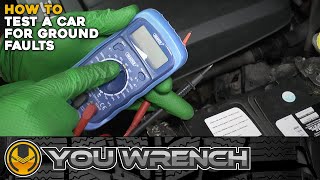
How to confirm: Use a multimeter to test voltage and continuity at the PCM connector pins. Verify battery voltage is stable and the alternator is charging correctly (typically 13.5-14.5 volts with the engine running). Inspect and clean all major ground points between the engine, chassis, and battery, paying close attention to the ground stud under the airbox/battery tray. 🎬 Watch how to clean the main battery ground connection on a Ford Focus
Typical fix: Clean or repair the corroded ground connection. Repair the faulty wiring harness or replace the failing alternator.
Est. part cost: $5-$400 - PCM Software Corruption ⚪ Low Probability Software glitches can sometimes cause logic errors that trigger a P0606 code. This can happen after an incomplete factory update or due to conflicts with aftermarket tuning files, a common modification for the Focus RS.
How to confirm: Use a Ford-specific scan tool (IDS) or a J2534 pass-thru device to check if a newer software calibration is available for the PCM. If an aftermarket tune is present, flash it back to the stock file to see if the code disappears.
Typical fix: Reflash (reprogram) the PCM with the latest software from Ford. If an aftermarket tune is present, flash it back to the stock file to see if the code disappears.
Est. part cost: $0-$250
Rare But Worth Checking
- Aftermarket Tuning: Aggressive aftermarket engine tunes, especially on the related Mustang EcoBoost platform, have been linked to P0606 faults. The tune can over-stress the PCM's processor or introduce software conflicts. If the vehicle is tuned, reverting to the stock calibration is a key diagnostic step.
- Failing Alternator: An alternator that is severely over-charging (producing excessive voltage >15V) or under-charging can physically damage or confuse the sensitive electronics inside the PCM.
Diagnosis Steps
- Read all Diagnostic Trouble Codes (DTCs) from all vehicle modules.
- Check the battery and charging system. Ensure the battery is fully charged (12.4V+ key off) and the alternator is providing stable voltage (13.5-14.5V engine running). A weak battery can cause numerous electrical faults.
- Visually inspect the PCM wiring harness and connectors for any signs of damage, corrosion, or loose connections.
- Critically, inspect, disconnect, and clean the main PCM and chassis ground connections. On the Focus platform, a key ground is located under the airbox/battery tray and is susceptible to corrosion.
- Using a multimeter and a wiring diagram, verify the PCM is receiving proper, stable power and ground at its connector pins.
- If the vehicle has an aftermarket tune, flash the PCM back to the original factory software file and see if the code clears.
- Check for any available PCM software updates using a Ford-specific scan tool (IDS). If an update is available, perform the reflash.
- If all external wiring, power, and grounds are confirmed good and the code returns after a software check, the PCM is faulty and must be replaced.
- Install and program the new PCM using a Ford-specific diagnostic tool (like IDS) or a J2534 pass-thru device. This includes programming keys for the PATS immobilizer system.
Parts You'll Likely Need
- Powertrain Control Module (PCM)
(OEM #G1FZ-12A650-ATE (example, must verify by VIN))— This code indicates a fatal internal processor error, and in most cases, the entire module must be replaced. Part numbers vary significantly; always confirm the correct part for your vehicle's specific VIN. The original Pass 1 part number F1EZ-12A650-AANP may apply to other Focus models but RS-specific parts often start with G1FZ.
Trusted brands: Motorcraft (OEM)
OEM price range: $700-$1200
Aftermarket price range: $500-$800
Related Codes That Often Appear With This One
- U0100 — This code means 'Lost Communication With ECM/PCM'. It often appears with P0606 because the internal fault disrupts the PCM's ability to communicate on the vehicle's CAN bus network.
- P0607 — This code for 'Control Module Performance' is very similar to P0606 and indicates a general internal malfunction, reinforcing the diagnosis of a failed PCM.
Technical Service Bulletins (TSBs) & Recalls
- TSB 16-0129: While not directly applicable to the RS, this TSB for other Focus models shows that Ford links P0606 to severe drivability concerns and control module failure.
- TSB 16-0044: Superseded by 16-0129, this TSB also connects P0606 with no-start and loss of power conditions on automatic Focus models, establishing a pattern for the code's severity on the platform.
Platform-Specific Known Issues
- While the provided TSBs (16-0129, 16-0044) mention P0606, they are specific to Focus/Fiesta models with the DPS6 automatic transmission and do not apply to the manual-only Focus RS.
- It is important to distinguish P0606 symptoms from those of a faulty canister purge valve, which was subject to recall 18S32 on the Focus ST/RS. 🎬 See how to replace a faulty Ford Focus purge valve A bad purge valve can also cause stalling and drivability issues, but the fix is a software update and/or valve replacement, not a new PCM.
Mechanic-Grade Diagnostic Values
- Battery Voltage (Key Off, Engine Off) — expected: 12.4V to 12.6V. Failure: A reading below 12.4V indicates a discharged or failing battery that can cause spurious module faults.
- Charging System Voltage (Engine Running) — expected: 13.5V to 14.5V. Failure: Voltage below 13.5V or above 14.5V indicates a problem with the alternator or voltage regulator, which can damage the PCM.
- PCM Ground Circuit Voltage Drop — expected: Less than 0.2V. Failure: A reading higher than 0.2V between the PCM ground pin and the negative battery terminal indicates high resistance in the ground circuit.
Scan Tool Commands That Help
- Ford IDS / FORScan (with extended license): Programmable Module Installation (PMI) — This is the essential function used when replacing a PCM. It transfers the vehicle's configuration data (VIN, security info, etc.) from the old module to the new one. If the old module is unresponsive, this data must be sourced from Ford's servers (As-Built data).
- Ford IDS / FORScan / High-End Aftermarket (e.g., Autel): PATS (Passive Anti-Theft System) Parameter Reset — After installing a replacement PCM, a parameter reset is required to synchronize the immobilizer system between the new PCM and the Body Control Module (BCM). This procedure requires a minimum of two keys to be programmed.
- Ford IDS / FORScan: PCM Module Initialization/Relearn Vehicle Data — After flashing a new calibration (e.g., converting an automatic tune to manual), this function forces the PCM to relearn adaptive values and configurations for the specific vehicle.
Wiring & Ground Locations
- G104 / G108 — Underneath the airbox/battery tray on the driver's side frame rail.. These are critical chassis and PCM ground points. They are notoriously attached to painted surfaces from the factory, leading to poor connections over time. A bad ground here can cause system-wide voltage instability, triggering a P0606 code.
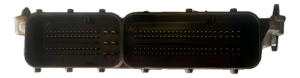
- C175B — The main, large, black connector at the Powertrain Control Module (PCM) itself.. All power, ground, and signal wires for the PCM pass through this connector. Verifying power and ground integrity directly at these pins is a crucial step to rule out a wiring issue before condemning the PCM.
Real Owner Repair Stories
- focusrs.org forum user (2016 Ford Focus RS) — No-start condition, P0606 code present.
❌ Tried (didn't work) Initial diagnosis pointed towards a dead module.
✅ What actually fixed it The dealership diagnosed a failed PCM and replaced it under warranty. The car started and ran correctly after the new PCM was installed and programmed.
OEM Part Supersession History
F1EA-12A650-CA / F1EA-12B684-CA→F1EZ-12A650-AANP (Service Part Number)— Standard part number evolution and updates.
Heads up: While F1EZ-12A650-AANP is a common service part for ST/RS models, it is critical to match the engineering number (e.g., F1EA-XXXX) or the 4-digit tear tag on the original PCM's sticker when sourcing a used replacement to ensure hardware compatibility.
Model Year Variations Within This Range
- Late 2017-2018: Late 2017 and all 2018 models received an updated head gasket from the factory to address a known issue on earlier models. This does not directly relate to P0606 but is a critical reliability distinction within the generation.
- 2018 only: The 2018 Focus RS came standard with a Quaife mechanical limited-slip front differential, which was not available on 2016-2017 models. This is a mechanical change and does not affect the P0606 diagnosis.
Diagnostic Flowchart
Other Known Issues on This Vehicle
Issues unrelated to this code that are worth knowing about as an owner of this generation:
- Head Gasket Failure 🔴 High — Common on models built from Aug 2015 to July 2017. Caused by the installation of the wrong head gasket (for a Mustang 2.3L) at the factory. (Ref: Ford Customer Satisfaction Program 17S34 (often called a recall) was issued to replace the head gasket and, if necessary, the cylinder head.)
- Faulty Canister Purge Valve 🟠 Medium — Widespread enough to trigger a recall. Symptoms include stalling after refueling, rough idle, and difficulty starting. (Ref: Recall 18S32 was issued by Ford to replace the valve and/or update PCM software to correct the issue.)
- Rear Drive Unit (RDU) Overheating 🟠 Medium — Primarily affects cars driven aggressively on track or with extensive use of 'Drift Mode'. The RDU overheats, triggering an 'AWD Fault' message and temporarily disabling the AWD system. (Ref: Ford released software updates via dealers to help better manage RDU temperatures and reduce the frequency of overheating during street driving.)
- Low-Speed Pre-Ignition (LSPI) 🔴 High — A risk for all small-displacement, high-output turbocharged engines. Can cause catastrophic engine failure (e.g., bent rods, cracked pistons) at low RPM under high load. Using high-quality, API SN PLUS or SP-rated oil is critical for mitigation.
Used vs. New Parts: Buying Guide for This Vehicle
When a used part is the smart pick: A used OEM PCM is a viable and cost-effective option for this repair, as the failure is electronic and not wear-related. However, it absolutely requires professional programming to function.
Donor-vehicle mileage cap: roughly under 150000 miles for the part to have meaningful remaining life.
What to inspect on the donor part:
- Match the OEM part number (e.g., F1EA-12A650-CA) on the sticker EXACTLY to your original module.
- Source from a southern or dry-climate state to minimize the risk of corrosion on the casing and connector pins.
- Ensure the connector pins are straight and free of any green or white corrosion.
- Buy from a reputable seller that guarantees the part is functional and not from a flood-damaged vehicle.
OEM-only on this vehicle (don't cheap out):
- Powertrain Control Module (PCM) - While remanufactured units exist, a used OEM module programmed correctly is often more reliable than a poorly rebuilt aftermarket one. New OEM is the safest but most expensive option.
Brands owners have reported issues with on this vehicle:
- Generic, unbranded PCM/ECM repair services with no warranty or vehicle-specific programming support.
Real Owner Stories
Aggregated from forums and TSBs cited above. Mileages and costs reflect what owners reported in those sources.
2016-2018 Ford Focus RS 2.3L EcoBoost
Symptoms: Owner experienced a no-start condition with code P0606 present.
What fixed it: The dealer diagnosed the vehicle and replaced the PCM under warranty.
Source hint: focusrs.org - Thread: 'P0606 - ECM/PCM Processor Fault'
Related OBD-II Codes
Frequently Asked Questions
Does TSB 16-0129 or TSB 16-0044 apply to my 2016-2018 Ford Focus RS?
Could my stalling and P0606 code be related to the head gasket issue?
Is there a recall that covers stalling issues on the Focus RS instead of a PCM replacement?
Can my aftermarket tune cause the P0606 code on my Focus RS?
Where is the main ground point I should check for P0606 on this platform?
Will I need to program my keys if I replace the PCM?
Helpful Videos



We Have This Part in Stock



The information in this article is provided for general reference and educational purposes only. Vehicle specifications, procedures, and part compatibility can vary by production date, trim level, and region. Always consult your vehicle's factory service manual and verify part numbers before purchasing or performing repairs. Safety-critical components such as airbags, seat belts, and braking systems should be installed by a qualified professional.
- Ford Focus RS:
- 🎬 Helpful Videos
- 🛍️ Shop This Part
- What's Unique About the 2016-2018 Ford Focus RS
- Symptoms You May Notice
- Most Likely Causes
- Rare But Worth Checking
- Diagnosis Steps
- Parts You'll Likely Need
- Related Codes That Often Appear With This One
- Technical Service Bulletins (TSBs) & Recalls
- Platform-Specific Known Issues
- Mechanic-Grade Diagnostic Values
- Scan Tool Commands That Help
- Wiring & Ground Locations
- Real Owner Repair Stories
- OEM Part Supersession History
- Model Year Variations Within This Range
- Diagnostic Flowchart
- Other Known Issues on This Vehicle
- Used vs. New Parts: Buying Guide for This Vehicle
- Real Owner Stories
- 2016-2018 Ford Focus RS 2.3L EcoBoost
- Related OBD-II Codes
- Frequently Asked Questions
- 🎟️ Get 5% Off