

P0606 on 2014 Dodge Journey: Internal Processor Fault Causes & Fixes
On a 2014 Dodge Journey, code P0606 is often caused by a software glitch that leads to harsh shifting. A simple software update at the dealership, as specified in a Technical Service Bulletin (TSB), is the most likely fix. If that fails, the Powertrain Control Module (PCM) itself may have failed and will require replacement.
- For a 2014 Dodge Journey with a 3.6L engine, the first step for a P0606 code, especially with harsh shifting, should be a PCM software update per TSB #18-069-15 REV A.
- Do not immediately replace the PCM; first, rule out the software issue, low battery voltage, and bad power/ground connections.
- PCM replacement is not a DIY job as it requires programming with specialized tools for the vehicle to function.
- Check if the vehicle is still under the 8-year/80,000-mile federal emissions warranty, as it may cover the PCM replacement cost.
What's Unique About the 2014-2014 Dodge JOURNEY
For the 2014 Dodge Journey with the 3.6L engine, this code is specifically mentioned in manufacturer Technical Service Bulletin #18-069-15 REV A. This bulletin states that P0606 can be triggered by a software issue that also causes harsh transmission shifts, particularly after accelerating from a stop or during a 10-30 minute hot soak. This is significant because it means a relatively inexpensive software reflash at a dealership is the first and most likely solution, rather than immediately replacing the expensive PCM.
Diagnostic Flowchart
Tap your situation to follow the diagnostic path that matches what you're seeing on this vehicle.
Symptoms You May Notice
- Check Engine Light is on
- Harsh or clunky shifting, especially after accelerating from a stop or after a 10-30 minute shutdown
- Vehicle may enter 'limp mode' with reduced power, sometimes accompanied by the electronic throttle control (lightning bolt) light
- Engine may stall, fail to start, or have difficulty cranking
- Poor fuel economy
- Problems with cruise control, which may not disengage (related to a separate software recall)
- Erratic transmission behavior, such as shifting at very high RPMs during gentle driving
- Replacing the transmission or transmission solenoids due to harsh shifting, when the root cause is actually the PCM software correctable by TSB #18-069-15 REV A.
- Immediately replacing the PCM without first attempting the software update or checking for simpler issues like bad grounds or low battery voltage.
Most Likely Causes
- PCM Software Anomaly 🔴 High Probability Dodge issued TSB #18-069-15 REV A specifically for the 2014 Journey (with 3.6L engine), linking P0606 to harsh shifts that can be corrected with a software update. This TSB also addresses a harsh garage shift into Drive after a brief shutdown.
How to confirm: A dealership or qualified shop with a factory-compatible scan tool (wiTECH) can check the current software calibration against the TSB. The TSB applies to 2014 JC platform (Journey) vehicles with the 3.6L engine built on or before September 11, 2013.
Typical fix: Reprogramming (reflashing) the Powertrain Control Module with the latest software version. The TSB notes the flash process takes approximately 2 minutes but requires a stable battery voltage between 13.2 and 13.5 volts.
Est. part cost: $0 - Powertrain Control Module (PCM) Failure 🟡 Medium Probability The code's definition points directly to an internal processor fault. If a software update doesn't work, or if the vehicle exhibits erratic behavior beyond the scope of the TSB, the hardware itself is the next logical point of failure.
How to confirm: This is typically diagnosed by exclusion. If a software reflash does not fix the issue and all power/ground circuits to the PCM are verified to be good, the module itself is condemned.
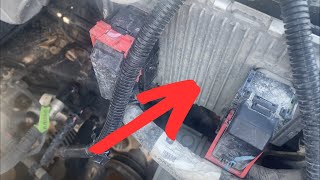
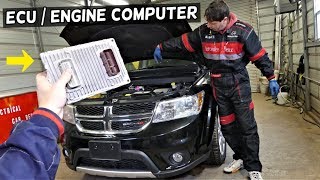
Typical fix: Replacing the PCM and programming the new unit to 🎬 See this walkthrough for locating and replacing the PCM the vehicle's VIN and security system. This programming is mandatory for the vehicle to start.
Est. part cost: $400-$800 - Poor Battery or Charging System Issue ⚪ Low Probability All modern control modules, including the PCM, are sensitive to voltage fluctuations. A weak battery or failing alternator can cause unpredictable behavior and trigger internal processor faults.
How to confirm: Test the battery's health and voltage, especially during cranking. It should be 12.6V+ with the engine off. With the engine running, use a multimeter to check the alternator's output voltage at the battery terminals; it should typically be between 13.5 and 14.5 volts.
Typical fix: Replacing a weak or failing battery or repairing the charging system (alternator).
Est. part cost: $150-$400 - PCM Power or Ground Circuit Fault ⚪ Low Probability The Dodge Journey platform is noted by owners to have a weak factory grounding system, making it susceptible to electrical issues from corroded or loose grounds.
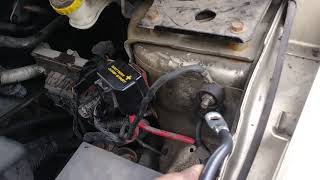
How to confirm: Using a multimeter and a vehicle-specific wiring diagram, check for battery voltage at the PCM's power pins and for good continuity to ground on the ground pins. Inspect the wiring harness for corrosion or damage and check all related fuses. Pay special attention to the main ground stud on the driver's side strut tower and the engine-to-chassis ground straps. 🎬 Watch: How to fix common Dodge Journey ground cable issues
Typical fix: Repairing the damaged wiring, cleaning ground connections, or replacing a faulty fuse or relay.
Est. part cost: $10-$100
Rare But Worth Checking
- Shorted Sensor or Component:
Diagnosis Steps
- Scan the vehicle for any other DTCs. Address other codes first, especially those related to sensor circuits, as a shorted sensor can sometimes trigger a P0606.
- Check for applicable TSBs. For the 2014 Journey with the 3.6L engine, TSB #18-069-15 REV A is highly relevant.
- Test the vehicle's battery and charging system to ensure stable voltage (13.5-14.5V while running) is being supplied to the PCM.
- Inspect the PCM's wiring harness and connectors for any signs of damage, corrosion, or loose connections. Check all PCM-related fuses.
- Verify the integrity of the PCM's main ground connections. Key locations include the ground stud on the driver's side strut tower, the cable from the stud to the engine block, and the engine mount ground straps.
- If all preliminary checks pass, have a dealership or qualified shop attempt to reflash the PCM with the latest software update, per the TSB. This is the most likely fix.
- If the code returns after the reflash, and all power, ground, and sensor checks pass, the PCM is likely faulty and requires replacement. The new module must be programmed to the vehicle.
Parts You'll Likely Need
- Powertrain Control Module (PCM)
(OEM #5150782AB (for 3.6L V6); 5150776AB (for 2.4L I4))— If a software update does not resolve the issue, the internal hardware of the PCM has likely failed, as indicated by the code definition. Part numbers vary by engine and vehicle options.
Trusted brands: Mopar (OEM)
OEM price range: $600-$900
Aftermarket price range: $400-$600
Related Codes That Often Appear With This One
- U0140 - Lost Communication With Body Control Module (Also mentioned in TSB #18-069-15 REV A)
Technical Service Bulletins (TSBs) & Recalls
- 18-069-15 REV A: Addresses harsh shifts and a P0606 code, recommending a PCM software update for correction on 2014 Journey 3.6L models.
- A Subaru TSB (07-75-13R) for its 2.4L engine shows how disconnecting the battery and turning the ignition on too quickly can set a P0606, highlighting the PCM's sensitivity to power cycles.
Platform-Specific Known Issues
- A software anomaly can cause harsh shifts and trigger a P0606 code, which is correctable with a PCM software update as detailed in TSB #18-069-15 REV A for 3.6L models built on or before Sept 11, 2013.
- The 2014 Journey was also part of a recall (NHTSA 18V-332) for a software fault that could prevent the cruise control from deactivating, which required a PCM software flash. This highlights the importance of ensuring the PCM software is up to date.
- Some owners on forums report intermittent 'limp mode' events where the vehicle loses acceleration, sometimes accompanied by the throttle control warning light, which can be related to PCM faults.
Mechanic-Grade Diagnostic Values
- Battery Voltage, Engine Off — expected: 12.6 Volts or higher. Failure: Below 12.4V indicates a discharged or failing battery that can cause module errors.
- Alternator Output Voltage, Engine Running — expected: 13.5 - 14.5 Volts. Failure: Voltage below 13.2V or above 14.8V indicates a charging system fault that can damage modules.
Scan Tool Commands That Help
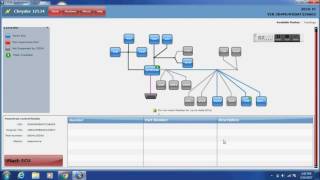
- wiTECH 2.0: Flash ECU / Reprogram PCM — This is the primary repair step for a P0606 accompanied by harsh shifting, as specified in TSB #18-069-15 REV A. It updates the PCM software to the latest calibration.
- wiTECH 2.0: PCM Replaced — This function is mandatory after installing a new PCM. It is found in the Wireless Control Module (WCM) menu and transfers the vehicle's 4-digit security PIN to the new PCM, allowing the engine to start.
- wiTECH 2.0: Restore Vehicle Configuration — This should be run after successfully flashing a module. It re-syncs the newly programmed module with the vehicle's specific features and network configuration.
- wiTECH 2.0: Check PCM VIN — Used after installing a new or blank PCM to manually write the correct Vehicle Identification Number to the module, which is required for it to function correctly.
Wiring & Ground Locations
- Main Ground Stud — On the driver's side strut tower in the engine bay; the negative battery cable connects here.. This is the central grounding point for the vehicle. Corrosion or looseness here can cause widespread electrical problems, including PCM faults.
- Engine/Transmission Ground Straps — Braided metal straps connecting the engine block and/or transmission case to the vehicle's chassis/frame. One key strap is often connected to an engine mount.. These straps provide the main ground return path for the engine's electrical system. A broken or corroded strap can cause the PCM and other components to malfunction.
- Connector C101 — A large, multi-pin connector located near the PCM in the engine bay.. A documented case showed that a poor pin fit within this connector caused an intermittent voltage drop to the transmission control circuits, resulting in limp mode and multiple DTCs that could be misdiagnosed as a failed PCM.
Real Owner Repair Stories
- Certified Transmission Case Study (2010 Dodge Journey AWD 3.5L V6 (with 62TE transmission, same as 2014 model)) — No upshifts, stuck in 3rd-gear failsafe mode, multiple transmission solenoid codes (P0765, P0750, P0755) and a low voltage code (P0562).
❌ Tried (didn't work) Initial scan pointed towards transmission solenoids or PCM. Battery and charging system tests were performed and passed, ruling out a simple power supply issue.
✅ What actually fixed it The technician identified a voltage drop on the transmission control output circuit (T16). The fault was traced to a poor male-to-female pin fit in connector C101. A new wire was used to bypass the faulty pin connection in C101, which permanently resolved all symptoms and codes.
OEM Part Supersession History
5150782AB→No supersession found in searches.— This appears to be the current part number for the specified application.
Heads up: This part is specific to the 3.6L V6 engine with the 62TE automatic transmission for the 2014 model year.
Model Year Variations Within This Range
- 2014: The software-related fix described in TSB #18-069-15 REV A is specifically for vehicles with the 3.6L engine built on or before September 11, 2013. Vehicles built after this date have the updated software from the factory and are less likely to experience this specific issue.
Helpful Videos
We Have This Part in Stock



The information in this article is provided for general reference and educational purposes only. Vehicle specifications, procedures, and part compatibility can vary by production date, trim level, and region. Always consult your vehicle's factory service manual and verify part numbers before purchasing or performing repairs. Safety-critical components such as airbags, seat belts, and braking systems should be installed by a qualified professional.
- Dodge JOURNEY:
- 🎬 Helpful Videos
- 🛍️ Shop This Part
- What's Unique About the 2014-2014 Dodge JOURNEY
- Diagnostic Flowchart
- Symptoms You May Notice
- Most Likely Causes
- Rare But Worth Checking
- Diagnosis Steps
- Parts You'll Likely Need
- Related Codes That Often Appear With This One
- Technical Service Bulletins (TSBs) & Recalls
- Platform-Specific Known Issues
- Mechanic-Grade Diagnostic Values
- Scan Tool Commands That Help
- Wiring & Ground Locations
- Real Owner Repair Stories
- OEM Part Supersession History
- Model Year Variations Within This Range
- 🎟️ Get 5% Off