

P0606 on 2013-2015 Dodge Challenger: PCM Processor Fault Causes and Fixes
P0606 on a 2013-2015 Dodge Challenger indicates an internal processor fault in the Powertrain Control Module (PCM). The most common fix is a software update ('reflash') performed by a dealer, as specified in multiple Technical Service Bulletins. If a software update doesn't work or isn't available, the cause is likely a poor ground connection or a failed PCM that requires replacement and programming.
- P0606 on a 2013-2015 Challenger means the engine computer (PCM) has an internal fault.
- Before replacing any parts, check with a dealer for available PCM software updates (reflash), as this is the most common fix documented in TSBs.
- Do not drive the vehicle. A faulty PCM can cause stalling or a no-start condition, which is a major safety concern.
- If a software update doesn't fix it, the next step is to inspect PCM power/ground wires before condemning and replacing the expensive PCM.
- This is not a DIY-friendly repair; programming a new PCM requires special tools and access to manufacturer software.
What's Unique About the 2013-2015 Dodge CHALLENGER
For this generation of Dodge Challenger and its platform mates (Dodge Charger, Chrysler 300), the P0606 code is frequently not a sign of immediate, catastrophic hardware failure. Instead, as documented in numerous Technical Service Bulletins (TSBs), this code often appears alongside a variety of other seemingly unrelated codes. This pattern strongly suggests the root cause is often a software glitch within the PCM that can be resolved with a manufacturer-issued software update (a 'reflash') rather than an expensive hardware replacement.
Diagnostic Flowchart
Tap your situation to follow the diagnostic path that matches what you're seeing on this vehicle.
Generation note: The 2013-2015 Dodge Challenger is part of the third generation (LC). However, the 2015 model year received a significant interior and exterior facelift. While the underlying PCM architecture is similar, always confirm TSB applicability and part numbers using your vehicle's specific VIN, especially for the 2015 model, as different part numbers exist for different engine and transmission combinations.
Symptoms You May Notice
- Check Engine Light is on
- Electronic Throttle Control (ETC) or 'lightning bolt' light may be on
- Engine may stall, run rough, or misfire
- Vehicle may not start or may be hard to start
- Erratic or harsh automatic transmission shifting
- Reduced fuel economy
- Engine cooling fans may run constantly when the ignition is on
- Vehicle may enter a low-power 'limp mode'
- Other warning lights, such as for ABS or traction control, may illuminate
- Replacing O2 sensors, EVAP system components, or transmission solenoids without first checking for PCM software updates. The provided TSBs show that codes for these components often appear with P0606 and are resolved by a single PCM reflash.
- Immediately condemning the PCM without first verifying stable power and ground connections.
Most Likely Causes
- PCM Software Needs an Update 🔴 High Probability Manufacturer TSBs #18-073-20, #18-088-16, and #18-052-15 REV A all list P0606 among codes that can be resolved with a PCM software update. These bulletins address a wide range of symptoms that are fixed with a single reflash.
How to confirm: A Dodge dealership or a qualified shop with a subscription to FCA's wiTECH 2.0 software can check for and apply available PCM updates for your vehicle's VIN. They can see if the installed software version is outdated.
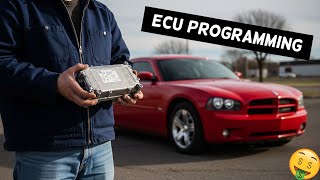
Typical fix: Perform a PCM reflash with the latest manufacturer software. The process involves connecting a battery charger to maintain stable voltage and using the wiTECH tool to install the update. 🎬 See how to flash or reprogram a Chrysler-family PCM. This typically takes under an hour.
Est. part cost: $0 (if under warranty) - $200 for the labor to reflash. - Failed Powertrain Control Module (PCM) 🟡 Medium Probability While software is the first check, the internal hardware of the PCM can fail from thermal stress, voltage spikes, or age, causing a genuine processor fault.
How to confirm: This is typically diagnosed by exclusion. If all wiring, grounds, and power supplies are confirmed good and a software update does not fix the issue (or isn't available), the PCM itself is condemned. 🎬 Watch this guide on diagnosing a PCM processor error code.
Typical fix: Replace the Powertrain Control Module and program it to the vehicle. It's important to note that the Federal Emissions Warranty may cover the PCM for up to 8 years or 80,000 miles.
Est. part cost: $250-$800 for a remanufactured or new PCM. - Poor Power or Ground Connection to the PCM ⚪ Low Probability Corroded battery terminals, loose main body grounds, or damaged wiring can cause intermittent voltage drops to the PCM, fooling it into setting an internal fault code.
How to confirm: Visually inspect all battery connections, main engine/chassis grounds (check near the starter and on the firewall), and the PCM connectors for corrosion or damage. Use a multimeter to verify stable voltage (12.6V+ off, 13.5-14.5V running) and good ground (less than 0.5 ohms resistance to chassis) at the PCM connector pins according to a factory wiring diagram.
Typical fix: Clean or tighten battery terminals and ground connections. Repair any damaged wiring.
Est. part cost: $5-$50 for cleaning supplies or new cables.
Rare But Worth Checking
- Faulty Alternator: An alternator that is over-charging or under-charging can create unstable voltage, which may trigger a P0606 code. Check the charging system voltage with the engine running; it should be stable, typically between 13.5 and 14.5 volts.
- Shorted Sensor or Actuator: In rare cases, a sensor that shares a 5-volt reference circuit with the PCM can short out, pulling down the voltage and causing the PCM to report an internal fault. This would usually be accompanied by other sensor-specific codes. Unplugging the suspect sensor may cause the P0606 to disappear, isolating the faulty component.
- Interrupted or Failed PCM Reflash: If a software update is interrupted due to a weak battery or loss of connection to the scan tool, the PCM's software can become corrupted, leading to a P0606 code. This is why technicians are instructed to use a battery charger during the reflash process.
Diagnosis Steps
- Check for Other Codes: Scan the vehicle for any other stored trouble codes. The presence of codes mentioned in the TSBs (like P0300, P0456, U0140) strongly suggests a software update is needed.
- Check for TSBs: Ask a dealership or use a professional database to check for any open recalls or applicable PCM software update TSBs for your specific VIN. This is the most critical first step.
- Inspect Battery and Grounds: Check that the battery terminals are clean and tight. A healthy battery should read above 12.6 volts with the engine off. Inspect the main engine-to-chassis ground strap for corrosion or looseness.
- Check Charging System: With the engine running, use a multimeter to check the voltage at the battery. It should be stable, between 13.5 and 14.5 volts.
- Inspect PCM Connections: The PCM is located in the engine compartment on the passenger's side, near the firewall. Visually inspect the PCM connectors for any signs of corrosion, moisture, or bent pins. Disconnecting and reconnecting them can sometimes resolve a poor connection.
- Perform PCM Reflash: If a software update is available, have it performed by a qualified facility. This is the most likely solution and should be done before considering hardware replacement.
- Condemn the PCM: If all previous steps check out and the code persists, the PCM hardware has likely failed. Before ordering a replacement, check if your vehicle is covered under the 8-year/80,000-mile Federal Emissions Warranty.
Parts You'll Likely Need
- Powertrain Control Module (PCM)
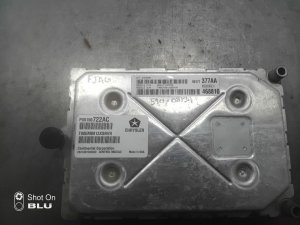
(OEM #68212724AG (Example for 2014 5.7L, many others exist))— This is the part that is replaced if a software reflash does not solve the problem. It is the computer that has the internal fault. Part numbers are highly specific to VIN, engine, and transmission.
Trusted brands: Mopar (OEM), Cardone, Standard Motor Products, Flagship One, SIA Electronics
OEM price range: $500-$825
Aftermarket price range: $250-$600
Related Codes That Often Appear With This One
- P0300 — Multiple Cylinder Misfire can be a symptom of erratic PCM calculations. TSBs #18-073-20 and #18-052-15 REV A link it to P0606.
- P0456 — An EVAP System Small Leak code can be set due to a software glitch that also triggers P0606, as noted in TSB #18-088-16. Owners on forums often report this code is fixed by replacing the ESIM module, but it should be diagnosed in context when P0606 is present.
- U0140 — Lost Communication With Body Control Module can occur when the PCM is malfunctioning. TSB #18-088-16 lists this code alongside P0606.
- P1621 / P1622 — O2 Sensor Reference Voltage Circuit Low/High codes are mentioned with P0606 in TSBs #18-073-20 and #18-052-15 REV A, pointing to a common PCM software issue.
- P219A / P219B — Air-Fuel Ratio Imbalance codes are also linked to P0606 by TSBs #18-073-20 and #18-052-15 REV A, indicating a PCM software problem.
Technical Service Bulletins (TSBs) & Recalls
- 18-073-20
- 18-088-16
- 18-088-16 REV. A
- 1808816
- 18-052-15 REV A
- 18-086-15 REV A
- 18-084-16
Platform-Specific Known Issues
- A primary issue for 2013-2015 Challengers is the prevalence of software-related faults that trigger P0606. TSB #18-073-20, #18-088-16, and #18-052-15 REV A all indicate that a PCM software update can resolve P0606 along with a host of other codes related to emissions, misfires, and module communication. Owners should always pursue a software check before paying for a PCM replacement.
Mechanic-Grade Diagnostic Values
- Battery Voltage (Key Off, Engine Off) — expected: ~12.2V to 12.8V. Failure: Below 12.2V indicates a weak or discharged battery that can cause spurious module faults.
- Charging System Voltage (Engine Running) — expected: Stable ~13.5V to 14.8V. Failure: Voltage that is low, high, or fluctuating indicates a faulty alternator or regulator, which can damage the PCM.
- PCM Ground Circuit Resistance — expected: Less than 0.5 Ohms. Failure: High resistance indicates a poor ground connection, which can cause the PCM to malfunction and set internal fault codes.
- CAN Bus Resistance (at diagnostic port, battery disconnected) — expected: ~60 Ohms. Failure: A reading of ~120 Ohms suggests one of the two terminating resistors (often in the PCM and another module) is offline. A reading of 0 Ohms indicates a short.
- CAN Bus Voltages (Key On, Engine Off) — expected: CAN High: ~2.5-3.5V, CAN Low: ~1.5-2.5V. Failure: Voltages outside these ranges or that don't mirror each other suggest a bus communication problem.
Hidden / Shadow Codes Worth Checking
- Internal Log: 'Firmware Corruption': This is not a standard DTC but a log entry that may be visible on dealer-level scan tools. It indicates the PCM's operating software is damaged, often from a failed update or voltage spike. (see via FCA's wiTECH 2.0 diagnostic software or equivalent high-end scan tool with deep module interrogation capabilities.)
Scan Tool Commands That Help
- wiTECH 2.0: Flash PCM / Calibrate — Used to install manufacturer software updates to fix bugs (often the cause of P0606 per TSBs) or to program a brand new, blank PCM.
- wiTECH 2.0: Restore Vehicle Configuration — After installing a replacement PCM, this function copies the vehicle's original configuration (like options and features) from a central database or the old module into the new one.
- wiTECH 2.0: Check PCM VIN / Write VIN — This is a mandatory step when replacing a PCM. It writes the vehicle's unique VIN into the new module, which is required for it to function and communicate with other modules.
- wiTECH 2.0: Learn ETC (Electronic Throttle Control) — After a PCM replacement, this procedure is required to calibrate the throttle body's position sensors to the new module.
Wiring & Ground Locations
- PCM — Located in the engine compartment, on the passenger's side (right side) near the firewall.. This is the module setting the code. Its connectors are a primary inspection point for corrosion, moisture, or damage that could cause the fault.
- G102 — Located at the left rear of the engine.. This is a primary engine ground. While not directly for the PCM, a poor engine ground can create electrical noise and voltage differentials that affect all engine electronics, including the PCM.
- PCM Sensor Ground Pins — Multiple pins on the PCM connectors, such as pin 54 (SENS GND) on a 2015 V6 model.. The PCM relies on clean ground references for its sensor readings. Verifying ground integrity directly at these pins is a key diagnostic step.
Real Owner Repair Stories
- Mechanic report on a related platform (2013 Dodge Charger (same platform)) — Persistent P0301 misfire code at idle that was not felt by the driver.
❌ Tried (didn't work) Initial diagnosis pointed towards replacing the PCM and engine harness due to suspected electromagnetic interference buildup.
✅ What actually fixed it A PCM software update (reflash) was released to address other, unrelated trouble codes. Performing this flash unexpectedly and permanently resolved the P0301 misfire, proving that software updates can fix issues beyond what is explicitly stated in the TSB.
When the Usual Fixes Don't Work
- While the provided TSBs strongly suggest a software reflash is the primary fix, there are documented cases where this does not work. In one instance involving a related platform, a persistent misfire code believed to be a PCM issue was only resolved after a software update intended for other codes was applied. This indicates that even if a TSB doesn't explicitly list P0606, an available update may still contain underlying fixes that resolve the problem. If a reflash fails, the next step is always to meticulously verify all power and ground circuits to the PCM before condemning the expensive module.
Model Year Variations Within This Range
- 2015: The 2015 model year marked a significant refresh. The 5-speed automatic was replaced by the ZF 8-speed automatic, which requires a different PCM and software. The interior and Uconnect systems were also completely redesigned. Furthermore, PCMs from 2015 onward are cryptographically locked, preventing easy aftermarket tuning. Tuner companies often require you to send in your original PCM to be unlocked or purchase a pre-unlocked 'swap' PCM.
Helpful Videos
We Have This Part in Stock




The information in this article is provided for general reference and educational purposes only. Vehicle specifications, procedures, and part compatibility can vary by production date, trim level, and region. Always consult your vehicle's factory service manual and verify part numbers before purchasing or performing repairs. Safety-critical components such as airbags, seat belts, and braking systems should be installed by a qualified professional.
- Dodge CHALLENGER:
- 🎬 Helpful Videos
- 🛍️ Shop This Part
- What's Unique About the 2013-2015 Dodge CHALLENGER
- Diagnostic Flowchart
- Symptoms You May Notice
- Most Likely Causes
- Rare But Worth Checking
- Diagnosis Steps
- Parts You'll Likely Need
- Related Codes That Often Appear With This One
- Technical Service Bulletins (TSBs) & Recalls
- Platform-Specific Known Issues
- Mechanic-Grade Diagnostic Values
- Hidden / Shadow Codes Worth Checking
- Scan Tool Commands That Help
- Wiring & Ground Locations
- Real Owner Repair Stories
- When the Usual Fixes Don't Work
- Model Year Variations Within This Range
- 🎟️ Get 5% Off