

P0606 on 2013-2015 Chrysler 300: PCM Processor Fault Causes and Fixes
On a 2013-2015 Chrysler 300, code P0606 often indicates a software glitch within the Powertrain Control Module (PCM), not hardware failure. The most common and manufacturer-recommended fix is a PCM software update (reflash) performed by a dealer or qualified shop. This service typically costs between $150 and $300. Before considering PCM replacement, checking for software updates and verifying battery health is critical, as low voltage can also trigger this code.
- P0606 on a 2013-2015 Chrysler 300 is most often caused by a software glitch, not a failed computer.
- Before considering replacing the expensive PCM, have a dealer check for and install any available software updates (reflash).
- Always check the health of your battery and its connections, as low voltage is a known cause for this code.
- This is not a DIY-friendly repair; diagnosis and repair require professional-level scan tools for software updates or module programming.
- If other codes are present, especially U0140 or P0335, it strongly suggests the issue is software-related as outlined in manufacturer TSBs.
What's Unique About the 2013-2015 Chrysler 300
For the 2013-2015 Chrysler 300 and its platform mates (Dodge Charger/Challenger), a P0606 code is frequently a software-related issue, not an outright hardware failure of the PCM. Chrysler has issued multiple Technical Service Bulletins (TSBs) indicating that this code can be falsely triggered by other system faults, such as a loss of communication with the Body Control Module (U0140) or issues with the crankshaft position sensor (P0335). In these documented cases, the official fix is a PCM software update (reflash) to correct the faulty logic, making it a less common scenario for the PCM to need physical replacement compared to other vehicles where P0606 often means a failed module.
Diagnostic Flowchart
Tap your situation to follow the diagnostic path that matches what you're seeing on this vehicle.
Symptoms You May Notice
- Check Engine Light is on.
- Vehicle may not start or may be hard to start.
- Engine may stall unexpectedly while driving.
- Poor or erratic engine performance and acceleration.
- Problems with automatic transmission shifting.
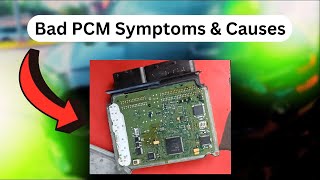
- Other warning lights, like the ABS or traction control light, may illuminate. 🎬 See this breakdown of common symptoms and causes for bad PCMs
- Vehicle may enter 'limp mode' with reduced power.
- Immediately replacing the PCM without first checking for software updates. The numerous TSBs for this platform make a reflash the most probable solution.
- Replacing sensors (like O2 or crankshaft sensors) that have set codes alongside P0606 without first checking for PCM software updates. The TSBs show that the PCM software is often the root cause of both the P0606 and the other codes.
Most Likely Causes
- PCM Software Requires an Update 🔴 High Probability Multiple TSBs (#18-073-20, #18-084-16, #18-088-16 REV. A, #18-086-15 REV A) confirm that updated software is required to prevent other DTCs from falsely triggering P0606. This is the manufacturer's specified first line of defense.
How to confirm: A dealer or a properly equipped independent shop using a tool like wiTECH can check the current software calibration number against the latest version available from Chrysler for your VIN.
Typical fix: Reflash (update) the PCM with the latest manufacturer software. This is a software-only repair that often resolves the code permanently.
Est. part cost: $0 - Weak Battery or Poor Electrical Connections 🟡 Medium Probability All modern control modules are sensitive to voltage fluctuations. A weak battery, corroded terminals, or even an improper jump-start can cause transient voltage drops/spikes that confuse the PCM's processor, triggering a P0606. Owners sometimes report this code appearing temporarily after replacing a dead battery.
How to confirm: Test the battery with a digital multimeter or electronic battery tester; it should read at or above 12.6 volts at rest and hold a load. Check the charging system voltage with the engine running; it should be stable between 13.5 and 14.5 volts. Inspect battery terminals and main ground straps for corrosion or looseness.
Typical fix: Clean battery terminals and cable ends, tighten connections, or replace the battery if it fails a load test. Ensure all main power and ground connections to the chassis and engine block are secure.
Est. part cost: $150-$300 - Faulty Powertrain Control Module (PCM) ⚪ Low Probability While less common than software issues on this platform, internal hardware failure from thermal stress, vibration, or age can still occur. This is the diagnosis after all other possibilities (software, voltage, wiring) have been eliminated.
How to confirm: This is a process of elimination. If the software is confirmed to be up-to-date, and all power/ground circuits to the PCM are verified to be stable and have good continuity, the module itself is the likely culprit.
Typical fix: Replace the PCM and program the new unit to the vehicle's VIN and specific configuration. Note: The Federal Emissions Warranty may cover PCM replacement for up to 8 years or 80,000 miles; it is worth checking with a dealer.
Est. part cost: $250-$700
Rare But Worth Checking
- Faulty Alternator: An alternator that is over-charging (voltage spikes) or under-charging (low voltage) can create an unstable electrical environment that disrupts the PCM's internal processor, leading to a P0606 code. Check the charging system voltage with the engine running; it should typically be between 13.5 and 14.5 volts.
- Wiring Harness Issues: A short or open in the wiring providing power or ground to the PCM can cause this code. This is rare but can happen due to physical damage, abrasion, or corrosion. A thorough visual inspection of the harness near the PCM is a valid diagnostic step.
Diagnosis Steps
- Scan for all diagnostic trouble codes. Pay close attention to any other codes present, especially U-codes or codes mentioned in the TSBs.
- Check for applicable TSBs. This is the most critical first step. A dealer or shop with access to manufacturer information can quickly verify if any software updates are pending for your VIN.
- Inspect the battery and charging system. Ensure the battery voltage is at or above 12.6V with the engine off and stable between 13.5-14.5V with the engine running. Clean any corrosion from terminals and check that ground straps are tight.
- Inspect PCM wiring and connectors. Look for any visible damage, corrosion, or loose connections at the PCM harness connectors.
- Perform a PCM reflash. If a software update is available, have a dealer or qualified shop perform the update. This is the most likely fix and should be done before considering hardware replacement.
- If the code returns after a reflash, verify all power and ground circuits to the PCM using a multimeter to ensure they are stable and have good continuity under load.
- If all other steps fail, the PCM is likely faulty and requires replacement and programming. 🎬 Watch: Step-by-step guide to programming a new Chrysler 300 computer Check with a dealer about potential coverage under the 8-year/80,000-mile Federal Emissions Warranty before paying out of pocket.
Parts You'll Likely Need
- Powertrain Control Module (PCM) Reflash — This is not a physical part, but a software update service. It's the most common and manufacturer-recommended solution for P0606 on this vehicle, as confirmed by multiple TSBs.
Trusted brands: Mopar (Dealer Service)
OEM price range: $175-$300
Aftermarket price range: N/A - Powertrain Control Module (PCM)
(OEM #Varies by engine/year. Ex: 5150787AC (for some 2014 3.6L models), 5150797AC (for some 2014 5.7L/6.4L models). Always verify with VIN.)— If a software reflash doesn't work and all wiring/power is confirmed good, the PCM itself has likely failed and needs to be replaced.
Trusted brands: Mopar (OEM)
OEM price range: $550-$800
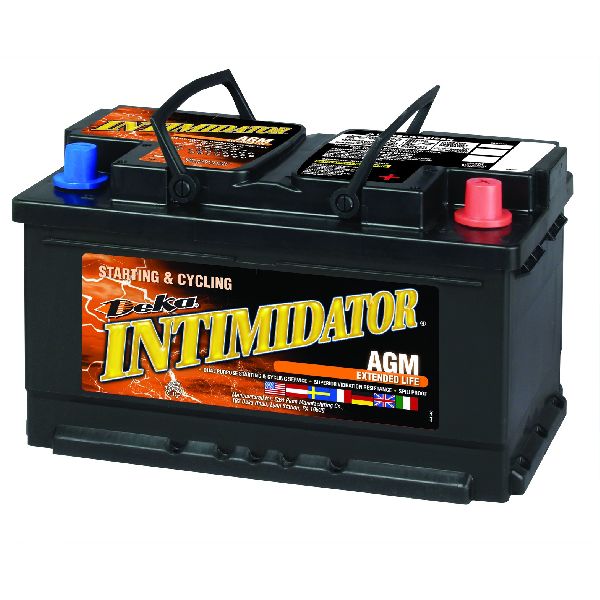
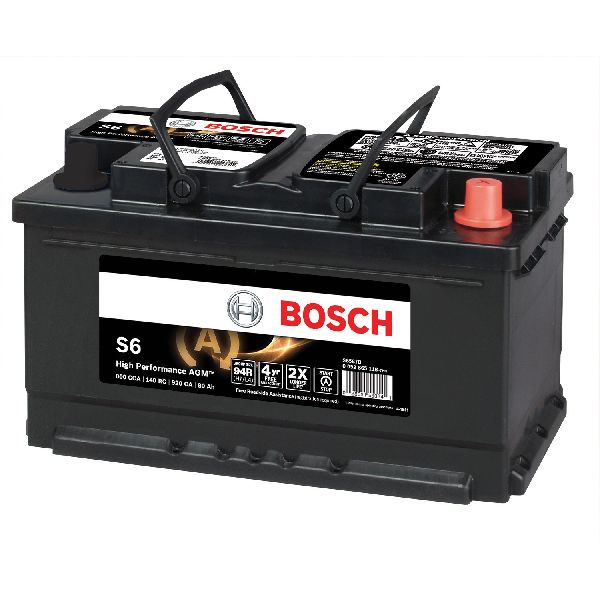
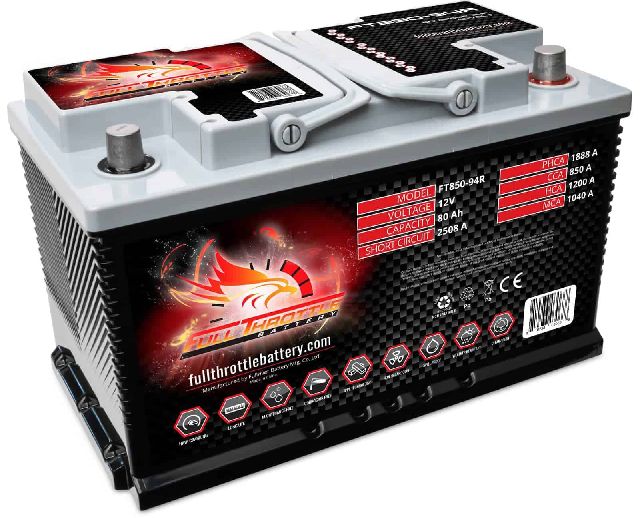
Aftermarket price range: $250-$500 - Car Battery — A weak or failing battery can cause low voltage issues that trigger a false P0606 code. This is a common and relatively inexpensive item to rule out first.
Trusted brands: Mopar (OEM), Interstate, DieHard
OEM price range: $200-$300
Aftermarket price range: $150-$250
Related Codes That Often Appear With This One
- U0140 — As cited in TSBs #18-086-15 REV A and #18-088-16 REV. A, a software issue can cause both a loss of communication with the Body Control Module (U0140) and an internal processor fault (P0606), which is fixed by a reflash.
- P0335 — TSB #18-088-16 REV. A links a Crankshaft Position Sensor Circuit code with P0606, indicating a PCM software update is needed to address both.
- P0300 — TSBs #18-073-20 and #18-084-16 list Multiple Cylinder Misfire along with P0606, suggesting the PCM may be misinterpreting data or that a software update is the intended fix.
- P2610 — TSB #18-088-16 REV. A notes that a PCM Internal Engine Off Timer Performance code can appear with P0606, pointing to a required software reflash.
Technical Service Bulletins (TSBs) & Recalls
- 18-088-16 REV. A: The most relevant TSB, explicitly linking P0606 with U0140 (Lost Comm
Platform-Specific Known Issues
- Chrysler has released several software updates to address this code being set erroneously. TSB #18-073-20, #18-084-16, #18-088-16 REV. A, and #18-086-15 REV A all list P0606 as a code that can be resolved with a PCM software update, often in conjunction with other seemingly unrelated codes. Owners on forums frequently confirm that a dealer reflash was the successful fix.
Mechanic-Grade Diagnostic Values
- Battery Voltage (Engine Off) — expected: At or above 12.6 Volts. Failure: Below 12.4V indicates a discharged or failing battery that can cause spurious codes.
- Charging System Voltage (Engine Running at 1500 RPM) — expected: Stable between 13.5 and 14.5 Volts. Failure: Voltage below 13.5V or above 14.5V, or fluctuating wildly, indicates a problem with the alternator or voltage regulator which can trigger a P0606.
- PCM Fused B+ Circuit (A209) Voltage — expected: Battery Voltage (approx. 12V+). Failure: No voltage indicates an open or short in the main power feed to the PCM.
- PCM Ground Circuit (Z904) Continuity — expected: Test light connected to 12V+ should illuminate brightly when probing the ground circuit.. Failure: A dim or non-illuminated test light indicates a poor or open ground, which is a common cause of module issues.
Scan Tool Commands That Help
- wiTECH 2.0: Restore Vehicle Configuration — This function is critical after installing a replacement (new or used) PCM. It aligns the configuration of all modules on the vehicle's network to the new PCM, resolving VIN mismatch errors and ensuring all features work correctly.
- wiTECH 2.0: Check PCM VIN / Write VIN — When installing a new, blank PCM, the vehicle's VIN must be manually written to the module. This is one of the first steps after the initial software flash.
- wiTECH 2.0: Check PCM Odometer — After writing the VIN to a new PCM, the vehicle's current mileage must be programmed into the module to synchronize it with the instrument cluster.
- wiTECH 2.0: Learn ETC (Electronic Throttle Control) — After a PCM replacement or reflash, this procedure calibrates the throttle position sensors to ensure proper throttle response.
Wiring & Ground Locations
- PCM C1 Connector — The Powertrain Control Module is located in the engine bay. The C1 connector is one of the main multi-pin connectors plugging into the module.. This connector carries the primary power and ground circuits for the PCM. Verifying voltage at specific pins on this connector is a key diagnostic step.
- (A209) Fused B(+) Circuit — This is a circuit within the PCM C1 harness connector.. This is a main, constant power supply to the PCM. An open or short in this circuit will prevent the PCM from functioning and can cause a P0606 or a no-communication issue.
- (Z904) Ground Circuit — This refers to one or more ground circuits within the PCM C1 harness connector.. A stable and clean ground connection is essential for the PCM's internal processor to function. An open or high-resistance ground is a common cause of intermittent and difficult-to-diagnose module faults, including P0606.
Real Owner Repair Stories
- CarKiller Forum (2007 Toyota Camry (Note: Different vehicle, but illustrates a common electrical cause)) — After the battery died and was jumped twice, then replaced, the Check Engine Light came on for a day and then went off. A scan revealed a stored P0606 code.
❌ Tried (didn't work) The user was concerned about a major failure before giving the car to a relative.
✅ What actually fixed it The code was likely triggered by the low voltage from the failing battery and the subsequent jumps. After replacing the battery, the code cleared itself and did not return, indicating a temporary glitch rather than a permanent PCM failure. The advice given was to also have the alternator load tested as a precaution.
OEM Part Supersession History
05150787AB→05150787AC— Part revision or update by the manufacturer.
Heads up: Part number 05150787AC is listed for 2014 Chrysler 300 and Dodge Charger models with the 3.6L V6 engine. It is critical to match the part number exactly or use the latest superseded part number when replacing the PCM.
Model Year Variations Within This Range
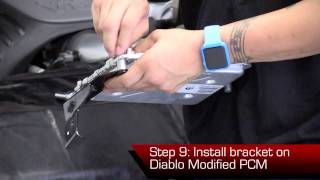
- 2015: The 2015 model year marked a significant refresh. The PCM for 2015+ models is security-locked from the factory. This means that before any custom tuning can be performed with tools from companies like HP Tuners or Diablosport, the PCM must first be sent to a specialized service to be 'unlocked'. This does not apply to standard dealer reflashing for TSBs.
- 2015: The 2015 models received a new 8-speed automatic transmission as standard on all V6 and V8 RWD models, a new 7-inch digital instrument cluster, and updated interior/exterior styling. These changes likely correspond to different PCM hardware and/or software calibrations compared to 2013-2014 models.
Helpful Videos
Used OEM Parts in Stock


New Aftermarket Parts Available


The information in this article is provided for general reference and educational purposes only. Vehicle specifications, procedures, and part compatibility can vary by production date, trim level, and region. Always consult your vehicle's factory service manual and verify part numbers before purchasing or performing repairs. Safety-critical components such as airbags, seat belts, and braking systems should be installed by a qualified professional.
- Chrysler 300:
- 🎬 Helpful Videos
- 🛍️ Shop This Part
- What's Unique About the 2013-2015 Chrysler 300
- Diagnostic Flowchart
- Symptoms You May Notice
- Most Likely Causes
- Rare But Worth Checking
- Diagnosis Steps
- Parts You'll Likely Need
- Related Codes That Often Appear With This One
- Technical Service Bulletins (TSBs) & Recalls
- Platform-Specific Known Issues
- Mechanic-Grade Diagnostic Values
- Scan Tool Commands That Help
- Wiring & Ground Locations
- Real Owner Repair Stories
- OEM Part Supersession History
- Model Year Variations Within This Range
- 🎟️ Get 5% Off