

P0606 on 2011-2015 Chevrolet Volt: Control Module Processor Fault Explained
On a 2011-2015 Chevy Volt, P0606 often indicates a temporary glitch in the Hybrid Powertrain Control Module 2 (HPCM2), especially during servicing. Before considering a costly module replacement, follow the specific TSB procedure to clear the code. If the code persists, it may point to a true internal module failure, but checking the 12V battery and related wiring is crucial before condemning the module.
- For a 2011-2015 Volt, P0606 does not automatically mean you need a new control module.
- The most important first step is to follow the GM-specific clearing procedure outlined in TSB PIC5978B, as the code is often a temporary glitch from servicing.
- If the code returns, have the 12V battery professionally tested before condemning any expensive modules.
- True diagnosis and repair of a persistent P0606 code requires professional-level scan tools and should be performed by a qualified technician.
What's Unique About the 2011-2015 Chevrolet VOLT
What makes the Chevy Volt unique regarding P0606 is that General Motors has issued specific Technical Service Bulletins (TSBs) acknowledging that this code can be set by mistake. Actions as simple as clearing other codes or connecting the 12-volt battery can trigger a false P0606 in the HPCM2. This is a critical distinction, as the immediate assumption of a failed, expensive control module is often incorrect for this vehicle. Technicians are advised to follow a special procedure to clear the code before pursuing module replacement.
Diagnostic Flowchart
Tap your situation to follow the diagnostic path that matches what you're seeing on this vehicle.
Symptoms You May Notice
- Check Engine Light (Malfunction Indicator Lamp) is on.
- Reduced propulsion or power message on the display.
- Vehicle may not start or may crank without starting.
- Intermittent stalling.
- In many cases, especially if set during service, there may be no noticeable symptoms at all.
- Immediately replacing the Hybrid Powertrain Control Module 2. Given the high likelihood of a temporary glitch as described in TSB PIC5978B, replacing the module without first attempting the special clearing procedure can be a costly and unnecessary repair.
- Replacing the ECM for P0606 when the actual cause is a faulty camshaft position sensor. Another GM TSB (17-NA-132) notes that a cam sensor fault can incorrectly set a P0606 during cranking before the specific sensor code has a chance to register.
Most Likely Causes
- Temporary Software Glitch During Servicing 🔴 High Probability As documented in GM TSB PIC5978B, the HPCM2 is sensitive and can set this DTC during normal procedures like clearing codes or connecting the 12V battery.
How to confirm: The code appears after service procedures (like a 12V battery change) but was not present before. The vehicle may drive normally.
Typical fix: Follow the specific GM procedure outlined in TSB PIC5978B: 1) Close all doors and hatch. 2) Put vehicle in service mode (press and hold power button). 3) Clear the DTC with a GDS2 scan tool. 4) Power off the vehicle. 5) Open and close the driver's door. 6) Wait one minute. 7) Restart the vehicle to confirm the light is off.
Est. part cost: $0 - Internal HPCM2 Failure 🟡 Medium Probability All electronic modules have a finite lifespan and can fail internally. This is the code's primary intended meaning.
How to confirm: The code returns immediately after being cleared (using the proper TSB procedure), and other causes like wiring and voltage issues have been ruled out.
Typical fix: The Hybrid Powertrain Control Module 2 (HPCM2) must be replaced and programmed by a dealer or qualified shop with GM-specific tools. This was a restricted part requiring GM TAC authorization.
Est. part cost: $400-$800 - Low or Unstable 12V Battery Voltage ⚪ Low Probability Control modules require a stable voltage to operate correctly. A weak or failing 12V AGM battery can cause unpredictable electronic glitches, including processor faults, especially during engine cranking.
How to confirm: Test the 12V battery's health, voltage, and load capacity. Voltage should be stable and above 12.4V when the car is off. A voltage drop below 9V during cranking can trigger the code.
Typical fix: Replace the 12V Absorbed Glass Mat (AGM) battery and ensure all terminal connections are clean and tight.
Est. part cost: $150-$250 - ECM Software Anomaly ⚪ Low Probability A separate GM TSB (#20-NA-136) notes that a software anomaly in the main Engine Control Module (ECM) can also cause a P0606, leading to no-start or stalling conditions.
How to confirm: A technician would check for available software updates for the ECM using GM's service software (GDS2/Techline Connect).
Typical fix: Reprogram the Engine Control Module (ECM) with the latest software. This must be done by a professional. Some owners have reported dealer quotes for software updates around $600, while DIY options with a VCX Nano tool and a $45 ACDelco subscription cost significantly less.
Est. part cost: $0 (if part of a warranty or recall), otherwise labor cost for programming.
Rare But Worth Checking
- Poor Power or Ground Connections: While less common than a glitch or module failure, corroded or loose ground straps and power feeds to the control module can cause voltage drops that mimic an internal fault. A visual inspection of the module's wiring harness and main chassis grounds is a worthwhile step.
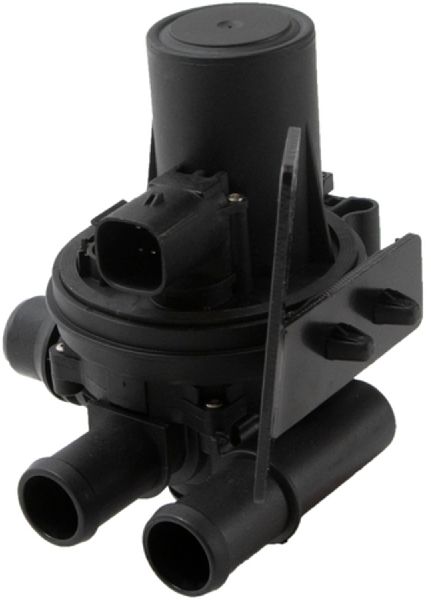
- Faulty Related Component (e.g., Coolant Valve): In one documented case, a P0606 in the HPCM2 was ultimately traced back to a fault with a battery coolant bypass valve. The interconnected nature of the Volt's systems means a fault in a seemingly unrelated component can sometimes trigger a processor code in a major module.
Diagnosis Steps
- Check Service History: Determine if the code appeared immediately after the 12V battery was disconnected or other codes were cleared. If so, suspect a temporary glitch per TSB PIC5978B.
- Attempt TSB Clearing Procedure: Using a GM-compliant scan tool (GDS2), follow the specific steps: enter service mode, clear DTCs, power off, cycle the driver's door, wait 60 seconds, and restart. If the code is gone, the issue is resolved.
- Inspect 12V Battery and Connections: If the code returns, perform a comprehensive test of the 12V AGM battery. Ensure terminals are clean and tight. Low or fluctuating voltage is a known cause of module errors.
- Check for Software Updates: A technician should connect to GM's service network to see if a software update is available for the Engine Control Module (ECM) or HPCM2, as noted in TSB 20-NA-136.
- Inspect Wiring and Grounds: Visually inspect the wiring harness and connectors for the HPCM2 for any signs of damage, corrosion, or looseness. Check the main chassis and engine ground straps for high resistance.
- Review Other DTCs: Pay close attention to any other codes stored, even if they seem unrelated. As noted in TSB 17-NA-132, a cam sensor fault can trigger P0606. A user also reported a coolant valve fault was the root cause.
- Condemn the Control Module: If all previous steps fail and the code persists, the Hybrid Powertrain Control Module 2 (HPCM2) has likely suffered an internal failure and requires replacement and programming.
Parts You'll Likely Need
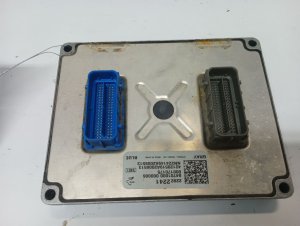
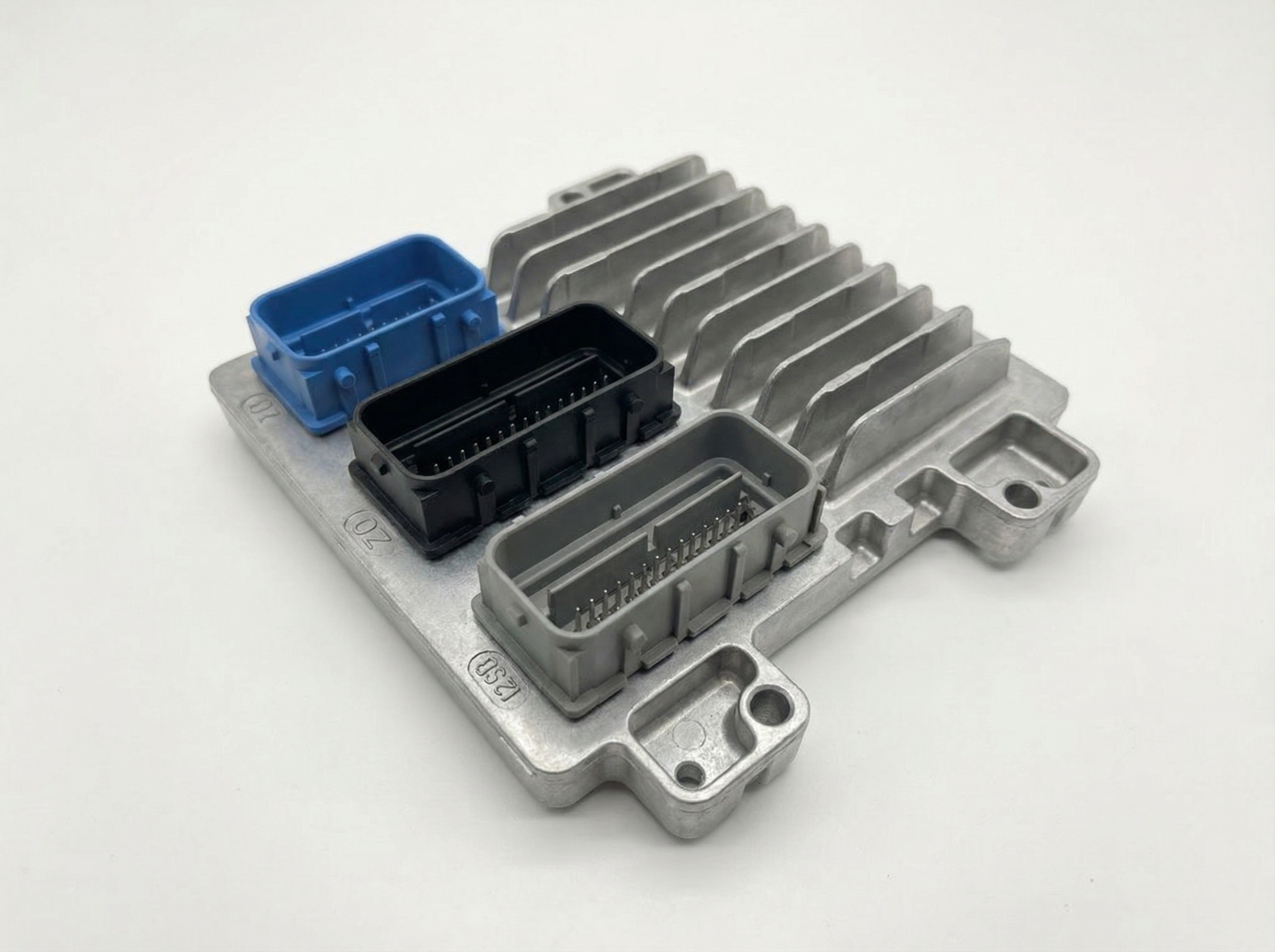
- Hybrid Powertrain Control Module 2 (HPCM2)
(OEM #23432751, 24291550, 22994053, 22985723)— This is the module that sets the code. If the code is not a temporary glitch and persists after diagnostics, the module itself has failed. Note that GM put this part on restriction, requiring dealer coordination with GM TAC to order.
Trusted brands: ACDelco (OEM)
OEM price range: $400-$800
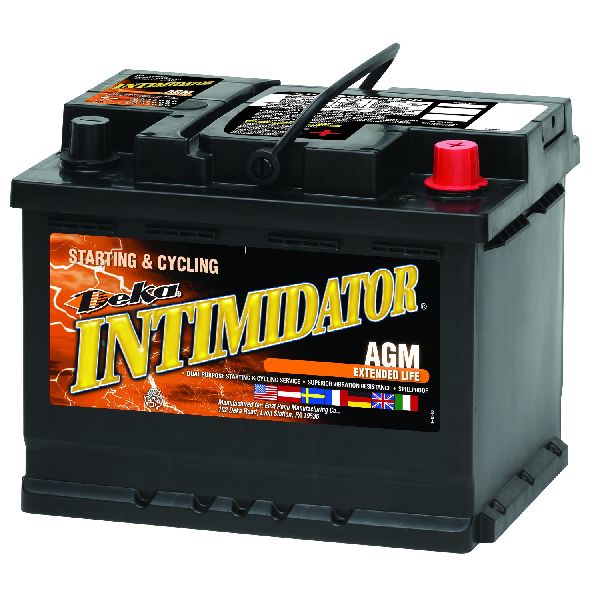
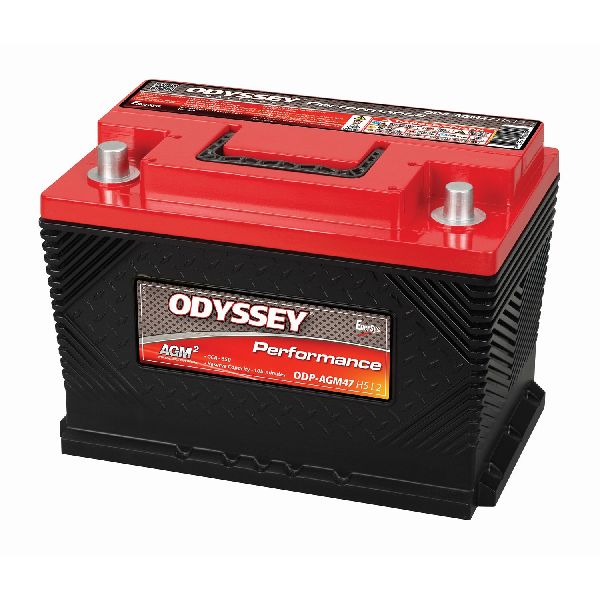
Aftermarket price range: $300-$600 (Remanufactured) - 12V AGM Battery — A failing 12V battery can cause a host of electrical issues, including setting a false P0606 code due to unstable voltage.
Trusted brands: ACDelco, Optima, Odyssey
OEM price range: $200-$300
Aftermarket price range: $150-$250
Related Codes That Often Appear With This One
- P0562 — Indicates system voltage is low. A low voltage state from a failing 12V battery is a known trigger for P0606.
- P0563 — Indicates system voltage is high. A voltage spike, such as from improper jump-starting, can also damage or confuse a control module, leading to P0606.
- U-codes (e.g., U0100) — U-codes indicate communication loss between modules. A severe internal fault in the HPCM2 could cause it to stop communicating with other modules on the CAN bus network.
- P1E00 — This is a generic code indicating that the hybrid/EV powertrain system has requested the Malfunction Indicator Lamp (MIL) to be turned on. P0606 is often the underlying specific code that triggers the P1E00.
Technical Service Bulletins (TSBs) & Recalls
- PIC5978B: HPCM2 Fault Code P0606 – Control Module Internal Performance
Platform-Specific Known Issues
- TSB PIC5978B documents that P0606 can be falsely set in the HPCM2 during routine service like clearing codes or connecting the 12V battery, and provides a specific procedure to clear it without replacing parts.
- TSB 20-NA-136 indicates that a separate software anomaly in the main Engine Control Module (ECM) can also trigger a P0606, which is resolved by reprogramming the module.
- TSB PIC5380E notes that the HPCM2 was placed on parts restriction, meaning a dealer could not simply order a replacement without first consulting with the GM Technical Assistance Center (TAC) to confirm the diagnosis.
Mechanic-Grade Diagnostic Values
- 12V Battery Voltage (Key Off, Static) — expected: 12.4V to 12.6V. Failure: A reading below 12.4V indicates a discharged or failing battery. A reading below 12.0V can indicate a dead cell.
- Charging System Voltage (Engine Running) — expected: 13.5V to 14.5V. Failure: Voltage that is too low, too high, or fluctuating indicates a problem with the charging system (Accessory Power Module in the Volt's case), which can trigger processor faults.
Hidden / Shadow Codes Worth Checking
- GM.CPUFAULT: This is a Parameter ID (PID) that can be logged with a capable scan tool when DTC P0606 is present. It returns a specific number that indicates the exact nature of the internal processor fault, providing more granular detail than the generic P-code alone. (see via Advanced scan tool with access to GM-specific PIDs, such as EFILive or potentially GDS2.)
Scan Tool Commands That Help
- GDS2 (GM Global Diagnostic System 2): Clear Secured High Voltage DTCs — This function is used after a repair or to clear persistent high-voltage system codes (like P0AFA) that often accompany P0606 and prevent charging. It is found under: Module Diagnostics -> Hybrid/EV Powertrain Control Module 2 -> Control Functions.
- GDS2 / Techline Connect (SPS): Service Programming System (SPS) — This is used to reprogram the HPCM2 or other modules with updated software from GM. This is the fix for known software anomalies and is required after replacing a module. This can be done DIY with a J2534 device (like a VCX Nano) and an ACDelco TDS subscription.
- Xtool D7/D8/D9: Hybrid/EV Battery Contactor Open Reasons Reset — This is an aftermarket tool equivalent to the GDS2 'Clear Secured DTCs' function. It's used to reset the high-voltage contactors after a fault (often triggered by a weak 12V battery) has locked them out. It is found under HPCM2 -> Special Functions -> Reset Functions.
Wiring & Ground Locations
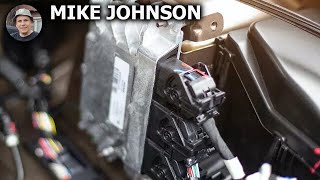
- K114B Hybrid Powertrain Control Module 2 (HPCM2) — Located under the front passenger seat. It can be accessed by removing the two rear bolts for the seat, tilting the seat assembly forward, and accessing the module from the rear passenger footwell.. This is the module that sets the P0606 code. Physical inspection for connector integrity, water intrusion, or damage is a key diagnostic step.
- Accessory DC Power Control Module (14V Power Module) — Located in the rear compartment of the vehicle, underneath the load floor.. This module functions as the Volt's alternator, converting high voltage DC to low voltage DC to charge the 12V battery and power vehicle systems. A fault here can cause the unstable voltage that triggers a P0606 code.
Real Owner Repair Stories
- Reddit user in r/volt (Chevrolet Volt (generation not specified, but likely Gen 1)) — P0606 code in the HPCM2, along with other codes for coolant valves.
❌ Tried (didn't work) Initially ignoring the coolant valve codes because the user had previously swapped the valve's internal components and assumed the codes were due to minor calibration differences.
✅ What actually fixed it The P0606 was ultimately resolved by properly addressing the fault with the battery coolant bypass valve. This highlights that a fault in a related subsystem can trigger a processor code in the HPCM2.
"I Checked Everything" — The Actual Cause
- While a smoke test is not a typical procedure for P0606, the principle applies to cases where all direct electrical checks of the HPCM2 are clean. In one confirmed repair, a persistent P0606 was not caused by the module, its software, or its wiring, but by a faulty battery coolant bypass valve. A technician focused solely on the HPCM2 would miss this, as the root cause was in the battery thermal management system, which then reported a fault up to the HPCM2 that manifested as a processor error.
When the Usual Fixes Don't Work
- The most significant counter-evidence to P0606 being a definitive module failure is a real-world repair where the code was ultimately caused by a faulty battery coolant bypass valve. Despite the HPCM2 reporting an internal processor fault, the module itself was not the problem. The issue was erroneous data or electrical noise from a component in a connected subsystem, causing the HPCM2's processor to report a fault. This proves that a wider diagnostic scope, including seemingly unrelated DTCs, is critical before condemning the control module.
OEM Part Supersession History
20882022, 22762258, 22854018, 22994053, 24283995→24291550— Standard part revision and consolidation by the manufacturer.
Heads up: Part number 24291550 is specified for 2011-2013 Volts. Later models (2014-2015) may use a different part number, so verifying the correct part for the specific VIN is critical.
Model Year Variations Within This Range
- 2011-2015: Within the first generation, the battery capacity was incrementally increased: 16.0 kWh for 2011-2012, 16.5 kWh for 2013-2014, and 17.1 kWh for 2015. While this doesn't directly change the P0606 diagnosis, it's important to note that module software calibrations may differ between these years.
- 2011-2013 vs 2014-2015: The HPCM2 part number 24291550 and its predecessors are listed for model years up to 2013, suggesting that 2014 and 2015 models may use a different, non-interchangeable module.
Helpful Videos


Used OEM Parts in Stock


New Aftermarket Parts Available


The information in this article is provided for general reference and educational purposes only. Vehicle specifications, procedures, and part compatibility can vary by production date, trim level, and region. Always consult your vehicle's factory service manual and verify part numbers before purchasing or performing repairs. Safety-critical components such as airbags, seat belts, and braking systems should be installed by a qualified professional.
- Chevrolet VOLT:
- 🎬 Helpful Videos
- 🛍️ Shop This Part
- What's Unique About the 2011-2015 Chevrolet VOLT
- Diagnostic Flowchart
- Symptoms You May Notice
- Most Likely Causes
- Rare But Worth Checking
- Diagnosis Steps
- Parts You'll Likely Need
- Related Codes That Often Appear With This One
- Technical Service Bulletins (TSBs) & Recalls
- Platform-Specific Known Issues
- Mechanic-Grade Diagnostic Values
- Hidden / Shadow Codes Worth Checking
- Scan Tool Commands That Help
- Wiring & Ground Locations
- Real Owner Repair Stories
- "I Checked Everything" — The Actual Cause
- When the Usual Fixes Don't Work
- OEM Part Supersession History
- Model Year Variations Within This Range
- 🎟️ Get 5% Off