

P0606 on 2009-2016 Chevrolet Traverse: ECM/PCM Processor Fault Guide
P0606 on a Chevy Traverse indicates a critical internal failure of the Engine Control Module (ECM). Driving is not recommended. While the ECM itself is the most likely cause, it's crucial to first rule out cheaper issues like low battery voltage, bad ground connections, or even a dirty throttle body before replacing the expensive computer.
- P0606 is a critical fault in the Traverse's main computer; do not drive the vehicle.
- Before condemning the expensive ECM, always test the battery, charging system, and check all main power/ground connections for corrosion, especially the G110 ground on the rear of the engine.
- Also inspect and clean the throttle body, as heavy contamination is a known issue on this platform that causes similar warning messages.
- ECM replacement is not a DIY plug-and-play job. The new module MUST be professionally programmed to your vehicle's VIN and security system.
- Carefully inspect the engine wiring harness for any signs of rubbing or damage, as a short circuit can falsely trigger a P0606 code.
What's Unique About the 2009-2016 Chevrolet TRAVERSE
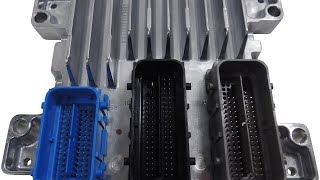
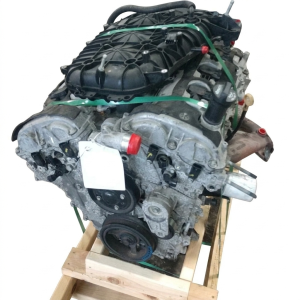
The 2009-2016 Traverse belongs to the GM Lambda platform, which also includes the Buick Enclave, GMC Acadia, and Saturn Outlook. All share the 3.6L V6 engine and the Delphi/ACDelco E39 ECM. While P0606 is a generic processor fault, on this platform it is frequently accompanied by "Service StabiliTrak" and "Reduced Power" messages. These symptoms are often linked to external issues that can mimic ECM failure, such as a dirty throttle body (addressed in TSB PI0746E), low voltage events, or poor grounds. The informational TSB #05-06-04-060A specifically notes that P0606 can be shared across multiple modules, highlighting the importance of a full system scan.
Diagnostic Flowchart
Tap your situation to follow the diagnostic path that matches what you're seeing on this vehicle.
Symptoms You May Notice
- Check Engine Light is on
- Engine stalling or shutting off while driving
- No-start or intermittent starting condition
- Engine running rough or misfiring
- Reduced engine power ("Limp Mode")
- Erratic transmission shifting
- "SERVICE STABILITRAK" or "SERVICE TRACTION CONTROL" messages on the dash
- Throttle body clicking or other relay noises
- Replacing the throttle body when the issue is a bad ground or the ECM itself.
- Replacing the ECM without first verifying stable battery voltage and clean, tight ground connections at the battery, chassis, and engine block (G110).
- Replacing the accelerator pedal position (APP) sensor, as its symptoms can overlap with throttle body issues.
Most Likely Causes
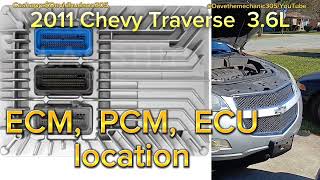
- Internal ECM/PCM Failure 🔴 High Probability The Delphi/ACDelco E39 ECM is a complex electronic device. Over time, heat cycles, vibration, and internal component degradation can lead to processor failure. On the Traverse, the ECM is located behind the radiator fan shroud, 🎬 Watch: See exactly where the ECM is located on your Traverse. exposing it to significant temperature swings.
How to confirm: After confirming all power, ground, and wiring circuits are intact and the battery/charging system is healthy, the ECM is condemned. A high-end scan tool may show a communication failure or confirm the internal fault directly.
Typical fix: Replace the Engine Control Module and program it to the vehicle's VIN. A crankshaft variation relearn (CASE relearn) will also be required.
Est. part cost: $250-$700 - Low Battery Voltage or Charging System Issue 🟡 Medium Probability Insufficient or unstable voltage during startup or operation can cause the ECM's processor to glitch and incorrectly report an internal fault. GM has issued TSBs for other models (e.g., 24-NA-050) explicitly stating that low voltage from a weak battery or high voltage from jump-starting can trigger a P0606 in a control module.
How to confirm: Test the battery with a digital multimeter or load tester. It should read above 12.4 volts at rest. With the engine running, the alternator should produce a stable voltage between 13.7 and 14.7 volts.
Typical fix: Recharge or replace the battery. If the charging voltage is incorrect, diagnose and repair the charging system (alternator, wiring).
Est. part cost: $150-$450 - Poor ECM Power or Ground Connections 🟡 Medium Probability Corrosion on battery terminals, main engine grounds, or the ECM's own ground straps can create voltage drops that mimic an internal module failure. A critical ground point on the Traverse is G110, located on the right rear of the engine, 🎬 Watch: How a bad ground causes communication and starting issues. on a bracket above the power steering pressure hose. This ground is shared by the ECM, TCM, and other components.
How to confirm: Visually inspect all battery terminals, cables, and engine/chassis ground points (especially G110) for corrosion, looseness, or damage. Perform a voltage drop test on the ECM's power and ground circuits; a reading over 0.1-0.2 volts indicates a problem.
Typical fix: Clean, tighten, or replace corroded terminals and ground straps.
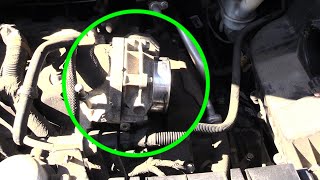
Est. part cost: $10-$50 - Dirty or Failing Throttle Body ⚪ Low Probability The 3.6L V6 engine is known for PCV system issues that allow oil and condensation into the air intake duct, gunking up the throttle body. This can cause erratic throttle position sensor readings, leading to "Service StabiliTrak" and "Reduced Power" modes, which are often seen alongside a P0606, even if the throttle body is the root cause.
How to confirm: Remove the air intake snorkel and inspect the throttle body bore and plate for heavy carbon and oil deposits. The engine may have other codes related to throttle position or air/fuel mixture (e.g., P2177, P2187).
Typical fix: Clean the throttle body thoroughly with a dedicated cleaner and a soft cloth or brush. In some cases, the throttle body assembly may need to be replaced.
Est. part cost: $10-$250 - Damaged Wiring Harness ⚪ Low Probability Engine vibration and heat can cause wiring harnesses to rub against brackets, the engine block, or other components, eventually chafing through the insulation and causing a short. While no specific TSB points to a common chafe spot causing P0606 on the Traverse, it remains a possibility that must be investigated.
How to confirm: Thoroughly inspect the entire engine wiring harness, particularly where it bends or comes close to metal brackets (like the ECM/TCM bracket), for signs of rubbing, chafing, or exposed wires.
Typical fix: Repair the damaged section of the wiring harness with solder and heat shrink, then secure it away from the point of contact using looms and zip ties.
Est. part cost: $50-$300
Rare But Worth Checking
- Shorted External Sensor or Component:
Diagnosis Steps
- Check for other DTCs. A P0606 by itself points more strongly to the ECM. P0606 with other codes (especially U-codes or voltage codes) may point to an external cause like wiring or power supply.
- Test the battery and charging system. Ensure voltage is stable and within specification (12.4V+ at rest, 13.7-14.7V running). A weak battery or failing alternator is a common trigger.
- Inspect all battery cables and main engine/chassis ground connections. Pay special attention to the G110 ground on the right rear of the engine block. Clean any corrosion and ensure all connections are tight.
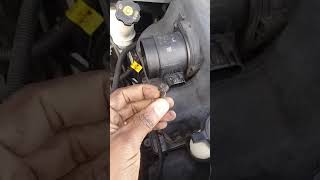
- Inspect the throttle body. Remove the intake duct and check for heavy oil or carbon buildup, which is common on the 3.6L engine and can cause Stabilitrak/Reduced Power errors that may be associated with a P0606.
- Inspect the ECM connectors and nearby wiring. The ECM is located behind the radiator fan shroud. Check its connectors for corrosion or damage and inspect the harness for any signs of chafing, melting, or physical damage.
- If other sensor-specific codes are present, try disconnecting that sensor to see if the P0606 code can be cleared. This can isolate a shorted component that is confusing the ECM.
- If all external factors check out, the ECM is almost certainly faulty. Confirm the diagnosis with a professional-grade scan tool before ordering a replacement part.
Parts You'll Likely Need
- Engine Control Module (ECM)
(OEM #Varies by year. Examples: 12617230 (2011), 12650248 (2012), 12653998 (2013-16). The module type is an ACDelco E39.)— This is the part that has failed internally when a P0606 code is set and all external factors have been ruled out.
Trusted brands: ACDelco, GM Genuine Parts
OEM price range: $400-$700
Aftermarket price range: $250-$450
Related Codes That Often Appear With This One
- P0601 — This code for 'Internal Control Module Memory Check Sum Error' is another type of internal ECM failure and is often seen with P0606. It is also mentioned in TSB #05-06-04-060A.
- U-codes (e.g., U0100, U0140) — U-codes indicate a loss of communication. If the ECM is failing, it may stop communicating with other modules on the vehicle's network (like the BCM or TCM), triggering these codes.
- P0300-P0308 — A failing ECM can cause random or specific cylinder misfires as it loses control of ignition timing or fuel injection.
- P0562 / P0563 — These codes for system voltage low/high often accompany a P0606, indicating that an unstable power supply from the battery or charging system is the likely root cause of the processor fault.
Technical Service Bulletins (TSBs) & Recalls
- 05-06-04-060A: An informational bulletin from GM that groups P0606 with other control module DTCs (P0601, P0602, P0603, P0604, P062F, P06F3, P1621), indicating they can be shared across multiple modules.
- PI0746E: Addresses issues of poor acceleration and various DTCs caused by ice or oil deposits in the air inlet duct and throttle body on 3.6L engines, including the Traverse. This is a known cause for symptoms that often accompany a P0606.
- 24-NA-050: While for a newer Silverado, this TSB shows GM's acknowledgement that low or high voltage events (weak battery, jump starts) can cause an Electronic Brake Control Module to falsely set a P0606, establishing a precedent for voltage-induced processor faults.
Platform-Specific Known Issues
- Throttle Body Contamination: The PCV system on the 3.6L V6 can cause oil and moisture to collect in the intake tube, fouling the throttle body. This leads to Stabilitrak/Reduced Power warnings and can be associated with a P0606 code. TSB PI0746E discusses this issue. Cleaning the throttle body is a common first step for many owners experiencing these symptoms.
- G110 Ground Point: A Reddit user investigating communication loss codes on a 2011 Traverse identified G110 as a critical shared ground for the ECM and TCM. It is located on the right rear of the engine on a bracket. A poor connection here can cause widespread electrical issues that could trigger a P0606.
Mechanic-Grade Diagnostic Values
- Battery Voltage (at rest, engine off) — expected: 12.4V - 12.6V. Failure: Below 12.4V indicates a discharged or weak battery that can cause voltage glitches.
- Charging System Voltage (engine running at idle) — expected: 13.7V - 14.7V. Failure: Voltage below 13.7V or above 14.7V indicates a faulty alternator or voltage regulator, which can trigger a P0606.
- Sensor 5-Volt Reference Circuit — expected: 5.0V with sensor connected, Key On Engine Off.. Failure: Voltage near 0V indicates a short to ground in the wiring or a connected sensor, which can falsely trigger a P0606.
Hidden / Shadow Codes Worth Checking
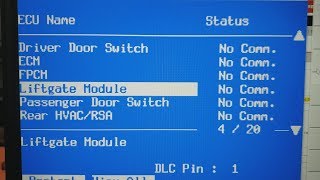
- P0606 (in EBCM): The P0606 processor fault can be set within the Electronic Brake Control Module (EBCM) instead of the ECM, often accompanied by voltage codes P0562 or P0563. (see via A full system scan with a professional tool like the GM GDS2 is required, as a basic OBD-II reader may only query the ECM.)
Scan Tool Commands That Help
- GM GDS2 / Tech2Win: SPS (Service Programming System) - ECM Reprogram — Use when diagnosis points to a software anomaly as the cause of P0606, as noted in some GM service bulletins. This re-flashes the ECM with the latest software and may fix the code without replacing the module.
- GM GDS2 / Tech2Win: Clear DTCs (in EBCM) — If P0606 is found in the EBCM due to a voltage event (like a jump start), this function is required to clear the code. Simply disconnecting the battery may not be sufficient.
- Professional Scan Tool: Crankshaft Position Variation Learn (CASE Relearn) — This procedure is mandatory after replacing the ECM to synchronize the new module with the crankshaft position sensor's signal, preventing misfire codes.
Wiring & Ground Locations
- G110 — Located on the right rear of the engine, mounted to the back of the cylinder head on a bracket, often described as being above the power steering pressure hose.. This is a primary ground for the ECM and TCM. A loose or corroded connection here is a well-documented cause of various module communication and processor faults, including P0606.
- G101 — On the left side of the engine compartment, attached to the left frame rail.. This is a major chassis ground point that provides a ground path for various components in the engine bay, including potentially the ECM harness.
- G103 — On the left side of the engine compartment, on the left inner fender panel.. Another key chassis ground. Verifying all major grounds in the engine bay is critical before condemning the ECM.
- G113 — Located on the left side of the engine, at an engine-to-transmission stud.. Provides a direct ground path between the engine and transmission, which is critical for sensor and module communication between the ECM and TCM.
Real Owner Repair Stories
- CarKiller Forum User Story (2007 Toyota Camry (similar principle applies)) — Car wouldn't start on a cold day, required two jump starts. A new battery was installed. About a week later, the Check Engine Light came on with code P0606, but then the light went off on its own.
❌ Tried (didn't work) The user was considering replacing spark plugs and filters, but the code cleared itself before further action.
✅ What actually fixed it No repair was immediately necessary. The P0606 was a temporary 'glitch' code, likely triggered by the severe low voltage condition from the failing battery and subsequent jump starts. The code cleared itself after several drive cycles with a new, stable battery.
When the Usual Fixes Don't Work
- While P0606 often points to a terminal ECM failure, it can frequently be a false alarm triggered by electrical system instability. In one documented case, a P0606 code appeared after a battery failure and multiple jump starts, but the Check Engine Light later extinguished on its own once a new, stable battery was installed, requiring no parts replacement. Furthermore, GM has issued bulletins for other vehicles (TSB 24-NA-050) explicitly warning technicians NOT to replace control modules for a P0606 code when it's accompanied by low or high voltage codes (P0562/P0563). In these instances, the root cause is the unstable voltage, not a true processor fault, and the first step should always be to test the battery and charging system thoroughly.
OEM Part Supersession History
12617230→N/A (Used for 2009-2011 models)— This is the ECM part number for the earlier first-generation Traverse models, typically with the 3.6L LLT engine.
Heads up: Not interchangeable with later model year ECMs due to engine and system differences.12650248→N/A (Used for 2012-2016 models)— This is the ECM part number for the mid-cycle refresh Traverse models, typically with the 3.6L LFX engine. It belongs to the 12651994 hardware family.
Heads up: Not backward-compatible with earlier 2009-2011 models. Always verify the part number against the vehicle's VIN.
Model Year Variations Within This Range
- 2009-2011 vs. 2012-2016: The Engine Control Module (ECM) part number and internal hardware changed around the 2012 model year. Early models use part numbers like 12617230, while later models use part numbers like 12650248. This change coincides with the update from the LLT to the LFX version of the 3.6L V6 engine, which have different fuel systems and engine management components. The parts are not interchangeable.
Helpful Videos
We Have This Part in Stock



The information in this article is provided for general reference and educational purposes only. Vehicle specifications, procedures, and part compatibility can vary by production date, trim level, and region. Always consult your vehicle's factory service manual and verify part numbers before purchasing or performing repairs. Safety-critical components such as airbags, seat belts, and braking systems should be installed by a qualified professional.
- Chevrolet TRAVERSE:
- 🎬 Helpful Videos
- 🛍️ Shop This Part
- What's Unique About the 2009-2016 Chevrolet TRAVERSE
- Diagnostic Flowchart
- Symptoms You May Notice
- Most Likely Causes
- Rare But Worth Checking
- Diagnosis Steps
- Parts You'll Likely Need
- Related Codes That Often Appear With This One
- Technical Service Bulletins (TSBs) & Recalls
- Platform-Specific Known Issues
- Mechanic-Grade Diagnostic Values
- Hidden / Shadow Codes Worth Checking
- Scan Tool Commands That Help
- Wiring & Ground Locations
- Real Owner Repair Stories
- When the Usual Fixes Don't Work
- OEM Part Supersession History
- Model Year Variations Within This Range
- 🎟️ Get 5% Off