

P0606 on 2015-2022 Chevrolet Tahoe: Control Module Processor Fault Causes and Fixes
P0606 on a Chevy Tahoe indicates a processor fault in a control module like the ECM or BCM. Before replacing any expensive modules, thoroughly test the battery and check all main power and ground connections, as multiple GM TSBs point to these as the common culprits. Key ground locations to inspect are behind both front wheels on the frame and inside the cabin near the driver's side A-pillar.
- P0606 on a 2015-2022 Tahoe is a serious code indicating a processor fault in a major control module.
- Do not immediately assume the control module is bad. The most common causes are a weak battery or poor electrical connections.
- Always start diagnosis by thoroughly testing the battery and inspecting/cleaning all main power and ground connections.
- This issue is well-documented by GM in multiple Technical Service Bulletins, all of which emphasize checking the electrical system first.
- Due to the complexity and need for module programming, professional diagnosis and repair are strongly recommended.
What's Unique About the 2015-2022 Chevrolet TAHOE
For the 2015-2022 Tahoe and its platform mates (GMC Yukon, Cadillac Escalade, Chevy Silverado), a P0606 code is frequently a 'red herring' that points away from the real problem. While the code's definition is a failed module, General Motors has issued multiple Technical Service Bulletins (TSBs) advising technicians to investigate the vehicle's electrical system first. Issues like low battery voltage, poor ground connections, or corroded battery terminals are often the true cause, tricking a module into setting this internal fault code. 🎬 Watch: Understanding the P0606 ECM processor fault and common fixes. Owners who immediately replace the ECM or BCM often find the problem returns until the underlying electrical issue is fixed. One TSB even notes that a faulty camshaft position sensor can erroneously trigger a P0606 code on some GM trucks.
Diagnostic Flowchart
Tap your situation to follow the diagnostic path that matches what you're seeing on this vehicle.
Generation note: The 2015-2022 year range covers two Tahoe generations: the K2XX (2015-2020) and the T1XX (2021-2022). The provided TSBs cover models in both generations, indicating that electrical issues causing a P0606 code are a known issue across both platforms. These platforms are shared with the GMC Yukon, Cadillac Escalade, Chevrolet Silverado, and GMC Sierra, which all exhibit similar P0606-related behaviors.
Symptoms You May Notice
- Check Engine Light is on
- Service StabiliTrak message
- Service Brake System message
- Engine may not start or may stall while driving
- Reduced Engine Power (Limp Mode)
- Erratic gauge cluster behavior or flashing dash lights
- Harsh or incorrect shifting
- Complete loss of throttle response
- Loss of power steering
- Immediately replacing the Engine Control Module (ECM) or Body Control Module (BCM) without first performing a thorough diagnosis of the battery and electrical connections. This is a costly mistake, as the new module may also set the same code if the underlying electrical problem is not resolved.
Most Likely Causes
- Low Battery Voltage or Failing Battery 🔴 High Probability Modern Tahoes have a high electrical demand. A weak or failing battery can cause voltage drops during startup or operation, which can confuse control modules and cause them to report internal faults. TSB #PIT6347B specifically directs technicians to perform battery testing for this code. Forum users frequently report that replacing an old battery resolves the code. A physically loose battery post can also cause these symptoms.
How to confirm: Test the battery with a professional-grade battery tester that can measure cold cranking amps and check for bad cells. Check the voltage with the engine off (should be ~12.6V) and while running (should be ~13.7-14.7V). A loose post on the battery itself can also be the culprit.
Typical fix: Replace the battery and clean the terminals.
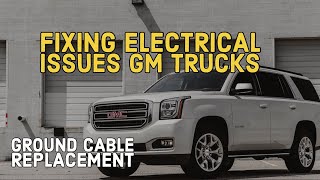
Est. part cost: $150-$350 - Poor Power or Ground Connections 🔴 High Probability TSB #PIP5609 and TSB #PIT6347B both point to checking electrical connections, powers, and grounds. These connections can corrode or loosen over time, creating high resistance and intermittent voltage drops that trigger the P0606 code. Forum users on tahoeyukonforum.com specifically call out grounds located behind both front wheels on the frame as a terrible location prone to corrosion from tire splash.
How to confirm: Visually inspect all battery terminals and main power feeds. Locate and inspect key ground points: battery to chassis, engine block to firewall, and the grounds on the frame behind both front wheels. A particularly important but hard-to-access ground for the BCM is located inside the cab near the front left speaker, requiring removal of the A-pillar trim. Disassemble, clean with a wire brush or sandpaper, and tighten connections even if they look okay.
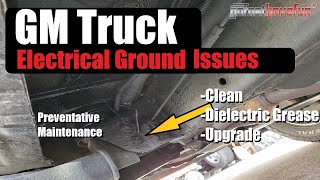
Typical fix: Clean or replace corroded battery terminals or ground straps. Ensure all connections are clean, tight, and protected with dielectric grease.
Est. part cost: $10-$100 - Faulty Control Module (ECM, BCM, ABS) 🟡 Medium Probability While often a symptom of electrical issues, the module itself can fail internally. This is the direct definition of the code, but should only be considered after all electrical system checks have been exhausted, as per GM's own TSBs.
How to confirm: This is a process of elimination. If the battery, charging system, and all related wiring, powers, and grounds are confirmed to be in perfect condition, the module itself becomes the primary suspect. A dealership-level scan tool is needed to communicate with the module, check for software updates, and confirm the internal fault.
Typical fix: Replace the faulty control module and program it to the vehicle's VIN.
Est. part cost: $400-$1200
Rare But Worth Checking
- Software Glitch: Occasionally, the code can be triggered by a temporary software glitch. A module re-flash with updated software from the manufacturer can sometimes resolve the issue without replacing hardware.
- Faulty Camshaft Position Sensor: TSB #17-NA-132, while not for the Tahoe specifically, shows that on other GM trucks, an open in the camshaft position sensor circuit can cause the ECM to set a P0606 instead of the correct sensor code during cranking. This is a known red herring and worth investigating if power/grounds are good.
- Faulty Alternator: An alternator that is overcharging or undercharging the system can create voltage instability, leading a module to set a P0606 code. This can be checked with a multimeter across the battery terminals while the engine is running; the voltage should be stable and typically between 13.7V and 14.7V.
Diagnosis Steps
- Read the code with an OBD-II scanner and note which module set the P0606 code, if the tool provides this information.
- Thoroughly test the battery's state of health and charge. A simple voltage check is not enough; use a load tester or professional analyzer.
- Inspect the battery terminals and cables for any signs of corrosion, damage, or looseness. Remove, clean, and tighten as necessary.
- Locate and inspect the main ground points. Key locations on the K2XX platform include: the firewall ground strap, and grounds on the frame located behind both front wheels. Clean these points to bare metal and ensure a tight connection.
- Inspect the ECM/BCM connectors for cleanliness and proper pin fitment.
- Check the fuses for the ECM, BCM, and other control modules.
- If all power and ground systems are verified to be in excellent condition, consult a professional technician to perform advanced diagnostics, confirm which module is at fault, and check for available software updates before proceeding with replacement.
- If a module is replaced, it must be programmed to the vehicle using dealership-level tools like GM's Techline Connect.
Parts You'll Likely Need
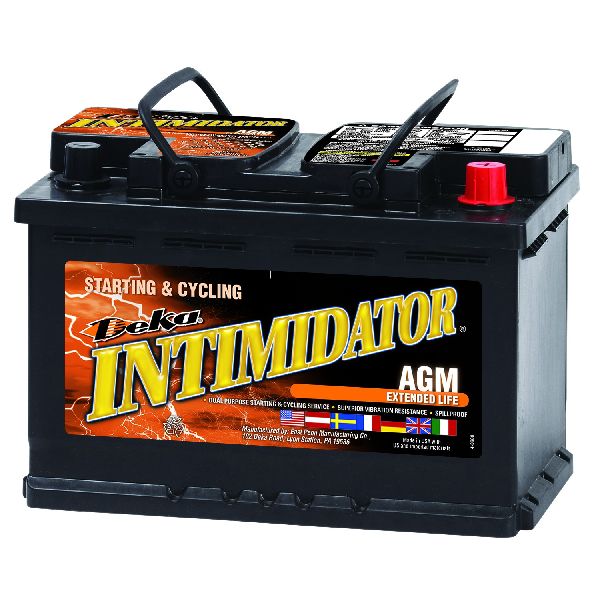
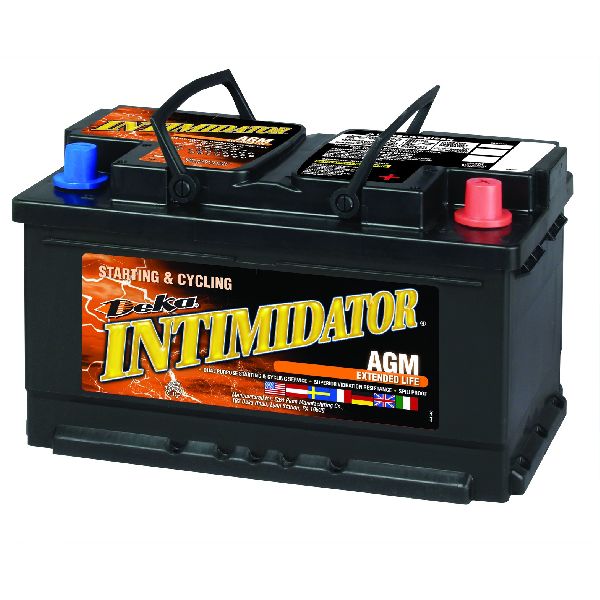
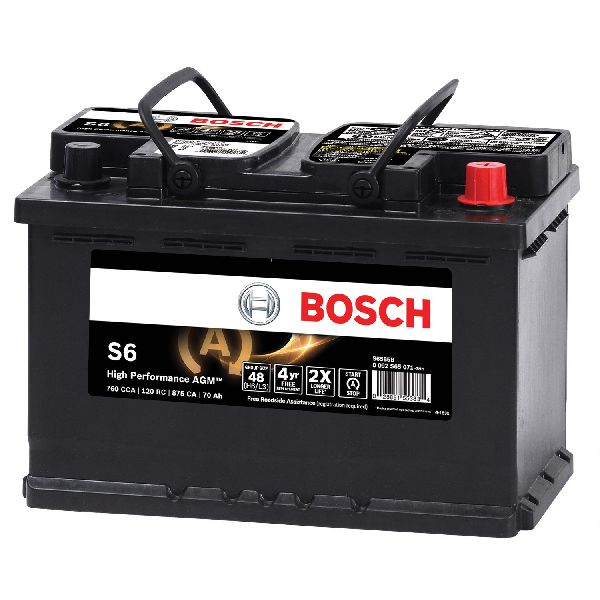
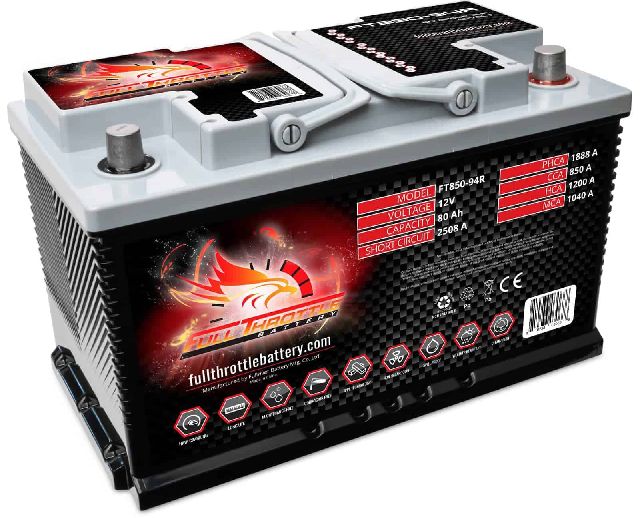
- Battery — A weak or failing battery is a primary cause of voltage-related codes like P0606 on this platform, as noted in TSB #PIT6347B and confirmed in owner forums.
Trusted brands: ACDelco, Interstate, DieHard
OEM price range: $200-$350
Aftermarket price range: $150-$300 - Engine Control Module (ECM)
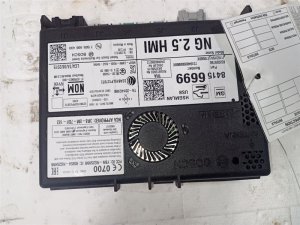
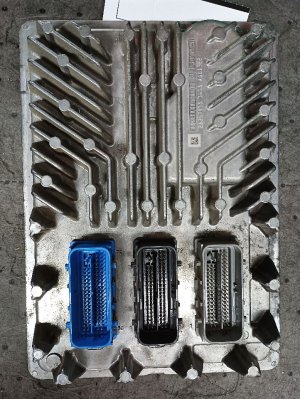
(OEM #e.g., ACDelco E92 (service numbers like 12673228, 12704475 vary by year/VIN))— If all electrical systems are sound, the ECM itself may have an internal failure. The K2XX/T1XX platforms commonly use the ACDelco E92 ECM.
Trusted brands: ACDelco
OEM price range: $400-$1200
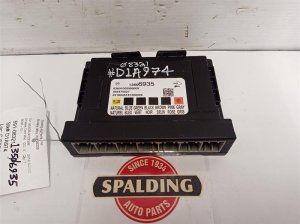
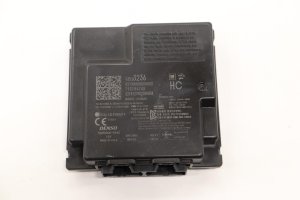
Aftermarket price range: $300-$800 - Body Control Module (BCM) — TSB #PIT5946C specifically calls out the BCM as a potential source for a P0606 code. A poor ground connection to the BCM is a known issue.
Trusted brands: ACDelco
OEM price range: $300-$600
Aftermarket price range: $200-$450
Related Codes That Often Appear With This One
- P0562 — This code means 'System Voltage Low' and is mentioned in TSB #PIT6347B. Its presence strongly supports the theory that a battery or charging system issue is the root cause of the P0606.
- P0601, P0602, P0603, P0604 — These are all related to internal control module memory and processor errors. TSB #PIP5609 groups these codes together, indicating a common diagnostic path often related to module power and ground integrity.
- P0300-P0308 — A 'Service Stabilitrak' message, often seen with P0606, can also be triggered by engine misfires. A failing ignition coil, for example, can cause a misfire (e.g., P0301 for cylinder 1) which in turn disables Stabilitrak and may contribute to the electrical noise setting a P0606.
Technical Service Bulletins (TSBs) & Recalls
- PIT6347B
- PIP5609
- 05-06-04-060A
- PIT5946C
- 17-NA-132
Platform-Specific Known Issues
- TSB #PIT6347B: Directly links P0606 with ABS, StabiliTrak, and low voltage (P0562) warnings, instructing dealers to perform extensive battery and connection testing.
- TSB #PIP5609: Points to inspecting the ECM's electrical connections, powers, and grounds as a primary diagnostic step for P0606 and a host of other modul
Mechanic-Grade Diagnostic Values
- Positive Battery Cable Voltage Drop (during crank) — expected: Less than 100 mV. Failure: A reading above 100 mV indicates high resistance in the positive cable or its connections.
- Negative Battery Cable Voltage Drop — expected: Less than 200 mV. Failure: A reading above 200 mV indicates high resistance in the negative cable or its ground connections.
- Negative Battery Cable to Engine Block Nut Torque — expected: 45 Nm (33 ft lb). Failure: A loose connection at this point can cause a wide range of electrical issues.
- Battery Cable Clamp Nut Torque — expected: 7 Nm (62 lb in). Failure: Loose battery clamps are a primary cause of intermittent power and module communication errors.
Hidden / Shadow Codes Worth Checking
- GM.CPUFAULT: This is not a standard DTC but a Parameter ID (PID) that can be logged with a professional scan tool. When P0606 is present, logging this PID may return a specific number that indicates the exact nature of the internal processor fault, helping to distinguish between different types of failures. (see via Requires a professional scan tool like GM's GDS2 or certain high-end aftermarket scanners with access to manufacturer-specific PIDs.)
Scan Tool Commands That Help
- GDS2 / SPS (Service Programming System): Module Programming/Flashing — When replacing a control module like the ECM, BCM, or FPCM, the new module must be programmed to the vehicle's VIN. This function, using GM's SPS software, loads the correct software and configuration into the new module. In some cases, a P0606 can be caused by another module (like the FPCM), which also requires programming upon replacement.
Wiring & Ground Locations
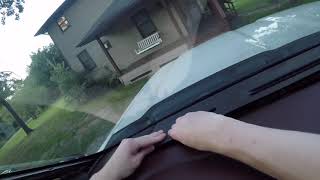
- G218 — Inside the cabin, on the driver's side, behind the trim near the A-pillar and left speaker.. This is a critical ground for the Body Control Module (BCM). TSBs PIT5405C and 18-NA-161 identify a common issue where the dash insulator mat gets trapped between the ground terminal and the body stud, causing a poor connection and a host of electrical problems, including setting a P0606 in various modules.
- Frame Grounds (Front) — On the frame behind both front wheels.. Described by forum veterans as a 'terrible location' because they are constantly exposed to tire splash, leading to heavy corrosion and poor grounding, which can cause intermittent voltage issues that trigger a P0606.
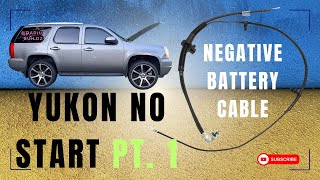
- Negative Battery Cable Grounds — The main negative cable has multiple connection points, typically one on the engine block/cylinder head and another on the frame.. The entire vehicle's electrical system relies on this path to the battery. Corrosion or looseness at either the engine or frame connection point can cause system-wide voltage instability and module faults.
- ECM Power and Ground Pins — On the E92 ECM connectors (X1, X2, X3). For example, on the X1 connector, Pin 20 is often Battery Positive Voltage, and on the X3 connector, Pin 52 is a ground.. When diagnosing a suspected bad ECM, these are the first pins to test with a multimeter to confirm the module is receiving proper power and has a solid ground before condemning the expensive unit.
Real Owner Repair Stories
- tahoeyukonforum.com user (2015 Tahoe LTZ) — Randomly losing all power when making slow right turns, various electrical issues.
❌ Tried (didn't work) Initial diagnosis was unclear.
✅ What actually fixed it The owner replaced the battery and cleaned three key ground points: the two frame grounds behind the front wheels and the ground strap on the firewall. The passenger-side frame ground was found to be covered in 'grease and gunk'. The vehicle operated normally after this service. - YouTube user 'Garcia Garage' (Chevrolet Tahoe (K2XX platform)) — No start, intermittent stalling while driving, all dash lights and locks going 'crazy'.
❌ Tried (didn't work) Cleaning the ground on the cylinder head and the body ground only provided a temporary fix.
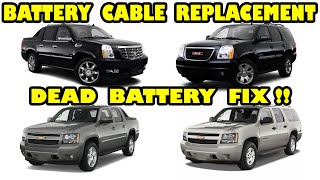
✅ What actually fixed it The problem was permanently resolved by replacing the entire negative battery cable assembly and the 175-amp 'mega fuse' located on the positive battery terminal fuse block.
When the Usual Fixes Don't Work
- In one documented case, a vehicle owner chased a persistent P0606 code. After verifying power and grounds were good, and even trying a replacement ECM to no avail, the root cause was discovered to be a faulty Fuel Pump Control Module (FPCM). The ECM was correctly reporting a processor fault because its communication with the FPCM was being disrupted. The final repair was to replace and reprogram the FPCM, which cleared the P0606 code. This serves as a strong reminder that even when the code points to one module, the cause can be an entirely different module on the vehicle's data network.
Model Year Variations Within This Range
- 2021-2022 (T1XX Platform): The T1XX generation has a specific Upfitter bulletin (UI Bulletin #173b) detailing the installation of five additional ground straps for Police (PPV) and Special Service (SSV) vehicles. Locations include the left/right front frame body mount brackets and the exhaust hanger hook. While for special service vehicles, this highlights GM's continued focus on improving the platform's grounding integrity, suggesting potential differences from the earlier K2XX models.
- 2015-2017 (Early K2XX Platform): TSB 18-NA-161 and PIT5405C, which detail the G218 ground issue and battery cable voltage drop tests, specifically apply to the earlier models in this range. This suggests these issues were most prevalent on the early production K2XX trucks.
Helpful Videos


Used OEM Parts in Stock


New Aftermarket Parts Available


The information in this article is provided for general reference and educational purposes only. Vehicle specifications, procedures, and part compatibility can vary by production date, trim level, and region. Always consult your vehicle's factory service manual and verify part numbers before purchasing or performing repairs. Safety-critical components such as airbags, seat belts, and braking systems should be installed by a qualified professional.
- Chevrolet TAHOE:
- 🎬 Helpful Videos
- 🛍️ Shop This Part
- What's Unique About the 2015-2022 Chevrolet TAHOE
- Diagnostic Flowchart
- Symptoms You May Notice
- Most Likely Causes
- Rare But Worth Checking
- Diagnosis Steps
- Parts You'll Likely Need
- Related Codes That Often Appear With This One
- Technical Service Bulletins (TSBs) & Recalls
- Platform-Specific Known Issues
- Mechanic-Grade Diagnostic Values
- Hidden / Shadow Codes Worth Checking
- Scan Tool Commands That Help
- Wiring & Ground Locations
- Real Owner Repair Stories
- When the Usual Fixes Don't Work
- Model Year Variations Within This Range
- 🎟️ Get 5% Off