

P0606 on 2007-2014 Chevrolet Tahoe: ECM/PCM Processor Fault Guide
P0606 on a 2007-2014 Tahoe indicates a critical internal processor fault in the Engine Control Module (ECM/PCM). While external issues like bad grounds, corroded battery cables, or low voltage should be checked first, the most common fix is replacing the ECM, which requires professional programming. Expect costs to range from $400 to over $1200.
- P0606 is a critical code indicating a processor fault within your Tahoe's main engine computer (ECM).
- Do not drive the vehicle, as it may stall or behave unpredictably.
- Before condemning the expensive ECM, always test the battery, alternator, and check all main power and ground connections for corrosion or looseness.
- Replacing the ECM is not a simple DIY job; it requires professional programming to match the module to your vehicle.
- The most likely fix is a new or remanufactured ECM, but ruling out simpler electrical issues first can save you significant time and money.
What's Unique About the 2007-2014 Chevrolet TAHOE

For this generation of GM trucks (GMT900), including the Tahoe, the provided NHTSA Technical Service Bulletin (TSB #05-06-04-060A) highlights that codes like P0606 can be set by multiple control modules, not just the ECM. For example, a voltage issue could cause the Electronic Brake Control Module (EBCM) or Fuel Pump Control Module (FPCM) to log a P0606. This underscores the sensitivity of the GM vehicle network and means a comprehensive diagnostic approach that doesn't immediately condemn the ECM is particularly important. A full system scan to see which module actually set the code is a critical first step.
Diagnostic Flowchart
Tap your situation to follow the diagnostic path that matches what you're seeing on this vehicle.
Symptoms You May Notice
- Check Engine Light is on
- Vehicle enters 'Reduced Power' mode, sometimes with complete loss of throttle response.
- Engine stalls intermittently or will not start at all.
- Rough idling or misfiring
- Erratic or harsh automatic transmission shifting.
- Decreased fuel economy
- ABS or Traction Control / Stabilitrac lights may also illuminate.
- Unpredictable electrical behavior, like the radio flashing or acting erratically.
- Replacing oxygen sensors or spark plugs without diagnosing the root cause.
- Condemning the ECM immediately without first checking for simple and common issues like a weak battery, corroded battery cables, bad grounds, or a failing alternator.
Most Likely Causes

- Internal ECM/PCM Failure 🔴 High Probability The E38 ECM used in this generation can fail internally over time due to heat, vibration, and age. This is often the final diagnosis after all other possibilities are exhausted.
How to confirm: After verifying all external factors (power, ground, wiring), this becomes the default diagnosis. A professional may use advanced scan tools to try and communicate with the module. If communication fails or the code returns immediately after clearing and a reflash, the ECM is condemned.
Typical fix: Replacement of the ECM/PCM followed by programming (flashing) to the vehicle's VIN.
Est. part cost: $250-$800 - Poor Power or Ground Connections 🟡 Medium Probability Over time, ground straps and battery connections can corrode or loosen. The positive battery cable, in particular, is cited by owners for developing hidden corrosion under the insulation, leading to intermittent voltage drops that can trigger a false P0606. A critical ground for the ECM is G103, located on the front of the passenger side cylinder head.
How to confirm: Perform a voltage drop test on the main power and ground circuits to the ECM. Visually inspect all ground straps (engine block to chassis, firewall) and the main battery terminals and cables. Wiggling the positive cable may reproduce the no-start or limp mode condition. Check for corrosion creeping up the cable from the terminal.
Typical fix: Clean and tighten all ground and power connections. Replace corroded battery terminals or entire cables if corrosion is found under the sheathing.
Est. part cost: $10-$150 - Low Battery Voltage or Failing Alternator 🟡 Medium Probability
How to confirm: With the engine off, check the battery voltage with a multimeter; it should be around 12.6 volts. With the engine running, check the alternator output; it should be stable between 13.5 and 14.5 volts. A weak battery that drops significant voltage during cranking can trigger a P0606, even if the vehicle eventually starts.
Typical fix: Replace the battery and/or alternator if they fail testing.
Est. part cost: $150-$400 - Wiring Harness Issues ⚪ Low Probability
How to confirm: Visually inspect the wiring harness leading to the ECM for any signs of physical damage, chafing, or rodent damage. Pull the ECM connectors and check for bent, loose, or corroded pins.
Typical fix: Repair the damaged section of the wiring harness or replace the connector pigtail.
Est. part cost: $20-$150
Rare But Worth Checking
- Software Glitch or Corrupted Software: Sometimes, a voltage spike from jump-starting or an interrupted update can corrupt the ECM's software. A reflash with the latest manufacturer software can sometimes resolve the issue without replacing the hardware. This is often attempted before module replacement.
- Shorted External Sensor: In rare cases, a sensor that is powered by the ECM can short out internally, causing voltage irregularities that the ECM interprets as an internal fault. Unplugging sensors one by one while monitoring the code can sometimes isolate such a problem.
- Faulty Fuel Pump Control Module (FPCM): On these vehicles, the FPCM can also set a P0606 code. In some forum instances, owners have resolved a persistent P0606 by replacing the FPCM, not the main ECM, especially when accompanied by code P069E.
Diagnosis Steps
- Check for other stored DTCs. Use a scan tool to see which module set the P0606. Address any other codes, especially those related to power (P0562/P0563), grounds, or communication (U-codes), before diagnosing the P0606.
- Verify battery and charging system health. Use a multimeter to ensure the battery has at least 12.6 volts with the engine off and that the alternator is charging between 13.5-14.5 volts with the engine running. A load test on the battery is recommended.
- Inspect all power and ground connections. This is a critical step. Thoroughly check the battery terminals for corrosion. Pay close attention to the positive battery cable for hidden corrosion under the insulation. Inspect and clean the main engine-to-chassis and firewall ground straps, paying special attention to grounds G102, G103, and G104 on the cylinder heads.
- Inspect ECM Connectors. Disconnect the battery, then unplug the ECM connectors. Look for any signs of water intrusion, corrosion, or bent/damaged pins.
- If all external factors check out, consider a software reflash. A dealership or qualified shop may be able to update the ECM software, which can sometimes fix corruption issues.
- If the code persists after a reflash and all wiring/power checks, replace the implicated control module (usually the ECM). The new module must be programmed to your vehicle's VIN and specific configuration.
Parts You'll Likely Need
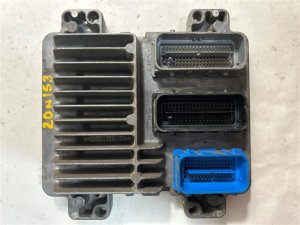
- Engine Control Module (ECM/PCM)
(OEM #Varies by year/engine. Common ACDelco part numbers include 12612384 and 12633238.)— This is the most common cause for a P0606 code, indicating an irreparable internal processor failure after external factors are ruled out.
Trusted brands: ACDelco (OEM Remanufactured), Cardone (remanufactured), ARES Technologies (remanufactured)
OEM price range: $400-$800
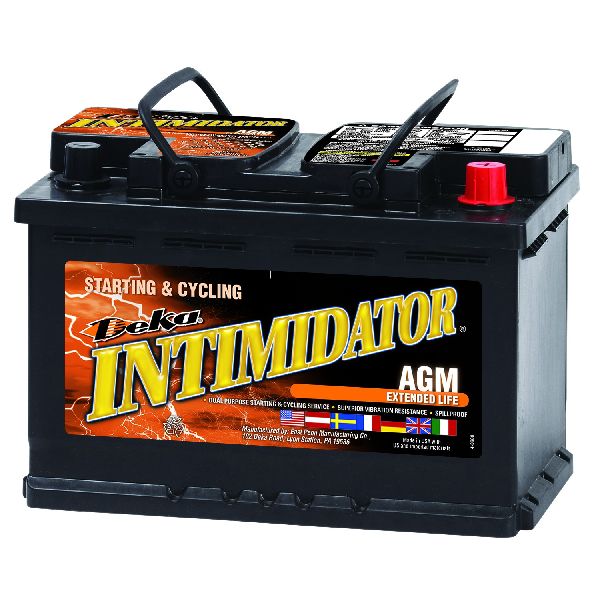
Aftermarket price range: $250-$500 - Battery — A weak or failing battery can provide unstable voltage, especially during cranking, which can trigger a false P0606 code.
Trusted brands: ACDelco, Interstate, DieHard
OEM price range: $180-$250
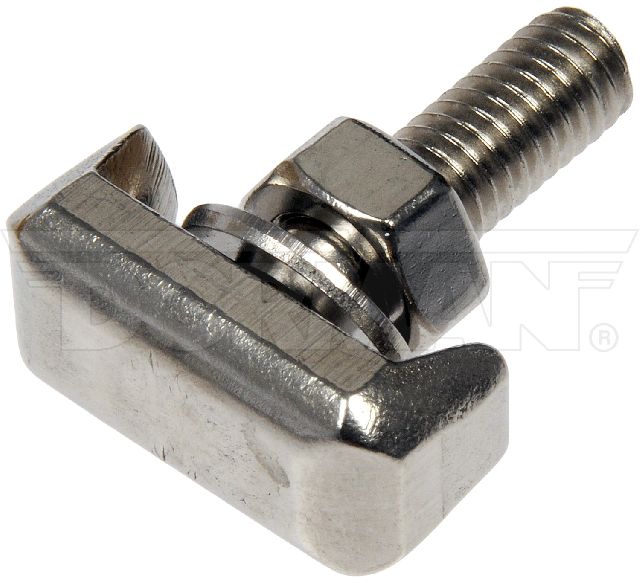
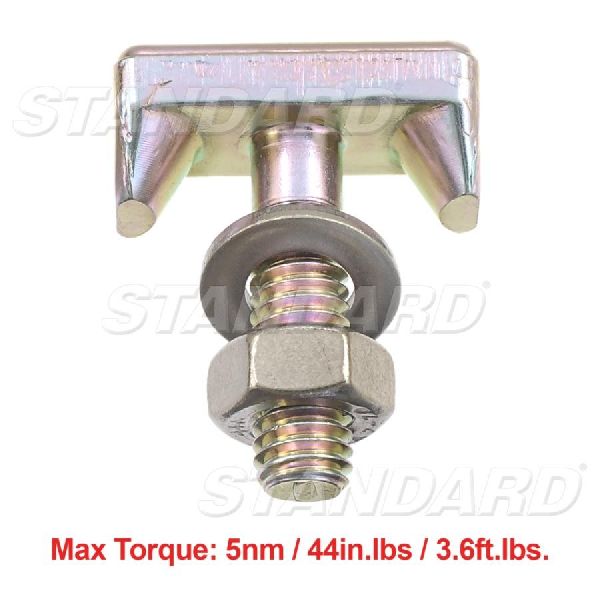
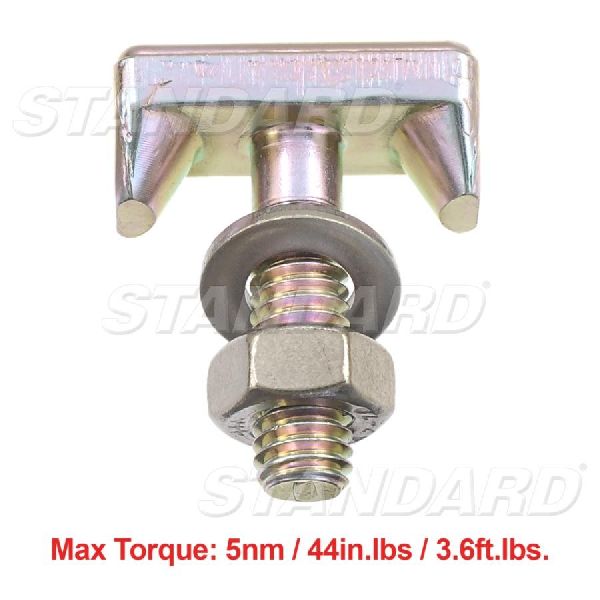
Aftermarket price range: $150-$220 - Positive Battery Cable — Corrosion can wick up the cable under the insulation, causing intermittent high resistance and voltage drops that confuse the ECM.
Trusted brands: ACDelco, Standard Motor Products
OEM price range: $70-$150
Aftermarket price range: $40-$100
Related Codes That Often Appear With This One
- U0100 — Lost Communication With ECM/PCM. This code often appears with P0606 because if the ECM's processor is failing, it cannot communicate effectively on the vehicle's data network.
- P069E — Fuel Pump Control Module (FPCM) Requested MIL Illumination. This often points to the FPCM as the source of the problem, which may itself be setting a P0606 internally.
- P0562 / P0563 — System Voltage Low / High. These codes strongly suggest the P0606 was triggered by a power supply problem, such as a failing battery or alternator, and should be diagnosed first. TSB 24-NA-050 specifically links these codes to P0606 on newer GM trucks.
- P0315 — Crankshaft Position System Variation Not Learned. This code often appears after an ECM is replaced but before the Crankshaft Variation Relearn procedure has been performed with a capable scan tool.
Technical Service Bulletins (TSBs) & Recalls
- TSB #05-06-04-060A: This bulletin notes that DTCs P0601, P0602, P0603, P0604, P0606, P062F, P06F3, and P1621 can be shared among multiple control modules, highlighting the importance of a full system scan to identify the source module.
- TSB #24-NA-050: While for newer (2024) HD trucks, this bulletin is relevant as it officially links DTC P0606 in the EBCM to low or high voltage conditions (DTCs P0562/P0563) during cranking or charging. It advises against replacing the module and to test the battery first, reinforcing the diagnostic principle for older models as well.
Platform-Specific Known Issues
- Intermittent P0606 from Corroded Battery Cables: Multiple owners on forums for GMT900 trucks have chased an intermittent P0606 code, experiencing symptoms like 'Reduced Engine Power' and no-starts, only to find the root cause was a corroded positive battery cable. Wiggling the cable could make the truck start, temporarily resolving the issue. The corrosion often hides under the red insulation, making a visual check of the terminal insufficient; a voltage drop test is required for proper diagnosis.
- Importance of Ground Locations: The GMT900 platform has several critical ground points that can cause a P0606 if compromised. G103 (front of passenger side cylinder head) and G104 (rear of driver's side cylinder head) are particularly important for the ECM and its sensors. Over time, heat and vibration can loosen these connections, or corrosion can build up, leading to intermittent electrical faults that mimic internal ECM failure.
Mechanic-Grade Diagnostic Values
- ECM Power & Ground Verification (Open-Circuit) — expected: 12.6V (or current battery voltage). Failure: A reading of 0V indicates an open in the power or ground circuit to the ECM.
- Voltage Drop Test (Closed-Circuit) — expected: Less than 0.5V. Failure: A voltage drop greater than 0.5V indicates high resistance in the power or ground side of the circuit that needs to be isolated and repaired.
Scan Tool Commands That Help

- GDS2/Tech2 or equivalent J2534 tool: Security Key Relearn / Anti-Theft Password Relearn — This procedure is mandatory after installing a new or reprogrammed ECM. Failure to perform this will result in a no-start condition, as the new ECM will not recognize the vehicle's anti-theft system. It may also set a P0633 code.
- GDS2/Tech2 or equivalent J2534 tool: Crankshaft Position System Variation Learn (CASE Relearn) — This procedure must be performed after replacing the ECM. If not done, the Check Engine Light will illuminate and set a P0315 code. The vehicle will run, but the misfire detection system will not be accurate until the relearn is complete.
Wiring & Ground Locations

- G102 — Located on the rear of the left (driver's side) cylinder head.. Provides a primary ground for the eight ignition coils. A poor connection here can cause misfires and electrical noise that may affect the ECM.
- G103 — Located on the front of the right (passenger's side) cylinder head.. This is a critical ground point for the ECM, transmission control module (TCM), and various sensors. A fault at G103 is a very common cause of intermittent and difficult-to-diagnose electrical issues, including a false P0606.
- G104 — Located on the rear of the left (driver's side) cylinder head.. This ground is often bundled with other sensor grounds and provides a clean ground reference for the ECM.
- ECM Connector X1 (J1) — The 73-pin black connector on the E38 ECM, typically mounted on the left side of the engine bay.. This is the main connector for ECM power, ground, and many sensor inputs. Key pins for testing are Pin 19 (Ignition 1 Voltage), Pin 20 (Battery Positive Voltage), and multiple ground pins.
Real Owner Repair Stories
- TahoeYukonForum.com user report (2007-2014 Tahoe (platform issue)) — Intermittent no-start, 'Reduced Engine Power' message, and P0606 code.
❌ Tried (didn't work) Checking battery, Checking alternator, Clearing codes (code would return)
✅ What actually fixed it The user finally got the truck to start by wiggling the positive battery cable. The cable had internal corrosion hidden under the red insulation, causing a significant voltage drop under load. Replacing the entire positive battery cable and terminal assembly permanently resolved the P0606 code. - Forum user experiences (composite) (GMT900 Truck/SUV with P0606 and P069E) — Check Engine Light, Reduced Power Mode, P0606 and P069E codes stored.
❌ Tried (didn't work) Replacing the battery, Cleaning ground connections, Reflashing the ECM
✅ What actually fixed it In several documented cases, the root cause was a faulty Fuel Pump Control Module (FPCM), also known as the Fuel Pump Driver Module. The FPCM was setting its own internal P0606 and requesting the MIL via code P069E. Replacing the FPCM, located on the frame rail, resolved all codes and symptoms.
OEM Part Supersession History
12597121, 12612384, 12625455→12633238— Hardware and software updates for improved reliability and compatibility across multiple model years.
Heads up: While later part numbers like 12633238 are generally backward compatible with the correct programming, using an older ECM (e.g., from a 2008 vehicle) in a newer (2010+) vehicle can cause issues, particularly with throttle body compatibility and operating system mismatches. It is critical to match the Service Number or use the latest superseded part number for the specific VIN.
Model Year Variations Within This Range
- 2007-2009 vs 2010-2014: The E38 ECM underwent hardware and internal software revisions around 2010. Early E38s had some known idle, fuel, and spark control issues that were improved in later versions. This also corresponds with changes in part numbers (e.g., 12612384 being superseded by 12633238). While functionally similar, programming and compatibility can be specific, making it important to use the correct module for the vehicle's model year.
Helpful Videos
Used OEM Parts in Stock



New Aftermarket Parts Available


The information in this article is provided for general reference and educational purposes only. Vehicle specifications, procedures, and part compatibility can vary by production date, trim level, and region. Always consult your vehicle's factory service manual and verify part numbers before purchasing or performing repairs. Safety-critical components such as airbags, seat belts, and braking systems should be installed by a qualified professional.
- Chevrolet TAHOE:
- 🎬 Helpful Videos
- 🛍️ Shop This Part
- What's Unique About the 2007-2014 Chevrolet TAHOE
- Diagnostic Flowchart
- Symptoms You May Notice
- Most Likely Causes
- Rare But Worth Checking
- Diagnosis Steps
- Parts You'll Likely Need
- Related Codes That Often Appear With This One
- Technical Service Bulletins (TSBs) & Recalls
- Platform-Specific Known Issues
- Mechanic-Grade Diagnostic Values
- Scan Tool Commands That Help
- Wiring & Ground Locations
- Real Owner Repair Stories
- OEM Part Supersession History
- Model Year Variations Within This Range
- 🎟️ Get 5% Off