

P0606 on 2007-2010 Chevrolet Silverado 2500: ECM Fault Causes & Fixes
P0606 on a 2007-2010 Silverado 2500 indicates an ECM/PCM processor fault, but the actual cause is often external. Before replacing the expensive engine computer, thoroughly inspect battery connections, ground straps (especially G103 and G104 on the engine), and wiring, as poor voltage or ground is a very common trigger. In some cases, a transmission module reprogram is the required fix.
- P0606 is a critical code; do not drive the vehicle as it may stall at any time.
- The most common causes are not a bad ECM, but rather poor electrical grounds, a weak battery/alternator, or faulty wiring.
- Always start diagnosis by testing the battery, charging system, and cleaning all major ground connections.
- Be aware that a software update for the Transmission Control Module (TCM) may be the required fix, especially if you are experiencing shifting problems.
- Only replace the ECM as a final step after all other possibilities have been professionally ruled out.
What's Unique About the 2007-2010 Chevrolet SILVERADO 2500
What makes the GMT900-generation Silverado unique regarding P0606 is the high likelihood of an external cause. The electronics on this platform are notoriously sensitive to voltage fluctuations. GM has issued several TSBs for these trucks that link this serious-sounding code to problems outside the ECM itself. These include low/high system voltage (TSB #24-NA-050), the need for a transmission control module (TCM) software update to fix shifting issues that can trigger the code (TSB #150730002A), and even problems within the lighting control module (TSB #24-NA-005). A weak battery or corroded ground strap is often the true culprit, causing a voltage drop that the ECM misinterprets as an internal failure.
Diagnostic Flowchart
Tap your situation to follow the diagnostic path that matches what you're seeing on this vehicle.
Symptoms You May Notice
- Check Engine Light is on
- Engine stalls or shuts off while driving
- Vehicle enters "Reduced Engine Power" or limp mode
- "Service StabiliTrak" and "Service Traction Control" messages on the driver information center
- No-start or crank-no-start condition
- Harsh or erratic automatic transmission shifting
- Gauges stop responding or go dead
- Headlights may flash (if related to Lighting Control Module) [TSB #24-NA-005]
- ABS light may illuminate
- Replacing the Engine Control Module (ECM) without first thoroughly testing all power and ground circuits. Many owners and shops replace the expensive computer only to find the problem was a $15 corroded ground strap (often the one from the firewall to the engine block).
- Replacing the battery without cleaning the cable terminals and checking the main ground points. A new battery can be drained or provide unstable voltage if the connections are poor.
Most Likely Causes
- Poor ECM/PCM Power or Ground Circuits 🔴 High Probability This is the most common cause on GMT900 trucks. Main ground straps corrode and fail, creating intermittent voltage drops. Key failure points are the braided strap from the firewall to the rear of the driver's side cylinder head (G104) and the ground on the front of the passenger's side cylinder head (G103).
How to confirm: Visually inspect and physically tug on all major ground straps, especially G103 and G104. Use a multimeter to perform a voltage drop test on the main power and ground wires at the ECM connector with the system under load. A reading above 0.2-0.3 volts indicates excessive resistance.
Typical fix: Remove, wire brush, and securely re-tighten all grounding points to bright metal. Replace corroded or broken ground straps. The firewall-to-engine strap is a frequent replacement item.
Est. part cost: $10-$75 - Low System Voltage (Weak Battery/Failing Alternator) 🟡 Medium Probability GMT900 control modules are highly sensitive to voltage. A weak battery that drops below 10.5V during cranking can trigger a false P0606. TSB #24-NA-050 specifically links P0606 to low or high voltage codes (P0562/P0563) set in the EBCM. A physically loose battery post has also been documented to cause this.
How to confirm: Test the battery with a digital load tester, not just a voltmeter. With the engine running, check the alternator output with a multimeter; it should be stable between 13.5 and 14.5 volts.
Typical fix: Replace the faulty battery or alternator.
Est. part cost: $150-$400 - Transmission Control Module (TCM) Software Issue 🟡 Medium Probability TSB #150730002A directly states that symptoms like firm shifts, shudder, and DTCs P0606, P16F3, or P2818 can be corrected by reprogramming the TCM with updated calibration files from GM. This indicates a software conflict between modules can falsely set the P0606 code.
How to confirm: A GM dealer or a qualified independent shop with access to GM's Techline Connect (SPS2) software can check if your vehicle's VIN has a pending TCM software update related to this TSB.
Typical fix: Reprogram the Transmission Control Module (TCM) with the latest software calibration. This must be done in the vehicle.
Est. part cost: $0 (if under warranty) - $250 - Internal ECM/PCM Failure ⚪ Low Probability While this is the direct definition of the code, it should be considered the last resort after all external electrical and software issues have been exhaustively ruled out. Many ECMs are replaced unnecessarily due to misdiagnosis of a bad ground or battery.
How to confirm: This is a process of elimination. If all power feeds, grounds, and communication networks to the ECM test perfectly (near zero voltage drop), 🎬 See this walkthrough on diagnosing an ECM processor error code. and all relevant TSBs have been addressed, the module itself is likely faulty.
Typical fix: Replace the Engine Control Module and have the new unit programmed to the vehicle's VIN. A used ECM may not be programmable by a dealer due to VIN-lock.
Est. part cost: $300-$900
Rare But Worth Checking
- Faulty Lighting Control Module (LCM): TSB #24-NA-005 mentions that flashing headlamps and a P0606 set in the LCM can occur. While less common, it highlights that this code can originate in modules other than the ECM.
- Wiring Harness Chafing: Though more documented on later models, chafing of the engine wiring harness against brackets or the firewall can cause shorts that trigger a P0606. A visual inspection of the harness where it runs near sharp metal edges is a worthwhile check.
- Aftermarket Engine Tuning: If the ECM has been reprogrammed with an aftermarket 'tune,' a corrupted file or improper flash can cause a processor fault and set a P0606.
Diagnosis Steps
- Scan for all stored DTCs in all modules, not just the ECM. Pay close attention to any voltage (P0562/P0563) or communication (U-codes) that are present.
- Perform a complete battery and charging system test. Ensure the battery is fully charged and can hold a load, and verify the alternator output is stable and within the 13.5-14.5 volt range.
- Visually inspect the battery terminals and main power distribution connections for looseness or corrosion. Check for physically loose battery posts.
- Locate, disconnect, and thoroughly inspect the main engine-to-frame and battery-to-chassis ground straps. Specifically target the braided strap from the firewall to the driver's side cylinder head (G104) and the ground on the front passenger cylinder head (G103). Clean any corrosion and ensure a tight metal-to-metal connection.
- Disconnect the ECM connectors (with the battery disconnected) and inspect the pins for corrosion, moisture, or damage ('fretting').
- If equipped with the necessary tools and wiring diagrams, perform a voltage drop test on the ECM's main power and ground pins to confirm circuit integrity under load. A reading over 0.2V is a problem.
- Check with a dealer for any open recalls or applicable TSBs, specifically mentioning TSB #150730002A regarding TCM reprogramming for transmission-related symptoms.
- If all external wiring, power, grounds, and software are confirmed to be good, suspect a faulty ECM.
Parts You'll Likely Need
- Engine Control Module (ECM)
(OEM #12617630 (Supersedes to 12612384, 12633238 for some applications))— This is the part the code directly points to, but it should only be replaced after all other potential causes (grounds, power supply, software) have been ruled out. The specific ECM is the E38 model.
Trusted brands: ACDelco (GM Genuine)
OEM price range: $500-$900
Aftermarket price range: $300-$600 - Engine Ground Strap
(OEM #15179982 (Braided strap, common for firewall-to-engine))— Corrosion or breakage of these cables is a very common cause of intermittent voltage issues that can trigger a P0606 code.
Trusted brands: ACDelco (GM Genuine), Dorman
OEM price range: $25-$50
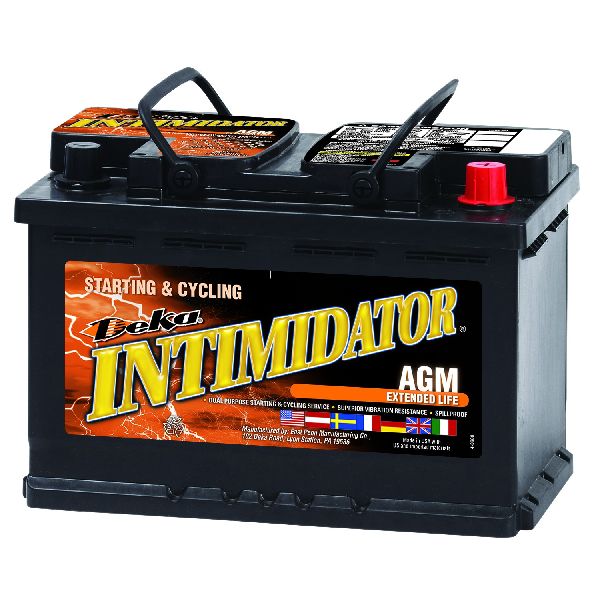
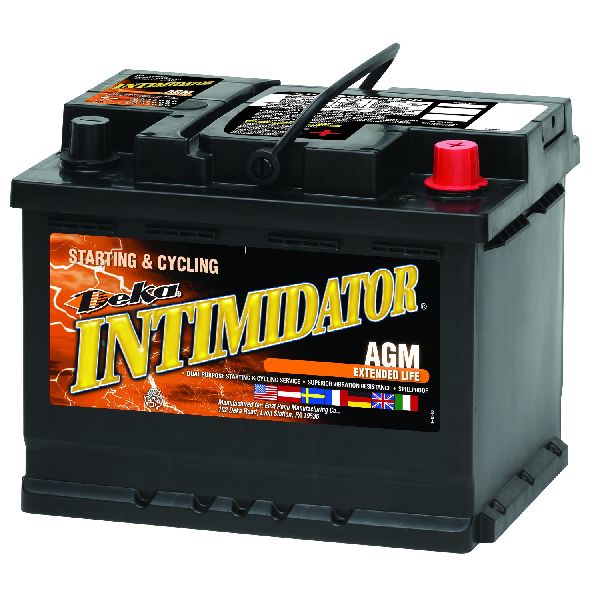
Aftermarket price range: $10-$30 - Battery — A weak or failing battery that cannot provide stable voltage, especially during cranking, is a frequent trigger for a false P0606 code.
Trusted brands: ACDelco, DieHard, Optima
OEM price range: $200-$350
Aftermarket price range: $150-$250
Related Codes That Often Appear With This One
- P0562 — Indicates System Voltage Low. Its presence strongly suggests the P0606 is caused by a battery, alternator, or wiring issue, as noted in TSB #24-NA-050.
- P0563 — Indicates System Voltage High. Its presence points to a charging system problem (like a faulty alternator voltage regulator) as the root cause of the P0606, per TSB #24-NA-050.
- P16F3 — This is a manufacturer-specific code that is often seen with P0606 when there is a control module software issue, as cited in TSB #150730002A.
- P2818 — Another manufacturer-specific code related to transmission pressure control that can appear with P0606 when a TCM reprogram is needed. [TSB #150730002A]
- U-codes (e.g., U0100, U0101) — Indicates loss of communication with the ECM or TCM. These often accompany P0606 when a bad ground or power feed is intermittently cutting power to a module.
Technical Service Bulletins (TSBs) & Recalls
- 24-NA-050: P0606 setting with voltage codes P0562 or P0563.
- PIP5609: Direction to inspect ECM electrical connections, powers, and grounds.
- 150730002A: TCM reprogramming for firm shifts, shudder, and P0606.
- 05-06-04-060A: Informational bulletin that P0606 can be shared in multiple modules.
- 24-NA-005: P0606 set in Lighting Control Module with flashing headlamps.
Platform-Specific Known Issues
- TSB #24-NA-050: Notes that P0606 can be set along with low/high voltage codes (P0562/P0563), pointing to a power supply problem.
- TSB #PIP5609: Instructs technicians to inspect the ECM's electrical connections, powers, and grounds as a preliminary step for P0606.
- TSB #150730002A: Recommends TCM reprogramming to fix an issue causing firm shifts, shudder, and the P0606 code.
- TSB #05-06-04-060A: Informs technicians that P0606 is a code that can be shared among multiple different control modules on the vehicle.
- TSB #24-NA-005: Provides a specific case where flashing headlights are accompanied by a P0606 set in the Lighting Control Module.
Mechanic-Grade Diagnostic Values
- Alternator output voltage at idle — expected: 13.5 - 14.5 Volts. Failure: A reading below 13.5V or above 14.5V indicates a charging system problem that can cause voltage instability and trigger P0606.
- Voltage drop test on ECM power or ground circuit — expected: < 0.2 Volts. Failure: A reading greater than 0.2V (some sources say up to 0.5V) under load indicates excessive resistance in the circuit, which is a common cause of this code.
- ECM Battery Positive Voltage (B+) — expected: System Voltage (typically 12.6V KOEO, 13.5-14.5V KOER). Failure: Voltage significantly lower than battery voltage points to high resistance in the power supply wiring to the ECM.
Scan Tool Commands That Help
- GM Service Tool (Tech 2 / GDS2): Clear DTCs in EBCM — When P0606 is set in the Electronic Brake Control Module (EBCM) due to a low or high voltage event, simply disconnecting the battery may not clear the code. A scan tool must be used to erase the code from the EBCM specifically.
- GM Service Tool (Tech 2 / GDS2 with SPS2): Module Reprogramming — Used to update the software calibration in the Transmission Control Module (TCM) as specified by TSB #150730002A to resolve conflicts that can trigger a P0606.
Wiring & Ground Locations
- G103 — On the front of the passenger's side (right) cylinder head.. This is a primary engine ground point. Corrosion or looseness here directly impacts the stability of the electrical system and can cause voltage fluctuations seen by the ECM.
- G104 — A braided ground strap located on the rear of the driver's side (left) cylinder head, often connecting to the firewall at ground point G108.. This is arguably the most common failure point for this code. This strap grounds the engine to the body/chassis. Its failure creates a floating ground, causing the ECM to misinterpret its own status and set a P0606.
- ECM Connector X1, Pin 20 — The main 73-pin ECM connector (often black), pin 20 (Red/White wire).. This is a primary Battery Positive Voltage feed to the ECM. A voltage drop test at this pin is critical to confirm the ECM is receiving stable power.
- ECM Connector X2, Pin 73 — The second main ECM connector (often grey or blue), pin 73 (Black wire).. This is a primary ECM ground pin. A voltage drop test between this pin and the battery negative terminal will confirm the integrity of the ground circuit back to the battery.
- Underhood Fuse Block — Located in the engine bay, typically on the driver's side.. Not just the fuses, but the main connectors on the bottom of the fuse block can become loose or corroded. This creates high resistance for multiple circuits, including ECM power, leading to intermittent P0606 codes that are very difficult to trace.
Real Owner Repair Stories
- Common narrative from multiple owner forums and YouTube repair videos (2007-2010 Silverado/Sierra 2500) — Sudden 'Reduced Engine Power' message, stalling, and P0606 code. Sometimes accompanied by ABS and StabiliTrak lights.
❌ Tried (didn't work) Replacing the throttle body., Replacing the accelerator pedal position (APP) sensor., Replacing the battery without cleaning ground connections., Clearing the code, only for it to return immediately or soon after.
✅ What actually fixed it In a high percentage of documented cases, the final fix was not the ECM. The most common solution was replacing the braided ground strap between the firewall and the back of the driver's side cylinder head (G104). The second most common fix was discovering and tightening the main electrical connectors on the underside of the underhood fuse block, which had worked themselves loose over time.
"I Checked Everything" — The Actual Cause
- A common scenario that fools technicians is 'fretting corrosion' on ECM or fuse block connector pins. The connection appears visually clean and may test fine for continuity with a multimeter when stationary. However, microscopic vibrations when the engine is running cause the contacts to rub, creating an insulating layer of oxidized debris. This leads to intermittent high resistance and voltage drops under load that the ECM interprets as an internal fault, setting P0606. The fix is to disconnect the connector and apply a specialized dielectric lubricant designed to prevent fretting.
When the Usual Fixes Don't Work
- Many owners have spent over $1,000 replacing the Engine Control Module, as suggested by the code's definition, only to have the P0606 code return. This strongly indicates that replacing the ECM should be the last step, not the first. The root cause is far more likely to be in the ECM's environment: its power supply and ground connections. Successful repairs documented by owners almost always involve fixing these external circuits for a fraction of the cost of a new ECM. For example, a user on a truck forum chased the code for weeks, replacing the battery and alternator, before finding the braided ground strap (G104) was corroded and broken. Replacing the $20 strap permanently solved the problem.
OEM Part Supersession History
12612384→12617630, 12633238 (varies by specific application)— Internal revisions and software compatibility updates.
Heads up: The ECM for this truck is the E38 model. While different part numbers may physically connect, they must be programmed with the correct VIN and software calibration. Using an incorrect hardware version can lead to compatibility issues even after programming.
Helpful Videos
Used OEM Parts in Stock


New Aftermarket Parts Available



The information in this article is provided for general reference and educational purposes only. Vehicle specifications, procedures, and part compatibility can vary by production date, trim level, and region. Always consult your vehicle's factory service manual and verify part numbers before purchasing or performing repairs. Safety-critical components such as airbags, seat belts, and braking systems should be installed by a qualified professional.
- Chevrolet SILVERADO 2500:
- 🎬 Helpful Videos
- 🛍️ Shop This Part
- What's Unique About the 2007-2010 Chevrolet SILVERADO 2500
- Diagnostic Flowchart
- Symptoms You May Notice
- Most Likely Causes
- Rare But Worth Checking
- Diagnosis Steps
- Parts You'll Likely Need
- Related Codes That Often Appear With This One
- Technical Service Bulletins (TSBs) & Recalls
- Platform-Specific Known Issues
- Mechanic-Grade Diagnostic Values
- Scan Tool Commands That Help
- Wiring & Ground Locations
- Real Owner Repair Stories
- "I Checked Everything" — The Actual Cause
- When the Usual Fixes Don't Work
- OEM Part Supersession History
- 🎟️ Get 5% Off