

P0606 on 2007-2011 Chevrolet HHR: ECM Processor Fault Causes and Fixes
P0606 on a Chevrolet HHR indicates a critical internal failure of the Engine Control Module (ECM). Before condemning the expensive ECM, thoroughly check the battery, all ground connections, and the engine wiring harness for chafing, especially near the purge solenoid bracket. Also, per a GM TSB, a faulty camshaft position sensor circuit can falsely trigger P0606. If these checks pass, the most common fix is replacing the ECM, which requires professional programming. Expect to pay between $715 an
- P0606 is a critical code indicating an internal ECM processor fault. Do not continue to drive the vehicle.
- Before condemning the expensive ECM, always perform basic electrical checks: test the battery, inspect all ECM power and ground connections for tightness and corrosion.
- The most common fix for a persistent P0606 code is to replace the Engine Control Module (ECM).
- ECM replacement is not a simple plug-and-play job; it requires professional programming to match the new module to your car's VIN and security system.
What's Unique About the 2007-2011 Chevrolet HHR
On the GM Delta platform (HHR, Cobalt, G5), a P0606 code doesn't always condemn the ECM. A critical GM Technical Service Bulletin (TSB #17-NA-132) warns that an open circuit in the camshaft position sensor can incorrectly trigger a P0606 code during cranking without setting a specific sensor code. Furthermore, HHR and Cobalt forums are filled with owner experiences where intermittent issues like 'Engine Power Reduced' messages were traced to frayed wiring harnesses. A known chafe point is where the engine harness rubs against the sharp edge of the EVAP canister purge solenoid bracket, causing shorts that can mimic or lead to an ECM fault.
Diagnostic Flowchart
Tap your situation to follow the diagnostic path that matches what you're seeing on this vehicle.
Symptoms You May Notice
- Check Engine Light is on
- Engine stalls or shuts off while driving
- Vehicle enters 'Reduced Engine Power' or 'Engine Disabled' mode
- Car will not start or is hard to start
- Erratic automatic transmission shifting
- Poor fuel economy
- ABS or other warning lights may illuminate
- Engine misfires or runs rough
- Replacing throttle bodies or other sensors when the ECM is the root cause. An owner may experience 'Reduced Power' mode and replace the throttle body, only for the problem to return because the ECM itself is faulty and misinterpreting sensor data.
- Immediately replacing the ECM without checking for the camshaft position sensor circuit fault as described in TSB #17-NA-132.
Most Likely Causes
- Internal ECM Failure 🔴 High Probability The Delphi/ACDelco E37 ECM is a complex electronic component that can fail over time due to heat, vibration, or internal component degradation. Given the age of the 2007-2011 HHR fleet, these modules are reaching the end of their expected service life.
How to confirm: After definitively verifying all power, ground, and related sensor circuits are intact and free of shorts or opens, the ECM is diagnosed by exclusion. A professional will use a high-end scan tool to confirm communication is impossible or that the internal fault status is active.
Typical fix: Replace the Engine Control Module (ECM) and have it professionally programmed to the vehicle's VIN.
Est. part cost: $200-$610 - Poor ECM Power or Ground Connections 🟡 Medium Probability Corrosion and looseness are common on older vehicles. On the HHR, specific problem areas include the ground strap from the transmission case to the radiator cradle and the main grounds on the engine block. A poor ground can cause unstable voltage, confusing the ECM's processor.
How to confirm: Visually inspect the ECM connectors for corrosion or damage. Use a multimeter to perform a voltage drop test on the main power and ground wires to the ECM to ensure they are less than 0.2 volts. Locate and clean all major ground points, including G108 (engine block to frame).
Typical fix: Clean the ECM connectors and engine/chassis ground points with a wire brush until they are shiny. Tighten all connections. A common fix described in forums is adding a supplementary ground wire from the strut tower to the engine block.
Est. part cost: $0-$20 - Chafed Engine Wiring Harness 🟡 Medium Probability There is a widely-documented issue on ChevyHHR.net where the engine wiring harness rubs against the sharp metal bracket for the EVAP canister purge solenoid. Over time, this can wear through the loom and insulation, causing intermittent shorts on critical sensor or power wires, which can trigger a P0606 or other confusing codes.
How to confirm: Carefully inspect the entire engine wiring harness, paying extremely close attention to the area where it passes the EVAP purge solenoid bracket on the engine.
Typical fix: Repair the damaged wires using solder and heat shrink. Re-route or wrap the harness with protective loom or tape to prevent future contact with the sharp bracket.
Est. part cost: $10-$30 - Low Battery Voltage or Faulty Charging System ⚪ Low Probability A weak battery or failing alternator can supply unstable voltage to the vehicle's modules, causing the ECM to fail its self-test and log a P0606 code, especially during engine cranking.
How to confirm: Test the battery with the engine off; it should read approximately 12.6 volts. With the engine running, check the alternator output; it should be between 13.7 and 14.7 volts. Perform a load test on the battery.
Typical fix: Replace the weak battery or faulty alternator.
Est. part cost: $150-$400
Rare But Worth Checking
- Faulty Camshaft Position Sensor Circuit: GM TSB #17-NA-132 explicitly states that an open in the camshaft position sensor circuit can cause a P0606 to set during cranking *instead* of the appropriate sensor code. This is a critical diagnostic step. The bulletin warns technicians: 'Do Not replace the Engine Control Module (ECM) for this condition.' before checking the cam sensor circuit.
- Aftermarket Programming/Tuning: An improper or corrupted software flash from an aftermarket performance tuner can cause internal conflicts within the ECM's logic, leading to a P0606 code. This was noted in a Cobalt SS forum where a user with multiple aftermarket parts was battling a P0606.
Diagnosis Steps
- Check for other DTCs. Pay close attention to any communication (U-codes) or sensor circuit codes, especially for the camshaft position sensor.
- Check the battery and charging system. Ensure voltage is stable and within the correct range (12.6V engine off, 13.7-14.7V engine running).
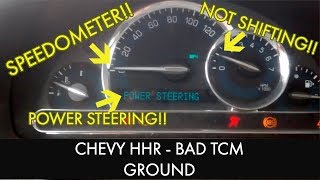
- Inspect all ECM power and ground connections. Clean any corrosion and ensure all connections are tight. Refer to a ground location diagram for the HHR to find all relevant points, such as the one on the transmission case. 🎬 Watch: How to fix common ground issues causing shifting problems.
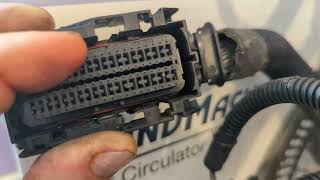
- Thoroughly inspect the engine wiring harness for any signs of chafing, melting, or physical damage, especially near the EVAP purge solenoid bracket. 🎬 See this walkthrough for inspecting and replacing the engine harness.
- Clear the codes, disconnect the battery for 15 minutes to reset the modules, and see if the code returns. Sometimes a random voltage spike can cause a fluke code.
- If available, use a scan tool to check the camshaft position sensor data while cranking the engine. Any dropouts or lack of signal could point to the issue described in TSB #17-NA-132.
- If the code returns and all wiring, power, and grounds are confirmed to be good, the ECM is highly likely to be faulty and requires replacement.
Parts You'll Likely Need
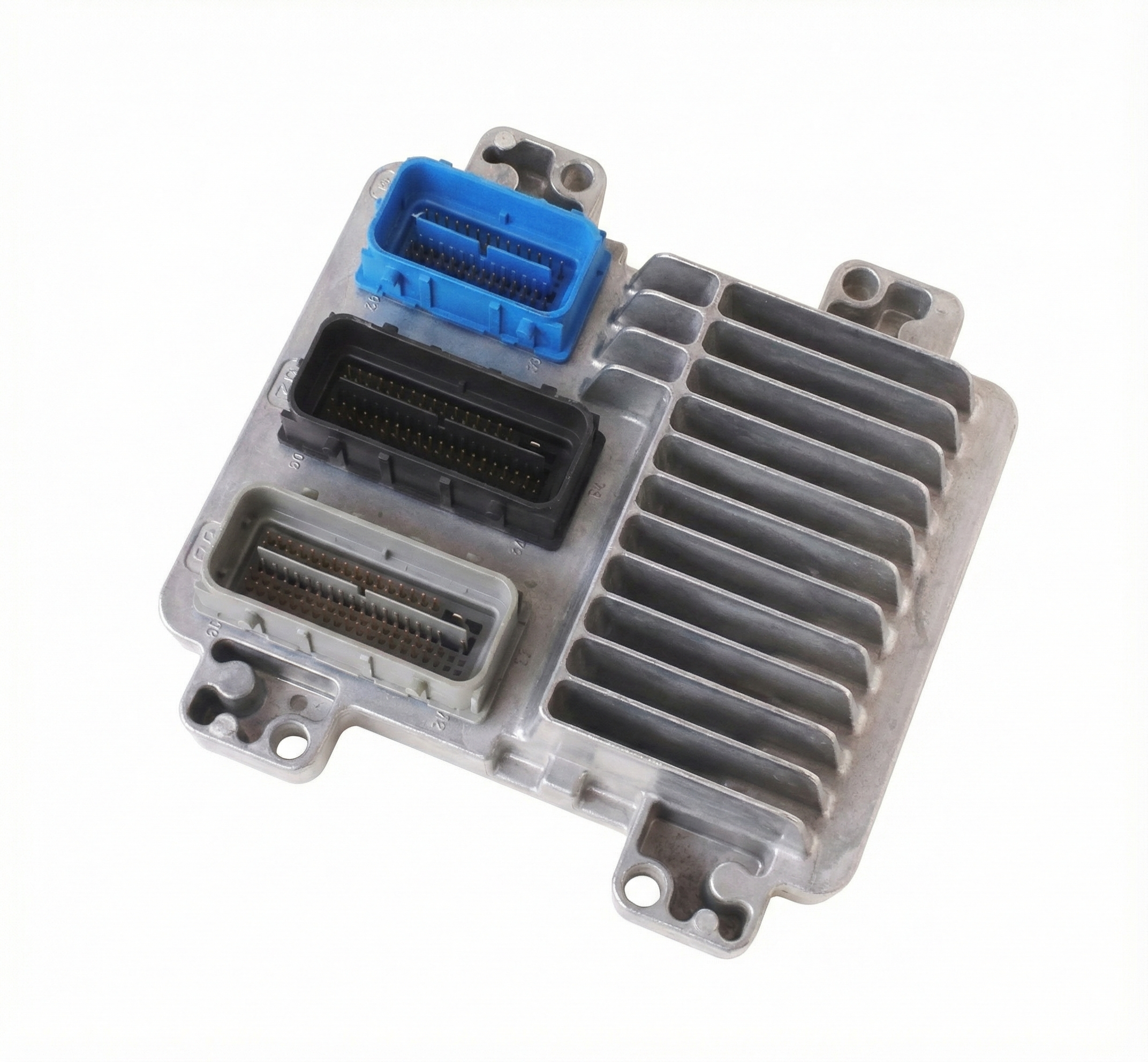
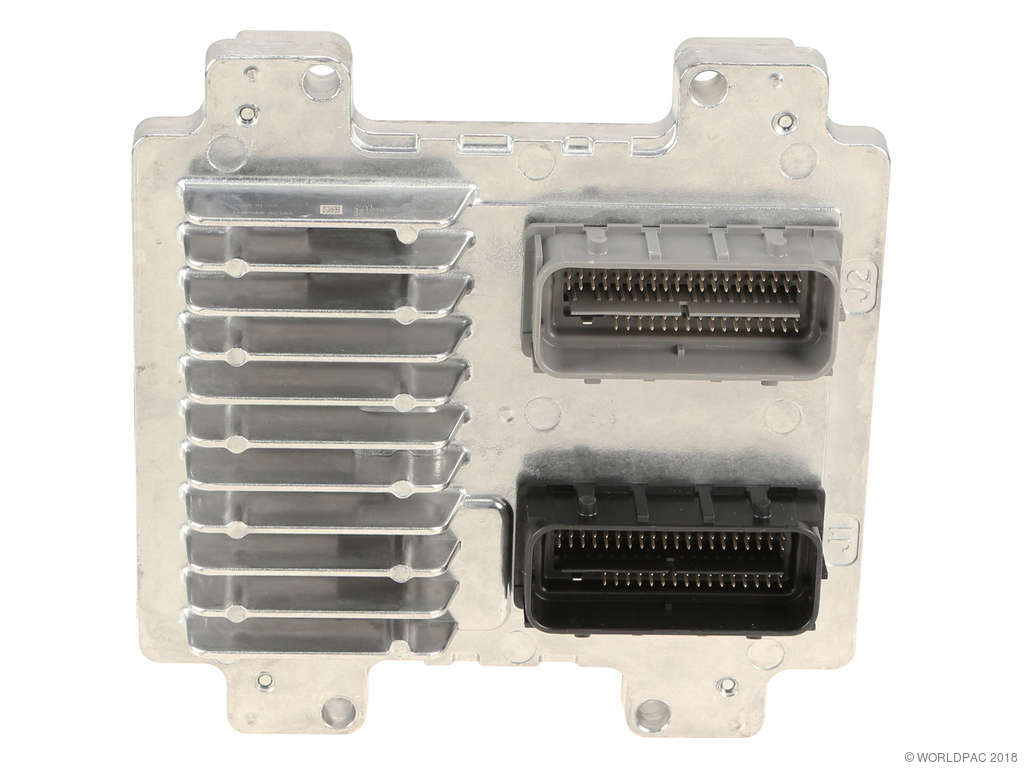
- Engine Control Module (ECM)
(OEM #12612397 (ACDelco E37). This part number is frequently interchanged or superseded by others like 12597125, 12618031, 12630186, and 12635902. Always verify with VIN.)— This code specifically indicates an internal processor fault, and in most cases where wiring and grounds are good, the module itself has failed and must be replaced.
Trusted brands: ACDelco (OEM), Remanufactured units from Flagship One, Solo Auto Electronics
OEM price range: $350-$610
Aftermarket price range: $200-$450
Related Codes That Often Appear With This One
- U0073 — This code indicates a 'Control Module Communication Bus Off' error, suggesting a network-wide problem that could trigger a processor fault in the ECM.
- P0601, P0602, P0603, P0604 — These are all internal control module memory or processor error codes. Their presence alongside P0606 strongly points to a failed ECM. The provided NHTSA TSB #05-06-04-060A groups these codes together as related control module faults.
- P0172 (System Too Rich) — A failing ECM can lose control of fuel mixture, often leading to a rich condition. A user on the Cobalt SS Network forum reported having both P0606 and P0172 codes simultaneously due to an aftermarket tune and potential ECM issues.
Technical Service Bulletins (TSBs) & Recalls
- 05-06-04-060A: This informational bulletin advises technicians about a group of control module Diagnostic Trouble Codes (DTCs), including P0606, that can be set in multiple modules.
- 17-NA-132: Explicitly warns that an open in the camshaft position sensor circuit can c
Platform-Specific Known Issues
- The federal emissions warranty may cover the PCM/ECM for 8 years or 80,000 miles. Owners of lower-mileage vehicles within this window should contact a dealer to check for potential coverage, though most 2007-2011 models will be outside this range by now.
- Per TSB #05-06-04-060A, this code is part of a group of control module DTCs that can be shared across multiple modules, indicating a potential network issue rather than an isolated ECM failure.
- A known wiring harness chafe point near the EVAP purge solenoid bracket is a common source of electrical gremlins that can trigger a P0606 code.
Mechanic-Grade Diagnostic Values
- Battery State of Charge (Engine Off) — expected: 12.4V to 12.6V. Failure: Below 12.0V, or a voltage divisible by 2.1V from 12.6V (e.g., 10.5V), suggests a dead cell.
- Charging System Voltage (Engine Running) — expected: 13.5V to 14.5V at the battery terminals.. Failure: Voltage below 13.5V or above 14.5V indicates a potential alternator or regulator fault that can cause module issues.
- ECM Power & Ground Voltage Drop — expected: Less than 0.2 volts. Failure: A reading higher than 0.2 volts on either the power feed or ground circuit under load indicates excessive resistance that can starve the module of stable power.
Scan Tool Commands That Help
- GM Tech2 / GDS2 or capable aftermarket scanner: Crankshaft Position Variation Relearn (P0315 Relearn) — This procedure is often required after replacing the ECM. Failure to perform it can result in a P0315 code being set and potential misfire detection issues.
- No Tool Required (Manual Procedure): 30-Minute Security Key Relearn — After installing a new or reprogrammed ECM, the vehicle's anti-theft system must be synchronized with the new module. This procedure is necessary to allow the engine to start.
Wiring & Ground Locations
- G105 — On the left front of the engine block.. This is a primary engine ground. A poor connection here can cause unstable voltage to various components, potentially affecting the ECM.
- G107 — On the front left corner of the transmission.. This ground is critical for the transmission control module (on A/T models) and is tied into the overall powertrain ground scheme. A fault here can cause network communication issues that might be misinterpreted as an ECM fault.
- G108 — On the right rear of the engine block.. Another key engine block ground point. Verifying its integrity is a crucial step in diagnosing any module communication or processor fault code.
- ECM Connector X1, Pin 20 — At the Engine Control Module, connector X1.. This is a main battery power (+) input to the ECM. A voltage drop test should be performed here to ensure the module is receiving stable power.
- ECM Connector X1, Pin 73 — At the Engine Control Module, connector X1.. This is a primary ground (-) for the ECM. A voltage drop test on this pin is essential to rule out a bad ground connection as the cause of P0606.
Real Owner Repair Stories
- Reddit user on r/WRX (2015+ Subaru WRX (Note: While not an HHR, the principle applies to P0606 after a battery event)) — P0606 and limp mode immediately after jumping a dead battery.
❌ Tried (didn't work) Clearing the code with an OBD2 tool while parked.
✅ What actually fixed it A combination of steps, believed to be a key cycle procedure, resolved the issue. The user turned the key to ON for 1 minute, OFF for 1 minute, then ON again for 1 minute. After this, the code was able to be cleared and the car returned to normal. Another user fixed it by disconnecting the battery and holding the brake pedal down for a minute to drain residual power. - Chevy HHR Network user (2006 HHR with 86k miles) — Engine power reduced, engine disabled, delayed start, and then a solid Check Engine Light with code P0606.
❌ Tried (didn't work) The user was seeking advice before trying any fixes.
✅ What actually fixed it The immediate advice from forum veterans was to first clear the code and check all wiring connections at the PCM. The problem was intermittent, suggesting a potential fluke or connection issue rather than a hard internal failure. The user was also advised to check with a dealer about the 8-year/80,000-mile federal emissions warranty for the PCM, even though they were slightly over mileage.
OEM Part Supersession History
12597125→12612397— Standard part revision and consolidation by the manufacturer.
Heads up: Part number 12612397 is a common service replacement for many earlier E37 ECMs, including 12597125, 12618031, and 12635902. Always verify the correct service number for the specific vehicle's VIN, but these are often interchangeable after programming.
Model Year Variations Within This Range
- 2006 (2.2L Engine Only): The 2006 HHR with the 2.2L engine does not use physical camshaft position sensors. It uses a 'compression sense ignition' system where the Ignition Control Module (ICM) determines cam position. On these specific models, a camshaft-related code (like P0340/P0341) points to a faulty ICM or its wiring, not a sensor. This is relevant to P0606 diagnostics as a faulty ICM could potentially create electrical noise or data conflicts that affect the ECM.
Helpful Videos
Used OEM Parts in Stock

New Aftermarket Parts Available

The information in this article is provided for general reference and educational purposes only. Vehicle specifications, procedures, and part compatibility can vary by production date, trim level, and region. Always consult your vehicle's factory service manual and verify part numbers before purchasing or performing repairs. Safety-critical components such as airbags, seat belts, and braking systems should be installed by a qualified professional.
- Chevrolet HHR:
- 🎬 Helpful Videos
- 🛍️ Shop This Part
- What's Unique About the 2007-2011 Chevrolet HHR
- Diagnostic Flowchart
- Symptoms You May Notice
- Most Likely Causes
- Rare But Worth Checking
- Diagnosis Steps
- Parts You'll Likely Need
- Related Codes That Often Appear With This One
- Technical Service Bulletins (TSBs) & Recalls
- Platform-Specific Known Issues
- Mechanic-Grade Diagnostic Values
- Scan Tool Commands That Help
- Wiring & Ground Locations
- Real Owner Repair Stories
- OEM Part Supersession History
- Model Year Variations Within This Range
- 🎟️ Get 5% Off