

P0606 on 2007-2014 Chevrolet Equinox: ECM Processor Fault Causes and Fixes
P0606 indicates an internal processor fault in the Engine Control Module (ECM). Before replacing the expensive ECM, you must rule out simpler causes like a weak battery, bad ground connections, or wiring issues. On 2010-2011 2.4L models, oil leaking from the oil pressure sensor or VVT solenoids into the ECM connector is a well-documented cause. A faulty camshaft position sensor circuit can also falsely trigger P0606.
- P0606 is a critical code indicating an ECM processor fault; do not continue to drive the vehicle.
- Before condemning the expensive ECM, you must first rule out simpler issues: a weak battery, bad alternator, and poor power/ground connections.
- On 2010-2011 Equinox models with the 2.4L engine, it is mandatory to inspect the ECM connectors for oil contamination from leaking sensors before replacing the module.
- A faulty camshaft position sensor circuit can also trigger a false P0606 code on these vehicles.
- ECM replacement is not a DIY job as it requires professional programming to the vehicle's VIN.
What's Unique About the 2007-2014 Chevrolet EQUINOX
The 2007-2014 Equinox spans two generations with different common failure points. For the second generation (2010-2014) with the 2.4L engine, a critical and unique issue is engine oil leaking from the oil pressure sensor (Part No. 12673134) or VVT solenoids, traveling up the wiring harness, and contaminating the ECM connectors, causing a short. This issue is also prevalent on its platform-mate, the GMC Terrain. For all years, GM has issued TSB #17-NA-132 noting that P0606 can be triggered by an open in the camshaft position sensor circuit 🎬 See how to perform a camshaft sensor repair., which can mislead a technician into unnecessarily replacing the ECM.
Diagnostic Flowchart
Tap your situation to follow the diagnostic path that matches what you're seeing on this vehicle.
Generation note: This range covers the first generation (2007-2009) and the second generation (2010-2014) Equinox. A key issue specific to the 2010-2011 second-gen models with the 2.4L engine is oil wicking into the ECM harness from leaking sensors. First-generation models are more generally prone to the typical causes like wiring, grounds, or internal ECM failure, though checking for oil leaks is still wise. The 2010-2011 2.4L LAF engine has known reliability issues, and many owners swap in the improved 2012-2017 LEA engine, which requires transferring some sensors and components.
Symptoms You May Notice
- Check Engine Light is on
- Engine stalling unexpectedly, sometimes intermittently
- Vehicle will not start or has a crank-no-start condition 🎬 Watch: Diagnostic tips for a car that won't start.
- Reduced Engine Power mode, sometimes with a 'STARTING DISABLED, SERVICE THROTTLE' message on the DIC
- Erratic or harsh transmission shifting
- Rough idle or engine misfires
- Poor fuel economy
- Electronic Stability Control (ESC) warning light, as seen in NHTSA complaint #10648516
- Replacing the ECM without checking for oil contamination in the harness on 2010-2011 2.4L models. The new ECM will be damaged by the same oil leak.
- Replacing the ECM without first testing the battery and charging system.
- Replacing the ECM without inspecting the camshaft position sensor circuit, as noted in TSB #17-NA-132.
Most Likely Causes
- Internal ECM/PCM Failure 🔴 High Probability The ECM is the default suspect when it reports an internal processor fault. This can be due to age, heat cycles, or internal component failure.
How to confirm: After ruling out all other possibilities (power, ground, wiring, software, and external sensor faults), the ECM is condemned. This is a process of elimination.
Typical fix: Replace the Engine Control Module and program the new unit to the vehicle's VIN. Common ACDelco part numbers include 12655476, 12648906, and 12635821.
Est. part cost: $300-$800 - Oil Contamination in ECM Connector (2010-2011 2.4L) 🔴 High Probability A known issue where engine oil from a leaking oil pressure switch (ACDelco #12673134, which supersedes older parts) or VVT solenoids can wick up the wiring harness and flood the ECM connector, causing short circuits.
How to confirm: Unplug the main connectors at the ECM and carefully inspect for the presence of engine oil inside the connector housing and on the pins.
Typical fix: Replace the leaking sensor/solenoid that is the source of the oil. Thoroughly clean the oil out of the harness connector with electrical contact cleaner. If the harness is saturated, it may need replacement. The ECM itself may also be damaged and require replacement.
Est. part cost: $50-$900 - Low Battery Voltage or Charging System Fault 🟡 Medium Probability Control modules require a stable voltage to operate. A weak battery, failing alternator, or loose/corroded battery terminals can cause voltage drops or spikes that trigger a processor fault code.
How to confirm: Test the battery's state of charge and health. With the engine running, use a multimeter to check the alternator output voltage at the battery terminals. It should be stable, typically between 13.5 and 14.5 volts.
Typical fix: Replace the weak battery or faulty alternator. Clean or replace corroded battery terminals.
Est. part cost: $150-$500 - Poor ECM Power or Ground Connections 🟡 Medium Probability Corroded or loose ground straps and power connections are a common issue on many GM vehicles, leading to intermittent module resets and faults.
How to confirm: Visually inspect all battery cables, main engine/chassis ground straps (e.g., G103, G112), and the ECM's own power and ground wires at its connector. Perform a voltage drop test on the power and ground circuits to check for high resistance; it should be less than 0.3V.
Typical fix: Clean all corrosion from terminals and grounding points with a wire brush. Tighten any loose connections. Replace corroded cables or terminals if necessary.
Est. part cost: $10-$100
Rare But Worth Checking
- Faulty Camshaft Position Sensor Circuit: A GM TSB (#17-NA-132) warns that an open in the camshaft position sensor circuit can incorrectly trigger a P0606 code during engine cranking, before the specific cam sensor code has a chance to set. The ECM should not be replaced until the cam sensor and its circuit are checked.
- ECM Software Glitch: Sometimes, the code can be triggered by a software anomaly. Checking with a dealer for any available ECM software updates (reflashes) is a valid diagnostic step before replacement.
- Aftermarket Programming/Tuning: An improper or corrupted software flash from an aftermarket performance tuner can cause internal conflicts within the ECM's logic, leading to a P0606 code.
Diagnosis Steps
- Check for other DTCs. Codes for specific sensors (like camshaft position), system voltage, or communication can point to the root cause.
- Thoroughly test the battery and charging system. Ensure the battery is fully charged and healthy, and that the alternator provides stable voltage (13.5-14.5V) when running.
- Inspect all ECM power and ground connections. Check for corrosion, damage, or looseness at the battery terminals, main chassis grounds, and the ECM connector itself.
- For 2010-2014 2.4L models, unplug the ECM and inspect the connectors for any signs of engine oil contamination. If oil is found, trace it back to the source (usually the oil pressure switch or VVT solenoids).
- Per TSB #17-NA-132, if P0606 is present (especially with a no-start), test the camshaft position sensor and its wiring circuit for an open before condemning the ECM.
- Inspect the engine wiring harness for any signs of physical damage, chafing, or rodent damage, particularly where it might rub against brackets or engine components.
- Check for any available Technical Service Bulletins (TSBs) or software updates for the ECM. A reflash may solve the issue if it's a known software glitch.
- If all external factors (power, grounds, wiring, external sensors, software) have been ruled out, the ECM is likely faulty and requires replacement and programming.
Parts You'll Likely Need
- Engine Control Module (ECM/PCM)
(OEM #12655476, 12648906, 12635821 (Verify by VIN))— This is the most common fix when the code is caused by a true internal processor failure after all other causes are eliminated.
Trusted brands: ACDelco (OE Remanufactured)
OEM price range: $350-$600 - Engine Oil Pressure Sensor/Switch
(OEM #12673134 (supersedes 12621234))— For 2.4L models, this sensor is a primary source of oil leaks that wick into the wiring harness and damage the ECM.
Trusted brands: ACDelco
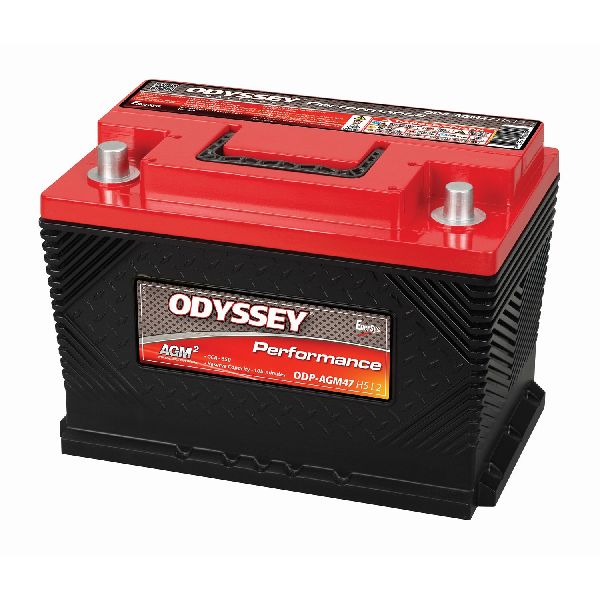
OEM price range: $25-$50 - Battery — A weak or failing battery can cause low voltage spikes that incorrectly trigger a P0606 code. This should be one of the first items tested.
Trusted brands: ACDelco, DieHard, Interstate
OEM price range: $150-$250
Related Codes That Often Appear With This One
- P0700 — This code means the Transmission Control Module (TCM) has requested the check engine light. It often appears with P0606 because the faulty ECM is sending bad data to the TCM, causing transmission-related faults. This was seen in NHTSA complaint #10648516.
- P0601 — This code for 'Internal Control Module Memory Check Sum Error' is another type of internal ECM fault. Seeing them together strongly points to a failed ECM.
- P0562 / P0563 — These codes for low or high system voltage suggest that the P0606 is a symptom of a power supply problem (bad battery/alternator) and not a primary ECM failure.
- U-series codes (e.g., U0100) — These codes indicate a loss of communication with the ECM. They can be caused by the same wiring, power, or ground issues that trigger P0606, or by the ECM failing completely.
- P0010, P0011, P0013, P0014 — On 2.4L models, a failing ECM can burn out the internal drivers for the VVT solenoids, setting these codes persistently even after the solenoids are replaced. This is another symptom of an internally failed ECM.
Technical Service Bulletins (TSBs) & Recalls
- TSB #17-NA-132: Warns that an open in the camshaft position sensor circuit can cause a false P0606 code during cranking. It explicitly states NOT to replace the ECM for this condition until the cam sensor circuit is inspected.
- TSB #05-06-04-060A: An informational bulletin that explains that processor fault codes like P0606 can be set in multiple modules and require careful diagnosis.
Platform-Specific Known Issues
- On 2010-2011 Equinox models with the 2.4L engine, oil from a leaking oil pressure sensor or VVT solenoid can travel through the wiring harness and short out the ECM. This is a well-documented pattern failure.
- GM TSB #05-06-04-060A notes that P0606 is a generic internal failure code that can be set in multiple different control modules (ECM, TCM, FPCM, etc.), and care must be taken to diagnose the correct module.
Mechanic-Grade Diagnostic Values
- ECM Ground Circuit Voltage Drop — expected: Less than 0.3 Volts (ideally close to 0.1V). Failure: A reading higher than 0.3V indicates high resistance in the ground circuit, which can cause the ECM to malfunction and set a P0606.
- Alternator Output Voltage — expected: 13.5V to 14.5V with the engine running. Failure: Voltage below 13.2V or above 14.8V indicates a charging system fault that can cause module errors like P0606.
Hidden / Shadow Codes Worth Checking
- P0606 5A: The '5A' is a GM-specific symptom byte that means 'Control Module Processor Performance'. While the base P0606 code is generic, this byte confirms the module has failed an internal performance self-check, strongly pointing to an internal ECM hardware or software fault. (see via A professional GM-specific scan tool like the GDS2 (Global Diagnostic System 2) is required to view symptom bytes. Standard OBD-II readers will only show P0606.)
Scan Tool Commands That Help
- GDS2 / Tech2: Module Replacement and Programming — This function is mandatory after replacing the ECM. It is used to write the vehicle's VIN into the new module and load the correct software and calibration files. The vehicle will not start without this step.
- GDS2 / High-End Scan Tool: Crankshaft Position (CKP) Variation Relearn (CASE Relearn) — This procedure must be performed after replacing the ECM. It calibrates the ECM to the minor variations in the crankshaft position reluctor wheel, ensuring accurate misfire detection. Failure to perform the relearn can result in false misfire codes.
Wiring & Ground Locations
- ECM Connectors (2.4L E39A ECM) — The ECM is located in the engine compartment. It has three large 73-pin connectors: X1 (Blue), X2 (Black), and X3 (Gray).. The main ECM grounds are the large black/white wires located at pin 73 of the black (X2) and gray (X3) connectors. These specific pins are the primary points for performing a voltage drop test to verify the ECM's ground integrity.
- G112 (2.4L) — A ground stud on the engine block, located under the alternator and just above the A/C compressor.. This is a primary grounding point for the ECM on 2.4L models. A video guide for checking PCM grounds on a 2013 Equinox confirms that the two main ECM ground circuits terminate at G112, making it a critical point to inspect for looseness or corrosion.
- G103 — Located at the left rear of the engine compartment on the cowl, above the brake booster.. This ground serves multiple modules including the Body Control Module (BCM) and the Data Link Connector (DLC). A poor connection here can cause widespread communication issues that could potentially be misinterpreted by the ECM.
- Engine Harness Chafing Point — On some GM vehicles, the engine wiring harness can rub against the oil dipstick tube bracket.. A GM service bulletin for other models (21-NA-206) highlights this as a potential chafe point. While not specific to the Equinox, it's a valuable inspection point for any hard-to-diagnose electrical issue like P0606, as a shorted wire in the harness can cause unpredictable module behavior.
OEM Part Supersession History
12635821→12653998— Service replacement and potential internal revisions.
Heads up: While these parts may be physically interchangeable, using the wrong service number for a given model year and VIN can lead to software incompatibility issues. Always program with the correct software for the vehicle's VIN.
Model Year Variations Within This Range
- 2010-2011: These years used the 2.4L LAF Ecotec engine, which is known for high oil consumption and timing chain issues. When this engine fails, a common repair is to swap in the improved LEA engine from a 2012-2017 Equinox/Terrain. This swap is not a direct drop-in and requires transferring the intake camshaft, cam sprocket, and throttle body from the original LAF engine to the new LEA engine to maintain compatibility with the 2010-2011 ECM.
Helpful Videos


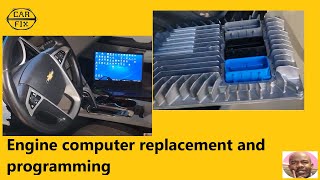


Used OEM Parts in Stock


New Aftermarket Parts Available


The information in this article is provided for general reference and educational purposes only. Vehicle specifications, procedures, and part compatibility can vary by production date, trim level, and region. Always consult your vehicle's factory service manual and verify part numbers before purchasing or performing repairs. Safety-critical components such as airbags, seat belts, and braking systems should be installed by a qualified professional.
- Chevrolet EQUINOX:
- 🎬 Helpful Videos
- 🛍️ Shop This Part
- What's Unique About the 2007-2014 Chevrolet EQUINOX
- Diagnostic Flowchart
- Symptoms You May Notice
- Most Likely Causes
- Rare But Worth Checking
- Diagnosis Steps
- Parts You'll Likely Need
- Related Codes That Often Appear With This One
- Technical Service Bulletins (TSBs) & Recalls
- Platform-Specific Known Issues
- Mechanic-Grade Diagnostic Values
- Hidden / Shadow Codes Worth Checking
- Scan Tool Commands That Help
- Wiring & Ground Locations
- OEM Part Supersession History
- Model Year Variations Within This Range
- 🎟️ Get 5% Off