

P0606 on 2011-2015 Chevrolet Caprice: ECM Processor Fault Causes and Fixes
P0606 on a 2011-2015 Chevrolet Caprice indicates a critical internal processor fault in the Engine Control Module (ECM). Before replacing the expensive ECM, thoroughly inspect the battery, ground connections, and wiring harness for issues, as electrical problems can mimic this code. Also, rule out faults in the camshaft position sensor circuit. ECM replacement requires professional programming and may be covered under the federal emissions warranty.
- P0606 is a critical code indicating an internal failure of the Engine Control Module's processor.
- Do not drive the vehicle. There is a high risk of the engine stalling at any time.
- Before replacing the ECM, you must rule out simpler causes: a weak battery, faulty alternator, and loose or corroded ground wires.
- ECM replacement is not a DIY job. The new module must be professionally programmed to your car's VIN.
- Expect the total repair cost at a shop to be between $500 and $1000, including parts, labor, and programming.
What's Unique About the 2011-2015 Chevrolet CAPRICE
The 2011-2015 Chevrolet Caprice, based on the Australian Holden Commodore, uses a sophisticated electrical architecture. As a Police Patrol Vehicle (PPV), these cars often have a high electrical load from upfitter equipment and long idle times, which can put additional stress on the charging system and ECM. For this platform, GM issued TSB #05-06-04-060A which groups P0606 with other internal control module codes (P0601, P0602, etc.), noting they can be set across multiple modules. This suggests that diagnosis should include checking for network-wide electrical issues, not just focusing on the ECM in isolation. The code indicates a serious processor performance issue, and while ECM failure is a strong possibility, external factors like voltage stability are critical first checks on these vehicles.
Diagnostic Flowchart
Tap your situation to follow the diagnostic path that matches what you're seeing on this vehicle.
Symptoms You May Notice
- Check Engine Light is on
- Vehicle will not start or has a crank-no-start condition
- Engine stalling unexpectedly, sometimes when coming to a stop
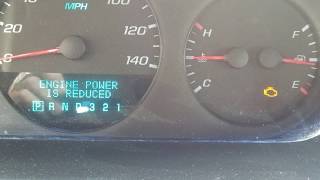
- "Reduced Engine Power" message displayed
- "Service Stabilitrak" or "Traction Control Fault" message displayed
- Erratic or harsh automatic transmission shifting
- Multiple other warning lights (ABS, Traction Control) may illuminate simultaneously
- Noticeable drop in fuel economy
- Engine cooling fans running constantly when the ignition is on
- Replacing fuel system or ignition components. The symptoms of P0606 (stalling, no-start) can resemble fuel or spark issues, but mechanics may mistakenly replace these parts when the root cause is the ECM itself or its electrical supply.
- Replacing the ECM without first thoroughly testing the battery, alternator, and all major power/ground connections.
- Replacing the ECM without investigating a potential camshaft position sensor circuit fault, as noted in GM TSB #17-NA-132.
Most Likely Causes
- Internal ECM Failure 🔴 High Probability The P0606 code is specifically designed to report an internal, non-recoverable processor fault. After all external factors are eliminated, the module itself is the confirmed point of failure.
How to confirm: This is confirmed by exclusion. After verifying all power, ground, and network connections are perfect and the battery/charging system is healthy, the ECM is condemned. A professional scan tool may show the ECM is unresponsive or fails internal self-tests.
Typical fix: Replace the Engine Control Module (ECM) and have it professionally programmed to the vehicle's VIN.
Est. part cost: $288-$600 - Weak Battery or Charging System Malfunction 🟡 Medium Probability Modern control modules are highly sensitive to voltage. Low voltage during startup or voltage spikes from a faulty alternator can corrupt the ECM's self-test process, falsely triggering a P0606 code.
How to confirm: Test the battery with a digital multimeter and a load tester. It should show ~12.6V engine-off and 13.7-14.7V engine-on. Most auto parts stores can perform a free load test.
Typical fix: Replace the battery if it fails a load test. Replace the alternator if it is under or over-charging.
Est. part cost: $150-$400 - Poor Power or Ground Connections 🟡 Medium Probability Corroded or loose battery terminals, chassis grounds, or engine block grounds can create intermittent power interruptions to the ECM, causing it to fail its internal self-check. This is a very common cause across GM platforms.
How to confirm: Visually inspect and physically check the battery terminals, the main negative-to-chassis ground strap, and the engine-to-chassis ground straps. 🎬 See how to properly fix ground connections on your car. Perform a voltage drop test on the ground circuits to identify high resistance.
Typical fix: Clean all corrosion from terminals and ground points with a wire brush and ensure all connections are tight. Replace any frayed or corroded ground straps.
Est. part cost: $10-$50
Rare But Worth Checking
- Aftermarket Programming/Tuning: If an aftermarket performance tune has been loaded onto the ECM, a corrupted file or improper flash can cause internal logic conflicts, leading to a P0606 code. This is particularly true on Gen4 GM V8s if the wrong Operating System (OS) is flashed without using dealer-level tools, as it can create a mismatch in the integrated throttle control logic. Attempting to flash the ECM back to its stock GM calibration can sometimes resolve the issue.
- Wiring Harness Damage: Though less common, damage to the wiring harness leading to the ECM from chafing, melting, or rodents can cause short circuits that may mimic an internal module failure. A user on an EFILive forum found that pins not fully seated in the ECM connector on a brand new harness caused intermittent open circuits, which could trigger a processor fault. A user on newcaprice.com reported finding shorted wires at the crank position sensor plug, which can trigger similar symptoms.
- Faulty Camshaft Position Sensor Circuit: While not for this exact model, GM TSB #17-NA-132 for other trucks warns that an open in the camshaft position sensor circuit can cause a P0606 to set during cranking *instead* of the correct cam sensor code. This can lead to a costly misdiagnosis of a bad ECM when the real issue is a wiring or sensor fault. This should be investigated before condemning the ECM.
Diagnosis Steps
- Check for and document any other DTCs stored in any of the vehicle's modules. Codes like P2610 or U-codes are significant.
- Perform a complete visual inspection of the battery, battery cables, and all major chassis and engine ground connections. Clean and tighten as necessary.
- Test the battery's state of charge and health using a multimeter and load tester. Voltage should be approximately 12.6V with the engine off and 13.7-14.7V while running.
- Test the alternator output to ensure it is within the correct voltage range and free of excessive AC ripple.
- Inspect the ECM connectors for any signs of corrosion, moisture intrusion, or bent/damaged pins. Wiggle the connectors with the engine running to see if the fault can be induced.
- Following the logic of TSB #17-NA-132, inspect the wiring and test the circuit for the camshaft position sensor before condemning the ECM.
- If an aftermarket tune is present, attempt to flash the ECM back to the stock GM software to see if the code disappears.
- If all external electrical inputs (power, ground) and related sensor circuits are verified to be good and the code persists, the fault is internal to the ECM.
- Confirm with a professional-grade scan tool that can attempt to communicate with the ECM. Failure to communicate or a persistent P0606 code after clearing points to ECM failure.
Parts You'll Likely Need
- Engine Control Module (ECM)
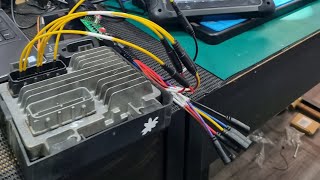
(OEM #12633238)— This is the most common fix for a P0606 code once external electrical issues have been ruled out. The code directly indicates a processor fault within this module.
Trusted brands: ACDelco (GM Genuine)
OEM price range: $400-$600
Aftermarket price range: $250-$450
Related Codes That Often Appear With This One
- P0601 — This code for 'Internal Control Module Memory Check Sum Error' is another internal ECM fault. TSB #05-06-04-060A groups it with P0606, indicating a related internal failure.
- U-codes (e.g., U0100) — U-codes indicate a loss of communication with a specific module. If the ECM is failing internally, it may stop communicating on the CAN bus network, triggering communication codes in other modules.
- P2610 — This code for 'ECM/PCM Internal Engine Off Timer Performance' is often seen with P0606 on Caprice PPV forums. It points to an issue with the ECM's ability to monitor the engine state after shutdown, further suggesting an internal ECM problem.
Technical Service Bulletins (TSBs) & Recalls
- 05-06-04-060A: This informational bulletin from GM notes that P0606 can be set along with a group of other internal control module fault codes (P0601, P0602, P0603, P0604, P062F, P06F3, P1621) and can be shared across multiple modules. It instructs technicians to follow standard diagnostic procedures which typically lead to module replacement if no external cause is found.
- 17-NA-132: While written for 2017+ GM trucks, this TSB contains highly relevant diagnostic logic. It warns that an open in the camshaft position sensor circuit can cause a P0606 to set during cranking *instead* of the
Platform-Specific Known Issues
- Real-World ECM Replacement on a 2012 Caprice PPV: A user on the 'newcaprice.com' forum reported getting codes P0606 and P2610 along with 'Reduced Power' and 'Traction Control Fault' messages on their 2012 6.0L PPV. After an initial repair to a shorted wire at the crank position sensor did not fix the issue, the ultimate solution was to replace the ECM. The owner sourced a used ECM from a 2013 model and had a specialized shop in Nashville program the new module to the car's VIN and keys, which successfully resolved all symptoms.
Mechanic-Grade Diagnostic Values
- Battery Voltage (Engine Off) — expected: ~12.6 Volts. Failure: Voltage significantly below 12.4V indicates a discharged or failing battery.
- Charging System Voltage (Engine Running) — expected: 13.7 - 14.7 Volts. Failure: Voltage below 13.5V or above 14.8V indicates a faulty alternator or voltage regulator, which can cause voltage spikes or drops that trigger P0606.
- Voltage Drop Test (Ground Circuit) — expected: < 0.5 Volts. Failure: A reading higher than 0.5 volts indicates high resistance in the ground circuit, which can starve the ECM of a stable ground and cause internal faults.
Scan Tool Commands That Help
- GM Techline Connect (SPS2): Replace and Program ECU — This function is required when installing a new or used ECM. It allows the technician to overwrite the VIN in a used module and program the vehicle's specific calibrations and security information into the replacement ECM.
- GM Techline Connect (SPS2): Override and Reprogram — When using a salvaged (used) ECM, the scan tool will detect a VIN mismatch. The 'Override' function must be used to force the tool to program the vehicle's correct VIN into the replacement module.
Wiring & Ground Locations
- ECM Location — Right front of the engine compartment.. This is the physical location of the module itself. All power, ground, and sensor wiring terminates here. Physical inspection for connector damage, corrosion, or water intrusion is a key step.
- G101 — At the front of the engine, lower block.. This is a primary ground point for the Engine Control Module (ECM) and Transmission Control Module (TCM). A poor connection here can directly cause power supply issues to the ECM, triggering a P0606.
- G110 — Right side of the engine block.. Another critical engine block ground point referenced in the wiring diagrams for the 6.0L engine. It must be clean and tight for proper ECM operation.
- G201 — Right end of the dash, behind the kick panel.. This is an interior ground point for several modules that communicate with the ECM via the data bus, including the Body Control Module (BCM). A fault here can cause communication errors that may be related to a P0606.
- ECM Connector X1 — The larger of the two main connectors on the E38 ECM.. This connector contains critical power and ground pins. For example, Pin 20 is Battery Positive Voltage, and Pin 19 is Ignition 1 Voltage. Testing for stable voltage at these pins is essential.
Real Owner Repair Stories
- EFILive Forum user '5557nut' (2010 Camaro SS with 6.2L LS3 (E38 ECM), similar architecture to Caprice.) — Multiple codes including P0204 (Injector Circuit) and P0358 (Ignition Coil Circuit), lean AFR on one bank.
❌ Tried (didn't work) Replaced ignition coil, Checked continuity on wiring from component to ECM (without disconnecting ECM connector), Replaced multiple sensors (MAP, cam, crank), Swapped injectors
✅ What actually fixed it The root cause was found to be pins that were not fully seated in the ECM connector of a brand new aftermarket wiring harness. Specifically, the pins for the injector and coil control circuits were barely making contact, causing intermittent open circuits. Physically inspecting the connector and seating the pins correctly resolved all issues.
OEM Part Supersession History
12633238→N/A, still current service number— This is the widely used service ECM for a range of GM V8 vehicles from this era.
Heads up: This ECM (GM E38) fits a wide range of vehicles including Cadillac Escalade, Chevy Silverado, and Yukon from roughly 2010-2014. While physically identical, it MUST be programmed with the specific vehicle's VIN and software calibration to function.
Model Year Variations Within This Range
- 2011-2013 vs 2014-2017: A major platform change occurred for the 2014 model year. The interior, dashboard, and electrical architecture were significantly updated. The 2014+ models use electric power steering instead of hydraulic. Due to these changes, modules like the ECM, BCM, and wiring harnesses are generally not interchangeable between the 2011-2013 and 2014-2017 generations, even if the engine is the same.
- 2012-2017: A 3.6L V6 (LFX) engine option was introduced in 2012. While the P0606 diagnosis remains similar (check powers/grounds first), the specific ECM and some wiring locations will differ from the 6.0L V8 models.
Helpful Videos


Used OEM Parts in Stock


New Aftermarket Parts Available

The information in this article is provided for general reference and educational purposes only. Vehicle specifications, procedures, and part compatibility can vary by production date, trim level, and region. Always consult your vehicle's factory service manual and verify part numbers before purchasing or performing repairs. Safety-critical components such as airbags, seat belts, and braking systems should be installed by a qualified professional.
- Chevrolet CAPRICE:
- 🎬 Helpful Videos
- 🛍️ Shop This Part
- What's Unique About the 2011-2015 Chevrolet CAPRICE
- Diagnostic Flowchart
- Symptoms You May Notice
- Most Likely Causes
- Rare But Worth Checking
- Diagnosis Steps
- Parts You'll Likely Need
- Related Codes That Often Appear With This One
- Technical Service Bulletins (TSBs) & Recalls
- Platform-Specific Known Issues
- Mechanic-Grade Diagnostic Values
- Scan Tool Commands That Help
- Wiring & Ground Locations
- Real Owner Repair Stories
- OEM Part Supersession History
- Model Year Variations Within This Range
- 🎟️ Get 5% Off