

P0606 on 2010-2015 Cadillac SRX: PCM Processor Fault Causes and Fixes
P0606 indicates a critical failure in the main engine computer (PCM). While this often means the PCM needs replacement, a very common cause on GM vehicles is a poor ground connection or low battery voltage. Always check all power and ground wires, especially the main engine-to-chassis strap, before replacing the expensive PCM, which requires professional programming.
- P0606 is a critical code indicating an internal PCM processor fault; do not drive the vehicle as it can stall at any time.
- Before spending hundreds on a new PCM, you MUST thoroughly check, clean, and tighten the battery connections and all major engine/chassis ground straps.
- A failing battery or alternator can create unstable voltage, which can also trigger this code. Test the complete charging system with a load tester, not just a voltmeter.
- If the PCM does need to be replaced, it is not a plug-and-play part. It requires professional programming to your vehicle's VIN.
- Check for available PCM software updates with a dealer, as a reflash can sometimes resolve this code per GM service bulletins.
What's Unique About the 2010-2015 Cadillac SRX
The 2010-2015 Cadillac SRX belongs to the second generation, which is built on the GM Theta Premium platform. 🎬 Watch: Top 5 common problems with the 2nd Gen SRX This platform's electrical architecture is known for its sensitivity to voltage fluctuations. GM has issued multiple Technical Service Bulletins, including #05-06-04-060A and #24-NA-050, acknowledging that internal module faults like P0606 can be triggered by low battery voltage during cranking or jump-starts. Critically, extensive owner experiences on similar GM platforms highlight that low voltage conditions or poor ground connections are a frequent trigger for this code, often leading to a misdiagnosis of PCM failure. One owner of a 2011 SRX was able to induce stalling and a no-start condition by applying heat to the ECU, and resolve it by cooling the unit down, confirming a heat-related internal failure in their specific case.
Diagnostic Flowchart
Tap your situation to follow the diagnostic path that matches what you're seeing on this vehicle.
Symptoms You May Notice
- Check Engine Light is on
- Engine stalls, especially when stopping or at idle
- No-start or hard-starting condition, sometimes after a hot soak
- Vehicle enters 'Reduced Engine Power' mode
- Erratic automatic transmission shifting
- ABS or Traction Control lights may illuminate
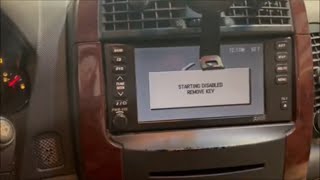
- Service Theft System light may appear randomly
- Poor fuel economy
- Replacing the PCM without first thoroughly inspecting, cleaning, and testing all battery connections and major ground straps on the engine and chassis.
- Replacing other components like the throttle body or sensors based on secondary codes that were falsely set by the faulty PCM.
Most Likely Causes
- Failed Powertrain Control Module (PCM) 🔴 High Probability Internal component failure due to age, heat cycles, or electrical stress. One 2011 SRX owner documented a repeatable failure where heating the PCM caused the vehicle to stall, pointing to an internal solder joint or component failure. This is the default diagnosis after all other possibilities are eliminated.
How to confirm: After verifying all power, ground, and software issues are resolved, if the code persists (especially if it's heat-related), the PCM is condemned. This is a process of elimination. 🎬 Watch: How to diagnose an ECM processor error code
Typical fix: Replace the PCM and have it professionally programmed to the vehicle.
Est. part cost: $400-$750 - Poor Power or Ground Connections to PCM 🟡 Medium Probability GM vehicles of this era are known for having ground points that can corrode or loosen over time. The main engine-to-chassis ground strap is a frequent culprit. These issues create unstable voltage that can confuse the PCM into reporting an internal fault.
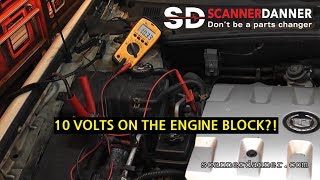
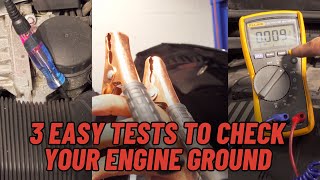
How to confirm: Perform a voltage drop test on the main power and ground cables. Visually inspect and physically check the battery terminals, engine block ground straps (like G105/G106 on the engine block), and chassis ground points for corrosion or looseness. Key grounds on the SRX platform are on the engine block, cowl, and frame rails. 🎬 See three ways to test your engine block ground
Typical fix: Clean, tighten, or replace corroded or broken ground straps and battery cable ends. Apply dielectric grease on reassembly to prevent future corrosion.
Est. part cost: $10-$50 - PCM Software Corruption ⚪ Low Probability Software glitches can occur from voltage spikes (like an improper jump-start) or from a failed previous programming attempt. GM has released TSBs like 20-NA-156 for other models, which explicitly state a software anomaly can cause P0606 and the fix is to reprogram the ECM, not replace it.
How to confirm: Check with a GM dealer or a shop with a Tech 2 or J2534 pass-thru tool to see if a software update (reflash) is available for the PCM via the Service Programming System (SPS).
Typical fix: Reprogram the PCM with the latest factory software. This requires maintaining stable battery voltage during the procedure.
Est. part cost: $0 (if under warranty) - $150
Rare But Worth Checking
- Failing Alternator: An alternator producing excessive AC ripple or unstable DC voltage (over 14.5V or under 13.5V while running) can cause electrical noise that the PCM may interpret as an internal fault. This should be checked before replacing the PCM.
- Damaged Wiring Harness: Physical damage to the wiring harness leading to the PCM can cause shorts or open circuits on the power or ground lines, triggering the P0606 code.
- Dirty or Failing Throttle Body: While less common for P0606 specifically, a severely carboned-up throttle body can cause stalling and erratic idle on the SRX. In some cases, related throttle position sensor codes (like P2135) can accompany or be confused with PCM faults. Cleaning the throttle body is a simple diagnostic step.
Diagnosis Steps
- Verify the battery is fully charged (12.6V+ engine off) and the charging system is working correctly (13.5V-14.5V engine running). Perform a load test on the battery, as a simple voltage check is not sufficient.
- Inspect the battery terminals for corrosion and ensure they are tight.
- Locate and thoroughly inspect the main engine-to-chassis ground straps. On the SRX, key grounds include G101, G105, and G106 on or near the engine block. Remove them, clean the contact points to bare metal, and securely reattach.
- Perform a voltage drop test on the PCM's main power and ground circuits. A drop of more than 0.2V on the ground side or 0.3V on the power side indicates excessive resistance that must be corrected.
- Check all fuses related to the ECM/PCM.
- Inspect the PCM connectors for any signs of corrosion, moisture, or bent pins.
- If available, use a scan tool (like a GM Tech 2 or GDS2) to check for any available software updates for the PCM. Consider a reflash if an update is available or as a diagnostic step, as recommended by GM TSBs for similar issues.
- If all power, ground, and software checks are good and the code returns, especially when the engine bay is hot, the PCM is highly likely to be the faulty component.
- Replace the PCM and have it programmed by a dealer or qualified independent shop with the correct tools.
Parts You'll Likely Need
- Powertrain Control Module (PCM)
(OEM #12633238, 12651993 (Verify by VIN))— This is the most common definitive fix for a P0606 code after all external factors like power and grounds have been ruled out.
Trusted brands: ACDelco (Genuine GM)
OEM price range: $500-$750
Aftermarket price range: $400-$600 - Engine Ground Strap — A corroded or broken ground strap is a frequent cause of voltage issues that can trigger a false P0606 code.
Trusted brands: ACDelco, Dorman
OEM price range: $20-$40
Aftermarket price range: $10-$25
Technical Service Bulletins (TSBs) & Recalls
- 05-06-04-060A: This informational bulletin from GM notifies technicians about a group of internal control module fault codes (including P0606) and that they can be shared across multiple modules.
- 24-NA-050: While for newer models, this TSB from March 2024 reinforces the principle that low battery state of charge or voltage fluctuations during jump-starting can cause the EBCM to set a P0606. It advises testing the battery and clearing the code before replacing any modules.
- 20-NA-156: For other GM vehicles, this TSB from July 2020 explicitly states that DTC P0606 can be caused by a software anomaly and instructs technicians to reprogram the ECM as the fix, NOT to replace it.
Platform-Specific Known Issues
- Heat-Soak PCM Failure: A documented case on a 2011 SRX showed that the P0606 code, along with stalling and no-start symptoms, would only appear after the engine was hot. The owner could replicate the failure by using a heat gun on the PCM and fix it temporarily by letting the PCM cool down. This points to an internal component or solder joint failure sensitive to thermal expansion.
Mechanic-Grade Diagnostic Values
- PCM Power & Ground Circuit Voltage Drop — expected: Less than 0.3V on power circuits, less than 0.2V on ground circuits.. Failure: A reading higher than the expected value indicates excessive resistance in the wiring or connections, which can cause the PCM to malfunction and set a P0606.
- Battery State of Charge (Engine Off) — expected: 12.4V to 12.6V.. Failure: A reading below 12.4V indicates a discharged or failing battery that cannot provide stable voltage to the modules.
- Charging System Voltage (Engine Running) — expected: 13.5V to 14.5V.. Failure: Voltage that is too high, too low, or unstable can indicate a faulty alternator, which can create electrical noise and trigger a false P0606.
Hidden / Shadow Codes Worth Checking
- P0606 with Symptom Byte 5A: The symptom byte '5A' provides additional detail, specifically pointing to an 'Internal Control Module Processor Performance' failure. This confirms the fault is internal to the module's processor, as opposed to a memory or other type of error. (see via A GM dealer-level scan tool like a Tech 2 or GDS2 is required to view symptom bytes associated with a DTC.)
Scan Tool Commands That Help
- GM GDS2 / Tech 2 with SPS: Replace and Program ECU — This function is mandatory when installing a new or remanufactured PCM. It uses the GM Service Programming System (SPS) to write the vehicle's VIN, immobilizer (theft-deterrent) data, and correct software calibrations to the new module, allowing it to communicate with the rest of the vehicle.
Wiring & Ground Locations
- G101 / G106 — G101 is on the lower front of the engine block, while G106 is on the front center of the frame cross rail, under the crank pulley. They are often jumpered together.. These are the primary grounds for the Engine Control Module (ECM). Corrosion or looseness at these points can cause unstable voltage to the ECM, a primary cause of a false P0606 code.
- G105 — Located on the left front of the engine compartment, often behind the cooling fan relays.. While not the primary ECM ground, it grounds several engine bay components. A poor connection here can introduce electrical noise into the system, potentially affecting module stability.
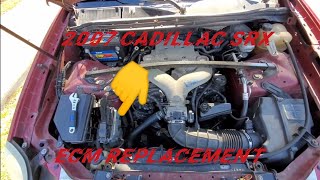
- ECM Location (3.0L & 3.6L) — Mounted on the side of the engine block. On the 3.6L LFX, it is on the right (passenger) side.. Knowing the physical location is essential for performing voltage drop tests directly at the module's connectors and for inspecting the harness for damage.
Real Owner Repair Stories
- Reddit user, r/MechanicAdvice (2012 Subaru (similar platform behavior)) — P0606 code appeared after the battery died and the car needed a jump start.
❌ Tried (didn't work) Clearing the code initially, but it would return.
✅ What actually fixed it Replacing the old, weak battery with a new, correctly rated one. The P0606 code did not return after the battery replacement, confirming the issue was caused by unstable voltage during cranking and not a failed ECU.
When the Usual Fixes Don't Work
- While P0606 often points to a terminal PCM failure, there are numerous documented cases across GM platforms where the code was triggered solely by a weak or dying battery. The PCM's self-diagnostic is highly sensitive to voltage drops during engine cranking. A battery that can no longer supply sufficient cold cranking amps can cause the PCM voltage to dip momentarily, triggering a false P0606. For this reason, a comprehensive battery and charging system test should always be the first step before condemning a multi-hundred dollar control module.
OEM Part Supersession History
12633238 (and others for 3.0L)→12651993 (and others for 3.6L)— Major engine change for the 2012 model year.
Heads up: The ECM for the 2010-2011 3.0L V6 (LF1) is an ACDelco E78. The ECM for the 2012-2015 3.6L V6 (LFX) is an ACDelco E39A. These two hardware families are not interchangeable. Attempting to program an E78 for a 3.6L vehicle (or vice-versa) will fail. Always confirm the correct part number by VIN.
Model Year Variations Within This Range
- 2010-2011: These models primarily used the 3.0L V6 (LF1) engine, which is controlled by an ACDelco E78 ECM. Diagnostic and replacement procedures are specific to this hardware.
- 2012-2015: These models switched to the 3.6L V6 (LFX) engine as standard. This engine is controlled by an ACDelco E39A ECM, which has a different internal architecture and programming requirements than the earlier E78.
Helpful Videos
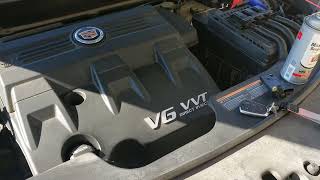

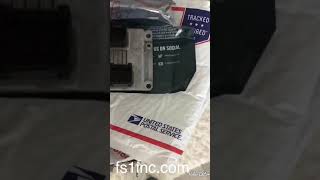
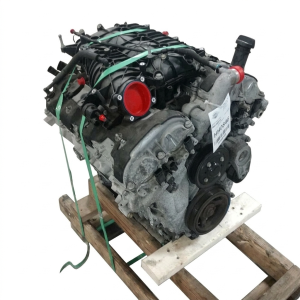
We Have This Part in Stock



The information in this article is provided for general reference and educational purposes only. Vehicle specifications, procedures, and part compatibility can vary by production date, trim level, and region. Always consult your vehicle's factory service manual and verify part numbers before purchasing or performing repairs. Safety-critical components such as airbags, seat belts, and braking systems should be installed by a qualified professional.
- Cadillac SRX:
- 🎬 Helpful Videos
- 🛍️ Shop This Part
- What's Unique About the 2010-2015 Cadillac SRX
- Diagnostic Flowchart
- Symptoms You May Notice
- Most Likely Causes
- Rare But Worth Checking
- Diagnosis Steps
- Parts You'll Likely Need
- Technical Service Bulletins (TSBs) & Recalls
- Platform-Specific Known Issues
- Mechanic-Grade Diagnostic Values
- Hidden / Shadow Codes Worth Checking
- Scan Tool Commands That Help
- Wiring & Ground Locations
- Real Owner Repair Stories
- When the Usual Fixes Don't Work
- OEM Part Supersession History
- Model Year Variations Within This Range
- 🎟️ Get 5% Off