

P0606 on 2007-2014 Cadillac Escalade: ECM Processor Fault Causes and Fixes
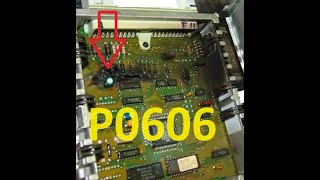
The P0606 code on a 2007-2014 Cadillac Escalade indicates a critical internal processor fault in the Engine Control Module (ECM). This is a serious issue that often requires replacing the ECM. Before condemning the expensive module, thoroughly inspect all battery, ground, and charging system connections, as voltage instability is a common trigger. A full replacement and programming can cost between $600 and $2,000.
- P0606 is a critical fault indicating the Engine Control Module (ECM) has an internal processor error.
- Do not drive the vehicle, as it can stall or lose throttle control at any time.
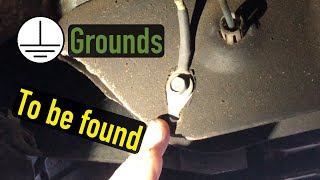
- Before condemning the ECM, thoroughly check and clean the battery connections, charging system, and all major ground straps, especially those on the frame under the driver's door.
- If the ECM must be replaced, it is not a DIY job for most, as the new module requires professional programming to the vehicle's VIN.
- This issue is common across the entire GMT900 family, including the Chevy Tahoe/Silverado and GMC Yukon/Sierra.
What's Unique About the 2007-2014 Cadillac ESCALADE
For the GMT900 platform, which includes the 2007-2014 Escalade, Chevrolet Tahoe, and GMC Yukon, the P0606 code is a known, though not frequent, failure mode pointing directly to the ECM (often an ACDelco E38 model). General Motors issued a Technical Service Bulletin (TSB #05-06-04-060A) that includes P0606, acknowledging that various control modules can set internal performance codes. [⭐] Forum discussions confirm that owners of these sister vehicles experience identical symptoms and fixes, frequently tracing the issue back to poor ground connections before suspecting the ECM itself.
Diagnostic Flowchart
Tap your situation to follow the diagnostic path that matches what you're seeing on this vehicle.
Symptoms You May Notice
- Check Engine Light is on
- ABS light may also be illuminated
- Engine may crank but not start
- Sudden engine stalling or rough idling
- Vehicle enters "Reduced Engine Power" mode, sometimes with complete loss of throttle response
- Erratic automatic transmission shifting or stuttering
- Noticeable decrease in fuel economy
- Strange electrical issues, like radio or dash lights acting erratically
- Replacing sensors (e.g., throttle body, MAF sensor) when the ECM is the actual cause of the fault.
- Unnecessarily replacing the ECM when the actual problem is a chafed wiring harness, a bad ground connection, or a faulty alternator.
Most Likely Causes
- Failed Engine Control Module (ECM) 🔴 High Probability The ECM is the most common point of failure when a P0606 code is present and all external factors are ruled out. This is the default diagnosis if power, grounds, and wiring are perfect. 🎬 Watch: A professional guide to diagnosing ECM processor errors.
How to confirm: After verifying all power, ground, and sensor circuits are functioning correctly, the diagnosis points to an internal, irreparable ECM fault. Sometimes a burnt smell near the ECM is noticeable.
Typical fix: Replace the Engine Control Module and have it programmed by a dealer or qualified shop.
Est. part cost: $400-$1200 - Poor Power or Ground Connections to the ECM 🟡 Medium Probability Corrosion or loose connections at the battery, main engine ground, or the ECM connector itself can cause unstable voltage, leading the module to report an internal fault. Owners on forums frequently solve electrical gremlins by cleaning grounds.
How to confirm: Inspect and clean all battery terminals and main ground straps. On GMT900s, pay special attention to the two grounds on the frame under the driver's side door. Use a multimeter to verify stable voltage (12.6V with engine off, 13.5-14.5V running) at the ECM connector. Check for corrosion hidden inside the wire sheathing.
Typical fix: Disassemble, clean, and tighten corroded or loose ground straps and power connections. Use dielectric grease upon reassembly to prevent future corrosion.
Est. part cost: $10-$50 - Faulty Charging System (Alternator) ⚪ Low Probability An alternator producing voltage spikes or insufficient voltage can damage or confuse the sensitive electronics in the ECM, triggering a P0606 code.
How to confirm: With the engine running, test the voltage at the battery terminals. A reading outside the typical 13.5-14.5 volt range indicates a charging system problem.
Typical fix: Replace the faulty alternator.
Est. part cost: $250-$500
Rare But Worth Checking
- Shorted 5V Reference Circuit: A short-to-ground in a sensor or wiring on the 5-volt reference circuit can pull down the voltage for multiple sensors, sometimes causing the ECM to set a P0606 code along with other sensor codes. A diagnostic case on a 2007 Escalade showed a chafed wire shorting this circuit was the root cause.
- Software Corruption or Aftermarket Tuning: In some instances, the code can be triggered by a software glitch. Checking if a manufacturer software update (reflash) is available is a valid diagnostic step. Additionally, owners have reported triggering P0606 after engine modifications (like a DOD delete) and subsequent aftermarket tuning, suggesting a conflict in the ECM's programming.
- Loose or Damaged ECM Connector Pins: Even if the wiring harness is intact, the pins within the large connectors that plug into the ECM can become loose, bent, or corroded over time. This creates a poor connection that can mimic an internal ECM fault. A forum moderator suggested pulling the connectors to check for cleanliness and pin fitment as a key diagnostic step.
Diagnosis Steps
- Scan for all stored Diagnostic Trouble Codes (DTCs). Note any other codes that may point to a specific circuit.
- Check the battery and charging system. Ensure battery voltage is above 12.4V with the engine off and between 13.5-14.5V when running. A weak battery can cause voltage to drop too low during cranking, triggering the code.
- Thoroughly inspect all power and ground connections for the ECM. On GMT900 trucks, specifically locate and clean the grounds on the frame rail under the driver's side door. Clean any corrosion and ensure all connections are tight.
- Inspect the engine wiring harness for any signs of physical damage, chafing, or corrosion, paying close attention to where it runs near hot or moving parts.
- Disconnect the ECM connectors (with the battery disconnected) and inspect for bent, corroded, or loose pins. Ensure they have good 'pin fitment' and are clean.
- Check for any available Technical Service Bulletins (TSBs) or software updates for the ECM. A reflash may solve the issue.
- If all external wiring, power, and grounds are confirmed to be good and no software update is available, the ECM is highly likely to be faulty and must be replaced.
Parts You'll Likely Need
- Engine Control Module (ECM)
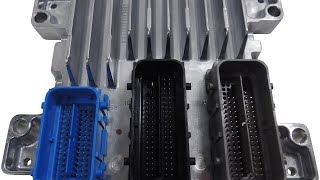
(OEM #12639269, 12633238 (for 2011 6.2L, always verify with VIN))— This is the most common cause of a P0606 code after all external electrical issues have been ruled out. The specific part number is critical and must be matched to the vehicle's VIN.
Trusted brands: ACDelco (OEM), Cardone (Remanufactured), Flagship One (Programmed)
OEM price range: $800-$1200
Aftermarket price range: $400-$900
Related Codes That Often Appear With This One
- P0601 — This code indicates an 'Internal Control Module Memory Check Sum Error,' another type of internal ECM failure often seen with P0606.
- P0641 — This code for '5V Reference 1 Circuit' can appear with P0606 if a shorted sensor or wire is causing voltage issues that the ECM interprets as an internal fault.
Technical Service Bulletins (TSBs) & Recalls
- 05-06-04-060A: This informational bulletin communicates Information to technicians on control module Diagnostic Trouble Code(s) (DTC)(s) P0601, P0602, P0603, P0604, P0606, P062F, P06F3, P1621 which can be shared in multiple modules. [⭐]
- Principle from TSB 24-NA-030: While for a newer model, this TSB shows that GM recognizes that low battery voltage or voltage spikes during charging/jump-starting can cause control modules to erroneously set a P0606. The fix is to address the battery/charging issue, not replace the module, reinforcing the 'check basics first' diagnostic principle.
Platform-Specific Known Issues
- GM has issued TSB #05-06-04-060A, which applies to the 2007 Escalade, noting that P0606 is one of several codes that can indicate an internal control module fault. [⭐]
- A common real-world failure pattern on the GMT900 platform involves intermittent 'Reduced Engine Power' and stalling that is temporarily resolved by clearing the P0606 code. This often points to a borderline issue with grounds or the charging system before a hard ECM failure.
Mechanic-Grade Diagnostic Values
- Battery Voltage (Key Off, Engine Off) — expected: ~12.6 Volts. Failure: A reading below 12.4V suggests a weak battery that can cause issues during cranking. A reading below 12.0V, especially if it's a multiple of 2.1V less than 12.6V (e.g., 10.5V), indicates a dead cell.
- Charging System Voltage (Engine Running) — expected: 13.5 - 14.5 Volts. Failure: Voltage below 13.5V or above 14.5V, or fluctuating erratically, points to a faulty alternator or voltage regulator which can trigger a P0606.
- ECM Power Supply at Connector Pins — expected: 12V+ Key On, Engine Off. Failure: Lack of stable battery voltage at the ECM's main power and ignition pins indicates a wiring or fuse block issue, not a faulty ECM.
- Sensor 5V Reference Voltage (at any sensor) — expected: Stable 5.0 Volts. Failure: If P0606 is present with other sensor codes, a shorted sensor can pull the 5V reference circuit down for all sensors, tricking the ECM into reporting an internal fault.
Hidden / Shadow Codes Worth Checking
- Mode $06 Data: While not a specific shadow code, advanced scan tools can access Mode $06 data, which contains results from the ECM's non-continuous self-tests. Reviewing this data may show specific processor or memory self-test failures that led to the P0606 being set. (see via Professional-grade scan tool with Mode $06 capability.)
Scan Tool Commands That Help
- GDS2 / Tech2: Service Programming System (SPS) — This is the GM dealer-level function required to flash a new or used replacement ECM with the correct VIN, software, and security calibration. It is essential for marrying the module to the vehicle.
- GDS2 / Tech2: Idle Relearn Procedure — After replacing or reprogramming the ECM, or if the throttle body was disconnected, an idle relearn should be performed to ensure stable idle speed.
- HP Tuners / EFILive: Write Entire — Used by professional tuners to overwrite the entire calibration on an ECM. This is a high-risk procedure that can 'brick' the ECM if the hardware service number and underlying 'slave OS' are not compatible with the new file being written.
Wiring & Ground Locations
- G103 — On the front of the right (passenger side) cylinder head.. This is a primary ground point for the Engine Control Module (ECM). A loose or corroded connection here can cause unstable voltage and trigger a P0606 fault.
- G104 — On the rear of the left (driver side) cylinder head.. This is another major engine and control module ground point. It is often a braided strap from the firewall to the cylinder head. Poor contact here can cause a wide range of electrical faults, including P0606.
- ECM Connector X1 (or J1) — The large 73-pin connector (often black) on the E38 ECM located in the engine bay.. This is the main data and power interface for the ECM. Key pins to test for stable voltage are Pin 19 (Ignition 1 Voltage) and Pin 20 (Battery Positive Voltage). A poor connection or corrosion on any of these pins can cause the P0606 code.
OEM Part Supersession History
Varies by year (e.g., 12612384 for 2008)→Varies by year (e.g., 12633238 for 2010-2012)— Hardware and internal software updates to accommodate changes in vehicle components, like different throttle bodies.
Heads up: E38 ECMs are model-year specific. A 2009 ECM has different internal calibrations than a 2008 model due to changes like a new throttle body design. Attempting to flash a tune from a different model year using aftermarket tools can permanently damage ('brick') the ECM. The service number on the case must be correct for the vehicle year and application.
Model Year Variations Within This Range
- 2009 vs. pre-2009: For the 2009 model year, many GM trucks and SUVs received a new electronic throttle body. This change required a different internal calibration in the E38 ECM. As a result, a 2008 and 2009 ECM are not directly interchangeable without dealer-level programming (SPS) to load the correct base calibration.
- 2007-2014: The Escalade features a more complex Vehicle Anti-Theft System (VATS) than its Chevrolet Tahoe/GMC Yukon counterparts. Replacing the ECM in an Escalade almost always requires programming with GM's Service Programming System (SPS) to sync with the anti-theft module, whereas the trucks can sometimes be reset with a simpler 30-minute key relearn procedure.
Helpful Videos

Used OEM Parts in Stock


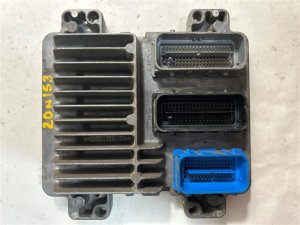

New Aftermarket Parts Available



The information in this article is provided for general reference and educational purposes only. Vehicle specifications, procedures, and part compatibility can vary by production date, trim level, and region. Always consult your vehicle's factory service manual and verify part numbers before purchasing or performing repairs. Safety-critical components such as airbags, seat belts, and braking systems should be installed by a qualified professional.
- Cadillac ESCALADE:
- 🎬 Helpful Videos
- 🛍️ Shop This Part
- What's Unique About the 2007-2014 Cadillac ESCALADE
- Diagnostic Flowchart
- Symptoms You May Notice
- Most Likely Causes
- Rare But Worth Checking
- Diagnosis Steps
- Parts You'll Likely Need
- Related Codes That Often Appear With This One
- Technical Service Bulletins (TSBs) & Recalls
- Platform-Specific Known Issues
- Mechanic-Grade Diagnostic Values
- Hidden / Shadow Codes Worth Checking
- Scan Tool Commands That Help
- Wiring & Ground Locations
- OEM Part Supersession History
- Model Year Variations Within This Range
- 🎟️ Get 5% Off