

P0606 on 2007-2014 Cadillac CTS: ECM/PCM Processor Fault Causes and Fixes
P0606 on a 2007-2014 Cadillac CTS indicates a critical internal failure of the Engine Control Module (ECM/PCM). The most common fix is replacing the ECM, which requires professional programming. Before replacement, thoroughly inspect the battery, charging system, and all ECM-related power and ground connections, as voltage issues can sometimes trigger this code in error. Key ground locations to check include those on the engine block and strut towers.
- P0606 is a critical code indicating the engine's main computer has an internal fault.
- Do not drive the vehicle. It can stall or lose power at any time, creating a serious safety hazard.
- Before spending money on a new ECM, you MUST verify the battery, alternator, and all power/ground connections to the ECM are clean, tight, and providing stable voltage.
- Replacing the ECM is not a DIY job for most people, as it requires expensive, specialized tools to program it to your specific vehicle.
What's Unique About the 2007-2014 Cadillac CTS
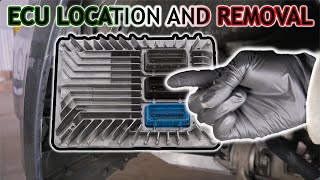
For this generation of Cadillac CTS, which uses the GM E38 or similar ECM, the P0606 code is a serious fault that often points directly to a failed module. Unlike some newer vehicles where this code can be triggered by various other modules, on the CTS from this era, it's more straightforwardly linked to the main engine computer. GM has issued a broad informational bulletin (TSB #05-06-04-060A) that includes P0606, acknowledging it as a potential control module fault code that can be shared across multiple modules, underscoring the importance of a full system diagnosis. The ECM is located behind the driver's side front wheel well liner, making it susceptible to moisture and physical damage if the liner is compromised.
Diagnostic Flowchart
Tap your situation to follow the diagnostic path that matches what you're seeing on this vehicle.
Generation note: This range covers the end of the first generation (2007) and the full second generation (2008-2014). While the code's meaning is consistent, specific ECM part numbers (e.g., ACDelco E38), locations, and wiring may differ between the two generations. Diagnostic approaches remain similar, with a strong emphasis on checking grounds and power supply before condemning the ECM.
Symptoms You May Notice
- Check Engine Light is on
- "Reduced Engine Power" message on the dash
- Vehicle may stall or die, especially when coming to a stop
- Engine won't start or has a hard time starting
- Erratic or improper automatic transmission shifting
- Engine stutters, hesitates, or misfires
- Loss of communication with the scan tool
- Fuel and temperature gauges may not work
- ABS or Traction Control lights may illuminate
- Decreased fuel economy
- Replacing fuel system or ignition system components (like spark plugs or coils) to address misfire or stalling symptoms without first addressing the P0606 code. The ECM fault is the root cause of these other symptoms.
- Immediately replacing the ECM without first thoroughly testing the battery, alternator, and all main power and ground connections. A voltage drop test on power and ground circuits is essential.
Most Likely Causes
- Failed Engine Control Module (ECM/PCM) 🔴 High Probability Internal component failure is the most common ultimate cause for a true P0606 code once external factors are eliminated. The ECM is the default diagnosis if power, grounds, and wiring are confirmed to be perfect.
How to confirm: After verifying all power, ground, and charging system inputs to the ECM are correct using a multimeter for voltage drop tests, the module itself is condemned. If a software reflash doesn't solve the issue, the hardware has failed. Sometimes a burnt smell may be noticeable near the ECM.
Typical fix: Replace the ECM and have it professionally programmed to the vehicle's VIN and security system.
Est. part cost: $400-$800 - Poor Power or Ground Connections 🟡 Medium Probability Corrosion or loose connections at the battery, main engine block, or the ECM connectors can cause unstable voltage, tricking the module into reporting an internal fault. On many GM platforms of this era, poor grounds are a very common trigger for this code. A video for a CTS with a no-start condition specifically highlights checking the two main grounds for the PCM on the side of the engine block as a crucial step. 🎬 See this walkthrough for troubleshooting intermittent no-start and ground issues.
How to confirm: Visually inspect and physically check all battery terminals, main chassis grounds (e.g., on strut towers), and engine-to-chassis ground straps. Perform a voltage drop test on the ECM's power and ground circuits to ensure it's receiving stable power under load.
Typical fix: Clean, tighten, or replace corroded battery terminals, ground straps, or ECM connector pins. This is a low-cost first step before considering ECM replacement.
Est. part cost: $10-$100 - Faulty Charging System or Weak Battery ⚪ Low Probability An alternator producing voltage spikes/dips or a weak battery providing insufficient voltage (especially during cranking) can confuse the sensitive electronics in the ECM, triggering a P0606 code.
How to confirm: Test the battery with a digital load tester, not just a voltmeter, to check its state of health and cold cranking amps capacity. With the engine running, use a multimeter to check alternator output at the battery terminals; it should be stable, typically between 13.5 and 14.5 volts.
Typical fix: Replace the battery and/or alternator.
Est. part cost: $150-$500 - ECM Software Anomaly ⚪ Low Probability GM has issued bulletins for other models and years (like TSB 20-NA-144 for 2016-2017 CTS) where a software glitch can cause a false P0606, especially related to start/stop systems. While less common than hardware failure on the 2007-2014 models, it's a possibility.
How to confirm: A dealership or qualified shop with access to GM's Techline Connect can check if a software update (reflash) is available for the ECM.
Typical fix: Reprogram the ECM with the latest software calibration. This should be attempted before hardware replacement.
Est. part cost: $100-$250 (Labor cost for programming)
Rare But Worth Checking
- Wiring Harness Damage: Physical damage to the wiring harness leading to the ECM from chafing, heat, or rodents can cause shorts or open circuits that mimic ECM failure. A visual inspection of the harness, especially where it routes near hot or moving parts, is warranted.
- Aftermarket Performance Tune: An improperly installed or poorly written aftermarket engine tune can sometimes conflict with the ECM's internal self-checks, triggering this code. Reverting to the stock tune can be a diagnostic step.
- Shorted External Component: In rare cases, a sensor or component that is shorting out can feed back improper voltage to the ECM, causing it to report an internal fault. A diagnostic approach could involve unplugging suspect components one by one to see if the P0606 code clears.
Diagnosis Steps
- Scan the vehicle for all DTCs. Note any other codes that are present alongside P0606, especially U-codes or voltage-related codes.
- Perform a thorough visual inspection of the battery, battery cables, and terminals for looseness or corrosion. Clean and tighten as necessary.
- Test the battery's state of health and cold cranking amps (CCA) with a professional load tester. A simple voltage check is insufficient.
- Start the engine (if possible) and test the alternator's output voltage. It should be stable and within the vehicle's specification (typically 13.5-14.5V).
- Inspect all major ground straps. On the CTS, pay close attention to the grounds on the engine block for the ECM and the main body grounds on the strut towers.
- Perform a voltage drop test on the ECM's main power and ground wires to ensure it's receiving stable power under load. Compare voltage at the ECM connector to battery voltage.
- If all power and ground inputs are good, check with a dealer for any available ECM software updates (reflash). This is a crucial step before replacement.
- If all external factors check out and a reflash does not solve the issue or isn't available, the ECM is faulty and requires replacement and programming.
Parts You'll Likely Need
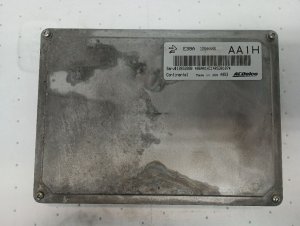
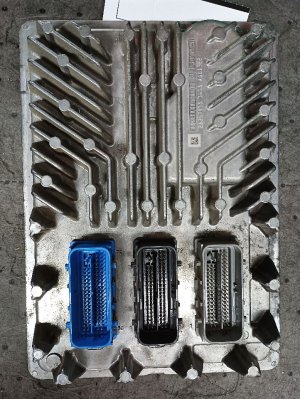
- Engine Control Module (ECM/PCM)
(OEM #Varies by year/engine (e.g., 12633238 for some 3.6L models))— This is the most common failed component when a true P0606 code is set and all external electrical issues have been ruled out.
Trusted brands: ACDelco (OEM), Cardone, FS1 (Flagship One)
OEM price range: $500-$800
Aftermarket price range: $350-$550 - Battery Ground Cable — Corrosion can hide under the insulation of ground cables, causing high resistance that leads to voltage issues and a false P0606. Replacing the main ground cables is a common preventative and diagnostic step.
Trusted brands: ACDelco, Standard Motor Products
OEM price range: $40-$80
Aftermarket price range: $20-$50
Related Codes That Often Appear With This One
- U-codes (e.g., U0100, U1000) — Communication codes often appear with P0606, indicating the ECM is not communicating properly with other modules on the vehicle's network, which can be a symptom of its internal failure.
- P0562 — This code for 'System Voltage Low' can accompany a P0606, strongly suggesting a battery or charging system problem is the root cause.
- Throttle Body Codes (e.g., P0223) — A failing ECM can cause erratic signals to components like the electronic throttle body, setting false codes for those parts. The root issue is often the ECM itself, not the component.
Technical Service Bulletins (TSBs) & Recalls
- 05-06-04-060A: An informational bulletin from GM that lists P0606 among several control module diagnostic trouble codes. It clarifies these codes indicate an internal module failure and instructs technicians to verify which module set the code before replacement.
- 20-NA-144: While for newer 2016-2017 models, this TSB shows a precedent for GM issuing software updates to fix a false P0606 code caused by a software anomaly. It advises reprogramming the ECM instead of replacing it.
Platform-Specific Known Issues
- ECM Ground Locations: A YouTube video specifically for a CTS no-start condition highlights the importance of checking the two dedicated PCM ground wires that attach to the side of the engine block. A poor connection here is a known failure point.
- ECM Location and Vulnerability: On the second-generation CTS, the ECM is located in the front driver's side wheel well, behind the fender liner. This location can make it vulnerable to water intrusion and corrosion if the liner is damaged or missing.
- Federal Emissions Warranty Coverage: The Powertrain Control Module is often covered under the Federal Emissions Warranty for 8 years or 80,000 miles. Owners of vehicles within this window should contact a GM dealer to verify coverage before paying for a replacement.
Mechanic-Grade Diagnostic Values
- Battery Voltage (Key Off, Engine Off) — expected: Approximately 12.6 Volts. Failure: A reading below 12.4V suggests a weak or discharged battery that needs load testing.
- Charging System Voltage (Engine Running) — expected: Stable reading between 13.5 and 14.5 Volts. Failure: Voltage that is too low, too high, or fluctuating indicates a faulty alternator or voltage regulator.
- ECM Power/Ground Circuit Voltage Drop — expected: Less than 0.5 Volts. Failure: A voltage drop greater than 0.5V indicates high resistance in the power or ground circuit that must be located and repaired.
- ECM Ignition 1 Voltage (at ECM connector) — expected: 12V+ with key in 'ON' position. Failure: No voltage or low voltage indicates a problem with the fuse, relay, or wiring supplying key-on power to the ECM.
Scan Tool Commands That Help
- GM Tech 2 or equivalent professional scan tool: Security Relearn (Theft Deterrent Relearn) — This procedure is mandatory after installing a replacement ECM to sync the module with the vehicle's anti-theft system. The engine will not start without it.
- GM Tech 2 or equivalent professional scan tool: CASE Relearn (Crankshaft Position System Variation Learn) — Required after ECM replacement to calibrate the new module to the specific crankshaft position sensor signal. Failure to perform this may result in a P0315 code and potential misfire detection issues.
Wiring & Ground Locations
- G103 / G104 — On the rear of the cylinder heads or top/side of the engine block. G104 is often on the left (driver's side) rear corner of the engine.. These are the primary grounds for the engine and the Engine Control Module (ECM). High resistance or a loose connection here is a top suspect for causing unstable voltage and a false P0606 code.
- G101 — Varies, but often on the engine block. A wiring document shows it grounds the ECM, TCM, and MAF sensor.. As a shared ground for multiple critical powertrain components, corrosion here can cause a cascade of communication and processor faults, including P0606.
- G108 — A ground strap running from the back of the left (driver's side) cylinder head to the firewall.. This provides a critical ground path between the engine and the vehicle's body/chassis, ensuring all modules have a common ground reference.
- Frame Ground under Driver's Door — On the frame rail, located underneath the driver's side door area.. This location is exposed to road salt and moisture, making it prone to corrosion. A failure here can cause widespread, difficult-to-diagnose electrical issues that can mimic an ECM failure.
- ECM Connector J1 (or X1), Pin 47 — On the main E38 ECM connector.. This pin is the 'Ignition 1 Voltage' circuit, a primary key-on power supply for the ECM. Verifying 12V+ at this pin is a critical step in confirming the ECM is receiving proper power.
Real Owner Repair Stories
- Tahoe Yukon Forum user (2007-2014 GM SUV (GMT900 Platform, similar electrical architecture to CTS)) — Multiple strange electrical problems, including dash lights, erratic wipers, and poor fuel economy.
❌ Tried (didn't work) Chasing multiple individual electronic gremlins without success.
✅ What actually fixed it A ground wire on the frame under the driver's side door had corroded and fallen off. Cleaning the contact point on the frame and re-securing the ground with a new bolt resolved all symptoms.
OEM Part Supersession History
Varies by model year→Varies (e.g., 12633238 is a common service number for 2010-2014 models)— Hardware and software updates for different model years and engine calibrations.
Heads up: E38 ECMs are model-year specific. Flashing an ECM with an operating system (OS) from a different year (e.g., putting a 2008 OS on a 2009 ECM) can permanently corrupt the module, making it unrecoverable. You cannot simply use any E38; the service number must be correct for the vehicle's year and configuration.
Model Year Variations Within This Range
- 2008-2011 (LLT Engine) vs. 2012-2014 (LFX Engine): The 3.6L V6 engine was updated in 2012. The earlier LLT engine uses a Bosch ECM, while the 2012+ LFX engine uses a Delphi ECM. The modules, wiring, and some internal engine components (like integrated exhaust manifolds on the LFX) are not interchangeable. An engine swap between these versions requires replacing the ECM and harness.
Helpful Videos


We Have This Part in Stock



The information in this article is provided for general reference and educational purposes only. Vehicle specifications, procedures, and part compatibility can vary by production date, trim level, and region. Always consult your vehicle's factory service manual and verify part numbers before purchasing or performing repairs. Safety-critical components such as airbags, seat belts, and braking systems should be installed by a qualified professional.
- Cadillac CTS:
- 🎬 Helpful Videos
- 🛍️ Shop This Part
- What's Unique About the 2007-2014 Cadillac CTS
- Diagnostic Flowchart
- Symptoms You May Notice
- Most Likely Causes
- Rare But Worth Checking
- Diagnosis Steps
- Parts You'll Likely Need
- Related Codes That Often Appear With This One
- Technical Service Bulletins (TSBs) & Recalls
- Platform-Specific Known Issues
- Mechanic-Grade Diagnostic Values
- Scan Tool Commands That Help
- Wiring & Ground Locations
- Real Owner Repair Stories
- OEM Part Supersession History
- Model Year Variations Within This Range
- 🎟️ Get 5% Off