

P0606 on 2007-2014 Buick LaCrosse: ECM Processor Fault Causes and Fixes
P0606 on a Buick LaCrosse indicates an internal processor fault in a control module, most often the main Engine Control Module (ECM/PCM). Before replacing the expensive ECM, thoroughly check the battery, alternator, and all ground connections, as voltage issues are a common trigger. On 2010+ models, this code can also point to a faulty Fuel Pump Control Module (FPCM), which is a known issue and a much cheaper repair.
- P0606 is a critical code indicating a module processor failure; do not continue to drive the vehicle.
- Before condemning the expensive Engine Control Module (ECM), you MUST verify the battery, alternator, and all ground connections are in perfect condition.
- Use a scan tool that can read codes from all modules. On a 2010-2014 LaCrosse, the Fuel Pump Control Module (FPCM) could be the actual cause.
- Any replacement control module (ECM, FPCM, TCM) will require professional programming to work with your car's VIN and security system.
What's Unique About the 2007-2014 Buick LACROSSE
For the Buick LaCrosse, especially the second generation (2010-2014) built on the Epsilon II platform, P0606 is not exclusively an engine computer failure. A service manual for the 2010 model explicitly lists P0606 as a potential fault within the Fuel Pump Control Module (FPCM). This aligns with a broader GM Technical Service Bulletin (TSB #05-06-04-060A) which notes that this code can be shared among multiple modules. Furthermore, another GM TSB mentions that a weak battery can cause the Electronic Brake Control Module (EBCM) to falsely set a P0606. Therefore, the first diagnostic step is to identify which module actually stored the code before assuming the main ECM is bad.
Diagnostic Flowchart
Tap your situation to follow the diagnostic path that matches what you're seeing on this vehicle.
Generation note: The 2007-2014 range covers two LaCrosse generations: the first (2007-2009 on the W-body platform) and the second (2010-2014 on the Epsilon II platform). While the code's meaning is the same, a key difference is that on the second-generation models, the Fuel Pump Control Module (FPCM) is a more commonly documented potential source for this code. The FPCM on 2010+ models is typically located in the trunk, behind the passenger-side trim panel.
Symptoms You May Notice
- Check Engine Light is on
- Engine stalling, especially when coming to a stop
- No-start or hard-starting condition
- Rough or unstable idle
- Reduced engine power or 'Limp Mode'
- Erratic or improper automatic transmission shifting
- Decrease in fuel economy
- Other warning lights, such as for the Anti-Lock Brakes (ABS) or Service Theft System, may illuminate
- Vehicle may shut off while driving
- Replacing the main ECM/PCM without first checking which module set the code. On a 2010+ LaCrosse, it could be the much cheaper Fuel Pump Control Module.
- Replacing a control module before thoroughly testing the battery, alternator, and all major ground connections. Unstable voltage is a frequent cause of false module failure codes.
- Replacing the ECM when only a software reflash is needed to correct a known anomaly.
Most Likely Causes
- Internal Powertrain Control Module (PCM/ECM) Failure 🔴 High Probability This is the default meaning of the code. The internal processor of the module fails its self-check due to hardware degradation over time.
How to confirm: After confirming all power, ground, and network connections are good, and no software updates are available, the module itself is condemned. This usually requires a professional diagnosis with advanced scan tools. 🎬 Watch: How to diagnose an ECM processor error
Typical fix: Replace the PCM/ECM and program the new unit to the vehicle's VIN. This is not a plug-and-play part.
Est. part cost: $400-$900 - Low Voltage or Charging System Fault 🟡 Medium Probability GM control modules are highly sensitive to voltage fluctuations. A weak battery, failing alternator, or poor connections can cause a module to fail its internal self-test and falsely set a P0606 code.
How to confirm: Test the battery with a digital load tester. With the engine running, use a multimeter to check alternator output at the battery terminals; it should be stable between 13.5 and 14.5 volts. A reading below 12.6V with the engine off indicates a discharged or failing battery.
Typical fix: Replace the weak battery and/or failing alternator.
Est. part cost: $150-$500 - Poor Power or Ground Connections 🟡 Medium Probability Corroded or loose ground straps and power connections to the ECM/PCM can create unstable voltage, leading to processor errors. Key ground points are on the engine block, chassis, and directly to the control modules.
How to confirm: Visually inspect and physically check all battery cable connections, engine-to-chassis ground straps, and the wiring harness connectors at the control module for corrosion, looseness, or damage. Use a multimeter to check for voltage drops between the battery negative post and the module's ground pin.
Typical fix: Clean, tighten, or replace corroded terminals and faulty ground straps.
Est. part cost: $20-$100 - Faulty Fuel Pump Control Module (FPCM) ⚪ Low Probability On 2010-2014 models, the FPCM can set a P0606 code for an internal processor fault. The FPCM is located in the trunk behind the passenger side trim panel.
How to confirm: Use an advanced scan tool to determine if the P0606 code is stored in the FPCM (GM module K27) rather than the ECM.
Typical fix: Attempt to reprogram the FPCM first. If the code returns, the FPCM must be replaced. Some aftermarket replacements (like Dorman) come pre-programmed and do not require dealer tools. 🎬 See this walkthrough for fuel pump and ignition codes
Est. part cost: $80-$300
Rare But Worth Checking
- Corrupted Module Software: Sometimes a software glitch can cause this code. Before replacing hardware, check for any available Technical Service Bulletins (TSBs) related to software updates. GM released TSB #20-NA-100 for other models which specifically addresses a false P0606 fixed by an ECM reprogram. Always check for similar bulletins for your LaCrosse.
- Faulty Transmission Control Module (TCM): On some GM vehicles, internal faults in the TCM can also trigger processor-related codes. If you are experiencing severe shifting issues, the TCM should be investigated as a possible source.
- Shorted Sensor or Actuator: Rarely, a sensor that shares a 5-volt reference circuit with the ECM can short out, causing electrical noise or voltage drops that make the ECM think it has an internal fault. A diagnostic video on a 2008 Impala (a platform mate) with P0606 showed the issue was a faulty 5V reference circuit affecting multiple sensors.
Diagnosis Steps
- Scan for Codes: Use an advanced OBD-II scanner capable of reading codes from all vehicle modules (ECM, TCM, FPCM, EBCM, etc.). Identify which specific module has stored the P0606 code. This is the most critical first step.
- Check Battery and Charging System: Test the battery's health with a load tester. With the engine off, voltage should be ~12.6V. With the engine running, check for a stable alternator output of 13.5-14.5V at the battery terminals. Unstable voltage can trigger a false P0606.
- Inspect Wiring and Grounds: Thoroughly inspect the battery terminals, main engine-to-chassis ground straps, and the wiring harness connectors at the suspect module. Look for any signs of corrosion, damage, or looseness. A bad ground is a common and simple-to-fix cause.
- Check for TSBs: Check for any Technical Service Bulletins for your specific year and engine. GM has issued software updates for other vehicles to fix false P0606 codes, so a reflash might be the solution instead of a replacement.
- Isolate the Module: If all external factors (power, grounds, wiring) check out, the problem is likely internal to the module that set the code.
- Reprogram or Replace: As a first step, a dealer or qualified shop may attempt to reflash the module's software. If this fails or the code returns, the module must be replaced and programmed to your vehicle's VIN.
Parts You'll Likely Need
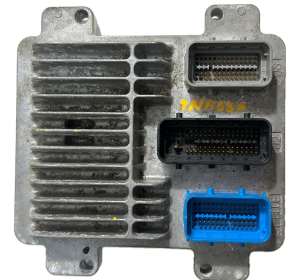
- Powertrain Control Module (PCM/ECM)
(OEM #12651994, 12652814, 12663029 (Example for 2012 LaCrosse 3.6L, VIN specific))— This is the most common cause of P0606 when all external electrical issues have been ruled out. Part numbers are VIN-specific and must be programmed.
Trusted brands: ACDelco (OEM), Flagship One, Vertex Auto
OEM price range: $700-$900
Aftermarket price range: $400-$600 - Fuel Pump Control Module (FPCM) — A known cause for P0606 on 2010-2014 LaCrosse models. This module controls the fuel pump's voltage and can fail internally. Located in the trunk behind the passenger side trim panel.
Trusted brands: ACDelco (OEM), Dorman
OEM price range: $150-$300
Aftermarket price range: $80-$200
Related Codes That Often Appear With This One
- P0601, P0602, P0603, P0604, P0605 — These are all internal control module fault codes. Seeing them together strongly indicates the module itself has failed.
- P0562 or P0563 — These codes indicate system voltage is too low (P0562) or too high (P0563). Their presence with P0606 is a strong clue that the processor fault was triggered by a charging system or battery problem.
- U-series codes (e.g., U0100) — U-codes indicate a loss of communication between modules. A failing ECM can stop communicating on the vehicle's network, triggering these codes alongside the P0606.
- P0641 — This code indicates an issue with the 5-Volt Reference Circuit. A short in a sensor on this circuit can sometimes induce a P0606. A 2008 Impala case study showed P0606 appearing with P0641 due to a sensor circuit issue, not a bad ECM.
Technical Service Bulletins (TSBs) & Recalls
- 05-06-04-060A: An informational bulletin explaining that DTC P0606 can be set by various control modules, not just the ECM.
- 20-NA-100: While not for the LaCrosse specifically, this TSB for other GM vehicles shows a known issue where a software anomaly can cause a P0606, which is fixed by reprogramming the ECM, not replacing it.
- A GM TSB for other models notes that a weak battery can cause the Electronic Brake Control Module (EBCM) to set a P0606, and a new calibration was being developed to make the diagnostic more robust.
Platform-Specific Known Issues
- The provided TSB #05-06-04-060A confirms that P0606 is an informational code that can be set by multiple different control modules on GM vehicles.
- On second-generation LaCrosse models (2010-2014), the Fuel Pump Control Module (FPCM) is a known point of failure that can set a P0606. It is located in the trunk area, behind the passenger side trim panel, making it relatively accessible.
- Another GM TSB (#PIC5978B, related to Chevy Volt/Cadillac ELR) shows a precedent for false P0606 codes being set by low voltage or after battery service, reinforcing the need to check the battery first. A similar TSB for other models also points to a weak battery causing a false P0606 in the EBCM.
Mechanic-Grade Diagnostic Values
- Alternator Output Voltage (Engine Running) — expected: 13.5V - 14.5V. Failure: Voltage below 13.5V or above 14.5V indicates a charging system fault that can trigger false module codes.
- FPCM Fuel Pressure Sensor 5V Reference Circuit (2010+) — expected: 4.8V - 5.2V. Failure: Voltage outside this range indicates a fault in the circuit or the FPCM itself. Test performed between terminal 3 of the sensor connector and ground.
- FPCM Fuel Pressure Sensor Low Reference Circuit (2010+) — expected: < 1.0 Ω. Failure: Resistance greater than 1.0 ohm indicates an open or high resistance in the ground circuit for the sensor.
- Low-Side Fuel Pressure (Pump Running) — expected: 345-690 kPa (50-100 psi). Failure: Pressure below this range indicates a weak fuel pump, clogged filter, or leak. Pressure above this range can indicate a faulty regulator in the pump module.
- Low-Side Fuel Pressure Leak-Down Test — expected: Pressure should not drop more than 34 kPa (5 psi) in 1 minute after the pump is turned off.. Failure: A rapid pressure drop indicates a leaking fuel injector or a faulty check valve in the fuel pump module.
Hidden / Shadow Codes Worth Checking
- History DTC: A 2010 service manual notes that P0606 may be stored as a 'history DTC' in the Fuel Pump Control Module (FPCM) without affecting the module's operation. If the code is not current, the manual advises against replacing the module. (see via A professional scan tool like the GM GDS2 that can differentiate between current and history codes within specific modules.)
Scan Tool Commands That Help
- GM GDS2 / Tech2: Read Codes by Module — This is the critical first step to determine which module (ECM, FPCM, EBCM, etc.) has actually stored the P0606 code, as it can originate in several different computers on this vehicle.
- GM GDS2 / Tech2: Fuel Pump Enable ON/OFF — Used to manually run the low-pressure fuel pump to check its operation and measure fuel pressure without the engine running. This helps isolate a fuel delivery problem from an ECM command issue.
- GM GDS2 / Tech2: Module Reprogramming (SPS) — If a TSB indicates a software anomaly is the cause, or as a final step before condemning a module, a reflash can fix software glitches that falsely trigger a P0606.
Wiring & Ground Locations
- G101 — On the lower front of the engine block.. This is a primary ground point for the Engine Control Module (ECM) and Transmission Control Module (TCM). A poor connection here can directly cause processor faults.
- G102 — Located at the left rear of the engine.. This ground is for the ignition coils. Electrical noise from a bad coil ground could potentially interfere with ECM operation.
- G103 — On the cowl in the left rear of the engine compartment, above the brake booster.. This grounds the Body Control Module (BCM) and Data Link Connector (DLC). A fault here can cause communication issues between modules. A TSB for later models also highlights this ground on the left frame rail as critical for preventing stalls.
- G113 / G117 — On an automatic transaxle stud, near the starter motor. (Primarily for W-Body, 2007-2009 models).. These are major engine harness grounds. A loose or corroded connection here can cause a wide range of electrical issues, including symptoms that mimic ECM failure.
When the Usual Fixes Don't Work
- While P0606 points directly to a processor fault, it is frequently a 'victim' code, not the root cause. Multiple GM Technical Service Bulletins for similar platforms warn technicians *not* to replace the control module if the code is accompanied by low voltage DTCs (P0562, P0563) or if it appears after a jump-start. In a forum discussion for a 2012 LaCrosse with a recurring no-start, a dealer replaced a 'computer module' only after a GM engineer was flown in to diagnose the car, indicating the complexity and the likelihood that the initial diagnosis was not straightforward. Another owner of a 2005 LaCrosse with a no-start issue had the starter replaced because the main electrical stud was broken internally, which was the true cause of the problem, not the computer. These cases underscore the importance of ruling out all external electrical system faults—battery, alternator, grounds, and main power connections—before condemning an expensive control module.
OEM Part Supersession History
12635717→24267940— Updated part.
Heads up: This part number change is for the Generator Control Module (GCM) on eAssist models, not the main ECM. It serves as an example of how GM updates module hardware over time.
Model Year Variations Within This Range
- 2010-2014: The second-generation LaCrosse is known to set P0606 from a faulty Fuel Pump Control Module (FPCM), located in the trunk. This is a much less common cause on the first-generation (2007-2009) models. Diagnosis must begin by identifying which module stored the code.
Helpful Videos


Used OEM Parts in Stock




New Aftermarket Parts Available




The information in this article is provided for general reference and educational purposes only. Vehicle specifications, procedures, and part compatibility can vary by production date, trim level, and region. Always consult your vehicle's factory service manual and verify part numbers before purchasing or performing repairs. Safety-critical components such as airbags, seat belts, and braking systems should be installed by a qualified professional.
- Buick LACROSSE:
- 🎬 Helpful Videos
- 🛍️ Shop This Part
- What's Unique About the 2007-2014 Buick LACROSSE
- Diagnostic Flowchart
- Symptoms You May Notice
- Most Likely Causes
- Rare But Worth Checking
- Diagnosis Steps
- Parts You'll Likely Need
- Related Codes That Often Appear With This One
- Technical Service Bulletins (TSBs) & Recalls
- Platform-Specific Known Issues
- Mechanic-Grade Diagnostic Values
- Hidden / Shadow Codes Worth Checking
- Scan Tool Commands That Help
- Wiring & Ground Locations
- When the Usual Fixes Don't Work
- OEM Part Supersession History
- Model Year Variations Within This Range
- 🎟️ Get 5% Off