

P0605 on 2009-2013 Nissan Versa: ECM Failure or Simple Brake Switch Fix?
On a 2009-2013 Nissan Versa, code P0605 often points to a simple, inexpensive fix. A Nissan Technical Service Bulletin (NTB13-039) states that an improperly adjusted or faulty cruise control (ASCD) brake switch is a common cause, not a failed Engine Control Module (ECM). This is typically a sub-$50 part and an easy DIY repair.
- Do not panic and replace the ECM. The most likely cause for P0605 on a 2009-2013 Versa is a faulty or misadjusted ASCD brake switch.
- This issue is well-documented by Nissan in Technical Service Bulletin NTB13-039, which applies to many 2009+ Nissan models.
- Symptoms are typically a Check Engine Light and cruise control that will not engage, but can sometimes include a no-start condition.
- Diagnosing and replacing the ASCD brake switch is a simple, low-cost DIY job that can be done with basic tools in under an hour.
- Always check the simple, inexpensive part (the switch) before considering the complex, expensive one (the ECM).
What's Unique About the 2009-2013 Nissan VERSA
For most vehicles, a P0605 code is a dire diagnosis pointing to a necessary and costly ECM replacement. However, on the Nissan Versa and other Nissan models from this era, the manufacturer issued a specific Technical Service Bulletin (NTB13-039) to warn technicians that the code is often caused by a simple, misadjusted brake pedal switch used for the cruise control. This platform-specific issue means a potentially very cheap and easy fix for a code that would otherwise suggest a repair bill of a thousand dollars or more.
🎬 Watch: Understanding the P0605 code and why it's often misdiagnosed.Diagnostic Flowchart
Tap your situation to follow the diagnostic path that matches what you're seeing on this vehicle.
Generation note: The 2009-2013 year range covers the end of the first generation Versa (C11; 2007-2012) and the start of the second generation (N17; 2012-2019). The TSB NTB13-039 applies to all 2009 and newer Nissan vehicles, so this issue can affect both generations covered in this range.
Symptoms You May Notice
- Check Engine Light is on
- Cruise control cannot be set or is inoperative
- The "CRUISE" or "SET" light on the dashboard may flash.
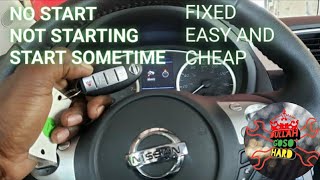
- Intermittent no-start condition (on push-button start models) 🎬 Watch: How a faulty brake switch causes no-start issues.
- Vehicle may have no acceleration or be stuck in a low RPM limp mode.
- Replacing the Engine Control Module (ECM) without first checking the ASCD brake switch. This is a very expensive mistake explicitly warned against by Nissan's own service bulletin NTB13-039.
Most Likely Causes
- Improperly Adjusted or Faulty ASCD Brake Switch 🔴 High Probability Nissan issued TSB NTB13-039 specifically identifying this as a common cause for P0605, instructing technicians to check the switch before replacing the ECM. These electro-mechanical switches are located in a tight space near the driver's footwell and can wear out or lose adjustment over time.
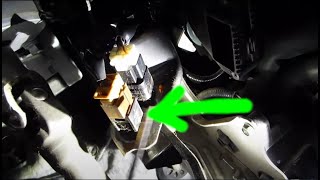
How to confirm: Inspect the two switches located at the top of the brake pedal arm. The ASCD switch is often the one with a brown or blue connector. Check for proper clearance and electrical function using a multimeter or by observing its status in a scan tool's live data. The ECM detects the brake pedal state based on the on/off signals from both the stop lamp switch and the ASCD switch; when the pedal is depressed, the ASCD switch should turn off. An adjustment involves loosening the lock nut, turning the switch until it contacts the stopper, and then turning it back a specific amount before tightening the lock nut.
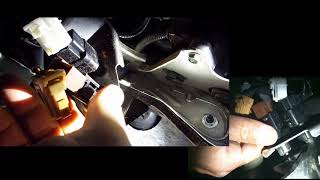
Typical fix: Adjust the switch's position or replace it if faulty. Replacement involves unplugging the electrical connector, twisting the switch about 45 degrees counter-clockwise to release it from its bracket, and installing the new one in the reverse order. 🎬 See this walkthrough for replacing the brake and cruise control switches. Ensure the new switch is installed and locked securely.
Est. part cost: $25-$60 - Poor Connection or Damaged Wiring ⚪ Low Probability
How to confirm: Visually inspect the wiring harness and connector at the ASCD brake switch and at the ECM. Check for continuity between the ECM terminal 108 and the ASCD switch terminal 2. Also check the harness for shorts to ground and power.
Typical fix: Repair the damaged section of the wiring harness or clean the corroded terminals in the connector.
Est. part cost: $5-$25 - Faulty Engine Control Module (ECM) ⚪ Low Probability
How to confirm: This is the cause to suspect only after the ASCD brake switch and its wiring have been thoroughly tested and confirmed to be working correctly. A professional diagnosis with advanced scan tools is required to confirm an internal ECM fault. This is explicitly the last step according to the Nissan TSB.
Typical fix: The ECM must be replaced and programmed to the vehicle's VIN. This is typically done by a dealership or a specialized automotive electronics shop. Some companies offer pre-programmed modules.
Est. part cost: $500-$1200
Rare But Worth Checking
- Low Battery Voltage or Power Supply Issues:
- Poor ECM Ground:
Diagnosis Steps
- Retrieve the P0605 trouble code using an OBD-II scanner.
- Per Nissan TSB NTB13-039, immediately focus on the ASCD brake switch. Do not assume the ECM is faulty.
- Locate the two switches on the brake pedal bracket. The ASCD switch is one of them (often with a brown or blue connector, typically the lower of the two).
- Check the switch's adjustment. Ensure there is proper clearance between the switch plunger and the pedal stop when the pedal is released. The adjustment procedure involves turning the switch within its bracket.
- Test the switch's electrical function. Use a scan tool to monitor the 'BRAKE SW 1' or similar parameter in live data while pressing and releasing the brake. The status should change from ON to OFF.
- If a scan tool is unavailable, unplug the switch and test for continuity across its terminals with a multimeter. The continuity should change as the plunger is pressed and released.
- If the switch is faulty or cannot be adjusted correctly, replace it. The part is widely available and relatively inexpensive.
- When replacing, unplug the connector, rotate the switch 45 degrees counter-clockwise, and pull it out. Install the new one by reversing the process.
- If the switch and its adjustment are good, inspect the wiring harness between the switch and the ECM for damage, corrosion, or loose connections. Check for continuity from ASCD switch connector terminal 2 to ECM connector terminal 108.
- Check ECM power and ground circuits. A poor ground connection can cause this code.
- As a final and least likely step, if all other possibilities are exhausted, the ECM may be at fault. This step requires professional diagnosis.
Parts You'll Likely Need
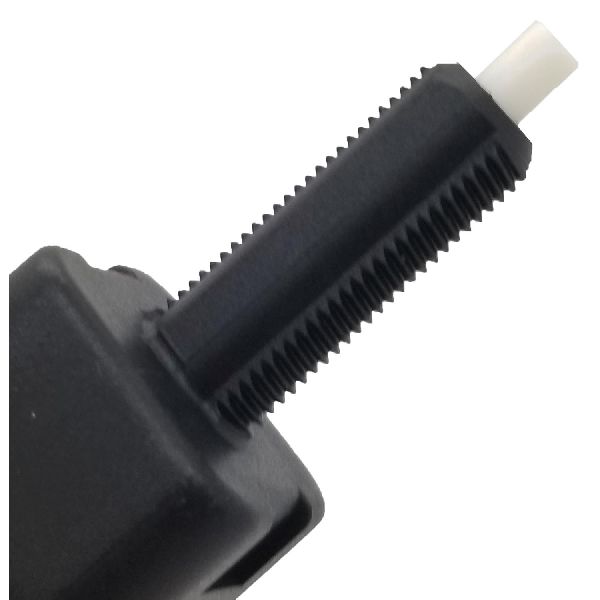
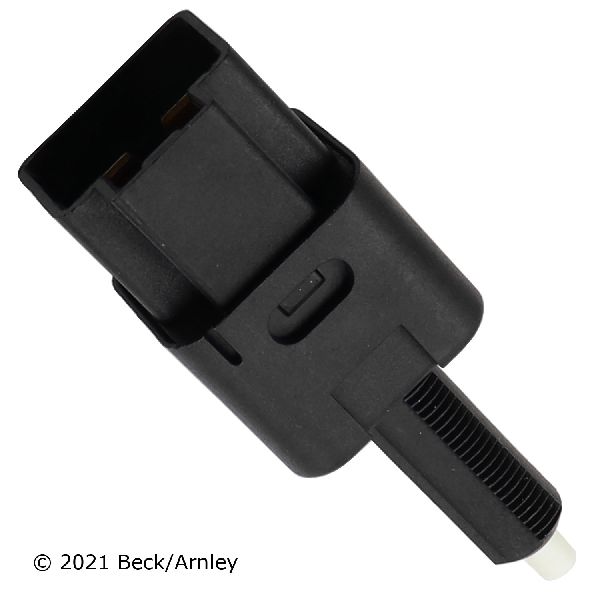
- ASCD Brake Switch (Cruise Control Switch)
(OEM #25320-AX00E)— This is the most common cause of P0605 on this vehicle, as identified by Nissan TSB NTB13-039. This part number may be superseded by or cross-referenced with 25320-AX00A, 25320-AX00B, 25320-AX00C, and 25320-AX10A. Always verify fitment with the vehicle's VIN.
Trusted brands: Nissan Genuine, Hitachi, Dorman
OEM price range: $40-$60
Aftermarket price range: $25-$45
Technical Service Bulletins (TSBs) & Recalls
- NTB13-039: States that 'Improper adjustment or operation of the ASCD brake switch can cause the Automatic Speed Control Device (ASCD) to “not set” and/or DTC P0605 (ECM) to store.' It advises checking the switch before replacing the ECM and applies to all 2009 and newer Nissan vehicles with cruise control.
Platform-Specific Known Issues
- Nissan Technical Service Bulletin NTB13-039 was released specifically to address the misdiagnosis of P0605. It states that before replacing the ECM, technicians must first check the ASCD brake switch for proper operation and adjustment, as it is a frequent cause of the code.
- The bulletin notes that in addition to the P0605 code, symptoms include the cruise control not setting and the 'CRUISE' or 'SET' light flashing.
Mechanic-Grade Diagnostic Values
- ASCD Brake Switch Input Voltage — expected: Battery voltage at terminal 1 of the switch connector (with respect to ground).. Failure: Approximately 0V indicates an open circuit in the power supply, possibly a blown fuse or wiring issue.
- ASCD Brake Switch Signal Circuit Continuity — expected: Continuity should exist between ASCD switch connector terminal 2 and ECM connector terminal 108.. Failure: No continuity (an open circuit) indicates a broken wire in the harness between the switch and the ECM.
- ASCD Brake Switch Operation (Continuity Test) — expected: The switch has two circuits. One should have continuity with the plunger out (pedal pressed) and be open with the plunger in (pedal released). The other circuit should have the opposite behavior.. Failure: If either circuit does not change state when the plunger is operated, or is always open/closed, the switch is faulty.
Scan Tool Commands That Help
- Nissan CONSULT-II / CONSULT-III: Work Support > ASCD BRAKE SWITCH — This function allows a technician to view the live ON/OFF status of the ASCD brake switch as seen by the ECM. It is the fastest way to confirm if the switch is sending the correct signal when the brake pedal is pressed and released.
Wiring & Ground Locations
- ECM Connector — Located on the left side of the engine compartment.. The signal from the ASCD brake switch is sent to terminal 108 on this connector.
- ECM Ground — Main grounds for the ECM are typically black wires bolted to the engine (e.g., intake manifold) or chassis frame near the ECM.. A poor or corroded ground connection can cause insufficient power or signal noise for the ECM, leading it to fail its internal self-test and set a P0605 code.
- ASCD Brake Switch Connector — At the top of the brake pedal arm in the driver's footwell.. This is the connector where initial voltage and continuity tests are performed. Terminal 1 is power-in, Terminal 2 is the signal-out to the ECM.
- Connectors M31, E152, M4 — These are inline harness connectors between the ASCD switch and the fuse block/ECM.. A service manual diagnostic procedure points to these as potential points of failure (corrosion, loose pins) if a wiring fault is suspected.
Real Owner Repair Stories
- YouTube - P0605 Nissan Code - Engine Control Module Fault (2010 Nissan Pathfinder) — Check engine light on with code P0605, engine would not accelerate past 2,000 RPM.
❌ Tried (didn't work) Initial diagnosis pointed towards a faulty ECM.
✅ What actually fixed it The problem was a poor ECM ground. The technician cleaned the existing ground points on the engine manifold and, as a robust solution, added a new, redundant ground wire directly from the ECM housing to a clean chassis point. This resolved the code and the acceleration issue.
When the Usual Fixes Don't Work
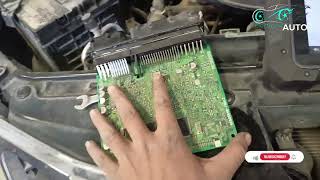
- While the ASCD brake switch is the most common cause of P0605 on this platform, it is not the only one. In a documented case on a similar Nissan vehicle, the brake switch and its wiring were functioning correctly. The P0605 code, accompanied by a severe lack of engine power, was ultimately traced to a poor ground connection for the Engine Control Module (ECM). Cleaning the existing ground points and adding a redundant ground strap from the ECM to the chassis permanently fixed the issue. This demonstrates that if replacing the brake switch does not resolve the code, the next step should be a thorough inspection and testing of the ECM's power and ground circuits before considering ECM replacement.
OEM Part Supersession History
25320-AX00E→25320-AX10A— Part has been updated by Nissan over time. The newest part number incorporates all previous revisions.
Heads up: The new part number 25320-AX10A is the correct service replacement for previous versions including 25320-AX000, 25320-AX00A, 25320-AX00B, and 25320-AX00C.
Helpful Videos
Used OEM Parts in Stock


New Aftermarket Parts Available




The information in this article is provided for general reference and educational purposes only. Vehicle specifications, procedures, and part compatibility can vary by production date, trim level, and region. Always consult your vehicle's factory service manual and verify part numbers before purchasing or performing repairs. Safety-critical components such as airbags, seat belts, and braking systems should be installed by a qualified professional.
- Nissan VERSA:
- 🎬 Helpful Videos
- 🛍️ Shop This Part
- What's Unique About the 2009-2013 Nissan VERSA
- Diagnostic Flowchart
- Symptoms You May Notice
- Most Likely Causes
- Rare But Worth Checking
- Diagnosis Steps
- Parts You'll Likely Need
- Technical Service Bulletins (TSBs) & Recalls
- Platform-Specific Known Issues
- Mechanic-Grade Diagnostic Values
- Scan Tool Commands That Help
- Wiring & Ground Locations
- Real Owner Repair Stories
- When the Usual Fixes Don't Work
- OEM Part Supersession History
- 🎟️ Get 5% Off