

P0605 on 2009-2013 Nissan Rogue: ECM Failure or Simple Brake Switch Fix?
On a 2009-2013 Nissan Rogue, the P0605 code, while defined as an internal computer error, is most often caused by a misadjusted cruise control (ASCD) brake switch. Before considering a costly ECM replacement, check and adjust the switch at the brake pedal as per Nissan's Technical Service Bulletin NTB13039, a known issue across many Nissan models.
- Do not panic and assume you need a new ECM. The most likely cause for P0605 on a 2009-2013 Rogue is a simple brake switch adjustment.
- The primary symptom, besides the Check Engine Light, is often a malfunctioning cruise control system, sometimes with a flashing 'SET' light.
- Diagnosing this issue should always start with inspecting and adjusting the ASCD (cruise control) brake switch located on the brake pedal.
- This is a known issue across many Nissan and Infiniti models from this era, not just the Rogue.
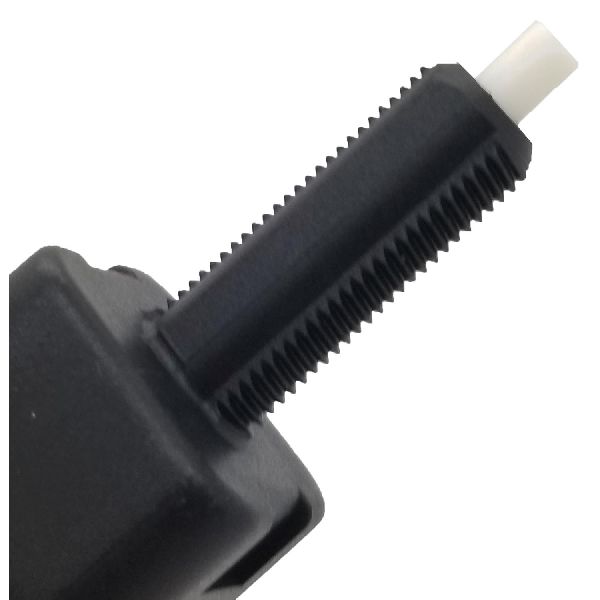
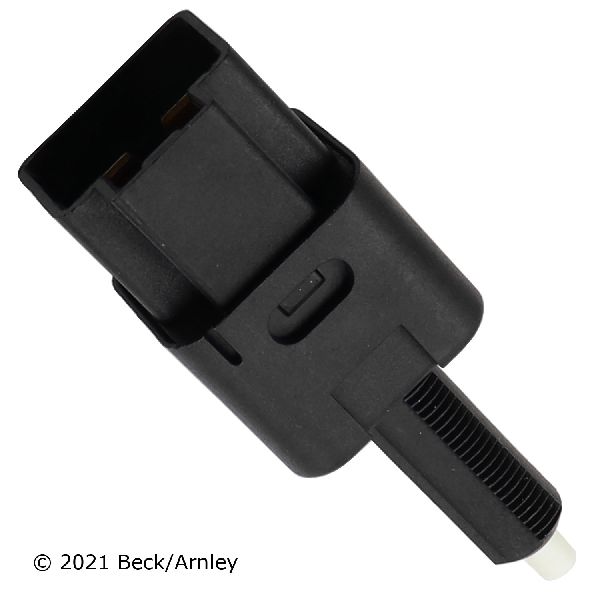
- If the switch needs replacement, a common OEM part number is 25320-3JA0A.
What's Unique About the 2009-2013 Nissan ROGUE
For most vehicles, a P0605 code points directly to a failed and expensive Engine Control Module (ECM). However, the 2009-2013 Nissan Rogue is a well-documented exception. Nissan issued a Technical Service Bulletin (NTB13039) specifically to address this, advising technicians to check and adjust the cruise control brake switch *before* condemning the ECM. This simple switch, located at the brake pedal, can send conflicting signals that trick the ECM into setting a P0605, making a complex problem often a simple, inexpensive fix. This issue is common across the Nissan lineup from this era.
Diagnostic Flowchart
Tap your situation to follow the diagnostic path that matches what you're seeing on this vehicle.
Symptoms You May Notice
- Check Engine Light is on
- Cruise control will not set or is inoperative
- "CRUISE" indicator light may stay on
- "SET" indicator light may flash
- Engine may stall, hesitate, or run rough
- Vehicle may not start or have an extended crank time
- Vehicle may enter limp mode with harsh shifting
- Replacing the Engine Control Module (ECM) without first checking the ASCD brake switch adjustment. This is a very expensive mistake that Nissan specifically warns against in TSB NTB13039.
Most Likely Causes
- Improperly Adjusted ASCD Brake Switch 🔴 High Probability This is a known issue documented by Nissan in TSB NTB13039. The switch's position is critical, and if it's slightly off, it can send a signal that conflicts with other vehicle operations, confusing the ECM.
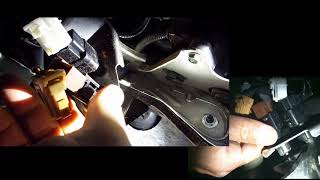
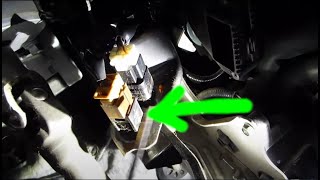
How to confirm: Inspect the ASCD brake switch located on the brake pedal support bracket. Check the clearance and ensure it is adjusted according to the service manual procedure. The switch plunger should be fully depressed when the pedal is released and open as soon as the pedal is pressed.
Typical fix: Adjust the switch. This is done by turning the switch 45 degrees counter-clockwise to unlock it, pulling the brake pedal fully back, pushing the switch into its bracket until its threaded body contacts the stop, and then turning the switch 45 degrees clockwise to lock it in place.
Est. part cost: $0 - Faulty ASCD Brake Switch 🟡 Medium Probability Like any electronic switch, it can fail with age and use. There are often two switches on the pedal; the one related to the cruise control and ECM is the one that causes this issue.
How to confirm: If adjustment doesn't work, test the switch's continuity with a multimeter. It should show continuity in one position (plunger in or out) and no continuity in the other. Also check if your brake lights are stuck on or not working at all.
Typical fix: Replace the ASCD brake switch. It unplugs and twists out of its bracket. The common replacement part is Nissan OEM part number 25320-3JA0A.
Est. part cost: $25-$60 - Poor ECM Power or Ground Connection ⚪ Low Probability
How to confirm: Check the vehicle's battery terminals for corrosion and tightness. Test battery voltage and alternator output (should be ~13.5-14.5V with engine running). Inspect the main ECM ground straps for corrosion or looseness, including where the ECM case grounds to the chassis and grounds on the engine manifold.
Typical fix: Clean battery terminals, tighten connections, or repair faulty ground straps. Some mechanics add a supplementary ground wire from the chassis to the ECM case as a preventative measure.
Est. part cost: $0-$20 - Faulty Engine Control Module (ECM) ⚪ Low Probability This is the generic cause for P0605, but on this vehicle, it should only be considered after all other possibilities, especially the brake switch, have been ruled out.
How to confirm: This requires professional diagnosis. If the brake switch is adjusted correctly, the wiring is intact, and power/grounds are good, the ECM is the likely culprit. A professional scan tool may be able to run a module self-test to confirm a ROM checksum error.
Typical fix: Replace the ECM. This requires programming the new unit to the vehicle's VIN and immobilizer system.
Est. part cost: $200-$800+
Diagnosis Steps
- Read the trouble codes with an OBD-II scanner to confirm P0605 is present.
- Check if the cruise control is working. Note if the 'CRUISE' or 'SET' lights are behaving abnormally, such as the 'SET' light flashing.
- Locate the ASCD brake switch on the brake pedal support bracket. There may be two switches; the ASCD switch is often for the cruise control/start system, while the other is for the brake lights.
- Following the procedure in Nissan TSB NTB13039, inspect and adjust the switch's clearance. A common method is to rotate the switch to unlock, ensure the pedal is fully released, push the switch in until it stops, and rotate to lock.
- Clear the P0605 code and test drive the vehicle to see if the code returns. Attempt to engage the cruise control.
- If the code returns, test the ASCD brake switch with a multimeter for proper electrical operation. Replace it if it fails the test. A common replacement is part number 25320-3JA0A.
- If the switch is good and adjusted correctly, inspect the battery, terminals, and ECM power and ground connections for any issues like corrosion or looseness. Check main ground points on the engine manifold.
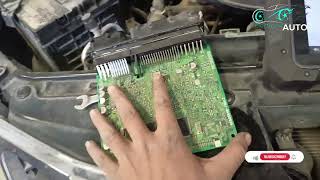
- If all of the above steps fail to resolve the issue, the ECM may be faulty and require professional diagnosis and likely replacement. 🎬 Watch this walkthrough if you must replace the ECM.
Parts You'll Likely Need
- ASCD Brake Switch / Stop Lamp Switch
(OEM #25320-3JA0A)— This switch is the most common cause of P0605 on this vehicle due to improper adjustment or failure, as documented in Nissan TSB NTB13039. This part number is a widely available OEM replacement.
Trusted brands: Nissan OE, Hitachi, Standard Motor Products, Duralast
OEM price range: $20-$40
Aftermarket price range: $15-$50
Technical Service Bulletins (TSBs) & Recalls
- NTB13039: States that improper adjustment or operation of the ASCD brake switch can cause the cruise control to not set and/or DTC P0605 to store. It notes that symptoms can include the 'CRUISE' indicator staying on while the 'SET' indicator flashes. It strongly advises checking the switch adjustment and operation before replacing the ECM.
Platform-Specific Known Issues
- Nissan Technical Service Bulletin NTB13039 explicitly states that an improperly adjusted ASCD brake switch can cause DTC P0605 to be stored in the ECM. It advises checking this switch before considering ECM replacement and applies to all 2009 and newer Nissans with cruise control.
Mechanic-Grade Diagnostic Values
- ECM Ground Circuit Resistance — expected: ≤ 0 Ω. Failure: Any reading significantly above 0 Ohms indicates a poor ground connection.
- Battery Voltage (Engine Off) — expected: 12.4V - 12.7V. Failure: Voltage below 12.4V indicates a weak or discharged battery that can cause electrical issues.
- Alternator Output (Engine Running) — expected: 13.5V - 14.5V. Failure: Voltage below 13.5V or above 14.5V can indicate a failing alternator, which may cause voltage spikes or drops that trigger the P0605 code.
- ASCD Brake Switch Circuit Continuity — expected: Continuity should exist between ECM terminal 108 and ASCD brake switch terminal 2.. Failure: No continuity indicates an open circuit in the harness.
Scan Tool Commands That Help
- Nissan CONSULT or equivalent professional scanner: Module Self-Test / ROM Checksum Verification — After verifying the brake switch and wiring are good, this test can be used to ask the ECM to check its own memory integrity. A failure here strongly points to a faulty ECM.
- Nissan CONSULT or equivalent professional scanner: Idle Air Volume Learn — This procedure is required after replacing the ECM or clearing its learned values to reset the base idle correctly. Failure to do this can result in a high or unstable idle.
- Professional Scanner (e.g., iCarsoft): Control Unit Reset — Can be attempted as a 'soft reset' for the module if a software glitch is suspected. This may temporarily or, in some cases, permanently clear the fault without part replacement.
Wiring & Ground Locations
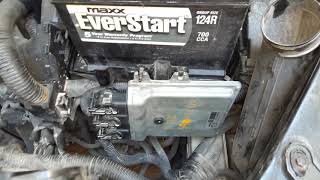
- ECM (Engine Control Module) — In the engine bay, on the left side, located behind the air filter box.. This is the computer setting the code. Its connections and grounds are critical for diagnosis.
- ECM Power/Ground Pins — At the ECM connector. Key pins include: Grounds (Pins 107, 108, 111, 112), Battery Power (Pin 105), and Ignition Power (Pin 93).. These specific pins must be tested for correct voltage and ground integrity before condemning the ECM. 🎬 See why this code doesn't always mean a bad ECM.
- Engine Manifold Grounds — Bolted to the intake manifold on the engine.. These are major ground points for engine sensors and the ECM. Corrosion or looseness here is a known cause of various electrical faults, including P0605.
- M76 (Ground Connector) — Behind the left side of the dashboard.. This is an interior ground distribution point. While less likely to be the cause than engine bay grounds, it can be a factor in complex electrical issues.
Real Owner Repair Stories
- YouTube - Abuzar auto technician (Nissan vehicle (model not specified, but similar era)) — P0605 code present, rough running.
❌ Tried (didn't work) Initial code clearing did not resolve the issue.
✅ What actually fixed it The problem was a poor ground connection. The fix involved thoroughly cleaning the main ground points on the engine manifold and adding a supplementary ground wire from the vehicle body directly to the ECM's case for a more robust connection. - YouTube - Fix It Yourself (2012 Nissan Tiida (shares platform elements)) — P0605 code, engine RPM fluctuating between 1500-1600 RPM when warm.
❌ Tried (didn't work) Verifying all wiring and ground connections to the ECM were good.
✅ What actually fixed it The ECM itself was faulty. The issue was resolved by replacing the ECM with a used unit that had the exact same part number (A56-Z16) and then performing the necessary programming and idle air volume learn procedures with a diagnostic scanner. - Reddit user comment (2010 Nissan Rogue) — P0605 code, vehicle not starting.
❌ Tried (didn't work) Owner was asking for help before taking it to a shop.
✅ What actually fixed it A knowledgeable user immediately identified the likely cause as a bad cruise control (ASCD) brake switch and provided a direct link to Nissan TSB NTB13039, guiding the owner away from assuming it was a failed ECM. This demonstrates the well-known nature of this specific fix in the community.
"I Checked Everything" — The Actual Cause
- In the context of this electronic code, the equivalent of a 'smoke test clean' scenario is when all wiring and ground tests come back as good. In one documented case on a similar Nissan platform, a technician verified all power and ground circuits to the ECM were functioning correctly, yet the P0605 code and high idle symptoms persisted. The actual root cause was an internal failure on the ECM's circuit board, which was only resolved by replacing the ECM unit itself.
When the Usual Fixes Don't Work
- While the ASCD brake switch is the most common culprit for P0605 on this Rogue, it is not the only cause. There are documented cases where, after confirming the switch and all related wiring and grounds are functioning perfectly, the code persisted. In these instances, the final repair was indeed replacing the Engine Control Module (ECM) itself due to an internal hardware failure. Another successful repair involved leaving the original ECM but cleaning corroded engine manifold grounds and adding a supplementary ground wire to the ECM case. This confirms that while the brake switch should always be the first check, thorough verification of the ECM's power and ground integrity is a critical second step before condemning the module.
Model Year Variations Within This Range
- 2009-2013: The first-generation Nissan Rogue received a facelift for the 2011 model year, which included cosmetic and feature updates. However, for the P0605 fault, the primary cause related to the ASCD brake switch and the guidance in TSB NTB13039 applies to the entire 2009-2013 range and beyond, indicating no significant change in this specific system's design.
Helpful Videos
We Have This Part in Stock




The information in this article is provided for general reference and educational purposes only. Vehicle specifications, procedures, and part compatibility can vary by production date, trim level, and region. Always consult your vehicle's factory service manual and verify part numbers before purchasing or performing repairs. Safety-critical components such as airbags, seat belts, and braking systems should be installed by a qualified professional.
- Nissan ROGUE:
- 🎬 Helpful Videos
- 🛍️ Shop This Part
- What's Unique About the 2009-2013 Nissan ROGUE
- Diagnostic Flowchart
- Symptoms You May Notice
- Most Likely Causes
- Diagnosis Steps
- Parts You'll Likely Need
- Technical Service Bulletins (TSBs) & Recalls
- Platform-Specific Known Issues
- Mechanic-Grade Diagnostic Values
- Scan Tool Commands That Help
- Wiring & Ground Locations
- Real Owner Repair Stories
- "I Checked Everything" — The Actual Cause
- When the Usual Fixes Don't Work
- Model Year Variations Within This Range
- 🎟️ Get 5% Off