

P0605 on 2009-2014 Nissan Murano: ECM Error or Simple Switch Fix?
On a 2009-2014 Nissan Murano, code P0605 often points to a simple, inexpensive fix related to the cruise control (ASCD) brake switch, not a catastrophic engine computer failure. Before considering a costly ECM replacement, inspect and adjust the brake switch and check for a broken plastic pedal stopper, as detailed in Nissan TSB NTB13039.
- Do not assume P0605 means you need a new engine computer on your 2009-2014 Murano.
- The most likely cause is a faulty or misadjusted ASCD (cruise control) brake switch located above the brake pedal.
- Always check the floor mat for broken plastic pieces from the brake pedal stopper pad before replacing any parts.
- Adjusting or replacing the ASCD switch and/or stopper pad is a very inexpensive and simple DIY repair that can save thousands.
- This issue is not unique to the Murano and affects many other Nissan and Infiniti vehicles from the same era.
What's Unique About the 2009-2014 Nissan MURANO
While a P0605 code typically suggests a severe and expensive Engine Control Module (ECM) failure on many vehicles, the story is different for the second-generation (Z51) Nissan Murano and its platform mates. Nissan specifically identified that a conflict in the signals from the two brake pedal switches can confuse the ECM, leading it to report a false internal memory error. This makes checking the inexpensive and easy-to-access ASCD brake switch and the even cheaper plastic pedal stopper the critical first steps, potentially saving owners hundreds or even thousands of dollars on an unnecessary ECM replacement.
Diagnostic Flowchart
Tap your situation to follow the diagnostic path that matches what you're seeing on this vehicle.
Symptoms You May Notice
- Check Engine Light is on
- Cruise control cannot be set or is inoperative
- VDC OFF and/or SLIP warning lights are illuminated on the dashboard.
- In some cases, the engine may stall, hesitate, or fail to start.
- Brake lights may stay on, draining the battery, or not work at all.
- With push-button start, the vehicle may intermittently fail to crank.
- Replacing the Engine Control Module (ECM) without first inspecting the ASCD brake switch and the plastic brake pedal stopper pad. The TSB from Nissan makes it clear that the switch is a primary suspect and a much cheaper fix.
Most Likely Causes
- Improperly Adjusted or Faulty ASCD Brake Switch 🔴 High Probability Nissan issued TSB #NTB13-039 specifically for this issue on all 2009 and newer vehicles, indicating it's a known problem. The switch can wear out or be knocked out of adjustment. It is a common failure point across many Nissan and Infiniti models.
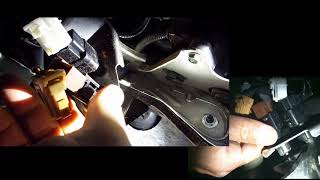
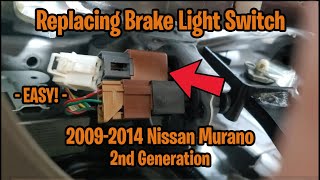
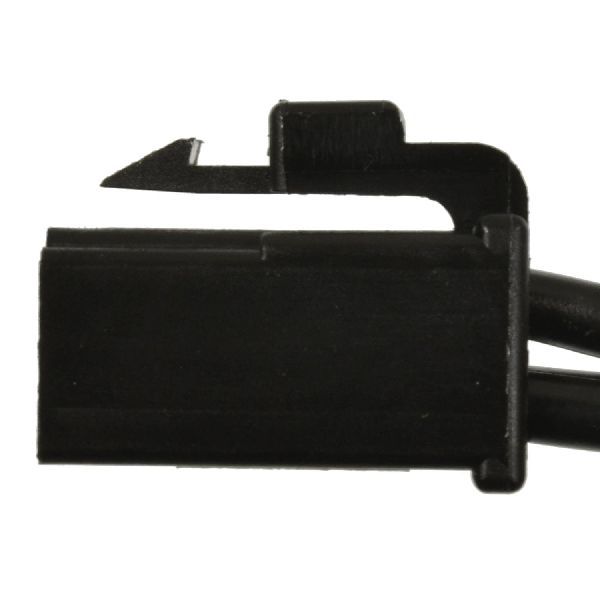
How to confirm: Inspect the two switches above the brake pedal. The ASCD switch often has a brown or gray connector, while the brake light switch may have a white one. Check for proper clearance and electrical function as detailed in the service manual or TSB. A simple adjustment may resolve the issue.
Typical fix: Adjust or replace the ASCD brake switch. It's a low-cost part that is accessible under the dashboard. Many owners recommend replacing both switches at the same time due to similar wear patterns.
Est. part cost: $20-$50 - Broken Brake Pedal Stopper Pad 🔴 High Probability The small plastic/rubber stopper pad on the brake pedal arm becomes brittle with age and heat cycles, eventually cracking and falling apart. This is a very common failure on older Nissan vehicles.
How to confirm: Check the driver's side floor mat for small, broken pieces of colored plastic. Look up at the brake pedal arm assembly where the switches make contact; you will see a small hole where the stopper pad should be. This failure can cause the brake lights to stay on constantly.
Typical fix: Insert a new stopper pad into the hole on the brake pedal arm. This is often a very cheap part and requires no tools to install.
Est. part cost: $5-$15 - Poor Electrical Connections or Damaged Wiring 🟡 Medium Probability
How to confirm: Visually inspect the wiring harnesses and connectors going to the ECM and the brake pedal switches for any signs of corrosion, damage, or looseness. Check for stable voltage and good grounds at the ECM. Poor grounds are a known issue that can mimic ECM failure.
Typical fix: Repair or clean the affected wiring or connectors. In some cases, adding a supplementary ground wire from the ECM case to the chassis has resolved persistent issues.
Est. part cost: $5-$100 - Failing Engine Control Module (ECM) ⚪ Low Probability
How to confirm: This should be the last step after all other possibilities (especially the ASCD switch and stopper pad) have been ruled out. Diagnosis requires advanced tools to confirm the ECM is truly faulty. Swapping in a known-good used ECM (with matching part number) can be a diagnostic step; if the P0605 code disappears before reprogramming, it confirms the original ECM was faulty.
Typical fix: Replace the ECM. This requires programming the new unit to the vehicle's VIN and immobilizer system by a dealer or qualified shop with a tool like Nissan CONSULT.
Est. part cost: $250-$800
Rare But Worth Checking
- Low Battery Voltage or Charging System Issues: Voltage spikes or consistently low voltage from a failing battery or alternator can sometimes cause the ECM to glitch and report internal errors. Before condemning the ECM, ensure the battery and charging system are healthy.
Diagnosis Steps
- Read the trouble codes with an OBD-II scanner to confirm P0605 is present.
- Crucial First Step: Inspect the driver's side floor mat for broken pieces of a small plastic/rubber stopper.
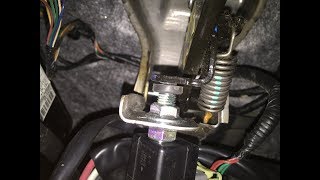
- Look at the brake pedal arm and locate the two switches mounted on a bracket above it. Check if the stopper pad that contacts the switch plungers is missing or disintegrated. If it is, replace it first.
- Identify the ASCD cruise control switch (often has a brown or gray connector) and the stop lamp switch.
- Check the adjustment of the ASCD brake switch per Nissan's TSB NTB13-039. This involves ensuring the correct clearance. A simple adjustment (twisting the switch body) may fix the problem.
- If adjustment doesn't work, test the switch's continuity with a multimeter as you press and release the plunger.
- If the switch is faulty or adjustment fails, replace the ASCD brake switch. It is often recommended to replace both brake pedal switches at the same time due to similar wear.
- If the code persists, inspect the wiring and connectors to the ECM for damage, corrosion, or loose pins. Pay special attention to the main ECM ground points on the engine and chassis.
- Verify the vehicle's battery and alternator are providing stable and correct voltage (typically 13.5-14.5 volts when running).
- Only after all the above steps have been exhausted should you consider the ECM to be the likely culprit. ECM replacement requires professional programming.
Parts You'll Likely Need
- Brake Pedal Stopper Pad / Cushion
(OEM #46584-S0100 (or similar, verify by VIN))— This small plastic part is extremely prone to breaking from age, which prevents the brake switch from being depressed, causing constant brake lights and/or fault codes. It's the cheapest and often the real culprit.
Trusted brands: Nissan Genuine, Dorman
OEM price range: $5-$10
Aftermarket price range: $3-$8 - ASCD Brake Switch / Cruise Control Switch
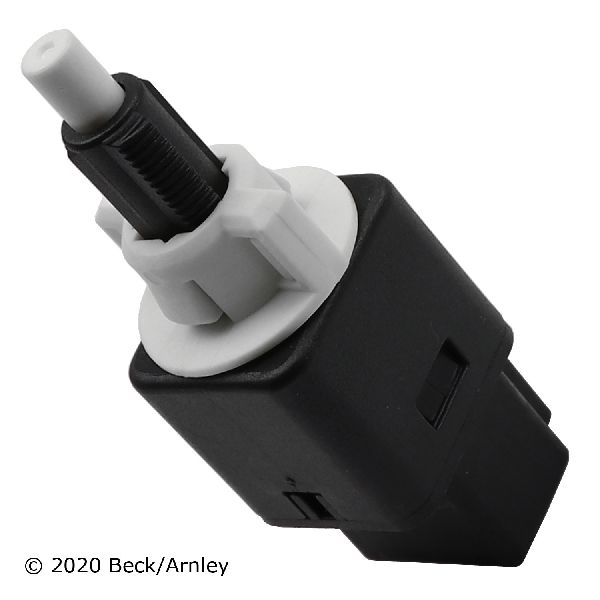
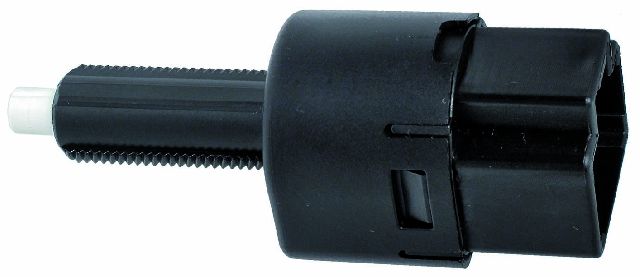
(OEM #25320-JN00A)— This is the most common component-level cause of P0605 on this vehicle, as identified by Nissan's own service bulletin. It is also referred to as a Stop Lamp Switch.
Trusted brands: Nissan Genuine, Standard Motor Products, Beck/Arnley
OEM price range: $40-$60
Aftermarket price range: $20-$40 - Engine Control Module (ECM) — This is the textbook cause of P0605, but it is the least likely cause on this specific vehicle. It should only be replaced after all other diagnostics have failed. Replacement requires professional programming.
Trusted brands: Nissan Genuine (Remanufactured), Cardone, Flagship One
OEM price range: $600-$900
Aftermarket price range: $250-$500
Technical Service Bulletins (TSBs) & Recalls
- NTB13-039 / NHTSA #10052024: States that improper adjustment or operation of the ASCD brake switch can cause DTC P0605 to be stored and the cruise control to not set. It applies to all 2009 and newer Nissan vehicles.
Platform-Specific Known Issues
- Nissan Technical Service Bulletin NTB13-039 explicitly states that before replacing the ECM for a P0605 code, technicians must first check the ASCD brake switch for proper operation and adjustment, as it is a known cause for this code. The bulletin notes that if a malfunction is detected, the 'CRUISE' indicator may stay on and the 'SET' indicator may flash.
Mechanic-Grade Diagnostic Values
- ASCD Brake Switch Continuity — expected: With plunger pressed in (brake pedal released): No continuity. With plunger released (brake pedal pressed): Continuity.. Failure: Continuity in both states or no continuity in either state indicates a faulty switch.
- Brake Switch Signal at ECM — expected: Check voltage at ECM terminal 26 (Blue wire for 2009-2011 models). Should be approx. 0V with pedal released and battery voltage with pedal pressed.. Failure: Voltage that doesn't change with pedal position, or is always low/high, points to a wiring or switch issue.
- Charging System Voltage — expected: 13.5V to 14.5V at the battery terminals with the engine running.. Failure: Voltage below 13V or above 15V can cause various electronic modules, including the ECM, to malfunction and set false codes.
Hidden / Shadow Codes Worth Checking
- P1610, P1611, P1614: These are immobilizer (NATS - Nissan Anti-Theft System) related codes. P1610 is 'Lock Mode', P1611 is 'ID Discord, IMMU-ECM', and P1614 is 'Chain of IMMU-KEY'. They will appear after replacing the ECM and trying to start the vehicle before reprogramming. They indicate a mismatch between the key, immobilizer module, and the new ECM. (see via A professional scanner like Nissan CONSULT or an advanced aftermarket scanner capable of reading BCM/IMMU modules.)
Scan Tool Commands That Help
- Nissan CONSULT: NATS IMMU/ECM Registration — This function is required after replacing the ECM to program the new module to the vehicle's existing keys and immobilizer system. Failure to perform this will result in a no-start condition and immobilizer-related DTCs.
- Nissan CONSULT (or advanced aftermarket scanner): Idle Air Volume Learn — After replacing the ECM or disconnecting the battery for an extended period, the engine idle may be unstable. This service function resets and relearns the base idle speed.
Wiring & Ground Locations
- ECM (Engine Control Module) — Located in the engine compartment on the left side (driver's side).. This is the module setting the P0605 code. All related wiring, power, and ground circuits terminate here. A poor ground connection to the ECM itself can cause this code.
- BCM (Body Control Module) — Located behind the instrument cluster/left side of the dash.. The BCM processes inputs from various switches, including the brake pedal, and communicates with the ECM over the CAN bus. A fault here could potentially send conflicting data.
- ASCD Brake Switch Connector — Above the brake pedal arm, often a brown or gray connector.. This is the primary point of failure according to TSB NTB13-039. Checking for power and signal at this connector is a key diagnostic step.
- ECM Main Ground — Typically bolted to the engine manifold or cylinder head.. A corroded or loose main engine-to-chassis or ECM ground can cause unstable voltage supply to the ECM, leading to internal self-test failures and a P0605 code.
Real Owner Repair Stories
- YouTube channel 'Car & Truck' (Nissan vehicle (model not specified, but demonstrates a universal Nissan issue)) — P0605 code present, engine RPM fluctuation.
❌ Tried (didn't work) Initial inspection showed all wiring seemed okay.
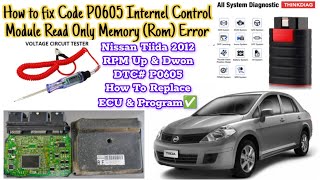
✅ What actually fixed it The root cause was a poor ground connection. The fix involved thoroughly cleaning all main ground wire contact points on the engine manifold and body, and adding a supplementary ground wire directly from the ECM case to the battery negative terminal to ensure a stable ground. - YouTube channel 'Repair and Regeneration' (Nissan Tiida (shares similar ECM logic)) — P0605 code, high/unstable idle when warm.
❌ Tried (didn't work) Checking all wiring and grounds, which were found to be good.
✅ What actually fixed it The ECM itself was internally faulty (board was shorted). The P0605 code was immediately resolved by plugging in a used replacement ECM with a matching part number, even before reprogramming the immobilizer. The final fix was replacing the ECM and performing the immobilizer registration and idle air volume learn procedures.
OEM Part Supersession History
25320-AX000, 25320-AX00A, 25320-AX00B, 25320-AX00C→25320-JN00A (for many applications)— Part consolidation and potential design improvements over time.
Heads up: While many switches look similar, using the correct part number is crucial as the internal resistance or plunger travel distance may differ. Always verify the part number with the vehicle's VIN. The same physical switch is used for both the ASCD and the main brake light function on many models.
Model Year Variations Within This Range
- 2011-2014: The Murano received a facelift for the 2011 model year, which included a new grille, new LED taillights, and interior updates like changing the instrument panel lighting from orange to white. While the core powertrain and electrical systems related to P0605 remained the same, wiring harness part numbers may differ for later years.
Helpful Videos
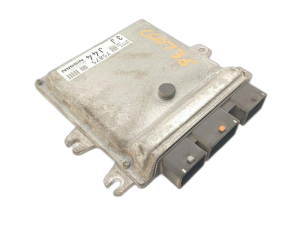
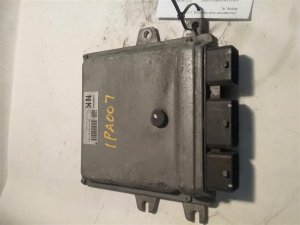
Used OEM Parts in Stock


New Aftermarket Parts Available



The information in this article is provided for general reference and educational purposes only. Vehicle specifications, procedures, and part compatibility can vary by production date, trim level, and region. Always consult your vehicle's factory service manual and verify part numbers before purchasing or performing repairs. Safety-critical components such as airbags, seat belts, and braking systems should be installed by a qualified professional.
- Nissan MURANO:
- 🎬 Helpful Videos
- 🛍️ Shop This Part
- What's Unique About the 2009-2014 Nissan MURANO
- Diagnostic Flowchart
- Symptoms You May Notice
- Most Likely Causes
- Rare But Worth Checking
- Diagnosis Steps
- Parts You'll Likely Need
- Technical Service Bulletins (TSBs) & Recalls
- Platform-Specific Known Issues
- Mechanic-Grade Diagnostic Values
- Hidden / Shadow Codes Worth Checking
- Scan Tool Commands That Help
- Wiring & Ground Locations
- Real Owner Repair Stories
- OEM Part Supersession History
- Model Year Variations Within This Range
- 🎟️ Get 5% Off