

P0604 on 2013-2016 Mazda CX-5: Internal Memory Error Causes and Fixes
This code indicates a Powertrain Control Module (PCM) internal memory error. Before suspecting a costly PCM failure, the most likely cause is a weak battery, poor electrical connections, or a charging system issue. Always test the battery and check grounds first.
- P0604 is a PCM memory error, but the PCM itself is rarely the initial problem.
- Always start your diagnosis with the simplest and most likely causes: test the battery and inspect all power and ground connections thoroughly.
- Do not replace the expensive PCM until all other electrical possibilities, including software updates, have been exhausted.
What's Unique About the 2013-2016 Mazda CX-5
For the first-generation Mazda CX-5, the P0604 code does not point to a common, widespread defect but rather follows a classic diagnostic pattern. The SKYACTIV-G platform is sensitive to battery voltage. Owners often encounter this code not because the PCM has failed, but because an aging battery or a corroded ground strap has created an unstable electrical environment, triggering a false memory error in the otherwise healthy computer. Any significant voltage drop during cranking can corrupt the PCM's RAM and trigger the code.
Symptoms You May Notice
- Check Engine Light is on
- Vehicle may stall unexpectedly
- Engine may crank but not start
- Rough or erratic idling
- Poor acceleration or loss of power
- Harsh or incorrect transmission shifting
- ABS or Traction Control lights may illuminate
- Replacing the PCM without first testing the battery and checking all power and ground connections. An inexpensive battery or ground strap issue is far more common than a failed computer.
Most Likely Causes
- Weak or Failing Battery 🔴 High Probability Modern vehicles like the CX-5 are packed with electronics that are sensitive to voltage. A battery that drops below 9.5V during cranking can cause a 'brown-out' that corrupts the PCM's RAM, as the Keep Alive Memory loses its stable power source.
How to confirm: Test the battery with a multimeter and a load tester. A healthy battery should show ~12.6 volts at rest. Many auto parts stores offer free battery testing.
Typical fix: Replace the vehicle's battery.
Est. part cost: $150-$300 - Poor Electrical Connections (Terminals/Grounds) 🟡 Medium Probability Over time, battery terminals can corrode and engine/chassis ground straps can loosen or fray, creating high resistance and unstable voltage to the PCM. There are multiple grounding points in the engine bay that are critical for stable PCM operation.
How to confirm: Visually inspect battery terminals for corrosion. Follow the negative battery cable to the chassis and engine block to find the main grounds; check that they are clean and tight. A user on a Mazda forum discovered a dangling ground strap below the battery tray was the source of their electrical issues. Resistance between the negative terminal and the chassis should be less than 0.1 Ω.
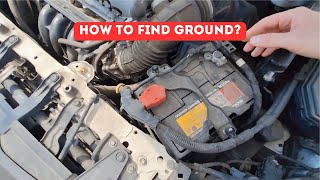
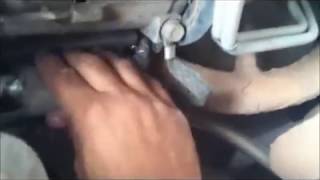
Typical fix: Clean the battery terminals and posts with a wire brush. Clean, tighten, or replace corroded or broken ground straps. Ensure all ground points are secured to bare metal. 🎬 See how to locate and inspect your car's ground connections.
Est. part cost: $5-$50 - Failing Alternator ⚪ Low Probability
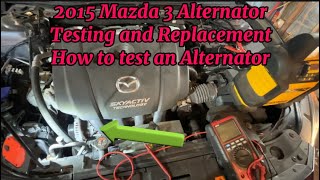
How to confirm: With the engine running, measure the voltage across the battery terminals. It should be stable, between approximately 13.5 and 14.8 volts. If it's too low, too high, or fluctuating wildly, the alternator's voltage regulator may be failing and causing electrical instability.
Typical fix: Replace the alternator.
Est. part cost: $300-$600 - Faulty Powertrain Control Module (PCM) ⚪ Low Probability While not a common failure, internal hardware failure of the PCM can occur, making this the final possibility after all other causes are eliminated. An internal short or failed RAM chip on the circuit board can cause this code.
How to confirm: This is a diagnosis of exclusion. If the battery, connections, and charging system are confirmed to be in perfect working order, and the code still returns after being cleared, the PCM itself is the likely culprit.
Typical fix: Replace the PCM. This must be programmed to the vehicle's VIN and immobilizer system by a dealer or qualified specialist.
Est. part cost: $900-$1800
Rare But Worth Checking
- Corrupted PCM Software: Sometimes a software glitch, rather than a hardware failure, can cause the P0604 code. TSBs for other makes confirm that a PCM reflash can resolve this DTC. Checking with a Mazda dealer for any available PCM software updates (reflashing) is a worthwhile step before replacing the unit. A reflash is significantly cheaper than a new PCM.
Diagnosis Steps
- Read all stored fault codes with an OBD-II scanner.
- Clear the codes and test drive the vehicle to see if the P0604 code returns immediately. If not, it may have been a temporary glitch from a past voltage drop.
- Perform a thorough battery test. Measure static voltage (should be ~12.6V) and perform a load test to check its health.
- With the engine running, test the alternator output at the battery terminals. The voltage should be stable and within the 13.5V-14.8V range.
- Switch the ignition off. Inspect and clean the battery terminals and cable ends until they are free of corrosion.
- Inspect the main engine and body ground straps. Key locations are from the negative battery terminal to the chassis and from the chassis to the engine/transmission. Ensure they are tight and not corroded. Clean or replace as necessary.
- Check fuses related to the PCM/ECM in the vehicle's fuse box.
- If all electrical tests pass, contact a Mazda dealership to check for any available PCM software updates (reflash).
- If the code persists after all previous steps, the PCM is likely faulty and requires replacement and programming.
Parts You'll Likely Need
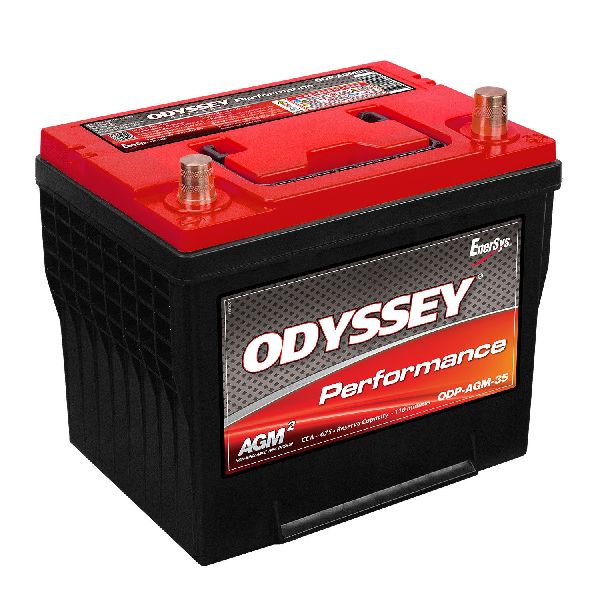
- Battery — An old or weak battery is the most frequent trigger for a P0604 code due to unstable voltage during startup.
Trusted brands: Interstate, DieHard, Duralast, Bosch
OEM price range: $200-$350
Aftermarket price range: $150-$250 - Powertrain Control Module (PCM)
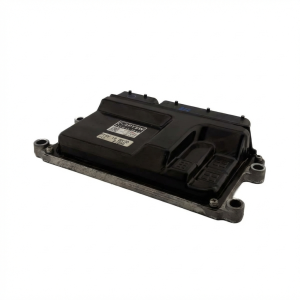
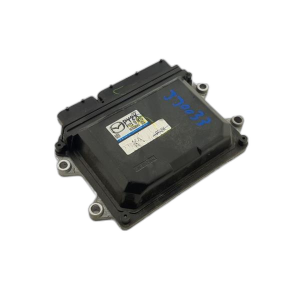
(OEM #PUZ1-18-881E (for 2.0L, supersedes PECA-18-881, PECA-18-881A/B/C), PYFL-18-881 (for 2.5L Turbo, may vary), PYXN-18-881 (for 2.5L). Note: Always verify the correct part number with a dealer using the vehicle's VIN.)— This is the last resort fix when all electrical and software issues have been ruled out. The original PCM has failed internally.
Trusted brands: Mazda (OEM)
OEM price range: $800-$1100
Aftermarket price range: $250-$800 (Remanufactured)
Related Codes That Often Appear With This One
- U-series codes (e.g., U0100) — Communication codes often appear with P0604 because an unstable or failing PCM can disrupt the entire vehicle network (CAN bus).
- P0602 — This code indicates a 'Control Module Programming Error' and can be triggered by the same voltage instability or internal faults that cause P0604.
Technical Service Bulletins (TSBs) & Recalls
- While no Mazda TSB directly links a software update to fixing P0604 on this specific model, TSBs for other manufacturers (e.g., Stellantis TSB 18-058-23 REV. A) show a precedent for PCM reprogramming being a valid fix for this exact code.
Platform-Specific Known Issues
- A forum user on mazda-forum.com reported finding a loose/dangling ground strap underneath the battery tray on a 2014 CX-5, which was causing electrical problems. Re-securing this ground resolved the issue.
Mechanic-Grade Diagnostic Values
- Battery Voltage During Cranking — expected: > 9.5 Volts. Failure: Voltage dropping below 9.5V during engine start can cause a 'brown-out' condition, corrupting PCM RAM and triggering a false P0604.
- PCM Ground Circuit Resistance — expected: < 0.1 Ω. Failure: Higher resistance indicates a poor ground connection, which can create an unstable voltage supply for the PCM.
- Alternator Output Voltage (Engine Running) — expected: 13.5V - 14.8V. Failure: Voltage that is too low, too high, or fluctuating indicates a faulty alternator/regulator, which can cause electrical surges and damage or disrupt the PCM.
Hidden / Shadow Codes Worth Checking
- Pending Code: Mazda's OBD-II logic for this fault uses a '2-drive cycle' detection method. A fault detected on the first drive cycle stores a 'pending code'. If the same fault is detected on the second consecutive drive cycle, the code matures into a full DTC (like P0604) and the Check Engine Light is illuminated. This is not a hidden code, but part of the standard OBD-II protocol. (see via Most standard OBD-II scanners can read pending codes.)
Scan Tool Commands That Help
- Mazda Modular Diagnostic System (M-MDS): Programmable Module Installation (PMI) — This function is required when replacing the PCM. It reads configuration data from the old module (if possible) and writes it, along with As-Built data, to the new module.
- Mazda Modular Diagnostic System (M-MDS): Immobilizer System Parameter Reset — After installing a new or used PCM, this function is mandatory to synchronize the immobilizer unit with the new PCM, allowing the engine to start. Attempting to swap a PCM without this step will result in a 'Theft detected' error and a no-start condition.
Wiring & Ground Locations
- Main Relay — Located in the main engine compartment fuse and relay block.. The Main Relay supplies switched power to the PCM. An intermittent failure or corroded contacts in this relay can cause sudden power loss to the PCM, leading to RAM corruption and a P0604 code, mimicking a faulty PCM.
- PCM Ground Points — Multiple points on the chassis and engine block. A key ground strap is located from the negative battery terminal to the chassis, and another is often found under the battery tray.. The PCM relies on clean, low-resistance ground connections for stable operation. Official wiring diagrams confirm the PCM is a grounded component, and high resistance on these grounds is a common cause of voltage-related codes like P0604.
Real Owner Repair Stories
- Mazda Forum User (2016 Mazda CX-5) — Needed to replace a broken PCM.
❌ Tried (didn't work) The user successfully installed a used PCM and used the FORScan tool to write the configuration data from the old module to the replacement module.
✅ What actually fixed it The process failed at the final step. The vehicle would not start and displayed a 'Theft detected' error because the immobilizer was active. This confirms that even with advanced DIY tools like FORScan, a dealer tool (M-MDS) is required to perform the immobilizer parameter reset to pair the new/used PCM to the vehicle. The user was advised to take the vehicle to a dealer or specialized shop.
OEM Part Supersession History
PECA-18-881, PECA-18-881A, PECA-18-881B, PECA-18-881C→PUZ1-18-881E (and its own earlier revisions like puz118881b/c)— Standard part evolution for bug fixes, hardware revisions, or supplier changes.
Heads up: These part numbers are specific to the 2.0L SKYACTIV-G engine. Always confirm the correct part number for your specific VIN with a dealer, as there are variations for engine size, transmission, and emissions (Federal vs. California).
Model Year Variations Within This Range
- 2016 vs 2016.5: Mazda introduced a mid-year refresh known as the '2016.5' model. Changes included making the 2.5L engine standard on more trims, adding standard navigation to Touring/Grand Touring, and other feature shuffles. However, the underlying SKYACTIV electrical architecture, PCM design, and diagnostic procedures for a P0604 code remained consistent across the 2013-2016 generation.
Diagnostic Flowchart
Other Known Issues on This Vehicle
Issues unrelated to this code that are worth knowing about as an owner of this generation:
- LED Daytime Running Light (DRL) Failure 🟠 Medium — Very common on 2016 models. A sealing gasket releases sulfur, which corrodes the LED circuit, causing flickering or complete failure. The entire headlamp assembly often requires replacement, which is costly. (Ref: NHTSA Recall 20V063000 (Mazda recall 4320A) was issued for 2016 models to replace the gasket and, if necessary, the headlamp unit.)
- Leaking Drive Belt Tensioner 🟠 Medium — Affects a wide range of SKYACTIV-G engines, including 2013-2019 CX-5s. Oil leaks from the tensioner's hydraulic damper, especially in high heat and high load conditions. (Ref: Mazda TSB 01-019/19 addresses this by replacing the tensioner with an improved part (e.g., PE03-15-980C).)
- Intake Valve Carbon Buildup 🟡 Low — A known characteristic of all Gasoline Direct Injection (GDI) engines, including the SKYACTIV-G. Buildup occurs over many miles (e.g., 70k+ miles) and is worse for vehicles used primarily for short trips. Can lead to rough idle, misfires, or a P0171 lean code.
- Premature Brake Wear 🟡 Low — Some owners of early models (especially 2014-2016) reported needing to replace pads and rotors sooner than expected, sometimes before 40,000 km.
- Faulty Shifter Microswitch 🟡 Low — A switch in the automatic transmission shifter assembly can fail, preventing the car from detecting it is in Park. This causes accessories and the radio to stay on after turning the vehicle off, leading to a dead battery.
- Glitchy Infotainment System 🟡 Low — Common on 2014-2016 models with the early Mazda Connect system. Symptoms include freezing screens, random reboots, and unresponsive controls. (Ref: Software updates from dealers sometimes resolved the issues, but in some cases, the entire unit required replacement.)
Used vs. New Parts: Buying Guide for This Vehicle
When a used part is the smart pick: A used PCM from a junkyard is the cheapest hardware option but carries significant risk and hidden costs. It only makes sense if you have confirmed access to a Mazda dealership or a high-end independent shop with a legitimate M-MDS subscription who is willing to attempt to program a used module to your car. The cost of this programming can be several hundred dollars, potentially negating the savings.
Donor-vehicle mileage cap: roughly under 80000 miles for the part to have meaningful remaining life.
What to inspect on the donor part:
- Verify the part number on the donor PCM exactly matches the required part for your vehicle's VIN.
- Source from a vehicle with a known history, preferably one that was not involved in a flood or front-end collision.
- Ensure the donor vehicle did not have the P0604 code or other major electrical issues.
OEM-only on this vehicle (don't cheap out):
- Powertrain Control Module (PCM): While remanufactured units are available, they are rebuilding OEM cores. There are no reliable 'new' aftermarket PCMs for this vehicle; they are all either OEM or remanufactured OEM.
Aftermarket brands forum-validated for this vehicle:
- For related repairs: Interstate, DieHard, or Bosch for batteries; standard copper lugs and 4-gauge wire for building or replacing ground straps.
Brands owners have reported issues with on this vehicle:
- Avoid generic, unprogrammed used PCMs from online marketplaces unless you have a guaranteed programming solution lined up. A 'plug and play' claim for a used module is almost always false for this vehicle due to the immobilizer.
Real Owner Stories
Aggregated from forums and TSBs cited above. Mileages and costs reflect what owners reported in those sources.
2014 Mazda CX-5
Symptoms: Electrical problems and various electronic faults.
What fixed it: Found a dangling ground wire below the battery tray; cleaned and reattached it to the chassis.
Source hint: mazda-forum.com thread 'What goes here and where does this ground go'
2013 Mazda CX-5
Symptoms: Complex diagnostic journey involving drivability issues and a PCM replacement that did not immediately solve all problems.
What fixed it: Diagnosis of exclusion involving the PCM, though the source notes the difficulty of the repair process.
Source hint: reddit.com/r/AskMechanics/comments/137w50c/mazda_cx5_pcm_issues/
Related OBD-II Codes
Frequently Asked Questions
Can a bad battery really cause a P0604 internal RAM error on my CX-5?
Is there a recall for the electrical issues causing my lights to flicker on my 2016 CX-5?
My 2014 CX-5 won't turn off completely and the battery keeps dying; is this related to P0604?
Where should I check for loose grounds on my 2013-2016 CX-5?
Does Mazda have a TSB for reflashing the PCM to fix P0604?
What is the estimated cost if I actually need to replace the PCM on my CX-5?
Helpful Videos
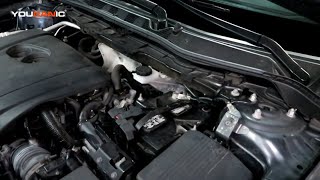
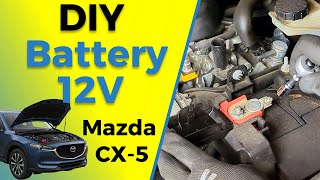
![How to [EASILY] Replace the Battery - Mazda CX-5 (2012-2016)](https://img.youtube.com/vi/z-TW5Zmo-WU/mqdefault.jpg)


Used OEM Parts in Stock




New Aftermarket Parts Available


The information in this article is provided for general reference and educational purposes only. Vehicle specifications, procedures, and part compatibility can vary by production date, trim level, and region. Always consult your vehicle's factory service manual and verify part numbers before purchasing or performing repairs. Safety-critical components such as airbags, seat belts, and braking systems should be installed by a qualified professional.
- Mazda CX-5:
- 🎬 Helpful Videos
- 🛍️ Shop This Part
- What's Unique About the 2013-2016 Mazda CX-5
- Symptoms You May Notice
- Most Likely Causes
- Rare But Worth Checking
- Diagnosis Steps
- Parts You'll Likely Need
- Related Codes That Often Appear With This One
- Technical Service Bulletins (TSBs) & Recalls
- Platform-Specific Known Issues
- Mechanic-Grade Diagnostic Values
- Hidden / Shadow Codes Worth Checking
- Scan Tool Commands That Help
- Wiring & Ground Locations
- Real Owner Repair Stories
- OEM Part Supersession History
- Model Year Variations Within This Range
- Diagnostic Flowchart
- Other Known Issues on This Vehicle
- Used vs. New Parts: Buying Guide for This Vehicle
- Real Owner Stories
- 2014 Mazda CX-5
- 2013 Mazda CX-5
- Related OBD-II Codes
- Frequently Asked Questions
- 🎟️ Get 5% Off