

P0604 on 2011-2016 Ford Focus: DPS6 Transmission Control Module (TCM) Failure Causes and Fixes
On a 2011-2016 Ford Focus, code P0604 almost always points to a failing Transmission Control Module (TCM), a well-known issue with the DPS6 transmission. The fix is replacing the TCM, which requires professional programming and costs between $800 and $1,500. Ford extended the warranty for this part to 10 years/150,000 miles under program 14M02, and even offered a final one-time replacement for expired vehicles until June 30, 2025.
- P0604 on a 2011-2016 Focus with an automatic transmission is not a generic code; it almost certainly means the Transmission Control Module (TCM) is failing.
- Do not continue to drive the vehicle. A complete TCM failure can cause a sudden loss of power, creating a dangerous situation.
- Before paying for a repair, contact a Ford dealership with your VIN to see if your vehicle is covered under one of the many warranty extensions for the TCM, such as 14M02.
- As a preliminary, low-cost step, cleaning the main chassis ground points under the airbox can sometimes resolve communication-related symptoms that mimic TCM failure.
- The same issue plagues the 2011-2016 Ford Fiesta, which uses the identical DPS6 transmission and TCM.
What's Unique About the 2011-2016 Ford Focus

The Ford Focus from this era is infamous for problems with its DPS6 'PowerShift' dual-clutch automatic transmission, also known as the 6DCT250. Unlike on other vehicles where P0604 might be a random glitch or a battery issue, on this specific car, it is a very strong indicator of the imminent or current failure of the Transmission Control Module (TCM). The issue stems from the transmission's dry-clutch design, which is prone to overheating and excessive wear, and a TCM with internal connection failures. Ford has faced class-action lawsuits and issued multiple warranty extensions (like Customer Satisfaction Program 14M02) for these TCMs due to their extremely high failure rate.
Symptoms You May Notice
- Check Engine Light illuminated
- Harsh, jerky, or erratic gear shifts
- Delayed or failed shifts, sometimes with excessive revving
- Sudden loss of drive, as if the car slipped into neutral
- No-start or intermittent starting issues
- Flashing gear selector light (PRNDL/S) on the instrument cluster
- Warning messages like 'Hill Start Assist Not Available' or 'Parking Aid Malfunction'
- Car stalls when coming to a stop
- Replacing the Powertrain Control Module (PCM). On this car, P0604 almost always relates to the TCM, not the PCM.
- Replacing the battery without confirming it's actually bad. While a possible cause, the TCM is far more likely to be the root problem, and a new battery will not fix a failed module.
- Replacing the clutch pack or shift actuators. While these are also common failure points on the DPS6, they typically produce different codes related to clutch position or actuator circuits (e.g., P0902, P090C). P0604 is an internal module error.
Most Likely Causes

- Faulty Transmission Control Module (TCM) 🔴 High Probability The original TCMs (part numbers prior to AE8Z-7Z369-F) used compliant pin connections internally that would develop micro-fractures and fail from heat and vibration. Updated modules use more robust soldered connections to fix this. The entire DPS6 system is known for design flaws and high failure rates.
How to confirm: After ruling out battery and wiring/ground issues, the presence of P0604 (often with other codes like U0100, P0606) is a definitive indicator. A Ford dealer or transmission specialist can confirm with an advanced scan tool. The diagnosis is so common that many owners report the dealer identifies it immediately.
Typical fix: Replace the Transmission Control Module. The new module must be programmed to the vehicle and have the adaptive learning procedure performed.
Est. part cost: $500-$1100 - Low Battery Voltage or Failing Alternator 🟡 Medium Probability All modern control modules are sensitive to voltage. A weak battery can cause temporary memory corruption during startup, triggering this code before the TCM has completely failed. The 2.0L engine can crank over with a weak battery, masking the underlying issue.
How to confirm: Test the battery voltage with a multimeter. It should be above 12.4V with the engine off and between 13.5V and 14.8V with the engine running. A load test is the best way to confirm battery health. If the battery is several years old, it's a primary suspect.
Typical fix: Replace the vehicle's battery, clear the codes, and perform a test drive. If the code returns, the TCM is the likely culprit.
Est. part cost: $150-$350 - Poor TCM Power or Ground Connections ⚪ Low Probability
How to confirm: Visually inspect the wiring harness and connectors going to the TCM. More importantly, check the main ground points. There are two critical grounds located under the air filter box that are known to have poor contact from the factory due to being installed on a painted surface. Another is near the battery. These should be removed, the paint underneath sanded to bare metal, and re-secured.
Typical fix: Clean the ground connections by sanding the paint off the chassis contact point or repair the damaged section of the wiring harness. Some owners add supplementary ground straps as a preventative measure.
Est. part cost: $10-$50
Rare But Worth Checking
- Water Intrusion into TCM:
Diagnosis Steps
- Read all fault codes from all vehicle modules using an OBD-II scanner capable of reading transmission codes.
- Check the battery and charging system. Ensure battery voltage is stable and above 12.4V (engine off) and the alternator is charging correctly (13.5-14.8V engine on). A weak battery is a common cause of spurious module errors.
- If battery/charging system is healthy, inspect and clean the primary ground connections. Remove the airbox to access two ground points on the chassis rail; unbolt them, sand the paint underneath to bare metal, apply dielectric grease, and re-tighten.
- Inspect the wiring harness and connectors at the TCM for any signs of corrosion, moisture, or physical damage.
- Contact a Ford dealership with your VIN to check for coverage under Customer Satisfaction Program 14M02. Even if the 10yr/150k mile warranty is expired, Ford offered a one-time replacement through June 30, 2025.
- If the above steps do not resolve the issue and no warranty is available, the TCM is faulty and requires replacement.
- The new TCM must be programmed and have the clutch adaptive learn procedure performed by a Ford dealer or a qualified independent shop with the correct software (like Ford IDS).
Parts You'll Likely Need

- Transmission Control Module (TCM)
(OEM #AE8Z-7Z369-F)— This is the component that fails, causing the P0604 code and associated transmission symptoms on this specific vehicle. The part number AE8Z-7Z369-F is the updated, more reliable version that supersedes previous versions like AE8Z-7Z369-B, -D, and -E. It features improved internal connections to prevent failure.
Trusted brands: Motorcraft (OEM)
OEM price range: $505 - $1100
Aftermarket price range: $200 - $700 (Remanufactured or pre-programmed used units from sources like eBay)
Related Codes That Often Appear With This One
- P0606 — This code indicates a generic 'Control Module Processor Error'. It's a related internal failure code that often points to the same failing TCM. TSB 16-0129 directly addresses this code for TCM issues.
- U0100 — This code means 'Lost Communication With ECM/PCM'. When the TCM fails, it can stop communicating on the vehicle's network, triggering this code in other modules.
- U0101 — This code means 'Lost Communication with TCM'. This is a direct confirmation that other modules on the car can no longer communicate with the Transmission Control Module.
- U1013 — This code for 'Invalid Internal Control Module Monitoring Data Received' is also frequently cited alongside the others in TSB 16-0129 as an indicator of TCM failure.
Technical Service Bulletins (TSBs) & Recalls
- TSB 16-0129: Addresses intermittent no-start, loss of power, and engagement issues with codes U0100, U0101, U1013, and P0606. It instructs technicians to check for these symptoms and codes, and if present, replace the TCM.
- Customer Satisfaction Program 14M02: This is the primary document extending the warranty on the DPS6 Transmission Control Module to 10 years or 150,000 miles from the vehicle's warranty start date.
Platform-Specific Known Issues
- The DPS6 transmission was the subject of multiple class-action lawsuits for defects including shuddering, hesitation, and premature failure of the clutch and TCM.
- Ford issued Customer Satisfaction Program 14M02, extending TCM warranty coverage to 10 years or 150,000 miles. A supplement to this program also offered a final one-time replacement for vehicles outside this warranty until June 30, 2025.
- Due to parts shortages at various times, owners have reported long waits for a replacement TCM, even when covered under warranty.
Mechanic-Grade Diagnostic Values
- Ground resistance at TCM ground points — expected: Below 0.1 Ω. Failure: Resistance above 0.1 Ω indicates a poor ground connection that can cause module errors.
- Battery voltage at module during engine cranking — expected: Above 9.0 V. Failure: Voltage dropping below 9.0V during cranking can corrupt the module's RAM and trigger a P0604 code.
- Clutch travel distance after adaptive learn — expected: 9-14mm for both clutch A and B. Failure: Values outside this range, or significant variation between routines, can indicate a problem with the clutch, actuators, or the TCM itself.
Scan Tool Commands That Help

- Ford IDS / FORScan: TCM Adaptive Learning — This procedure is mandatory after replacing the TCM or the clutch assembly. It allows the module to learn the clutch engagement points and shift drum positions. Failure to perform this can result in harsh shifts, shudder, and other drivability problems.
- Ford IDS / FORScan: Module Firmware Update — Used to load the correct calibration file onto a new or used TCM. With FORScan, this involves manually downloading the correct VBF files from Ford and using the 'custom' programming tab to load the secondary bootloader and strategy files.
- Ford IDS / FORScan: Reset All Adaptations — This function is used to clear the old learned values from the TCM's memory before starting a new adaptive learn procedure. It is the first step in resolving shifting issues via software.
- Ford IDS / FORScan: Clutch System Test — This is a diagnostic function within the TCM menu that performs a series of tests on the clutch travel and actuators to verify their mechanical and electrical integrity before attempting an adaptive learn.
Wiring & Ground Locations

- Main Chassis Grounds — Located on the driver's side frame rail, underneath the air filter box assembly.. These are the primary ground points for the TCM. They are notoriously installed on painted surfaces from the factory, leading to poor connections over time. A bad ground can cause voltage instability, triggering a P0604 RAM error. Cleaning the paint to bare metal is a critical diagnostic step.
- C175T — This is the main electrical connector for the Transmission Control Module (TCM) itself.. All power, ground, and communication signals for the TCM pass through this connector. Inspecting the pins for corrosion or damage is essential when diagnosing a P0604, especially if there are also communication codes like U0101.
Real Owner Repair Stories
- YouTube user comment on a TCM replacement video (2012-2018 Ford Focus (specific year not mentioned)) — Unspecified symptoms that led to a TCM replacement diagnosis.
❌ Tried (didn't work) The initial diagnosis pointed towards replacing the TCM, which would have cost over $900.
✅ What actually fixed it The technician, a former Ford dealership employee, first cleaned the ground areas on the car's body where the ground straps connect. This completely fixed the issue for some customers without needing to replace the TCM. - Reddit user creativitydrain in r/FordFocus (2014 Ford Focus with 155,000 miles) — Symptoms requiring a TCM replacement.
❌ Tried (didn't work) Being just outside of the extended warranty, the owner wanted to avoid dealer prices for programming a replacement module.
✅ What actually fixed it The user acquired a used TCM from a 2012 Focus and sought advice on DIY programming. The confirmed solution path was to use software like FORScan or rent Ford's IDS software to install the new module, perform the adaptive learn procedure, and 'marry' the new TCM to the car.
OEM Part Supersession History
AE8Z-7Z369-A, AE8Z-7Z369-B, AE8Z-7Z369-C, AE8Z-7Z369-D, AE8Z-7Z369-E→AE8Z-7Z369-F— The original TCMs used compliant pin connections for critical internal components that would fail due to heat and vibration. The updated 'F' revision is remanufactured with more durable soldered connections to resolve this design flaw.
Heads up: While a TCM from a Fiesta may physically fit, it will require a complete re-flash with Focus-specific software to function correctly.
Model Year Variations Within This Range
- 2011-2014: Vehicles built on or before June 5, 2013, were equipped with transmission input shaft seals that were more prone to leaking and contaminating the clutch, an issue addressed in TSB 16-0109. While not directly causing P0604, the associated shudder and drivability issues often occurred alongside TCM failures.
Diagnostic Flowchart
Real Owner Stories
Aggregated from forums and TSBs cited above. Mileages and costs reflect what owners reported in those sources.
2014 Ford Focus SE — 130000 miles
Symptoms: The car suddenly cut out while driving to church, though the owner was able to limp it back home. An AutoZone scanner pulled stored codes P0604 (RAM Error) and P1674 (Software Corrupted).
What fixed it: The mechanic attempted to clear the codes, but the TCM codes would immediately pop right back up, indicating a hard failure requiring TCM replacement.
Source hint: Reddit r/FordFocus
2014 Ford Focus
Symptoms: Experienced TCM failure symptoms accompanied by code P0606. The owner was informed by a technician that Ford was no longer covering the repair because the vehicle was out of warranty.
What fixed it: Required physical replacement of the TCM with updated part AE8Z-7Z369-F, followed by software programming.
Cost: $505-$505
Source hint: Reddit r/FordFocus - Thread 'TCM failure 2014 Ford Focus'
2011-2016 Ford Focus
Symptoms: Intermittent communication issues and spurious TCM codes caused by poor factory grounding on painted surfaces.
What fixed it: Performed the 'ground strap fix' by removing the airbox, locating the two ground studs on the frame rail, sanding the paint to bare metal, and reattaching the ground wires.
Source hint: FocusFanatics Forum
2011-2016 Ford Focus — ~150000 miles
Symptoms: TCM failure occurring after the vehicle passed the 10-year/150k-mile mark. The owner received a letter about the one-time replacement offer.
What fixed it: Approved for a free TCM replacement under Customer Satisfaction Program 14M02, though the dealer confirmed the replacement part was backordered with no ETA.
Source hint: Reddit r/FordFocus - Thread 'Ford letter - free TCM replacement after passing 10 years / 150k miles'
Related OBD-II Codes
Frequently Asked Questions
Is the TCM failure causing code P0604 on my 2011-2016 Ford Focus covered under warranty?
What is the updated part number for the Ford Focus DPS6 TCM?
Can a bad battery cause a P0604 code on my Focus?
How do I fix the ground connection issue on the Focus DPS6 transmission?
Does TSB 16-0129 apply to my Ford Focus?
Do I need to program a new TCM after installing it on my Focus?
Helpful Videos
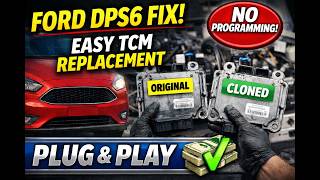
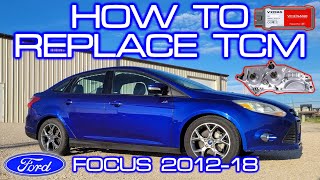
We Have This Part in Stock


The information in this article is provided for general reference and educational purposes only. Vehicle specifications, procedures, and part compatibility can vary by production date, trim level, and region. Always consult your vehicle's factory service manual and verify part numbers before purchasing or performing repairs. Safety-critical components such as airbags, seat belts, and braking systems should be installed by a qualified professional.
- Ford Focus:
- 🎬 Helpful Videos
- 🛍️ Shop This Part
- What's Unique About the 2011-2016 Ford Focus
- Symptoms You May Notice
- Most Likely Causes
- Rare But Worth Checking
- Diagnosis Steps
- Parts You'll Likely Need
- Related Codes That Often Appear With This One
- Technical Service Bulletins (TSBs) & Recalls
- Platform-Specific Known Issues
- Mechanic-Grade Diagnostic Values
- Scan Tool Commands That Help
- Wiring & Ground Locations
- Real Owner Repair Stories
- OEM Part Supersession History
- Model Year Variations Within This Range
- Diagnostic Flowchart
- Real Owner Stories
- 2014 Ford Focus SE — 130000 miles
- 2014 Ford Focus
- 2011-2016 Ford Focus
- 2011-2016 Ford Focus — ~150000 miles
- Related OBD-II Codes
- Frequently Asked Questions
- 🎟️ Get 5% Off