

P0604 on 2007-2014 Chevrolet Tahoe: RAM Error Causes and Fixes
P0604 on a 2007-2014 Tahoe indicates an internal memory error in a control module, often the PCM or TCM. Before suspecting a bad module, check for a weak battery or poor connections, as low voltage is a very common trigger for this code. A failing TCM, located inside the transmission pan, is a frequent culprit on this platform.
- P0604 means there is a Random Access Memory (RAM) error in a control module, most often the PCM or TCM.
- The most common cause is not a failed module, but a weak battery or poor electrical connection causing a voltage drop.
- Always start diagnosis by testing the battery and charging system before considering expensive module replacement.
- This code can cause serious drivability issues like stalling or a no-start condition, so it should be addressed promptly.
- If a module replacement is necessary, it will require programming to the vehicle's VIN.
What's Unique About the 2007-2014 Chevrolet TAHOE
On this generation of Chevrolet Tahoe (GMT900 platform), the P0604 code is often linked to electrical system stability rather than an outright module failure. The control modules are sensitive to low voltage. A weak or dying battery, poor grounds, or a voltage spike from a jump-start can easily corrupt the module's RAM and trigger this code. Specifically, GM Technical Service Bulletin #PIP4653E confirms that P0604 can appear in the Transmission Control Module (TCM), which can lead to shifting problems. The TCM on these models is located inside the transmission oil pan, where it is subjected to high heat, which can lead to internal component failure over time.
Diagnostic Flowchart
Tap your situation to follow the diagnostic path that matches what you're seeing on this vehicle.
Symptoms You May Notice
- Check Engine Light is on
- Vehicle may not start or may be hard to start
- Intermittent stalling or engine shutting off unexpectedly
- Harsh or erratic transmission shifting, or stuck in one gear (limp mode)
- ABS or Traction Control lights may illuminate
- Reduced fuel economy
- In some cases, no noticeable symptoms other than the Check Engine Light
- Replacing the PCM or TCM immediately without thoroughly testing the battery and checking all major power and ground connections first. Many owners resolve the code simply by replacing an old battery or cleaning a corroded ground strap.
Most Likely Causes
- Weak or Failing Battery 🔴 High Probability GMT900 control modules are highly sensitive to low voltage. A battery that drops below the required voltage during cranking can corrupt the RAM and is a very common trigger for a false P0604.
How to confirm: Test the battery with a multimeter or electronic battery tester. A healthy, fully charged battery should read approximately 12.6 volts at rest. While cranking, the voltage should not drop below 9.6V.
Typical fix: Recharge or replace the vehicle's 12V battery. After replacement, clear the codes and perform a drive cycle.
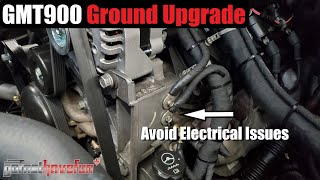
Est. part cost: $150-$300 - Poor Battery Connections or Grounds 🟡 Medium Probability Corrosion on battery terminals or loose/corroded main engine ground straps are common issues that create voltage drops, mimicking a weak battery. Key ground points on the Tahoe are on the frame behind the front wheels and on the cylinder heads 🎬 Watch: How to upgrade and clean your GMT900 ground straps. (G103/G104).
How to confirm: Visually inspect battery terminals for corrosion and ensure they are tight. Follow the main negative cable to its connection points on the body and engine block. Check main engine and body ground straps for tightness and corrosion. Resistance between the module's ground pin and the negative battery terminal should be below 0.1 Ω.
Typical fix: Clean the battery terminals and all ground connection points with a wire brush until shiny. Tighten all related connections securely.
Est. part cost: $5-$25 (for cleaning supplies or a new ground strap) - Faulty Transmission Control Module (TCM) 🟡 Medium Probability GM TSB #PIP4653E specifically calls out P0604 being stored in the TCM. The TCM (part of the TEHCM) is located inside the 6L80 transmission pan, where high temperatures contribute to failure.
How to confirm: A professional scan tool is needed to see if the code is originating from the TCM. If the code is isolated to the TCM and power/grounds are good, the module is the likely cause. TSB #PIP4653E suggests a reprogram may fix the issue.
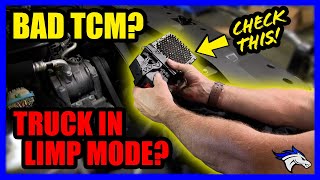
Typical fix: First, attempt to reprogram the TCM with the latest GM software. If the code returns, replace the Transmission Control Module/TEHCM assembly 🎬 Watch: How to diagnose and replace a faulty TCM. and program the new module.
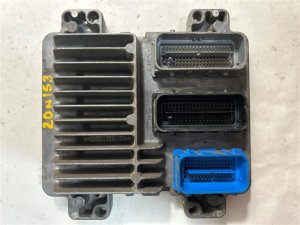
Est. part cost: $250-$700 - Faulty Powertrain Control Module (PCM) ⚪ Low Probability While less common than other causes, the PCM (often an E38 type) can fail internally due to heat, vibration, or age.
How to confirm: This is a diagnosis of exclusion. If the battery, charging system, all wiring, and grounds to the PCM are confirmed to be good (stable voltage and low resistance), the PCM is the likely culprit. This was the final fix for one owner after trying everything else.
Typical fix: Replace and reprogram the Powertrain Control Module. This requires a GM-specific tool like a Tech 2 or MDI with a subscription to program the VIN and perform a security relearn.
Est. part cost: $400-$1000
Rare But Worth Checking
- Charging System Fault: A failing alternator can cause voltage spikes or drops, leading to RAM corruption in the control modules. With the engine running, output should be stable between 13.5 and 14.5 volts.
- Corrupted Software or Failed Reflash: A failed software update, an interruption during programming, or the use of a low-quality aftermarket tuner can corrupt the module's memory and set this code.
Diagnosis Steps
- Check for other DTCs. Address any communication (U-codes) or power-related codes first.
- Fully charge and load-test the 12V battery. Voltage should be ~12.6V at rest and not drop below 9.6V during cranking.
- Inspect the battery terminals and cables for corrosion or looseness. Clean and tighten as necessary.
- Inspect the main power and ground connections. Key locations on the GMT900 platform include straps on the cylinder heads (G103/G104), frame rails behind the front wheels, and the main block ground. Ensure connections are clean and tight.
- Check the vehicle's charging system. With the engine running, the alternator should produce a stable voltage between 13.5 and 14.5 volts.
- Clear the DTCs. Disconnecting the battery for 30 minutes can help fully reset modules. Perform a drive cycle. If the code does not return, the issue was likely a temporary low-voltage condition.
- If the code returns, use a professional scan tool to determine which module is setting the code (PCM or TCM).
- If the TCM is the source, GM TSB #PIP4653E suggests a software reprogram may be the fix.
- If all power and ground inputs to the suspect module are good and a reprogram fails, the module itself has likely failed and requires replacement and programming.
Parts You'll Likely Need
- Vehicle Battery — A weak or failing battery is the most frequent cause of P0604 due to low voltage corrupting module memory during startup.
Trusted brands: ACDelco, DieHard, Interstate
OEM price range: $200-$350
Aftermarket price range: $150-$300 - Powertrain Control Module (PCM)
(OEM #e.g., ACDelco 12633238 (for 2011 5.3L, verify by VIN))— If power and ground sources are stable, the PCM's internal RAM may have failed, requiring module replacement.
Trusted brands: ACDelco (GM Genuine), Cardone (Remanufactured), FS1 (Remanufactured)
OEM price range: $500-$1000
Aftermarket price range: $250-$600 - Transmission Control Module (TCM)
(OEM #e.g., ACDelco 24256124 (for 6L80E, verify by VIN))— A GM TSB specifically identifies the TCM as a possible source for this code on Tahoes, indicating an internal fault, often due to heat exposure inside the transmission.
Trusted brands: ACDelco (GM Genuine), Dorman
OEM price range: $400-$700
Aftermarket price range: $165-$500 - Engine Ground Strap
(OEM #e.g., ACDelco 23249195)— The original ground straps can corrode or break, causing high resistance and voltage drops that trigger the P0604 code.
Trusted brands: ACDelco (GM Genuine), Dorman
OEM price range: $15-$40
Aftermarket price range: $10-$25
Related Codes That Often Appear With This One
- P0601 — This code indicates a 'Read Only Memory (ROM)' or checksum error, another type of internal module memory fault. Both can be triggered by similar electrical issues or internal failure, and are listed together in TSB #PIP4653E.
- U0100 — This code means 'Lost Communication With ECM/PCM'. If the PCM is failing internally (causing P0604), it may also stop communicating intermittently or entirely with other modules on the CAN bus network.
- P0602 — This code indicates a 'Control Module Programming Error'. It can appear with P0604 after a failed reflash attempt, significant voltage drop during an update, or if an incorrect module is installed.
Technical Service Bulletins (TSBs) & Recalls
- Bulletin #PIP4653E: Notes that DTCs P0601, P0603, P0604, P062F or P1621 can be stored in the Transmission Control Module (TCM). It advises that if the code is *only* in the TCM, a reprogram should be performed.
- Bulletin #05-06-04-060A: An informational bulletin stating that P0604 is one of several DTCs indicating an internal control module fault that can be set by multiple different modules, and it's critical to identify which module set the code before replacing parts.
Platform-Specific Known Issues
- TCM Failure due to Internal Location: The Transmission Control Module (TCM) for the 6L80 transmission is located inside the transmission oil pan, combined with the valve body (as a TEHCM). This location subjects it to constant high temperatures and vibration, leading to a higher failure rate where it can set a P0604 code.
- Grounding Point Corrosion: Owners on forums like TahoeYukonForum frequently report that cleaning and tightening main engine and chassis grounds resolves intermittent electrical issues, including false module codes. The primary grounds to inspect are G103 (passenger cylinder head) and G104 (driver cylinder head).
Mechanic-Grade Diagnostic Values
- Module Ground Circuit Resistance — expected: < 0.1 Ω. Failure: A reading higher than 0.1 Ohms indicates excessive resistance in the ground circuit, which can cause voltage drops and module malfunction.
- Alternator Output Voltage (Engine Running) — expected: 13.5 - 14.5 Volts. Failure: Voltage below 13.5V or above 14.8V can indicate a charging system fault that may corrupt module memory.
- Module Voltage During Cranking — expected: > 9.6 Volts. Failure: Voltage dropping below 9.6V during engine start can cause a temporary RAM corruption and set a false P0604.
- 6L80 TEHCM On/Off Shift Solenoid Resistance — expected: 20 - 40 Ω. Failure: A resistance reading outside this range on any of the on/off type shift solenoids points to an internal failure of the TEHCM/TCM assembly.
Hidden / Shadow Codes Worth Checking
- Symptom Byte (e.g., P0604 71): GM uses two-digit hexadecimal symptom bytes to provide more specific information about a DTC. For example, a symptom byte of '71' often indicates 'Invalid Serial Data Received,' pointing to a software or communication issue rather than a pure hardware failure. (see via Visible using dealer-level scan tools like the GM GDS2 (Global Diagnostic System 2) or a Tech 2.)
Scan Tool Commands That Help
- GM GDS2/Tech2: Service Programming System (SPS) — This function is required after replacing the TCM or ECM to download the correct VIN-specific software and calibration files to the new module. Failure to program the module will result in a no-start condition or immediate limp mode.
- GM GDS2/Tech2: Module Setup / Relearn Procedures — After programming a new ECM, functions like Crank Position Variation Relearn and Idle Learn Reset must be performed to synchronize the new module with the engine's sensors and prevent other DTCs from setting.
- GM Tech 2: Idle Learn Reset — Specifically used after replacing the ECM to reset the learned idle values. This is performed with the ignition on and engine off to prevent idle-related codes.
Wiring & Ground Locations
- G103 — On the front of the passenger-side cylinder head.. This is a primary ground connection for the powertrain modules. Corrosion or looseness here can cause unstable voltage and trigger memory codes like P0604.
- G104 — On the rear of the driver-side cylinder head.. Another critical engine-to-chassis ground point. A poor connection here can cause a variety of electrical faults, including module communication and memory errors.
- G101 — Located at the lower front of the engine, on the block.. This ground point directly serves the Engine Control Module (ECM) and Transmission Control Module (TCM). A fault here can directly impact module power stability.
- Underhood Fuse Block Fuses — In the main fuse box in the engine compartment, driver's side.. Fuses F14 (TCM) and F19 (TRANS) supply ignition voltage to the Transmission Control Module. A poor connection or blown fuse will cause the TCM to lose power and can set memory fault codes.
Real Owner Repair Stories
- gmtruckclub.com forum user (2009 Chevrolet Silverado (Same GMT900 platform/6L80 transmission)) — Check engine light with codes P0604 and U0100 (Lost Communication with TCM). Transmission was stuck in limp mode.
❌ Tried (didn't work) Replacing the battery, Clearing codes (they returned immediately), Visually checking wiring harness
✅ What actually fixed it The final repair was replacing the Transmission Electro-Hydraulic Control Module (TEHCM/TCM) located inside the transmission pan and programming the new module. - YouTube user 'weberauto' (2010 Chevrolet Silverado) — Check Engine Light with only code P0604 present after an alternator issue was fixed.
❌ Tried (didn't work) Removing aftermarket wiring, Reprogramming/updating the existing PCM software
✅ What actually fixed it Replacing the Powertrain Control Module (PCM) and performing the required setup procedures (crankshaft position learn, idle learn, theft deterrent relearn) fixed the issue. - TahoeYukonForum.com user (2011 Chevrolet Tahoe) — Check engine light with code P0604, transmission stuck in 3rd gear (limp mode).
❌ Tried (didn't work) Not specified, owner took it to a shop for diagnosis.
✅ What actually fixed it A transmission shop diagnosed a failed Transmission Control Module (TCM). Replacing and programming the new TCM resolved all symptoms and cleared the code.
OEM Part Supersession History
24256124→24276411 (and others)— Part revision and update by the manufacturer.
Heads up: The TCM (TEHCM) is VIN-specific. It is critical to verify the exact part number required for your vehicle's VIN before ordering. A remanufactured alternative from Sonnax is part number GM6L-TEHCM-C5.
Model Year Variations Within This Range
- 2009-2014: Starting in model year 2009, the 4-speed automatic was replaced with the 6-speed 6L80 automatic transmission. This is significant because the P0604 code on this platform is very commonly traced to the internal Transmission Control Module (TEHCM) of the 6L80.
- 2007-mid 2011: Earlier models in this generation were more prone to excessive oil consumption due to the Active Fuel Management (AFM) system's PCV design. While unrelated to P0604, it's a known issue to be aware of on earlier trucks. An updated valve cover design helps mitigate this.
Helpful Videos
Used OEM Parts in Stock



New Aftermarket Parts Available

The information in this article is provided for general reference and educational purposes only. Vehicle specifications, procedures, and part compatibility can vary by production date, trim level, and region. Always consult your vehicle's factory service manual and verify part numbers before purchasing or performing repairs. Safety-critical components such as airbags, seat belts, and braking systems should be installed by a qualified professional.
- Chevrolet TAHOE:
- 🎬 Helpful Videos
- 🛍️ Shop This Part
- What's Unique About the 2007-2014 Chevrolet TAHOE
- Diagnostic Flowchart
- Symptoms You May Notice
- Most Likely Causes
- Rare But Worth Checking
- Diagnosis Steps
- Parts You'll Likely Need
- Related Codes That Often Appear With This One
- Technical Service Bulletins (TSBs) & Recalls
- Platform-Specific Known Issues
- Mechanic-Grade Diagnostic Values
- Hidden / Shadow Codes Worth Checking
- Scan Tool Commands That Help
- Wiring & Ground Locations
- Real Owner Repair Stories
- OEM Part Supersession History
- Model Year Variations Within This Range
- 🎟️ Get 5% Off