

P0604 on 2008-2015 Chevrolet Silverado 3500: RAM Error Causes and Fixes
P0604 on a Silverado 3500 typically signals an internal Random Access Memory (RAM) error within a control module, most often the Powertrain Control Module (ECM) or, particularly on Duramax models, the Transmission Control Module (TCM). The fix usually requires professional diagnostics to isolate the faulty module, followed by reprogramming or replacement, with costs ranging from $500 to over $1600.
- P0604 is a serious code indicating an internal failure in a key computer, usually the TCM or ECM.
- Before replacing any expensive modules, always check the battery, its connections, and all main power/ground wires first.
- This is not a DIY-friendly repair. The fix requires expensive, specialized tools for programming the new module to your truck's VIN.
- Consult GM's Technical Service Bulletins (TSBs), as they show a known issue with the Transmission Control Module (TCM) for this code.
- If you have an aftermarket engine tune, it could be the cause. Try flashing back to the stock program before proceeding with hardware replacement.
What's Unique About the 2008-2015 Chevrolet SILVERADO 3500
For this generation of Silverado, especially those equipped with the 6.6L Duramax engine and Allison transmission, the Transmission Control Module (TCM) is a well-documented point of failure. General Motors issued Technical Service Bulletin #PIP4653E noting that DTCs like P0604 may be stored in the TCM, indicating a known pattern. The TCM (part numbers A50/T14) is located in the engine bay on top of the fan shroud, where high heat and potential static discharge from the fan belt are believed to contribute to its high failure rate. Another bulletin, #05-06-04-060A, acknowledges that P0604 can appear in multiple modules, but real-world data points to the Allison TCM as a primary culprit for these trucks.
Diagnostic Flowchart
Tap your situation to follow the diagnostic path that matches what you're seeing on this vehicle.
Generation note: This year range covers the end of the GMT900 generation (2008-2014) and the first year of the K2XX generation (2015). While the P0604 code has the same meaning for both, the physical location of the control modules, wiring, and specific part numbers will differ. For Duramax models from 2009-2015, the Allison A50/T14 TCM is a common failure point. Note that as of early 2025, TCMs for 2006-2008 models were reported as discontinued by GM, making repairs for those specific years more difficult.
Symptoms You May Notice
- Check Engine Light is on
- Erratic or harsh transmission shifting, sometimes described as a hard 'clunk' into gear.
- Vehicle may enter 'limp mode' (reduced engine power)
- Engine may stall or have difficulty starting.
- Failure to shift gears or being stuck in one gear.
- ABS or Traction Control lights may illuminate.
- PRNDL (gear indicator) display may be blank or not show the selected gear.
- Replacing internal transmission components (like solenoids or clutches) when the fault lies with the external Transmission Control Module (TCM).
- Replacing the ECM or TCM without first verifying stable battery voltage, clean grounds, and checking for available software updates.
- Immediately replacing a module when the issue is a damaged wire or corroded connector in the harness leading to it.
Most Likely Causes
- Faulty Transmission Control Module (TCM) 🔴 High Probability As cited in NHTSA TSB #PIP4653E and numerous owner forums, the Allison TCM is a known high-failure item on 6.6L Duramax trucks. Its location in a high-heat area of the engine bay is a primary contributing factor.
How to confirm: A professional technician will use a GM-specific scan tool to check for communication with the TCM. Loss of communication (often with code U0101) alongside P0604 strongly points to the TCM. They will also check power and ground circuits to the TCM before condemning the module.
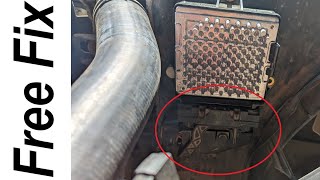
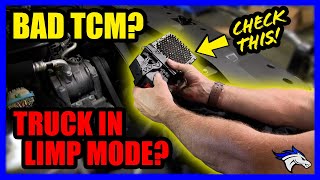
Typical fix: The TCM is replaced. 🎬 See this walkthrough on how to diagnose and replace the TCM. Many specialists offer pre-programmed units that are plug-and-play, avoiding a trip to the dealer for programming. In some cases, the original module can be sent out for repair.
Est. part cost: $300-$750 - Faulty Powertrain Control Module (ECM/PCM) 🟡 Medium Probability The ECM is the central computer, and internal RAM failure can occur on any vehicle. While less common than TCM failure for this specific code on Duramax trucks, it is the primary suspect on gasoline engine models.
How to confirm: After ruling out the TCM, wiring, grounds, and power supply, the ECM is diagnosed as the likely culprit. A diagnostic flowchart in the service manual will confirm this. The first step is often attempting to reprogram the module; if the code returns immediately, replacement is necessary.
Typical fix: The ECM is replaced and must be programmed with the vehicle's specific VIN and configuration. This often requires subsequent relearn procedures for crankshaft position variation and theft deterrent systems.
Est. part cost: $300-$800 - Low Battery Voltage or Poor Connections ⚪ Low Probability All modern control modules require stable voltage. These heavy-duty trucks have high electrical demands, and a weak battery or poor ground can cause voltage drops during cranking, which can corrupt memory and trigger this code. The engine-to-firewall ground strap is a known weak point.
How to confirm: Test the battery's health, voltage (should be above 12.4V at rest), and cranking voltage (should stay above 9.6V). Inspect battery terminals and main power/ground cables for corrosion or looseness. Specifically check the main PCM ground on the passenger side of the engine block and the engine-to-firewall ground strap.
Typical fix: Clean battery terminals and cable ends, tighten connections, or replace a weak or failing battery.
Est. part cost: $150-$350
Rare But Worth Checking
- Corrupted Software or Aftermarket Tuning: An improper software flash or a glitchy aftermarket performance tune can corrupt the module's memory, causing a P0604 code. A Reddit user with a tuned truck experienced a persistent P0604, highlighting that even if a tune ran well for a long time, it can be a factor in complex diagnostic situations. Reverting to the stock program is a critical diagnostic step.
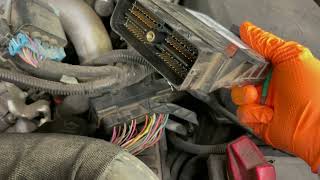
- Wiring Harness or Ground Issues: A poor ground connection to the ECM/TCM or a damaged wire in the power supply or communication enable circuit can cause intermittent voltage drops, leading to memory errors. A forum user on ChevroletForum.com was advised to thoroughly check all power and ground feeds and pin fitment at the PCM connectors 🎬 Watch: How to inspect and fix a damaged TCM connector. before replacing the module. On GMT900 trucks, key ground locations are on the cylinder heads and the frame under the driver's side floorboard.
Diagnosis Steps
- Check the battery and charging system. Ensure voltage is stable and above 12.4 volts at rest and does not drop below 9.6V during cranking.
- Inspect all battery terminals, main power cables, and engine/chassis ground straps for corrosion and tightness. Pay special attention to the main module grounds on the engine block.
- Scan for all DTCs in all modules. Note if P0604 is present in the ECM, TCM, or both. The presence of U0101 is a key clue for TCM failure.
- Attempt to clear the code. If it returns immediately without starting the engine, it indicates a hard internal fault.
- Using a professional scan tool, check for any available software updates for the ECM and TCM. TSBs suggest a re-flash may be a solution, though often the code returns if the hardware is failing.
- Visually inspect the wiring harness leading to the suspect module (ECM or TCM) for any signs of damage, chafing, or corrosion, especially where the harness may rub against other components.
- If all wiring, grounds, and power supplies are confirmed to be good and the code persists after a software update, the module itself is faulty and requires replacement or repair.
Parts You'll Likely Need
- Transmission Control Module (TCM)
(OEM #ACDelco 24256861 (Superseded by other numbers like 19434978).)— This is the most frequently cited cause for P0604 on Duramax-equipped trucks of this era, as noted in GM TSBs and extensive owner experiences.
Trusted brands: ACDelco (OEM), Dorman, Synapse Auto (Remanufactured), Circuit Board Medics (Repair Service)
OEM price range: $400-$750
Aftermarket price range: $250-$550 - Engine Control Module (ECM/PCM)
(OEM #Varies by year and engine. Example for 2014 w/ 6.0L Gas: 12692865. Example for 2014 w/ 6.2L Gas: 12657306.)— If the code is not isolated to the TCM, or on gasoline engine models, the ECM is the next most likely cause of an internal RAM error.
Trusted brands: ACDelco (OEM), Cardone, FS1 (Flagship One)
OEM price range: $400-$800
Aftermarket price range: $250-$600
Related Codes That Often Appear With This One
- U0101 — Indicates 'Lost Communication with TCM'. This code is very commonly seen with P0604 on Duramax models and is a strong indicator that the TCM has failed.
- P0700 — This is a general 'Transmission Control System Malfunction' code. The TCM requests the ECM to turn on the check engine light by sending this code. It often appears alongside more specific TCM codes like P0604.
- P0601 — This code indicates an 'Internal Control Module Memory Check Sum Error', another type of internal module fault. It is often seen with P0604 as they both point to a failing module.
- P1621 — This is a GM-specific code related to control module long-term memory. Its appearance alongside P0604 is mentioned in TSB #PIP4653E and points strongly to a module failure.
Technical Service Bulletins (TSBs) & Recalls
- 05-06-04-060A: Information on Control Module DTCs P0601, P0602, P0603, P0604, P0606, P062F, P06F3, P1621 which can be shared in multiple modules.
- PIP4653E: Advises technicians to check for P0604 and other codes stored in the Transmission Control Module (TCM).
Platform-Specific Known Issues
- NHTSA Bulletin #PIP4653E specifically points technicians to investigate the Transmission Control Module (TCM) when P0604 is found, suggesting it's a more common failure point than the ECM for this code on some GM trucks.
- NHTSA Bulletin #05-06-04-060A is an informational bulletin that groups P0604 with other internal module fault codes, indicating GM's awareness of these types of failures across various control modules.
- On Duramax models, the Allison TCM (A50/T14) is mounted directly on the fan shroud in the engine bay. This high-heat, high-vibration environment is widely believed to be the cause of the high failure rate for this specific part.
- Owner communities like Diesel Place and repair shops specializing in Duramax trucks frequently discuss the P0604/U0101 code combination as a classic sign of TCM failure, often recommending pre-programmed replacement modules as a standard fix.
Mechanic-Grade Diagnostic Values
- TCM Power Supply Voltage (Key On, Engine Off) — expected: Greater than 11.5 volts. Failure: Voltage below 11.5 volts indicates a power supply issue to the TCM.
- TCM Ground Circuit Resistance — expected: Less than 3.0 ohms. Failure: Resistance greater than 3.0 ohms between the TCM ground pins and the negative battery post indicates a poor ground connection.
- Alternator Output Voltage (Engine Running) — expected: 13.5 to 14.5 volts. Failure: Voltage significantly higher or lower than this range indicates a charging system problem that can cause module errors.
Scan Tool Commands That Help
- GDS2/Tech 2: Module Setup / Relearn — After replacing an ECM or TCM, the GDS2 tool is used to perform critical setup functions like Idle Learn Reset, Crankshaft Position Variation Learn, and Theft Deterrent Relearn to ensure the new module works correctly with the vehicle.
- GDS2: Clear All DTCs — After a module is reprogrammed or replaced, this function is used to clear all codes that were set during the process across all vehicle modules.
- GDS2: Control Functions (Bidirectional Control) — Allows a technician to command specific components (like solenoids, relays, or motors) on and off directly from the scan tool to test their functionality without having to physically access them. This helps isolate a faulty component from a wiring or module issue.
Wiring & Ground Locations
- TCM Connector (A50/T14) — On the driver's side of the engine bay, mounted on top of the fan shroud.. This is the main electrical interface for the TCM. The pins within this connector are known to become loose or spread, causing intermittent power, ground, or communication loss, which can trigger P0604 and U0101. Checking pin tension is a critical step before replacing the module.
- G103 / G104 — G103 is on the passenger side cylinder head, near the front. G104 is on the rear of the driver-side cylinder head.. These are primary engine and module ground points. A loose or corroded connection at these locations can cause unstable voltage and electrical noise, a known cause for corrupting control module memory and setting codes like P0604.
- TCM Power Pins — Within the main TCM connector. Specific pins vary by exact model/year but are typically checked for battery voltage. For example, on some Allison TCMs, pins 1, 2, 3, 4, and 6 are all power inputs.. A diagnostic procedure involves disconnecting the TCM and verifying with a multimeter that these pins have stable battery voltage (over 11.5V) with the key on, engine off. Lack of voltage points to a wiring or fuse issue, not a bad module.
- TCM Ground Pins — Within the main TCM connector. For example, on some Allison TCMs, pins 16, 19, 20, and 21 are ground circuits.. A key diagnostic step is to measure the resistance between these pins and the negative battery post. High resistance (over 3 ohms) indicates a faulty ground wire or connection, which must be repaired before condemning the TCM.
Real Owner Repair Stories
- DuramaxDiesels.com forum user (Duramax truck (year not specified)) — Loss of communication with ECM and TCM, setting codes U1000, U0101, and U0106.
❌ Tried (didn't work) Checked all powers and grounds at the TCM., Traced and ohmed all wires for the GMLAN data link; found no broken or chafed wires.
✅ What actually fixed it Replacing the Transmission Control Module (TCM) resolved all communication codes and fixed the issue. - YouTube video by 'Pine Hollow Auto Diagnostics' (Duramax truck with Allison transmission) — No communication with TCM, setting U0101. Intermittent communication when the connector was disturbed.
❌ Tried (didn't work) Initially suspected a bad TCM due to high failure rates.
✅ What actually fixed it The technician found that two ground terminals inside the main TCM connector were 'hogged out' and loose, causing a poor connection. Tightening/repairing the loose pins within the connector restored communication and fixed the problem without replacing the module itself. - YouTube video by 'Plugnplayparts.com' (Truck with Allison 5-speed transmission) — Intermittent TCM issues, shifting problems.
❌ Tried (didn't work) Considering immediate replacement of the expensive TCM.
✅ What actually fixed it The problem was traced to pins backing out of the TCM connector. The tight 90-degree bend of the harness puts stress on the wires, causing pins to pull past their locking tabs. The fix was to disconnect the harness, inspect and re-seat any dislodged pins, and apply dielectric grease before reconnecting.
When the Usual Fixes Don't Work
- While Pass 2 correctly identifies the TCM as a high-probability cause, multiple real-world mechanic case studies show that the electrical connector to the TCM is a significant failure point in itself. In one case, a technician found loose ground terminals within the connector were the sole cause of a no-communication issue that mimicked a dead TCM. In another, the tight bend of the harness was found to cause pins to back out of the connector over time. This suggests that a thorough inspection and pin-drag test of the TCM connector is a critical, and often successful, diagnostic step that should be performed before ordering a replacement module.
OEM Part Supersession History
29545535, 25798353, 24252363, and others→24256861, which is also superseded by numbers like 19435614 and 19431596— Standard GM/ACDelco part updates for design improvements, reliability enhancements, or manufacturing changes.
Heads up: The replacement TCM (e.g., 24256861) is sold unprogrammed. It must be programmed to the vehicle using OEM software (SPS/GDS2) after installation. Simply swapping the part will not work.
Model Year Variations Within This Range
- 2009-2015: The A50/T14 Allison TCM is the specific high-failure module for these years, located on the fan shroud.
- 2008 (and earlier): Earlier models used a different TCM. While they can also fail, the widespread issue with the A50/T14 module is specific to the later part of this generation range. As of 2025, parts for 2006-2008 models were reported as discontinued, making repairs more difficult.
Helpful Videos
Used OEM Parts in Stock


New Aftermarket Parts Available



The information in this article is provided for general reference and educational purposes only. Vehicle specifications, procedures, and part compatibility can vary by production date, trim level, and region. Always consult your vehicle's factory service manual and verify part numbers before purchasing or performing repairs. Safety-critical components such as airbags, seat belts, and braking systems should be installed by a qualified professional.
- Chevrolet SILVERADO 3500:
- 🎬 Helpful Videos
- 🛍️ Shop This Part
- What's Unique About the 2008-2015 Chevrolet SILVERADO 3500
- Diagnostic Flowchart
- Symptoms You May Notice
- Most Likely Causes
- Rare But Worth Checking
- Diagnosis Steps
- Parts You'll Likely Need
- Related Codes That Often Appear With This One
- Technical Service Bulletins (TSBs) & Recalls
- Platform-Specific Known Issues
- Mechanic-Grade Diagnostic Values
- Scan Tool Commands That Help
- Wiring & Ground Locations
- Real Owner Repair Stories
- When the Usual Fixes Don't Work
- OEM Part Supersession History
- Model Year Variations Within This Range
- 🎟️ Get 5% Off