

P0604 on 2015-2018 Chevrolet Malibu: Internal RAM Error Causes and Fixes
On a 2015-2018 Malibu, P0604 indicates a memory error in a control module, like the ECM or TCM. Before suspecting a faulty module, check the battery, its terminals, and all major ground connections, especially the main ground on the transmission case. Low or unstable voltage is a very common trigger for this code and is a much cheaper fix than replacing a module, a fact corroborated by numerous owner experiences.
- P0604 signifies a RAM (memory) error in a control module, but it does not automatically mean the module is bad.
- The most common cause for this code on a Malibu is an electrical issue: a weak battery, corroded terminals, or a bad ground connection.
- Always perform a full electrical system check (battery, alternator, grounds) before considering replacing the expensive ECM or TCM.
- If a module replacement is necessary, it must be programmed to your vehicle's VIN by a professional.
- Driving with this code is a risk, as it can lead to stalling or a no-start condition without warning.
What's Unique About the 2015-2018 Chevrolet MALIBU
For Chevrolet vehicles, including the Malibu, General Motors has issued several Technical Service Bulletins (TSBs) related to the P0604 code. TSB #PIP5609 explicitly instructs technicians to "Verify ALL controller power and ground supply circuits are correct" and check for terminal tension issues before replacing the ECM for a P0604 code. This bulletin, along with #05-06-04-060A, indicates a known pattern where external electrical faults can mimic an internal module failure, making a thorough electrical system check a critical, manufacturer-mandated first step.
Diagnostic Flowchart
Tap your situation to follow the diagnostic path that matches what you're seeing on this vehicle.
Generation note: The 2015 model year is the last of the 8th generation Malibu, while 2016-2018 models are the beginning of the 9th generation (on the Epsilon II platform). While the code's meaning is the same, the physical location of modules and ground points may differ. The diagnostic approach, however, remains consistent: check power and grounds first.
Symptoms You May Notice
- Check Engine Light is on
- Vehicle may not start or may be hard to start
- Intermittent stalling, especially when coming to a stop
- Erratic or harsh transmission shifting
- Reduced engine performance or entering 'limp mode'
- Activation of Traction Control or ABS lights
- No-crank, no-start condition where all lights come on but the engine does not turn over
- Replacing the ECM or TCM without first performing a thorough test of the battery, charging system, and all related power and ground wires. Many modules are replaced unnecessarily when the root cause was a simple, inexpensive electrical issue like a corroded ground strap on the transmission.
Most Likely Causes
- Low Battery Voltage or Weak Battery 🔴 High Probability Control modules are sensitive to voltage drops, especially during engine cranking. An aging battery (3-5 years old) or poor connections can cause memory glitches during startup self-tests, triggering a RAM error code before the module itself has actually failed. Multiple owner forums and Reddit threads confirm this is a frequent cause.
How to confirm: Test the battery with a multimeter; it should show ~12.6V with the engine off. More importantly, perform a load test at an auto parts store. A weak battery can show good voltage at rest but fail under the load of starting the engine, dropping below the 9.6V threshold needed by modules. During cranking, voltage at the module should not drop below 9V.
Typical fix: Recharge or replace the battery. Thoroughly clean the battery terminals and cable ends with a wire brush.
Est. part cost: $120-$250 - Poor Electrical Connections (Power or Ground) 🔴 High Probability As highlighted in GM TSB #PIP5609, loose or corroded electrical connections to the control module are a known issue. Owners on forums frequently point to a main ground strap located on the transmission case or engine block as a common culprit that becomes corroded or loose. TSBs for similar platforms specifically mention checking grounds G110 and G114.
How to confirm: Visually inspect and physically check the battery terminals for tightness and corrosion. Locate and inspect the main engine-to-chassis and transmission ground straps for corrosion or looseness. Unplug and inspect the ECM/TCM connectors (with the battery disconnected) for any signs of corrosion, moisture, or pushed-out pins. Perform a voltage drop test on the ground circuit; resistance should be below 0.1-1.0 Ohms.
Typical fix: Disconnect the negative battery terminal. Unbolt the ground straps, clean the terminal and the mounting surface on the frame/engine block with a wire brush until shiny, then re-secure tightly. Apply dielectric grease to connectors to prevent future corrosion.
Est. part cost: $0-$20 - Faulty Engine Control Module (ECM) or Transmission Control Module (TCM) ⚪ Low Probability While less common than external electrical issues, the module's internal RAM can fail due to age, heat cycles, or manufacturing defects. TSBs suggest the TCM is a common location for this code on GM platforms.
How to confirm: This is a diagnosis of exclusion. If the battery, charging system, and all power/ground wiring to the module have been tested and confirmed to be in perfect condition (including voltage drop tests), the module itself is the likely culprit. A dealer may first attempt a software reflash to rule out a software glitch.
Typical fix: Replace the faulty control module. The new module must be programmed to the vehicle's VIN using specialized dealer-level equipment.
Est. part cost: $300-$800
Rare But Worth Checking
- Aftermarket Performance Tune: Improperly written software can sometimes corrupt the module's memory or cause conflicts that lead to a P0604 code. If the vehicle has been tuned, reverting to the stock program can be a diagnostic step.
- Faulty Alternator: An alternator that is failing can produce voltage spikes or drops while the engine is running, which can disrupt module memory and trigger the code. A charging system test should show a steady voltage between 13.5V and 14.5V when the engine is running.
Diagnosis Steps
- Perform a full vehicle scan to check for any other codes that may be present.
- Perform a complete battery and charging system test. A simple voltage check is not enough; a load test is required to confirm battery health. Ensure the alternator is charging correctly (typically 13.5V-14.5V) when running.
- Inspect and clean the battery terminals and the main battery cable ends until they are free of corrosion.
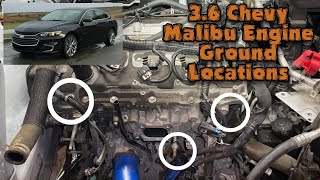
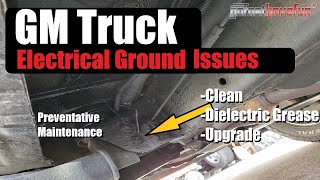
- Disconnect the negative battery terminal. Locate, inspect, and clean the primary engine and chassis ground connections. Pay special attention to the ground strap on the transmission housing 🎬 See this video for common Chevy engine ground locations, as this is a frequently cited failure point in forums. Clean contact points to bare metal.
- Following the guidance of TSB #PIP5609, carefully inspect the electrical connectors at the Engine Control Module (ECM) and Transmission Control Module (TCM). Look for loose pins, corrosion, or wire damage.
- If all wiring, power, and grounds are confirmed to be good, check for any available software updates for the suspect module. A dealer or qualified shop can perform this reflash.
- If the code still returns after all previous steps, the control module itself is likely faulty and requires replacement and programming.
Parts You'll Likely Need
- Engine Control Module (ECM)
(OEM #12673363, 12653998 (example for 2.5L 2016 model), 12669908 (example for 2017-2018 models))— If all external electrical factors are ruled out, the ECM's internal RAM has failed, requiring module replacement.
Trusted brands: ACDelco (GM Original Equipment)
OEM price range: $400-$800
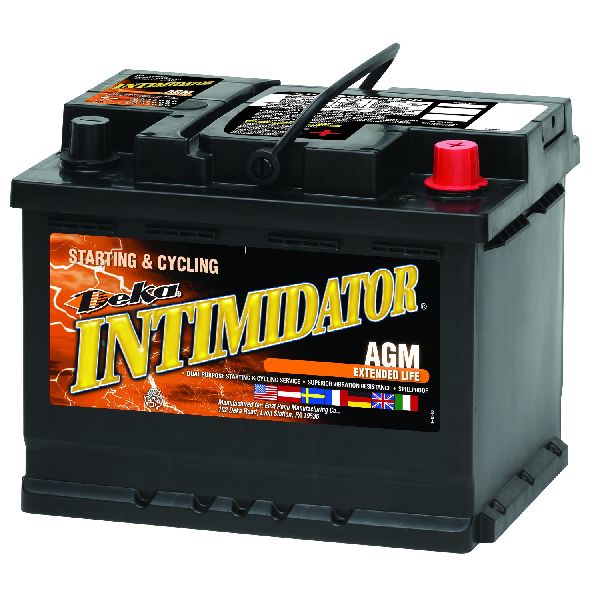
Aftermarket price range: $250-$500 - Battery — A weak or failing battery is a primary cause of low voltage conditions that trigger spurious memory fault codes in control modules.
Trusted brands: ACDelco, DieHard, Interstate
OEM price range: $180-$250
Aftermarket price range: $120-$200
Related Codes That Often Appear With This One
- P0601, P0602, P0603, P0606, P062F — These are all internal control module error codes. GM TSBs #PIP5609 and #05-06-04-060A group them together as related internal self-test failures that often share common causes, like power supply issues.
- P1621, P16F3, P262B — These are also listed alongside P0604 in GM service bulletins (#PIP5609, #PIP4653E) as related control module codes that can point to either ECM or TCM issues.
Technical Service Bulletins (TSBs) & Recalls
- PIP5609: Advises checking ECM electrical connections for codes P0601-P0604. Explicitly states to verify all power and ground circuits before replacing the ECM.
- 05-06-04-060A: Informs that codes like P0604 can be shared in multiple modules and can be caused by low voltage.
- PIP4653E: Notes that P0604 can be stored in the Transmission Control Module, causing shift issues.
Platform-Specific Known Issues
- TSB #PIP5609 specifically advises technicians dealing with codes P0601-P0604 to inspect the engine control module's electrical connections and verify proper power and ground before replacing the module.
- TSB #05-06-04-060A notes that P0604 is part of a group of codes that can be set in multiple different control modules, emphasizing the need to diagnose which module is the source.
- TSB #PIP4653E, though for an earlier model, establishes a history of this code being stored in the Transmission Control Module (TCM), often leading to shifting problems.
Mechanic-Grade Diagnostic Values
- Module Ground Circuit Resistance — expected: Less than 0.1 Ω. Failure: A reading higher than 0.1 Ω indicates excessive resistance that can cause module resets and data corruption. Some sources allow up to 1.0 ohm.
- Battery Voltage at Module During Cranking — expected: Above 9.0 Volts. Failure: Voltage dropping below 9.0V during engine start can corrupt the module's RAM self-test and trigger a false P0604 code.
- Charging System Voltage (Engine Running) — expected: 13.5V - 14.5V. Failure: Voltage that is too low or too high (spiking) can cause data corruption in the control modules.
Hidden / Shadow Codes Worth Checking
- Symptom Byte (e.g., 0x5A, 0x71): GM uses two-digit hexadecimal codes that provide specific details about the P0604 fault. For example, 0x5A might specify a particular type of internal RAM error, while 0x71 can indicate 'Invalid Serial Data Received,' pointing more towards a software or communication issue rather than a hardware failure. (see via A dealer-level scan tool like a GM MDI/MDI2 with GDS2 (Global Diagnostic System 2) software is required to view these symptom bytes.)
Scan Tool Commands That Help
- GDS2 / Techline Connect: Service Programming System (SPS) - 'Replace and Reprogram' — This function is mandatory when a new ECM or TCM is installed. It downloads the vehicle-specific software and VIN into the new module, without which the car will not start or communicate.
- GDS2 / Tech 2: Idle Learn Reset / Crankshaft Position Variation Learn — These procedures are required after replacing and programming the ECM. They synchronize the new module with the engine's sensors and actuators to ensure proper idle and prevent misfire codes.
- GDS2 / Tech 2: Transmission Service Fast Learn / Adaptive Pressure Reset — This must be performed after replacing and programming a TCM. It commands the module to learn the hydraulic and mechanical properties of the clutches to ensure smooth shifting.
Wiring & Ground Locations
- G110 / G114 — G110 is often located on the left front of the engine compartment, while G114 may be near the wiper motor. These are critical grounds for the ECM and other engine components.. A loose or corroded connection at these specific ground points is a known cause for various electrical issues, including module communication errors that can trigger a P0604. GM has issued information about checking these grounds for looseness.
- G106 / G107 — Located on the upper left radiator support or on the engine near the transmission.. These are primary ground points for the powertrain and transmission controls. TSBs for similar platforms specifically call out checking these grounds for TCM-related communication issues.
- ECM/PCM Power Relay (KR73) — In the underhood fuse block for 2016-2018 models, this is often relay #66.. A faulty relay can cause intermittent power loss to the Engine Control Module, leading to memory errors and a P0604 code.
- ECM/PCM Fuses — In the 2016-2018 underhood fuse block, relevant fuses include F46, F75, F76, F81, F84, F85, and F86.. A blown or intermittent fuse on one of the ECM's power supply circuits will cause it to lose power and can set a P0604 upon the next power-up.
Real Owner Repair Stories
- ChevyMalibuForum (paraphrased example) (2016 Chevrolet Malibu) — P0604 code present, vehicle would not start.
❌ Tried (didn't work) Replacing the battery
✅ What actually fixed it The owner located and cleaned a corroded main ground wire on the transmission case. After cleaning the connection point to bare metal and re-securing it, the car started and the code was resolved.
Model Year Variations Within This Range
- 2015 (8th Gen) vs 2016-2018 (9th Gen): The physical location of the ECM is different. On many 8th generation models, the ECM/PCM is located inside the passenger compartment, under the dash. On 9th generation (2016+) models, the ECM is located in the engine bay, often near the battery or under the upper radiator hose.
Helpful Videos
Used OEM Parts in Stock




New Aftermarket Parts Available




The information in this article is provided for general reference and educational purposes only. Vehicle specifications, procedures, and part compatibility can vary by production date, trim level, and region. Always consult your vehicle's factory service manual and verify part numbers before purchasing or performing repairs. Safety-critical components such as airbags, seat belts, and braking systems should be installed by a qualified professional.
- Chevrolet MALIBU:
- 🎬 Helpful Videos
- 🛍️ Shop This Part
- What's Unique About the 2015-2018 Chevrolet MALIBU
- Diagnostic Flowchart
- Symptoms You May Notice
- Most Likely Causes
- Rare But Worth Checking
- Diagnosis Steps
- Parts You'll Likely Need
- Related Codes That Often Appear With This One
- Technical Service Bulletins (TSBs) & Recalls
- Platform-Specific Known Issues
- Mechanic-Grade Diagnostic Values
- Hidden / Shadow Codes Worth Checking
- Scan Tool Commands That Help
- Wiring & Ground Locations
- Real Owner Repair Stories
- Model Year Variations Within This Range
- 🎟️ Get 5% Off