

P0604 on 2007-2014 Chevrolet Malibu: Internal Control Module RAM Error Guide
On a 2007-2014 Malibu, P0604 indicates a RAM error in a control module. Due to GM Technical Service Bulletins, this often points specifically to the Transmission Control Module (TCM). The fix is typically a software reflash or a complete TCM replacement, though checking for low battery voltage or broken power wires to the TCM is a critical first step.
- P0604 on a 2007-2014 Malibu is most frequently a fault within the Transmission Control Module (TCM), not the main engine computer, a fact supported by multiple GM TSBs.
- The most common fixes are a software reflash of the TCM or a complete replacement and reprogramming of the TCM.
- Before replacing expensive modules, always rule out simpler electrical issues like a weak battery, corroded terminals, or a broken power wire to the TCM, which can mimic module failure.
- This is a known issue on the GM Epsilon platform, affecting not just the Malibu but also vehicles like the Saturn Aura and Pontiac G6 that share the same transmission hardware and software logic.
What's Unique About the 2007-2014 Chevrolet MALIBU
While P0604 is a generic code applicable to any module, its appearance on the 2007-2014 Malibu has a specific history documented by Chevrolet. Manufacturer TSBs explicitly guide technicians to investigate the Transmission Control Module (TCM) when P0604 is found, often alongside other internal module fault codes like P0601 or P0603. [TSB #PIP4653E] This suggests a known pattern of software or hardware issues within the TCM for this platform, making it the primary suspect over the main engine computer. This is a common failure on other GM vehicles using the same platform and transmissions, such as the Saturn Aura and Pontiac G6.
Diagnostic Flowchart
Tap your situation to follow the diagnostic path that matches what you're seeing on this vehicle.
Generation note: The 2007-2014 year range covers the end of the 6th generation (2007), the entire 7th generation (2008-2012), and the beginning of the 8th generation (2013-2014). The meaning of the code is the same, but the physical location and part numbers for the Transmission Control Module (TCM) and Engine Control Module (ECM) will differ between these generations. The TCM is typically located inside the transmission on the valve body.
Symptoms You May Notice
- Check Engine Light is on
- Transmission may shift harshly or erratically
- Vehicle may enter "limp mode," stuck in a single gear
- Engine may stall, hesitate, or have a rough idle
- Difficulty starting the engine or a no-start condition
- Anti-lock Brake System (ABS) or Traction Control Light may activate
- Replacing the Engine Control Module (ECM) when the fault is in the Transmission Control Module (TCM).
- Replacing the entire transmission when only the electronic control module is faulty.
- Replacing the TCM when the actual fault is a simple broken power wire or bad ground connection.
Most Likely Causes
- Transmission Control Module (TCM) Software Glitch 🔴 High Probability GM issued TSBs (PIP4653E, 05-06-04-060A, 07235A) regarding this code in the TCM, indicating a known software issue that may require an update to fix driveability and shifting problems.
How to confirm: A GM-specific scan tool (Tech2/MDI with GDS2 software) is needed to check the current software version against the latest available from GM's TIS2Web service.
Typical fix: Reprogramming (reflashing) the TCM with the latest software version. This must be done by a dealer or a qualified shop with the correct equipment.
Est. part cost: $0 - Failing Transmission Control Module (TCM) 🟡 Medium Probability As pointed out by TSBs, the TCM is a common point of failure for this code. Internal hardware, like the RAM chip itself, can fail over time due to heat and electrical stress. This is a well-documented issue across GM platforms using the 6Txx series transmissions.
How to confirm: If a software reflash does not solve the issue or fails to complete, the module hardware is likely faulty. The code will return immediately after being cleared. A scan tool may also show a 'loss of communication with TCM' code.
Typical fix: Replacement of the Transmission Control Module, followed by programming it to the vehicle.
Est. part cost: $200-$500 - Low Battery Voltage or Poor Electrical Connection ⚪ Low Probability All modern vehicles are sensitive to voltage. A weak battery or corroded ground can cause unpredictable errors in various control modules during startup. A diagnostic reset (disconnecting the battery) can sometimes temporarily clear the code, pointing towards a voltage-related issue.
How to confirm: Test the battery voltage (should be >12.4V at rest) and charging system output (typically 13.5-14.5V when running). Inspect battery terminals and major ground straps for corrosion or looseness. A user on a Chevy HHR forum with a P0604 code found that fully charging the disconnected battery with a proper charger solved the issue after jump-starting failed.
Typical fix: Clean battery terminals, tighten ground connections, or replace a weak battery. In some cases, a broken power or ground wire to the TCM fuse block connector is the culprit, requiring wire repair.
Est. part cost: $0-$250
Rare But Worth Checking
- Broken Power Wire to TCM:
- Burnt or Contaminated Main Transmission Connector:
Diagnosis Steps
- Connect a professional OBD-II scanner that can read manufacturer-specific codes from all modules (ECM, TCM, BCM, etc.).
- Identify which module has stored the P0604 code. On this vehicle, pay close attention to the Transmission Control Module (TCM). Note any communication loss codes like U0101.
- Using a GM-specific tool like GDS2, check for hidden 'symptom bytes' associated with the P0604 code for more detailed fault information.
- Clear the codes and perform a short test drive. If P0604 returns immediately, it indicates a hard fault.
- Test the battery and charging system. Ensure battery voltage is above 12.4V at rest and the alternator output is 13.5-14.5V when running. A simple low battery can cause this code.
- Inspect all battery terminals, main power connections, and body/engine ground straps for corrosion and tightness. Key grounds are located on the transmission case and at the rear of the engine block.
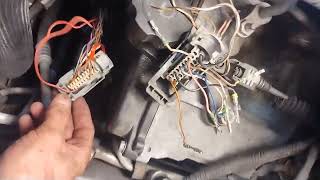
- Check all fuses related to the PCM and TCM. A diagnostic video showed a no-communication issue was caused by a broken power wire leading from the fuse box to the TCM, even though the fuse was good.
- Visually inspect the main wiring harness connector at the transmission for any signs of corrosion, damage, moisture, or burnt pins.
- If wiring and voltage are good, the next step is to attempt a software reflash of the module using a GM-compliant programming tool. Consult TSB PIP4653E.
- If the reflash is unsuccessful or the code returns, the control module itself is defective and must be replaced and programmed to the vehicle.
Parts You'll Likely Need
- Transmission Control Module (TCM)
(OEM #24252114 (Gen 7, 2008-2010), 24268169 (Gen 7, 2012-2013), 24276934 (Gen 8), 24243442 (2008 3.6L))— This is the most common point of failure for a P0604 code on this platform, as identified by GM's own service bulletins. The internal RAM chip or other hardware fails.
Trusted brands: ACDelco, Dorman
OEM price range: $175-$450
Aftermarket price range: $130-$550
Related Codes That Often Appear With This One
- P0601 — This is an 'Internal Control Module Memory Check Sum Error.' Like P0604, it indicates an internal module fault. TSBs PIP4653E and 05-06-04-060A list them together.
- P0603 — This is an 'Internal Control Module Keep Alive Memory (KAM) Error.' It's another memory-related fault within the module, often appearing with P0604. [TSB #PIP4653E]
- P062F — This is an 'Internal Control Module EEPROM Error.' It points to a different type of memory failure but is part of the same family of internal module faults listed in TSBs PIP4653E and 05-06-04-060A.
- P1621 — This code relates to 'Control Module Long Term Memory Performance.' It is another memory integrity code that GM groups with P0604 in its service bulletins. [TSB #PIP4653E]
- U0101 — This code means 'Lost Communication with TCM'. It often appears alongside P0604 when the TCM is failing or has lost power, confirming the fault is located in the transmission's control circuits.
Technical Service Bulletins (TSBs) & Recalls
- PIP4653E: Addresses Malfunction Indicator Lamp with DTCs P0601, P0603, P0604, P062F or P1621 stored in the Transmission Control Module.
- 05-06-04-060A: Informs technicians that DTCs like P0604 can be shared in multiple control modules.
- 07235A: Service update for platform mates to reprogram the TCM and ECM for hesitation and shift busyness.
Platform-Specific Known Issues
- GM Technical Service Bulletin PIP4653E specifically addresses DTCs P0601, P0603, P0604, P062F, or P1621 being stored in the Transmission Control Module (TCM), directing technicians to check there first.
- GM Technical Service Bulletin 05-06-04-060A notes that P0604 and other similar codes can be shared across multiple control modules, emphasizing the need for a full-system scan to pinpoint the origin.
- GM Service Update 07235A for platform mates (Pontiac G6, Saturn Aura) confirms that ECM/TCM reprogramming was a factory-authorized fix for driveability complaints related to the transmission, reinforcing the software-glitch cause.
Mechanic-Grade Diagnostic Values
- 6T40/6T45 TCM Main Connector Pin Voltage/Data — expected: Pin 1: Battery Voltage; Pin 2: Ground; Pin 6 & 7: High-Speed GMLAN (+); Pin 8 & 14: High-Speed GMLAN (-); Pin 12: Ignition Voltage.. Failure: No voltage on Pin 1 or 12, or high resistance to ground on Pin 2 indicates a power supply issue. No activity on GMLAN pins indicates a communication network fault.
- 6T40/6T45 Pressure Control Solenoid Resistance (Internal to TEHCM) — expected: Solenoids cannot be tested for resistance externally. They must be tested with a scan tool or specialized bench equipment.. Failure: A scan tool may show a circuit fault for a specific solenoid. A bench test using 90-100 PSI of regulated shop air while commanding the solenoid on/off can verify mechanical function.
Hidden / Shadow Codes Worth Checking
- P0604 with Symptom Byte (e.g., P0604 71): GM uses two-digit hexadecimal symptom bytes to add detail to generic codes. For example, a symptom byte of '71' indicates 'Invalid Serial Data Received,' pointing to a communication or software issue rather than a pure hardware failure. Other bytes can indicate voltage or temperature issues. (see via A dealer-level scan tool like the GM MDI2 with GDS2 (Global Diagnostic System 2) software is required. Basic code readers will not display these.)
Scan Tool Commands That Help
- GM GDS2 / Tech2Win: Module Diagnostics > TCM > Control Functions — To perform bidirectional tests, commanding individual solenoids on and off to check for response. This helps isolate a faulty solenoid within the TEHCM assembly.
- GM GDS2 / Tech2Win: TCM Programming / Service Programming System (SPS) — Used to reflash the TCM with updated software to fix known glitches (per TSBs) or to program a new replacement TCM to the vehicle's VIN.
- GM GDS2 / Tech2Win: Fast Learn Procedure — This procedure is required after replacing the TCM/TEHCM or servicing the valve body. It erases old adaptive data and allows the module to quickly relearn transmission clutch apply pressures for smooth shifting.
Wiring & Ground Locations
- Main Transmission Ground — A ground wire or strap directly on the transmission case, which then connects to the driver's side wheel well or chassis frame rail.. This is the primary ground for the transmission and its internal control module (on 6-speed models). Corrosion or looseness here can cause a host of intermittent electronic faults, including communication codes and module errors like P0604.
- G111 / G113 — On V6 models, these grounds are located on the rear of the engine block. G111 is on the right rear, and G113 is on the left rear.. These are major engine grounds. While not directly for the TCM, a poor engine ground can introduce electrical noise and voltage fluctuations that can affect all control modules, potentially triggering a P0604 during self-tests.
- Main Transmission Harness Connector — A large, round, multi-pin connector on the outside of the transmission case where the engine harness connects to the transmission's internal wiring.. This is the single point of failure for all communication and power to the internal TCM (TEHCM). It is prone to contamination from leaking fluid and high-resistance connections that can burn pins, causing codes U0101 and P0604.
Real Owner Repair Stories
- YouTube Channel 'Garrys repair and auto electrical diagnostics' (Chevrolet Malibu, similar to 2011-2020 models, experiencing intermittent U0101 (Lost Communication with TCM).) — Intermittent limp mode, erratic door lock cycling, multiple communication codes appearing and disappearing.
❌ Tried (didn't work) Initial checks of power and ground at the ECM were normal.
✅ What actually fixed it The root cause was found at the main transmission harness connector. One of the pins in the connector was visibly burnt and blackened from a high-resistance short. The fix required replacing both the engine wiring harness and the internal Transmission Control Module (TEHCM), as both sides of the connector were damaged.
Model Year Variations Within This Range
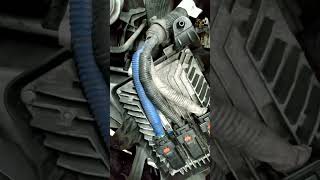
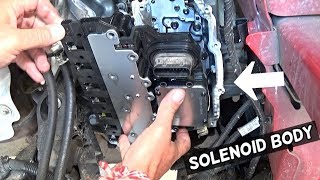
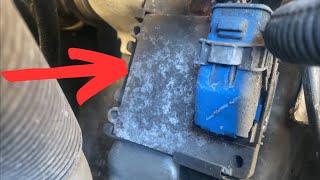
- 2008-2012 (approx.) with 4-speed Automatic (4T45-E): These models use an EXTERNAL Transmission Control Module. A video for a 2.4L Malibu shows it located under the hood on the driver's side frame rail. Diagnosis is different as the module and its wiring are accessible without opening the transmission.
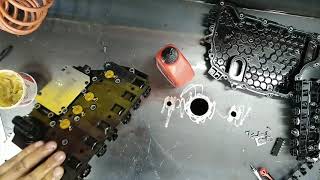
- 2008-2014 with 6-speed Automatic (6T40/6T45/6T50): These models use an internal TCM integrated with the valve body and solenoids, called a TEHCM (Transmission Electro-Hydraulic Control Module). The module is located inside the transmission's side pan. Any repair or replacement requires draining the fluid and removing the transmission side cover. This is the configuration referenced in TSB PIP4653E.
Helpful Videos

We Have This Part in Stock



The information in this article is provided for general reference and educational purposes only. Vehicle specifications, procedures, and part compatibility can vary by production date, trim level, and region. Always consult your vehicle's factory service manual and verify part numbers before purchasing or performing repairs. Safety-critical components such as airbags, seat belts, and braking systems should be installed by a qualified professional.
- Chevrolet MALIBU:
- 🎬 Helpful Videos
- 🛍️ Shop This Part
- What's Unique About the 2007-2014 Chevrolet MALIBU
- Diagnostic Flowchart
- Symptoms You May Notice
- Most Likely Causes
- Rare But Worth Checking
- Diagnosis Steps
- Parts You'll Likely Need
- Related Codes That Often Appear With This One
- Technical Service Bulletins (TSBs) & Recalls
- Platform-Specific Known Issues
- Mechanic-Grade Diagnostic Values
- Hidden / Shadow Codes Worth Checking
- Scan Tool Commands That Help
- Wiring & Ground Locations
- Real Owner Repair Stories
- Model Year Variations Within This Range
- 🎟️ Get 5% Off