

P0604 on 2007-2011 Chevrolet HHR: Internal Memory Error Causes and Fixes
On a 2007-2011 Chevy HHR, code P0604 is an Internal Control Module RAM Error, often triggered by a weak battery or poor electrical connections. Before suspecting a failed Engine Control Module (ECM), fully charge and test the battery, and inspect all battery, ground, and fuse box connections, as this is the most common and cheapest fix.
- Do not rush to replace the ECM. P0604 on an HHR is most often an electrical issue.
- Your first step should always be to have your battery professionally load-tested, not just checked for voltage.
- Thoroughly inspect and clean all battery and main ground connections, including the under-hood fuse box.
- If the ECM does need to be replaced, it is not a plug-and-play part; it requires professional programming to your vehicle's VIN.
What's Unique About the 2007-2011 Chevrolet HHR
For the Chevrolet HHR and its platform mates (Cobalt, G5), the P0604 code is very frequently a 'ghost' code triggered by electrical system instability rather than a true failure of the Engine Control Module (ECM). Owner forums are filled with stories where a weak, dying, or improperly installed battery caused a momentary voltage drop during startup, scrambling the ECM's memory and setting this code. A user on ChevyHHR.net detailed a no-crank situation with P0604 after the battery was drained; a full recharge of the battery completely resolved the issue without any parts replacement. Resolving the underlying battery or connection issue and clearing the code often provides a permanent fix without needing to replace the expensive ECM.
Diagnostic Flowchart
Tap your situation to follow the diagnostic path that matches what you're seeing on this vehicle.
Symptoms You May Notice
- Check Engine Light is on
- Engine may not crank or start
- Intermittent stalling
- No noticeable symptoms other than the Check Engine Light in some cases
- ABS or Traction Control Light may illuminate
- Immediately replacing the ECM without testing the battery and checking connections. This is the most common and expensive mistake made when diagnosing P0604 on an HHR.
Most Likely Causes
- Weak or Failing Battery 🔴 High Probability The HHR's control modules are sensitive to low voltage. A battery that drops below 9.6 volts during cranking can corrupt the ECM's RAM and trigger a P0604 code. This is the most widely reported cause in owner forums, often after the battery was drained completely.
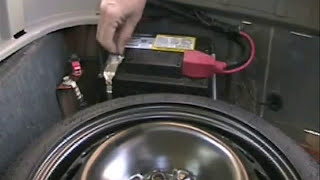
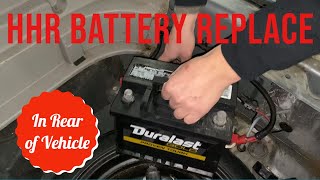
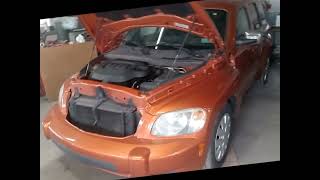
How to confirm: Perform a load test on the battery. A simple voltage check is not enough, as a battery can show 12V at rest but fail under load. Most auto parts stores can do this for free. Check the battery's age; if it is over 4-5 years old, it is a likely suspect. The HHR uses a specific battery located in the rear cargo area. 🎬 Watch: How to replace the battery in the rear cargo area.
Typical fix: Replace the battery with the correct type (typically a Group 90/T5 size) and clear the diagnostic trouble codes.
Est. part cost: $150-$250 - Loose or Corroded Battery/Ground Connections 🟡 Medium Probability Connections can loosen or corrode over time. Key areas on the HHR are the battery terminals (in the rear cargo area), the remote positive terminal under the hood, and the main engine/chassis ground straps (such as G107 and G108).
How to confirm: Visually inspect and physically wiggle all main power and ground cables. Clean any corrosion with a wire brush. Use a multimeter to check for voltage drops. Key grounds to check are on the engine block, transmission, and firewall. Ground resistance should measure below 0.1 Ω.
Typical fix: Clean and tighten all connections. Replace corroded terminals or cables if necessary.
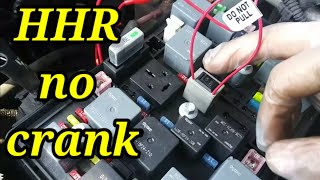
Est. part cost: $5-$50 - Loose Under-Hood Fuse Box ⚪ Low Probability Some HHR and Cobalt owners report that the two halves of the under-hood fuse box can become loose, causing intermittent power to the ECM and a variety of strange electrical problems, including P0604.
How to confirm: Remove the fuse box cover. Check that the main body of the fuse box is securely clipped together. There are large clips on the sides; if they are loose, the two halves can separate slightly. Owners often report being able to press down on the fuse box and hear it click back into place.
Typical fix: Reseat the fuse box halves to ensure a solid connection. Some owners add a zip tie around the fuse box as a preventative measure to keep it from separating again.
Est. part cost: $0-$1 - Failed Engine Control Module (ECM) ⚪ Low Probability While less common than electrical issues, the ECM (a GM E37 or E38 type on non-SS models) can fail internally. This should only be considered after all power and ground issues have been completely ruled out.
How to confirm: This is a process of elimination. If the battery, connections, and wiring are all confirmed to be good and the code returns immediately after being cleared (even without starting the engine), the ECM is the likely culprit. A professional diagnosis with advanced scan tools that can perform a 'memory test' routine is recommended.
Typical fix: Replace the Engine Control Module. The new module must be programmed to the vehicle's VIN. Additionally, a security relearn and a crankshaft position variation (CASE) relearn must be performed with a capable scan tool.
Est. part cost: $250-$500
Rare But Worth Checking
- ECM Software Glitch: Sometimes the code can be triggered by a software anomaly. Before replacing the ECM, a dealer or qualified shop can check if a software update is available using GM's Service Programming System (SPS), which might resolve the issue.
- Faulty Alternator: An alternator that is failing can produce voltage spikes or drops while the engine is running, which can corrupt the ECM's memory and trigger a P0604 code. A proper charging system test should check for stable voltage output, typically between 13.7V and 14.7V with the engine running.
Diagnosis Steps
- Read the code with an OBD-II scanner. Note any other codes present.
- Crucial First Step: Fully charge and load test the battery. A weak battery is the #1 cause of this code on the HHR. A voltage drop below 9.6V during cranking is a red flag.
- Inspect the battery terminals in the rear of the vehicle. Ensure they are clean, tight, and free of corrosion.
- Inspect the under-hood positive jump-start post and the main engine ground straps. Key locations include G107 (front left corner of transmission) and G108 (right rear of engine block). Use a multimeter to confirm ground resistance is below 0.1 Ω.
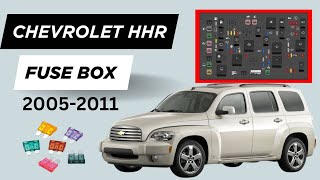
- Check the security of the under-hood fuse box assembly. Press down firmly on it to ensure the two halves are fully seated. 🎬 Watch: Locate and identify your HHR's fuses and relays.
- If all electrical connections are good and the battery tests healthy, clear the trouble codes. Disconnecting the battery for 15-30 minutes can also help fully reset modules.
- Drive the vehicle to see if the code returns. If it does not, the issue was likely a temporary low-voltage event.
- If the code returns immediately, have a professional check for any available ECM software updates.
- If no updates are available and the code persists, the ECM is likely faulty and requires replacement, VIN programming, and a CASE relearn procedure.
Parts You'll Likely Need
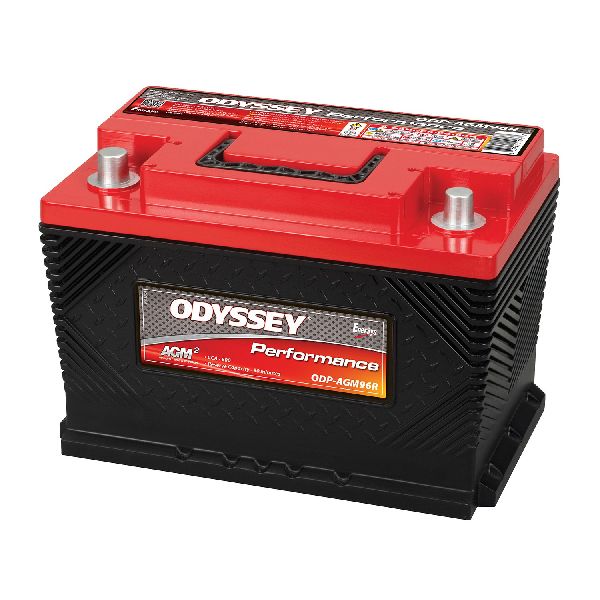
- Car Battery
(OEM #ACDelco Gold 90PS (Group Size 90/T5))— A weak or failing battery is the most common trigger for a P0604 code on this vehicle due to voltage drops during cranking.
Trusted brands: ACDelco, DieHard, Interstate
OEM price range: $200-$275
Aftermarket price range: $150-$250 - Engine Control Module (ECM)
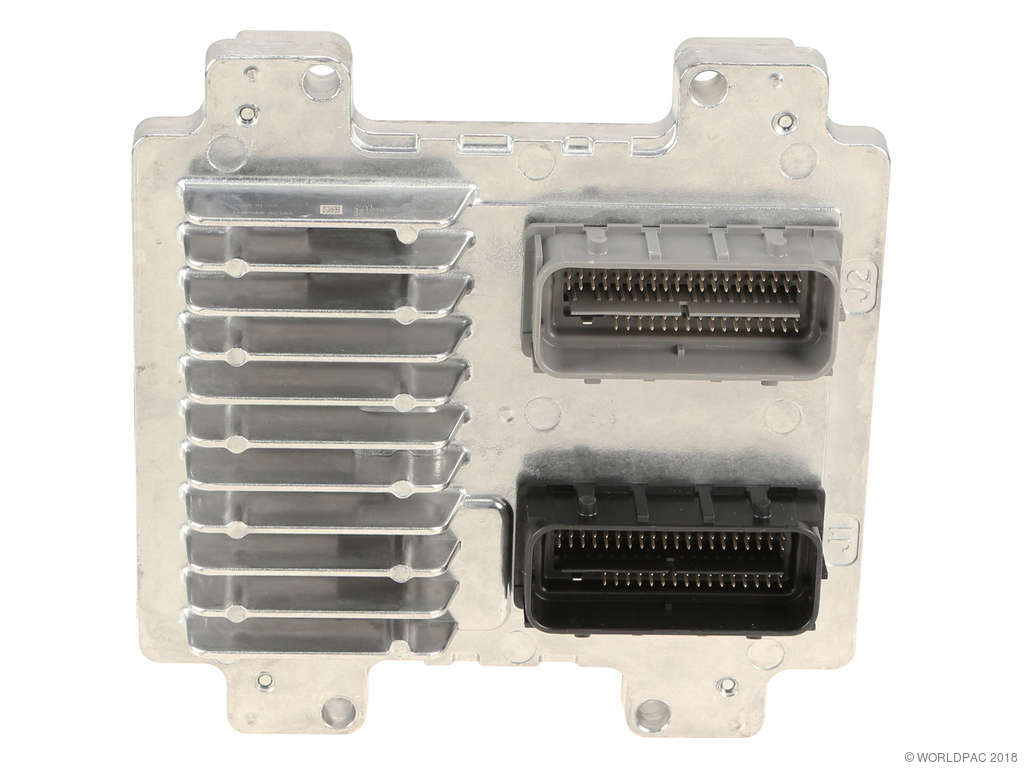
(OEM #Common service numbers include 12612384, 12633238, 12618031. Verify by VIN.)— If all electrical issues are ruled out, the ECM itself has likely failed internally. This part requires professional programming.
Trusted brands: ACDelco (OEM), Cardone, Blue Streak Electronics
OEM price range: $350-$500
Aftermarket price range: $250-$400
Related Codes That Often Appear With This One
- P062F — Internal Control Module EEPROM Error. This is another internal memory fault code. Seeing it with P0604 reinforces the likelihood of an electrical issue or a failing module.
- P1682 — Ignition 1 Switch Circuit 2. This code can appear alongside P0604 if there's a voltage difference detected between the ECM's two main power circuits, often caused by the same low voltage events or connection problems.
Technical Service Bulletins (TSBs) & Recalls
- 05-06-04-060A: An informational bulletin for technicians about various internal control module DTCs (P0601, P0602, P0603, P0604, etc.) that can be shared across multiple modules. It stresses that these codes can be caused by low voltage and warns against immediate module replacement without proper diagnosis. It advises technicians to use the appropriate service information to diagnose which module is at fault.
Platform-Specific Known Issues
- A known GM issue documented in TSB #05-06-04-060A states that P0604 is part of a family of codes that can be set in multiple modules, often due to low voltage, complicating diagnosis and warning against unnecessary module replacement. The bulletin is informational, advising technicians to understand which module set the code and to not assume the bulletin applies to every vehicle.
- Real Owner Experience: The Battery Fix: A well-documented case on ChevyHHR.net involved a 2011 HHR that would not crank and showed code P0604 after the battery was accidentally drained. The owner, an electrical engineer, noted that a slow recharge with a low-amperage charger seemed to have 'scrambled the engine controllers RAM'. After disconnecting the battery, properly charging it to 12.5V+, and reconnecting, the car started immediately and the code was gone. This highlights the module's sensitivity to both deep discharge and improper charging cycles.
Mechanic-Grade Diagnostic Values
- Battery Voltage During Cranking — expected: Above 9.6 Volts. Failure: Voltage dropping below 9.6V can corrupt module memory and set a false P0604 code.
- ECM/TCM Ground Circuit Resistance — expected: Below 0.1 Ω. Failure: Resistance higher than 0.1 Ω indicates a poor ground, which can cause erratic module behavior and trigger memory faults.
- Alternator Output Voltage (Engine Running) — expected: 13.7V - 14.7V. Failure: Voltage outside this range indicates a charging system problem that can cause voltage instability and lead to P0604.
- CAN Bus Voltage (Key On, Engine Off) — expected: Approximately 2.5V on Pin 6 and Pin 14 of the DLC, measured to ground.. Failure: Significant deviation from 2.5V suggests a problem on the communication network.
- CAN Bus Terminating Resistance (Battery Disconnected) — expected: 60 Ω between Pin 6 and Pin 14 of the DLC.. Failure: A reading of 120 Ω indicates an open circuit on the bus or a failure of one of the two terminating resistors (one in the ECM, one in another module like the PSCM).
Scan Tool Commands That Help
- GM Tech 2 / GDS2: Module Memory Integrity Test — After verifying all power and ground circuits are good, this OEM-level function can be used to directly test the ECM's internal RAM. A failure here strongly points to a faulty module.
- GM Tech 2 / GDS2: Security Relearn / Immobilizer Relearn — This is mandatory after replacing the ECM. The new module must be synchronized with the vehicle's immobilizer system, or it will not allow the engine to start. This often involves a sequence of timed key-on/key-off cycles.
- GM Tech 2 / GDS2: SPS (Service Programming System) Reflash — Before replacing a suspected faulty module, check for an updated software calibration. A reflash can fix software glitches that may be causing the P0604 code.
Wiring & Ground Locations
- G107 — On the front left corner of the transmission.. This is a primary ground point for both the Engine Control Module (ECM) and the Transmission Control Module (TCM). A poor connection here can directly cause voltage instability for both modules.
- G108 — On the right rear of the engine block.. This is another dedicated ground point for the Engine Control Module (ECM). Its integrity is critical for stable ECM operation.
- G103 — On the left front corner of the engine compartment, sometimes described as on the cowl above the brake booster.. This is a major ground distribution point that serves the ECM, BCM, and the Data Link Connector (DLC). A fault here can cause widespread communication and module issues.
- ECM Connector Pins — At the main connectors for the Engine Control Module.. Specific pins provide power and ground. For example, on some models, Pin 20 is battery power and Pin 73 is ground. Verifying stable voltage and low resistance at these specific pins is a key diagnostic step.
Real Owner Repair Stories
- ChevyHHR.net user 'Sparky21440' (2011 HHR) — No crank, no start, Check Engine Light on with code P0604.
❌ Tried (didn't work) Jumping the car., Using a slow, low-amperage (3 amp) float charger to recharge the completely dead battery while it was still connected to the car.
✅ What actually fixed it The owner disconnected the battery from the vehicle, charged it properly with a higher-amperage charger for 30 minutes until it reached 12.5V+, and then reconnected it. The car started immediately and the P0604 code was gone. The conclusion was that the slow discharge/recharge cycle had 'scrambled the engine controllers RAM'. - MHH AUTO forum user 'iperine78' (2009 HHR) — No start (no fire) after a new transmission was installed. No fault codes were present.
❌ Tried (didn't work) Checking all fuses and relays., Checking all visible ground locations and plugins., Scanning for codes (none were found).
✅ What actually fixed it After being unable to find a correct ECU pinout, the user started manually tracing wires by taking the harness apart. They found three broken wires inside their insulation casing within the ECU harness. One of the broken wires was the 5-volt reference to the crankshaft position sensor, which prevented the car from starting but did not set a code.
"I Checked Everything" — The Actual Cause
- In one documented case for a 2009 HHR, a no-start condition with no fault codes persisted even after checking all fuses, relays, and grounds. The root cause was found to be broken wires inside the insulation of the main ECU wiring harness, which likely occurred during a recent transmission replacement. This type of damage is invisible to a visual inspection and requires physically tracing and testing the harness wires.
When the Usual Fixes Don't Work
- While a weak battery is the most common cause, a confirmed fix from an owner highlights that the *method* of recharging a dead battery matters. A slow, low-amperage charge while connected to the car failed to resolve the P0604 and no-start condition. A full resolution was only achieved after disconnecting the battery entirely and charging it properly before reconnection, suggesting the module's RAM can be 'scrambled' by unstable voltage during a slow recharge cycle.
Model Year Variations Within This Range
- 2008-2010 (SS Models): The HHR SS (Super Sport) with the 2.0L LNF turbocharged engine uses a different Engine Control Module (GM E69) than the naturally aspirated 2.2L and 2.4L engines, which typically use an E37 or E38 ECM. Part numbers, pinouts, and some diagnostic procedures will be different for the SS model.
- 2008-2009: There is evidence of a mid-cycle change to the ECM connector. An owner of a 2009 HHR reported that its ECU plug was different from the 2008 model diagrams they found. This means technicians should verify the physical connector and pinout against the specific vehicle's VIN and build date, not just the model year.
Helpful Videos
Used OEM Parts in Stock


New Aftermarket Parts Available

The information in this article is provided for general reference and educational purposes only. Vehicle specifications, procedures, and part compatibility can vary by production date, trim level, and region. Always consult your vehicle's factory service manual and verify part numbers before purchasing or performing repairs. Safety-critical components such as airbags, seat belts, and braking systems should be installed by a qualified professional.
- Chevrolet HHR:
- 🎬 Helpful Videos
- 🛍️ Shop This Part
- What's Unique About the 2007-2011 Chevrolet HHR
- Diagnostic Flowchart
- Symptoms You May Notice
- Most Likely Causes
- Rare But Worth Checking
- Diagnosis Steps
- Parts You'll Likely Need
- Related Codes That Often Appear With This One
- Technical Service Bulletins (TSBs) & Recalls
- Platform-Specific Known Issues
- Mechanic-Grade Diagnostic Values
- Scan Tool Commands That Help
- Wiring & Ground Locations
- Real Owner Repair Stories
- "I Checked Everything" — The Actual Cause
- When the Usual Fixes Don't Work
- Model Year Variations Within This Range
- 🎟️ Get 5% Off