

P0604 on 2007-2011 Chevrolet Express: Internal Memory Error Causes and Fixes
P0604 indicates an 'Internal Control Module Random Access Memory (RAM) Error' in your van's main computer (PCM). Before condemning the expensive PCM, thoroughly check for low battery voltage, corroded battery terminals, and bad ground connections, as these are very common triggers. If the battery and all connections are good, the PCM likely needs replacement, which requires professional programming.
- P0604 is a serious code indicating an internal memory error in your van's main computer (PCM).
- Before spending money on a new PCM, always test the battery and check all power and ground connections thoroughly. A simple electrical issue is a common cause.
- Symptoms can be severe, including stalling or a no-start condition, so it's not recommended to drive the vehicle long distances.
- If the PCM needs to be replaced, it is not a DIY job for most people. The new module must be professionally programmed to your van's VIN to function.
What's Unique About the 2007-2011 Chevrolet EXPRESS
On this generation of Chevrolet Express vans, like other GM trucks of the era, the P0604 code is often a straightforward indicator of either a significant electrical system issue or an impending PCM failure. There isn't a uniquely common design flaw that causes it, but these work vans are often subjected to heavy use, frequent start-stop cycles, and aftermarket electrical accessories (e.g., lighting, inverters, radios), all of which can stress the charging system and the PCM over time. The provided TSB #05-06-04-060A confirms this is a generic internal module fault that GM is aware of across many platforms, underscoring that diagnosis must start with the basics (power and ground) before assuming the module itself is bad.
Diagnostic Flowchart
Tap your situation to follow the diagnostic path that matches what you're seeing on this vehicle.
Symptoms You May Notice
- Check Engine Light is on
- Engine may crank but not start
- Intermittent stalling or cutting out while driving
- Harsh or erratic transmission shifting
- Vehicle enters 'limp mode' with reduced power
- ABS or Traction Control lights may illuminate
- Poor or rough idle
- Replacing the transmission or transmission solenoids when harsh shifting is present, without first addressing the P0604 code which points to the control module.
- Immediately replacing the PCM without first performing a thorough battery, charging system, and ground circuit inspection.
Most Likely Causes
- Low Battery Voltage or Weak Battery 🔴 High Probability Work vans often have demanding electrical loads from accessories or long periods of idling, which can weaken the battery over time. Voltage drops during cranking are a primary cause of memory corruption.
How to confirm: Test the battery with a multimeter or a digital battery tester. A healthy, fully charged battery should read approximately 12.6 volts with the engine off. Check the voltage during cranking; if it drops below 9.6 volts, the battery is weak and can cause memory errors in the PCM.
Typical fix: Recharge or replace the battery.
Est. part cost: $150-$300 - Loose or Corroded Battery Terminals/Ground Straps 🟡 Medium Probability Vibrations and exposure to the elements can cause battery terminals and the main engine/chassis ground straps to become loose or corroded, leading to unstable voltage for the PCM.
How to confirm: Visually inspect battery terminals for corrosion. Follow the main negative battery cable to its connection point on the engine block (often near the alternator) and chassis. Check the braided ground straps from the firewall/body to the back of the cylinder heads. These connections must be clean and tight. A voltage drop test from the negative battery post to the engine block should read less than 0.2V.
Typical fix: Disconnect, clean all contact points with a wire brush, apply dielectric grease, and securely tighten all connections. Replace corroded cables or straps if necessary.
Est. part cost: $10-$75 - Failing Powertrain Control Module (PCM) 🟡 Medium Probability Internal components of the PCM (part of the E38 controller family) can fail due to age, heat cycles, or voltage spikes, leading to a permanent RAM error.
How to confirm: This is typically a diagnosis of exclusion. If the battery, charging system, and all related power/ground wiring to the PCM are confirmed to be in perfect condition, the module itself is the likely culprit. A professional scan tool may be able to perform a RAM integrity test, and if it fails, replacement is necessary.
Typical fix: Replace the PCM. The new unit must be programmed to the vehicle's VIN.
Est. part cost: $431-$470
Rare But Worth Checking
- Failing Alternator: An alternator producing unstable voltage (either too high or too low) can corrupt the PCM's memory. This should be checked during the battery and charging system diagnosis.
- Aftermarket Tuner/Programmer: If an aftermarket performance tune has been installed, a glitch during the flashing process or a poorly written file can corrupt the PCM's software and trigger a P0604 code. Sometimes, flashing back to the stock tune can resolve the issue.
- Aftermarket Electrical Accessories: Poorly installed aftermarket equipment like radios, alarms, or auxiliary lighting can create voltage draws or electrical noise that interferes with the PCM's operation, sometimes triggering memory codes. A Reddit user noted they had to remove an aftermarket CANBUS-connected radio to help diagnose a persistent P0604.
Diagnosis Steps
- Read all stored fault codes with an OBD-II scanner. Note any other codes that are present, especially other module communication or internal fault codes.
- Inspect the Electrical System First: Do not assume the PCM is bad. Start with the basics. A stable power supply is critical.
- Check Battery Health: Test the battery's state of charge and health. It should be at ~12.6V engine-off and not drop below 9.6V while cranking. A weak battery is a very common cause.
- Inspect Connections: Disconnect and thoroughly clean the battery terminals. Inspect the main power and ground cables. Key locations on GM trucks include the negative cable-to-engine block, the braided straps from the firewall to the rear of the cylinder heads, and the frame grounds near the fuel pump. Ensure all are free of corrosion and tight.
- Test the Charging System: With the engine running, check the alternator output with a multimeter. It should be steady, typically between 13.5 and 14.5 volts.
- Clear Codes and Test Drive: If any electrical issues were found and fixed, clear the P0604 code and drive the vehicle to see if it returns. If the code clears and stays off, the issue was likely voltage-related.
- Inspect for Aftermarket Modifications: Check for any non-factory wiring for stereos, alarms, remote starters, or tuners. Poor installations can cause electrical interference.
- Suspect the PCM: If the code returns immediately (sometimes without even starting the engine) and all power/ground inputs to the PCM are verified as good, the PCM has likely failed internally.
- Professional Confirmation: A professional shop can use a GM-specific scan tool (like a Tech 2 or GDS 2) to attempt to reflash the PCM's software as a last resort before recommending replacement. If the reflash fails or the code persists, the PCM requires replacement.
Parts You'll Likely Need
- Powertrain Control Module (PCM)
(OEM #Varies by VIN. Example part numbers for this era include 12625455 (for a 2009 model). Belongs to the E38 controller family.)— This is the part that fails when all external electrical factors have been ruled out. The internal RAM chip is not serviceable.
Trusted brands: ACDelco (OEM), Cardone, FS1 (Flagship One)
OEM price range: $450-$600
Aftermarket price range: $300-$500
Related Codes That Often Appear With This One
- P0601 — This code indicates a 'Control Module Read Only Memory (ROM) Error'. Like P0604, it points to a fatal internal PCM fault.
- P0606 — This code indicates a 'PCM Processor Fault'. It's another severe internal error that often means the PCM needs to be replaced.
- U0100 — This code means 'Lost Communication With ECM/PCM'. If the PCM is failing internally, it may stop communicating with other modules on the vehicle's data network.
- P0603 — This indicates an 'Internal Control Module Keep Alive Memory (KAM) Error,' which is closely related and often points to power supply interruptions from a weak battery or bad ground.
Technical Service Bulletins (TSBs) & Recalls
- 05-06-04-060A: An informational bulletin from GM that groups P0604 with other internal control module fault codes (P0601, P0602, etc.) and advises technicians that these codes indicate an internal failure and generally require module replacement after verifying power and grounds.
Platform-Specific Known Issues
- On these work vans, it is critical to inspect for non-OEM wiring. Owners frequently add aftermarket accessories, and improper connections that tap into key power or data circuits can introduce voltage instability or data corruption, leading to a P0604 code. Always trace wiring from the battery and fuse box to identify any modifications before condemning the PCM.
Mechanic-Grade Diagnostic Values
- Battery Voltage (Engine Off) — expected: ~12.6 Volts. Failure: Below 12.4V indicates a weak battery that can cause memory corruption.
- Battery Voltage (During Cranking) — expected: Should stay above 9.6 Volts. Failure: A drop below 9.6V can cause a 'brown-out' condition, corrupting the PCM's RAM.
- Alternator Output (Engine Running) — expected: 13.5 - 14.8 Volts. Failure: Voltage that is too low or too high (spiking) can damage or corrupt the PCM memory.
- PCM Ground Circuit Resistance — expected: Below 0.1 Ω. Failure: Higher resistance indicates a poor ground connection, which can lead to unstable PCM operation.
Hidden / Shadow Codes Worth Checking
- Symptom Byte (e.g., 0x71, 0x5A): GM uses two-digit hexadecimal symptom bytes to add detail to a DTC. For P0604, a byte like '71' might indicate 'Invalid Serial Data Received,' pointing to a software or communication issue, while others could specify a voltage or hardware-related trigger. (see via A dealer-level scan tool like a GM Tech 2 or a GM MDI interface with GDS2 software is required to view these codes.)
Scan Tool Commands That Help
- GDS2 / Tech 2: Idle Learn Reset — After replacing and programming a new PCM, the idle learn data must be reset to allow the new module to learn the engine's idle characteristics.
- GDS2 / Tech 2: Crankshaft Position System Variation Learn — This procedure is mandatory after PCM replacement. It synchronizes the new PCM with the crankshaft position sensor's signal to ensure accurate ignition timing and misfire detection. Failure to perform this will often leave a Check Engine Light on.
- GDS2 / Tech 2: Theft Deterrent Relearn — When a new PCM is installed, it must be synchronized with the vehicle's immobilizer system (Passkey/VATS). This function pairs the new module to the vehicle's keys, allowing the engine to start.
Wiring & Ground Locations
- G102 — On the left rear of the engine (driver's side).. This is a primary engine ground. A poor connection here can cause unstable voltage and intermittent issues for the PCM and other engine electronics.
- G103 — On the right rear of the engine (passenger's side), often a braided strap to the firewall.. This is a critical ground path between the engine and the body. Corrosion or looseness is common and directly impacts the PCM's reference voltage.
- G104 — On the lower right front of the engine (passenger's side).. Another key engine block ground that ensures a stable ground plane for sensors and the PCM.
- PCM Connector C1 (Blue/Black) — The PCM is located in the engine bay on the driver's side, under the upper radiator hose. C1 is one of the two main connectors.. Key power and ground pins are located here. Pin 19 (Ignition 1 Voltage) and Pin 20 (Battery Positive Voltage) must have stable voltage for the PCM to operate.
- PCM Connector C2 (Green) — The second main connector on the PCM.. This connector contains multiple chassis ground connections. Pins 1 and 40 are both chassis grounds that must be verified for continuity during diagnosis.
Real Owner Repair Stories
- YouTube video by 'Check Engine Light P0604 Code Fix' (2010 Chevrolet Silverado (similar GMT900 platform and E38 PCM)) — Check Engine Light with a control module memory error code (P0604).
❌ Tried (didn't work) The video proceeds directly to replacement, implying prior diagnosis ruled out external factors.
✅ What actually fixed it The PCM was replaced. The repair involved disconnecting the battery, physically swapping the module, and then using a Tech 2 scan tool with a GM SPS subscription to program the new PCM with the correct VIN. After programming, several mandatory relearn procedures were performed: Idle Learn Reset, Crankshaft Position Variation Learn, and a Theft Deterrent Relearn to sync the new PCM with the vehicle's security system.
OEM Part Supersession History
12597121, 12612384→12625455, 12633238— These are service numbers for the E38 ECM family used across many GM trucks and SUVs. Newer numbers represent hardware or software revisions over the years.
Heads up: While many E38s are physically interchangeable, their internal hardware and base operating systems can differ. A module from a 2011 truck (e.g., #12633238) may be required for a 2011 vehicle and cannot be replaced with an older 2007 module (e.g., #12597121) due to calibration and OS incompatibilities. Always match the service number or use a compatible superseded part.
Helpful Videos

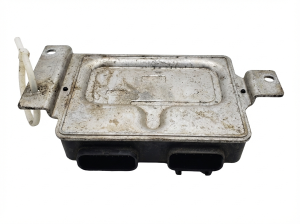
Used OEM Parts in Stock

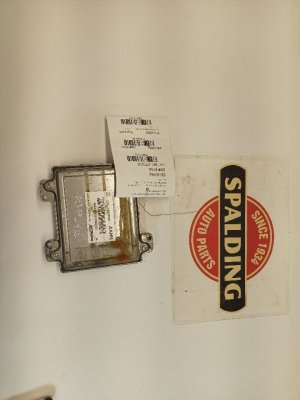


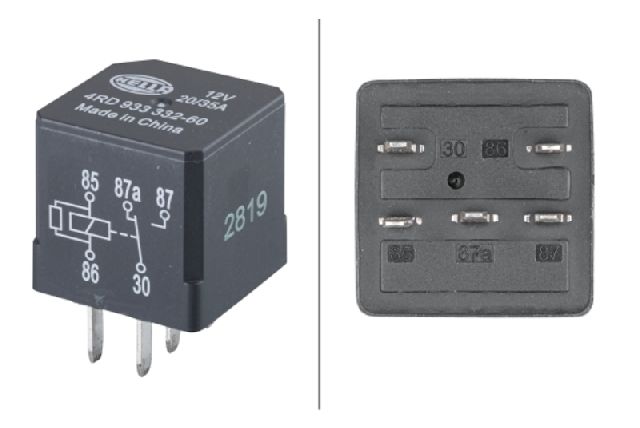
New Aftermarket Parts Available


The information in this article is provided for general reference and educational purposes only. Vehicle specifications, procedures, and part compatibility can vary by production date, trim level, and region. Always consult your vehicle's factory service manual and verify part numbers before purchasing or performing repairs. Safety-critical components such as airbags, seat belts, and braking systems should be installed by a qualified professional.
- Chevrolet EXPRESS:
- 🎬 Helpful Videos
- 🛍️ Shop This Part
- What's Unique About the 2007-2011 Chevrolet EXPRESS
- Diagnostic Flowchart
- Symptoms You May Notice
- Most Likely Causes
- Rare But Worth Checking
- Diagnosis Steps
- Parts You'll Likely Need
- Related Codes That Often Appear With This One
- Technical Service Bulletins (TSBs) & Recalls
- Platform-Specific Known Issues
- Mechanic-Grade Diagnostic Values
- Hidden / Shadow Codes Worth Checking
- Scan Tool Commands That Help
- Wiring & Ground Locations
- Real Owner Repair Stories
- OEM Part Supersession History
- 🎟️ Get 5% Off