

P0604 on 2012-2015 Buick Verano: Internal RAM Error Causes and Fixes
P0604 on a Buick Verano indicates an internal memory error in a control module, most commonly the Transmission Control Module (TCM) or Powertrain Control Module (PCM). The fix often requires professional diagnostics, a software reflash, or complete module replacement.
- P0604 on a 2012-2015 Verano is a serious code indicating an internal memory failure in a control module.
- Due to a specific TSB, the Transmission Control Module (TCM) is a high-probability cause, especially if you experience shifting problems.
- Always check the battery and charging system first, as low or unstable voltage can trigger this code erroneously.
- This is not a DIY-friendly repair. The fix requires professional diagnostic tools for both diagnosis and programming of the new module.
What's Unique About the 2012-2015 Buick VERANO
For the 2012-2015 Buick Verano, this code is specifically called out in manufacturer Technical Service Bulletins (TSBs). TSB #PIP4653E directly links P0604 to the Transmission Control Module (TCM), indicating that transmission-related issues are a more frequent source for this code on this platform compared to others where it might default to a PCM-only error. This TSB covers a wide range of GM vehicles, including the Verano and its platform-mate, the Chevrolet Cruze, that use the 6T-series automatic transmissions. The diagnostic procedure explicitly states to verify the code is set in the TCM before proceeding, as a re-flash or replacement is the recommended action.
Diagnostic Flowchart
Tap your situation to follow the diagnostic path that matches what you're seeing on this vehicle.
Symptoms You May Notice
- Check Engine Light is on
- Transmission may shift harshly or erratically
- Vehicle may stall unexpectedly or refuse to start
- Loss of power or poor acceleration
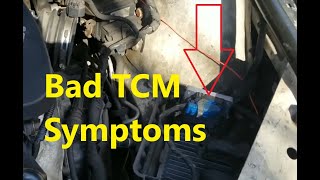
- ABS or Traction Control lights may illuminate 🎬 Watch: Common symptoms of a failing Transmission Control Module
- Vehicle may fail an emissions test due to OBD-II monitor issues
- Replacing transmission solenoids or other internal transmission parts when the TCM is the actual cause.
- Replacing the PCM when the code is actually being set by the TCM.
- Assuming the code is a PCM fault without verifying which module stored the code, as warned in TSB #PIP4653E.
Most Likely Causes
- Transmission Control Module (TCM) Internal Fault 🔴 High Probability TSB #PIP4653E specifically identifies the TCM as a source for this code on the Verano platform when the Malfunction Indicator Lamp is on. This is a known issue across multiple GM models sharing the 6T-series transmissions.
How to confirm: A professional scan tool must be used to confirm the P0604 code is stored in the TCM, not the ECM. The diagnostic procedure in the service manual for the platform mate Chevy Cruze instructs to replace the control solenoid valve assembly (TCM) if P0604 is set.
Typical fix: First, attempt a software reflash with the latest calibration using a Tech 2 or GDS2 scan tool. If the code returns, the TCM (which is part of the control solenoid valve assembly inside the transmission) must be replaced and programmed to the vehicle.
Est. part cost: $200-$500 for a remanufactured TCM - Powertrain Control Module (PCM) Internal Fault 🟡 Medium Probability The PCM is the primary computer and a common source for all P06xx series codes. TSB #05-06-04-060A notes that this code can be set in multiple modules, including the PCM.
How to confirm: A diagnostic scan will show the code stored in the PCM. A technician will verify power and ground circuits to the PCM before condemning it.
Typical fix: Attempt a software update first. If unsuccessful, the PCM needs to be replaced and programmed with the vehicle's specific information (VIN).
Est. part cost: $300-$700 for a remanufactured PCM - Low Battery Voltage or Poor Connections ⚪ Low Probability
How to confirm: Test the battery voltage (should be >12.4V with engine off) and check the charging system output (13.5V-14.5V with engine running). Inspect battery terminals and main engine/body grounds for corrosion or looseness.
Typical fix: Recharge or replace the battery. Clean or tighten battery terminals and ground connections.
Est. part cost: $0-$250
Rare But Worth Checking
- Corrupted Software: A failed software update or a random glitch can corrupt the module's memory, triggering a P0604 code even if the hardware is fine. A reflash is often the first diagnostic step for this reason.
- Wiring Harness Issue: Damage to the wiring providing power or ground to the PCM/TCM can cause voltage drops that mimic an internal module fault. This is less common than the module itself failing but should be checked before replacement.
- Windshield Water Leak (2012 models): Customer Satisfaction Program #13054 for 2012 Veranos notes that an improperly sealed windshield could allow water to leak onto a body harness connector. This corrosion or shorting could potentially cause a variety of electrical issues and codes, including module communication problems that could manifest as a P0604.
Diagnosis Steps
- Check battery voltage and the charging system to ensure stable power is supplied to all modules. A healthy battery should be over 12.4V engine off, and the alternator should supply 13.5-14.5V when running.
- Connect a professional-grade scan tool (like a Tech 2 or GDS2) to read the code and determine which module (PCM or TCM) has stored it. This is a critical step.
- Inspect all power and ground connections to the affected module for tightness and corrosion.
- Check for any available software updates (reflashes) for the affected module using a dealer or properly equipped independent shop tool. This is a critical step before replacing hardware.
- For 2012 models, inspect for signs of water intrusion near the interior fuse panel and body harness connectors, which could be related to a windshield leak described in program #13054.
- If a software update does not resolve the issue, or if power/grounds are good, the module itself is likely faulty.
- Replace the faulty control module (PCM or TCM) and program the new unit to the vehicle's VIN.
Parts You'll Likely Need
- Transmission Control Module (TCM)
(OEM #24265789 (This is a common Gen 2 6T30/6T40/6T45 TCM part number, superseding others like 24268164. Always verify with VIN.))— TSB #PIP4653E specifically points to the TCM as a common source of P0604 on this vehicle. It is often the primary suspect if transmission symptoms are present.
Trusted brands: ACDelco
OEM price range: $400-$600
Aftermarket price range: $200-$500 - Powertrain Control Module (PCM) — As the main computer, the PCM is a potential cause for any internal memory fault code. It is the likely culprit if the code is stored in the PCM and no transmission issues are noted.
Trusted brands: ACDelco
OEM price range: $500-$800
Aftermarket price range: $300-$700
Related Codes That Often Appear With This One
- P0601 — This code indicates a 'Control Module Read Only Memory (ROM) Error', another type of internal module fault. Both codes appearing together strongly suggests module failure. TSB PIP4653E lists this code alongside P0604 as part of the same known TCM issue.
- P0603 — This code indicates a 'Control Module Keep Alive Memory (KAM) Error'. Its presence alongside P0604 points to a broader problem with the module's memory functions and is also listed in TSB PIP4653E.
- P1621 — This is a GM-specific code for 'Control Module Long Term Memory Performance'. Both TSBs cite this code alongside P0604, indicating they are commonly found together during module diagnostics.
Technical Service Bulletins (TSBs) & Recalls
- PIP4653E: Advises technicians that P0604 may be stored in the Transmission Control Module and to verify the source module before reprogramming or replacing.
- 05-06-04-060A: Informs technicians that P0604 is one of several internal control module codes that can be shared across multiple modules.
- 13054 (Customer Satisfaction Program): Details a potential windshield water leak on 2012 models that could cause electrical issues by dripping on a harness connector.
Platform-Specific Known Issues
- TSB #PIP4653E notes that DTCs P0601, P0603, P0604, P062F, or P1621 may be found stored in the Transmission Control Module, indicating a known issue pattern. The bulletin stresses the importance of verifying which module set the code before repair.
- TSB #05-06-04-060A is a broader informational bulletin that groups P0604 with several other internal module fault codes, advising technicians that these codes can appear in multiple different control modules and are not specific to one.
- Customer Satisfaction Program #13054 identified a potential windshield sealing issue on 2012 Verano models that could cause water to leak onto a body harness connector, leading to various electrical faults.
Mechanic-Grade Diagnostic Values
- Module Ground Resistance — expected: Below 0.1 Ω. Failure: A reading higher than 0.1 Ω indicates a poor ground, which can cause voltage instability and trigger memory errors.
- Module Voltage During Cranking — expected: Should stay above 9.0 V. Failure: A drop below 9.0 V during engine cranking can cause a 'brown-out' event, corrupting the module's RAM.
- Alternator Output Voltage (Engine Running) — expected: 13.5 V - 14.5 V. Failure: Voltage that is too low or too high can cause electrical instability and damage control modules.
Scan Tool Commands That Help
- GDS2 (Global Diagnostic System 2): Module Setup / Programming — This function is required after replacing the TCM or PCM to load the correct VIN-specific software and calibrations onto the new module. It is accessed via the Service Programming System (SPS).
- Techline Connect (SPS2): Service Programming System (SPS) — This is GM's current cloud-based system used to download the latest calibration files for a module replacement. It integrates GDS2 and is required for programming modules on modern GM vehicles.
- GDS2 / Tech2Win: Clear All DTCs — After a module is replaced and programmed, any old codes stored in other modules must be cleared. Failure to do so can result in the Check Engine Light remaining on.
Wiring & Ground Locations
- G101 — On the lower front of the engine block.. This is a primary ground point for the Engine Control Module (ECM) and Transmission Control Module (TCM). A loose or corroded connection here can cause unstable power and lead to various module errors, including P0604.
- G107 — On the chassis, near the brake accumulator/booster area in the engine bay.. This is a major chassis ground point that the engine block ground (G101) connects to, completing the circuit back to the battery. Corrosion here can interrupt the ground path for the entire engine management system.
- TCM Location — Inside the transmission, as part of the valve body assembly (this is a TEHCM - Transmission Electro-Hydraulic Control Module).. Technicians must know the TCM is not an externally-mounted box. A P0604 set in the TCM requires dropping the transmission pan for access, which is a significant labor step.
Real Owner Repair Stories
- Car Talk Community Forum (2012 Buick Verano) — Intermittent heating/AC, electric handbrake staying on, Stabilitrak light, infotainment screen flashing, engine stalling, camshaft sensor codes.
❌ Tried (didn't work) Dealer was unable to find the source of the defect.
✅ What actually fixed it The owner reported numerous cascading electrical failures, suspecting a core electrical system problem. While not a confirmed P0604 fix, the symptoms (stalling, module-related lights) are classic signs of a failing control module or widespread electrical issue that could trigger a P0604. The user noted that electrical system corrosion is a known issue.
OEM Part Supersession History
Various Gen 1 PNs (e.g., 24256524)→Various Gen 2 PNs (e.g., 24268164, 24265789)— GM introduced a major revision to the 6T40 transmission for the 2012 model year, creating a 'Generation 2' (Gen 2) design with different internal components and a new TCM (TEHCM).
Heads up: Gen 1 and Gen 2 TCMs are not interchangeable. The valve bodies are physically different, and the programming is incompatible. A Gen 2 TCM can be identified by a letter (A, B, C, D) as the 8th digit of the number on its barcode, whereas a Gen 1 has a number (0-9).
Model Year Variations Within This Range
- 2012-2015: The 2012 model year marked the switch from the 'Gen 1' 6T40 transmission to the 'Gen 2' version. While the entire 2012-2015 Verano range uses the Gen 2 transmission, it's a critical distinction from earlier GM vehicles with the 6T40. The Gen 2 TCM has no pressure switches visible under its plate and uses a different pressure regulator valve in the pump.
- 2012: The 2012 model year was specifically cited in Customer Satisfaction Program #13054 for a potential windshield water leak that could affect a body harness connector, a unique risk for that year that could cause various electrical faults.
Helpful Videos
Used OEM Parts in Stock


New Aftermarket Parts Available




The information in this article is provided for general reference and educational purposes only. Vehicle specifications, procedures, and part compatibility can vary by production date, trim level, and region. Always consult your vehicle's factory service manual and verify part numbers before purchasing or performing repairs. Safety-critical components such as airbags, seat belts, and braking systems should be installed by a qualified professional.
- Buick VERANO:
- 🎬 Helpful Videos
- 🛍️ Shop This Part
- What's Unique About the 2012-2015 Buick VERANO
- Diagnostic Flowchart
- Symptoms You May Notice
- Most Likely Causes
- Rare But Worth Checking
- Diagnosis Steps
- Parts You'll Likely Need
- Related Codes That Often Appear With This One
- Technical Service Bulletins (TSBs) & Recalls
- Platform-Specific Known Issues
- Mechanic-Grade Diagnostic Values
- Scan Tool Commands That Help
- Wiring & Ground Locations
- Real Owner Repair Stories
- OEM Part Supersession History
- Model Year Variations Within This Range
- 🎟️ Get 5% Off