

P0604 on 2007-2011 Buick Lucerne: Internal RAM Error Causes and Fixes
P0604 on a Buick Lucerne typically indicates an internal Random Access Memory (RAM) error within the Powertrain Control Module (PCM) or another control module. Before condemning the expensive module, always check the battery, charging system, and all related ground connections, as low or unstable voltage is a common trigger. If the module is faulty, replacement and programming are required.
- P0604 is a serious code indicating an internal memory error in a control module, usually the PCM.
- Before spending money on parts, ALWAYS test the battery and charging system, and inspect ground connections. Low voltage is a very common cause.
- This is not a DIY-friendly repair. The final fix, if it's not a simple battery issue, will likely require professional diagnostic tools and module programming.
- A software reflash may fix the issue and is less expensive than replacing the entire module.
- If the PCM needs replacement, it must be programmed specifically for your vehicle's VIN.
What's Unique About the 2007-2011 Buick LUCERNE
For this generation of GM vehicles, including the Buick Lucerne, P0604 is part of a group of internal module fault codes that GM addressed in a technical service bulletin. TSB #05-06-04-060A communicates to technicians that codes like P0604 can be shared across multiple modules. This suggests that the diagnostic process should consider network-wide issues, like voltage instability or bad grounds, before focusing on a single potentially faulty module. The battery on the Lucerne is located under the rear seat, 🎬 Watch: How to find and access the rear seat battery. which can sometimes lead to overlooked connection issues.
Diagnostic Flowchart
Tap your situation to follow the diagnostic path that matches what you're seeing on this vehicle.
Symptoms You May Notice
- Check Engine Light is on
- Engine may stall intermittently or die unexpectedly.
- Hard starting or no-start condition. 🎬 Watch: Diagnostic steps for a Buick Lucerne crank no-start condition.
- Harsh or erratic transmission shifting.
- Reduced fuel economy.
- ABS or Traction Control lights may illuminate.
- Replacing the PCM without first testing the battery and charging system. A weak battery is a very common cause and is much cheaper to fix.
Most Likely Causes
- Low Battery Voltage or Charging System Fault 🔴 High Probability Control modules are highly sensitive to voltage. A weak battery, failing alternator, or poor connections can cause temporary memory corruption during startup, erroneously triggering a P0604 code. The battery is located under the rear seat, making it less frequently inspected for corrosion.
How to confirm: Test the battery with a load tester. With the engine running, use a multimeter to check alternator output at the battery terminals; it should be stable and roughly between 13.5 and 14.5 volts. Inspect battery terminals and main ground straps for corrosion or looseness. Voltage at the PCM connector should not drop below 9V during cranking.
Typical fix: Clean or tighten battery terminals and ground connections. Replace the battery if it fails a load test. Replace the alternator if its output is out of spec.
Est. part cost: $150-$600 - Faulty Powertrain Control Module (PCM) 🟡 Medium Probability Internal components of the PCM, including the RAM chip, can fail over time due to heat, vibration, or voltage spikes.
How to confirm: This is typically a diagnosis of exclusion. If the battery, charging system, and all wiring/connections to the PCM are confirmed to be good, and a software reflash doesn't solve the issue, the PCM itself is the likely culprit. A professional scan tool may have a 'memory test' routine that can confirm the internal fault.
Typical fix: Replace the Powertrain Control Module. 🎬 See this walkthrough on fixing a P0604 control module code. The new module must be programmed with the vehicle's specific VIN and software.
Est. part cost: $200-$800 - Corrupted Software or Pending Update ⚪ Low Probability Software glitches can cause the module to write invalid data to its RAM, triggering the error. Manufacturers sometimes release software updates to fix such bugs.
How to confirm: A professional technician with access to GM's TIS2Web or equivalent service can check if a software update is available for the PCM.
Typical fix: Reflash the PCM with the latest software version. This is often attempted before module replacement.
Est. part cost: $0-$200 (Labor) - Poor Electrical Connections or Wiring Issues ⚪ Low Probability Corroded pins on the PCM connector or a damaged wiring harness can interrupt power or ground, leading to memory errors.
How to confirm: Visually inspect the PCM connectors for corrosion, bent pins, or water intrusion. Check for continuity and resistance on the main power and ground wires to the PCM. Ground resistance should be below 0.1 Ω.
Typical fix: Clean the connectors with an electrical contact cleaner or repair the damaged section of the wiring harness.
Est. part cost: $10-$300
Diagnosis Steps
- Check for other DTCs. Address any communication, power, or sensor codes first.
- Thoroughly test the battery and charging system. The battery is under the rear seat. Ensure battery voltage is above 12.4V and alternator output is stable (13.5V-14.5V).
- Perform a voltage drop test on the PCM power and ground circuits. Voltage at the PCM should remain above 9V during engine cranking.
- Inspect all battery cables and main ground straps for corrosion and tightness. Key grounds include G101 (engine block) and G112 (rear of engine). Resistance on ground circuits should be less than 0.1 Ω.
- Clear the DTCs and test drive the vehicle to see if the code returns. Sometimes a low voltage event can set this code as a one-time fluke.
- If the code returns, inspect the PCM connectors for any signs of corrosion, moisture, or damage. The PCM is located inside the air cleaner housing on 3.8L models and on the left side of the engine bay on 4.6L models.
- If all external factors are ruled out, check for any available PCM software updates. A dealership or qualified shop can perform this.
- If a scan tool is available, perform a module 'memory test' if the function exists.
- If the code persists after a reflash, the PCM is likely faulty and requires replacement and programming. This will require a security relearn and a CASE relearn procedure.
Parts You'll Likely Need
- Powertrain Control Module (PCM) — This is the most common definitive fix when all external electrical issues have been ruled out, as the code points to an internal failure of this component.
Trusted brands: ACDelco
OEM price range: $300-$800
Aftermarket price range: $200-$500 - Battery — A weak or failing battery is a frequent cause of voltage-related codes like P0604. It should always be tested first.
Trusted brands: ACDelco, Interstate, DieHard
OEM price range: $200-$300
Aftermarket price range: $150-$250
Related Codes That Often Appear With This One
- P0601 — This is an 'Internal Control Module Memory Check Sum Error'. Seeing it with P0604 strongly suggests a failing control module.
- P0603 — This indicates a 'Keep Alive Memory (KAM) Error', another internal memory fault that can be caused by power interruptions or module failure.
- P1621 — This GM-specific code for 'Control Module Long Term Memory Performance' is often grouped with P0604 in service bulletins, pointing to a related module memory issue.
- U0100 — This means 'Lost Communication With ECM/PCM'. A module that is failing internally may stop communicating on the vehicle's data network.
Technical Service Bulletins (TSBs) & Recalls
- 05-06-04-060A: An informational bulletin for technicians regarding a group of control module DTCs (including P0604) that can be shared across multiple modules, emphasizing the need for comprehensive diagnostics.
Mechanic-Grade Diagnostic Values
- PCM Power Supply Voltage (during engine cranking) — expected: > 9.0 Volts. Failure: A reading below 9.0V indicates excessive voltage drop from a weak battery, poor connections, or a faulty starter.
- PCM Ground Circuit Resistance — expected: < 0.1 Ω. Failure: A reading higher than 0.1 Ω indicates a corroded, loose, or damaged ground connection that needs to be cleaned or repaired.
- Charging System Voltage (engine running at idle) — expected: 13.5V - 14.5V. Failure: Voltage below 13.5V may indicate a failing alternator; voltage above 14.5V may indicate a faulty voltage regulator, both of which can damage modules.
Scan Tool Commands That Help
- Tech2 / GDS2: Memory Test Routine — After verifying power and grounds are good, this OEM tool function can be used to directly test the module's internal RAM. A failure here confirms the need for replacement.
- Tech2 / GDS2: Idle Learn Reset — This is a required setup procedure after installing a new or reprogrammed PCM to establish the correct idle speed parameters.
- Tech2 / GDS2: Crankshaft Position Variation Learn (CASE Relearn) — Mandatory after PCM replacement to calibrate the PCM to the specific crankshaft position sensor's signal, preventing misfire codes and ensuring accurate timing.
- Tech2 / GDS2: Theft Deterrent Relearn — Required after PCM replacement to synchronize the new module with the vehicle's immobilizer system (e.g., PASSlock III). Without this, the vehicle will not start.
Wiring & Ground Locations
- Powertrain Control Module (PCM/ECM) — For 3.8L V6 models, it is located inside the air cleaner housing at the front left of the engine compartment. For 4.6L V8 models, it is on the left side of the engine compartment.. This is the module that most commonly sets the P0604 code. Its location is necessary for visual inspection, connector cleaning, and voltage/ground testing at the pins.
- Battery — Located under the rear passenger seat cushion. The seat bottom must be pulled up and removed for access.. The primary cause of module memory codes is unstable voltage. The battery is the first component to test, and its hidden location can lead to it being overlooked.
- G101 / G112 — G101 is on the lower front of the engine block. G112 (on 3.8L) is at the lower left rear of the engine. These are primary engine/PCM ground points.. A poor ground connection at these points can cause a floating ground or voltage differential, directly leading to module communication and memory errors like P0604.
- Underhood Fuse Block / Jump Point — Located on the passenger side of the engine bay. Contains critical fuses and serves as the remote positive jump-start terminal.. This is a central power distribution point. Checking fuses related to the ECM/PCM here is a key step. It's also the correct place to check charging voltage or jump-start the vehicle, not directly at the interior battery.
Real Owner Repair Stories
- Buick Forum user (Buick with no-start after dead battery) — No crank, no start. Starter motor would turn the engine when powered directly, but the engine would not fire.
❌ Tried (didn't work) Jump-starting the vehicle., Installing a brand new, fully charged battery., Replacing the PCM with a pre-programmed unit.
✅ What actually fixed it The final fix was not posted, but the user's advanced diagnosis revealed the actual problem: even with a new PCM, the module was not providing the ground signal to activate the powertrain relay. This indicates the problem was likely in the wiring between the PCM and the relay, or a fault in the security system (PASSlock) preventing the PCM from enabling the start sequence. This highlights that even if P0604 is present, replacing the module is not a guaranteed fix without verifying its control circuits.
OEM Part Supersession History
e.g., 12612384 (2008 E38 ECM)→e.g., 12625455 (2009 E38 ECM)— Hardware change to support a new throttle body design and other system updates for the 2009 model year.
Heads up: CRITICAL: E38 ECMs from different model years (e.g., 2008 vs. 2009) are NOT cross-compatible. Flashing an operating system from one year onto a module from another year can permanently corrupt the ECM, making it unusable. The Service Number on the module's label is the definitive identifier; it must match the intended vehicle year.
Model Year Variations Within This Range
- 2009-2011: The base engine was changed from the 3.8L V6 to a 3.9L LZ9 V6 starting in 2009. This change coincided with a hardware update to the E38 ECM. As a result, PCMs for 2007-2008 models are not interchangeable with 2009-2011 models.
- 2007-2011 (Engine Dependent): The physical location of the Powertrain Control Module differs based on the engine. On 3.8L V6 models, the PCM is inside the air cleaner housing. On 4.6L V8 models, it is mounted on the left side of the engine compartment.
Helpful Videos


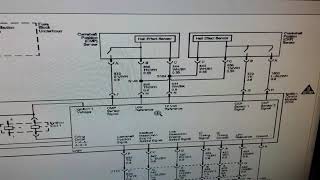

Used OEM Parts in Stock
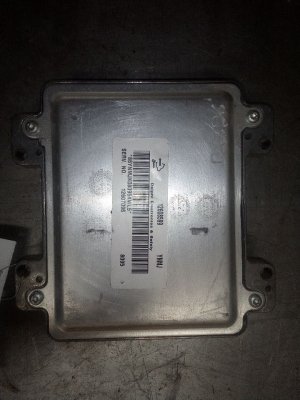
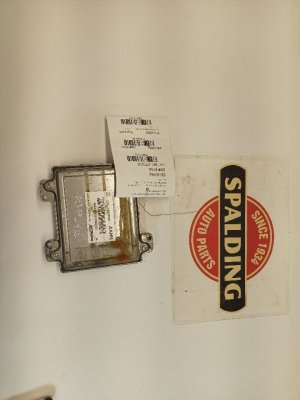
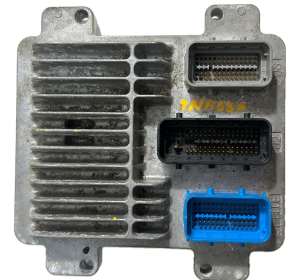
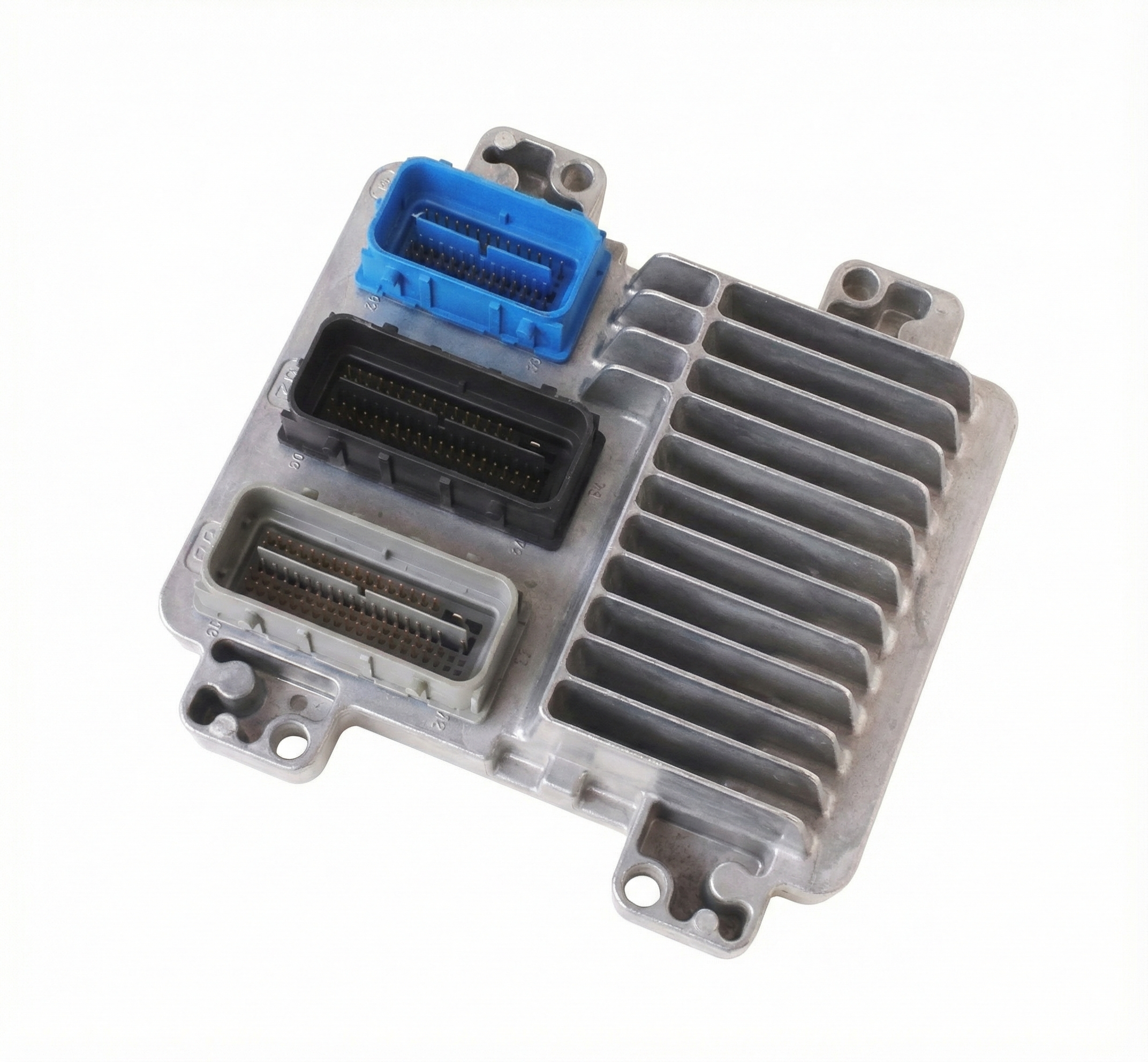
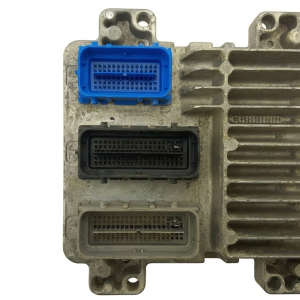
New Aftermarket Parts Available


The information in this article is provided for general reference and educational purposes only. Vehicle specifications, procedures, and part compatibility can vary by production date, trim level, and region. Always consult your vehicle's factory service manual and verify part numbers before purchasing or performing repairs. Safety-critical components such as airbags, seat belts, and braking systems should be installed by a qualified professional.
- Buick LUCERNE:
- 🎬 Helpful Videos
- 🛍️ Shop This Part
- What's Unique About the 2007-2011 Buick LUCERNE
- Diagnostic Flowchart
- Symptoms You May Notice
- Most Likely Causes
- Diagnosis Steps
- Parts You'll Likely Need
- Related Codes That Often Appear With This One
- Technical Service Bulletins (TSBs) & Recalls
- Mechanic-Grade Diagnostic Values
- Scan Tool Commands That Help
- Wiring & Ground Locations
- Real Owner Repair Stories
- OEM Part Supersession History
- Model Year Variations Within This Range
- 🎟️ Get 5% Off