

P0604 on 2007-2014 Buick LaCrosse: Internal RAM Error Causes and Fixes
This code indicates an internal Random Access Memory (RAM) error in a control module, most often the Transmission Control Module (TCM) on this vehicle. The most common fixes are reprogramming the module with updated software or, if that fails, replacing the faulty module.
- P0604 is a serious internal error in a control module, most often the TCM in your LaCrosse.
- Before replacing any expensive parts, always check for a weak battery, poor connections, and available software updates for the module.
- Diagnosis and repair should be left to a professional with GM-specific diagnostic tools, as module replacement requires vehicle-specific programming.
- This code is often accompanied by other internal module faults (P0601, P1621, etc.), which reinforces the diagnosis of a module-level problem.
What's Unique About the 2007-2014 Buick LACROSSE
The 2007-2014 LaCrosse spans two distinct generations (2007-2009 and 2010-2014), both of which can experience this fault. GM has issued several Technical Service Bulletins (TSBs) that group P0604 with other internal module failure codes like P0601 and P1621. [Bulletin #PIP4653E, Bulletin #05-06-04-060A] This indicates a known pattern where software glitches or module communication issues are common, and a software re-flash is often the first recommended step before condemning an expensive control module. On second-generation vehicles (2010+), the TCM is often a TEHCM (Transmission Electro-Hydraulic Control Module), which integrates the electronic controller, solenoids, and pressure switches into one unit inside the transmission, making it susceptible to heat and fluid contamination.
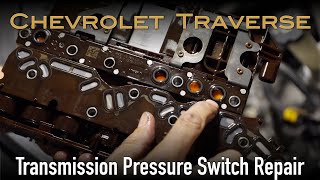
🎬 See this walkthrough on repairing the 6T70 transmission module.Diagnostic Flowchart
Tap your situation to follow the diagnostic path that matches what you're seeing on this vehicle.
Generation note: This range covers the end of the first generation (2007-2009) and the beginning of the second generation (2010-2014). While the code's meaning is the same, the specific location and part numbers for the TCM/PCM will differ between generations. The diagnostic approach, however, remains consistent. For example, the 2nd-gen LaCrosse often uses a 6-speed 6T70 or 6T45 transmission with an integrated TEHCM.
Symptoms You May Notice
- Check Engine Light is on
- Transmission shifts harshly or erratically
- Vehicle enters 'limp mode' (stuck in one gear)
- Engine may stall or have a hard-start/no-start condition
- ABS or Traction Control light may illuminate
- Unresponsive dashboard electronics or gear indicator jumping between positions.
- Reduced fuel economy.
- Replacing transmission solenoids or other internal transmission parts when the fault is purely electronic within the TCM.
- Replacing the PCM when the code is actually stored in the TCM.
- Assuming a used/junkyard module will work without professional reprogramming to the vehicle's VIN.
Most Likely Causes
- Control Module Software Corruption 🔴 High Probability GM has released TSBs that address internal module codes, often recommending software updates as a fix. [Bulletin #PIP4653E, Bulletin #05-06-04-060A] Software glitches can cause the module to write invalid data to RAM.
How to confirm: A dealership or qualified shop with a GM Tech 2 or MDI scan tool can check the current software calibration and see if an update is available via the TIS2Web or Techline Connect service.
Typical fix: Reprogramming (re-flashing) the affected module (usually the TCM or PCM) with the latest software from the manufacturer using the Service Programming System (SPS). This service typically costs between $75 and $250.
Est. part cost: $0 - Failing Control Module (TCM or PCM) 🟡 Medium Probability Internal hardware components like the RAM chip can fail due to age, heat, or voltage spikes. The TCM in many of these models is a TEHCM located inside the transmission, where it is exposed to significant heat and vibration, increasing failure risk.
How to confirm: If a software re-flash does not resolve the code, or if the module fails a diagnostic self-test, the module itself is condemned. A full scan showing the same internal fault code across multiple modules also points to a primary controller failure.
Typical fix: Replacement of the faulty control module. The new module will require programming to the vehicle's VIN. Options include new OEM parts, remanufactured units, or pre-programmed modules from specialty suppliers.
Est. part cost: $250-$800 - Low Battery Voltage or Unstable Power Supply ⚪ Low Probability Weak batteries or failing alternators can cause voltage drops during startup, which can corrupt the temporary memory (RAM) in control modules. This is a common cause for many electronic 'ghost' issues in modern cars.
How to confirm: Test the battery's state of charge and health. With the engine running, use a multimeter to check the alternator output voltage at the battery terminals (should be ~13.5-14.5 volts). Check for a battery warning light or slow cranking.
Typical fix: Replace the weak battery, clean corroded terminals, or replace the failing alternator.
Est. part cost: $150-$400 - Poor Electrical Connections ⚪ Low Probability
How to confirm: Visually inspect the wiring harness and connectors at the TCM and PCM for corrosion, moisture, or loose pins. Check the main power and ground connections to the module. Ground resistance should be below 0.3 Ω after the vehicle's modules go to sleep. A pin drag test can confirm proper terminal tension.
Typical fix: Clean and secure the connectors using dielectric grease. Repair any damaged wiring. Check for and clean main chassis and engine block ground points.
Est. part cost: $0-$100
Diagnosis Steps
- Check the battery and charging system first. Ensure voltage is stable and above 12.4V with the engine off, and between 13.5-14.5V with the engine running. A weak battery is a common cause of spurious module codes.
- Use a professional scan tool (GM GDS2 or Tech 2) to read codes from ALL modules. Confirm which module stores P0604 and check for any symptom bytes that provide more detail.
- Check for applicable Technical Service Bulletins (TSBs) for your vehicle's VIN. The TSBs provided (PIP4653E, 05-06-04-060A) are a primary starting point.
- If a software update is available for the affected module, perform the re-flash procedure using the GM Service Programming System (SPS). This is often the first step recommended by the manufacturer.
- If the code returns, inspect the wiring and connectors to the module for any signs of damage, corrosion, or loose pins. Perform a pin drag test on connector terminals to ensure good contact.
- Verify the module has a clean and tight power and ground supply. Locate and inspect the main TCM grounds (e.g., G101, G106, G111, G113) for corrosion or looseness. Test ground circuit integrity with a DMM, looking for resistance under 0.3 Ω when modules are asleep.
- If all wiring, power, and grounds are good and the code persists after a software update, the control module is faulty and requires replacement.
Parts You'll Likely Need
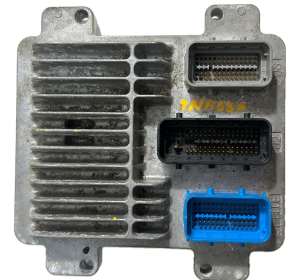
- Transmission Control Module (TCM/TEHCM)
(OEM #Varies by year/trans. Ex: 24252114, 24279973, D144420F (for 2012-2016).)— The provided TSBs and common symptoms strongly point to the TCM as the most likely module to set this code on the LaCrosse, leading to shifting problems. Often this is an integrated TEHCM unit on 2010+ models.
Trusted brands: ACDelco, Dorman (Remanufactured)
OEM price range: $400-$800
Aftermarket price range: $250-$500 - Powertrain Control Module (PCM)
(OEM #Varies by year/engine. Ex: 12653998 (2010).)— If the code is stored in the PCM and not the TCM, and software/wiring checks fail, the PCM itself is the cause.
Trusted brands: ACDelco
OEM price range: $400-$800
Aftermarket price range: $250-$500
Related Codes That Often Appear With This One
- P0601 — This is an 'Internal Control Module Memory Check Sum Error', another internal module fault. Both codes often point to a failing or corrupt module.
- P1621 — This code relates to 'Control Module Long Term Memory Performance'. The TSBs for the LaCrosse group it with P0604, indicating a related module memory issue. [Bulletin #PIP4653E]
- P0603 — This code indicates a 'Keep Alive Memory (KAM) Error'. It's another internal memory fault that can be caused by power supply interruptions or module failure. [Bulletin #PIP4653E]
- U0101 — This code means 'Lost Communication with TCM'. A severe internal TCM fault like P0604 can cause the module to stop communicating on the CAN bus entirely. A bad ground or power feed can also cause both codes.
Technical Service Bulletins (TSBs) & Recalls
- Bulletin #PIP4653E: Discusses various DTCs, including P0604, being stored in the Transmission Control Module.
- Bulletin #05-06-04-060A: Informs technicians that P0604 and other similar codes can be set in multiple different control modules.
Platform-Specific Known Issues
- TSB #PIP4653E notes that codes P0601, P0603, P0604, P062F or P1621 can be stored in the Transmission Control Module, often requiring a software or hardware fix. [Bulletin #PIP4653E]
- TSB #05-06-04-060A highlights that P0604 is one of several internal module DTCs that can be shared across multiple modules, emphasizing the need for careful diagnosis to pinpoint the correct one. [Bulletin #05-06-04-060A]
- For 2010+ models with the 6T70/6T45 transmission, GM bulletin PIP4990A advises checking TCM grounds G106/G107 and the main transmission connector for poor pin fit before replacing the TEHCM for communication-related codes.
Mechanic-Grade Diagnostic Values
- Control module ground circuit resistance to a clean chassis point — expected: Should drop below 0.3 Ω after the vehicle's modules go to sleep (typically 3-10 minutes after ignition off).. Failure: A reading that stays high (e.g., above 1.0 Ω) indicates a poor ground connection that can cause module errors.
- TEHCM Shift Solenoid Resistance (On/Off type) — expected: 20-40 ohms. Failure: A reading outside this range indicates a faulty solenoid within the TEHCM assembly, often requiring TEHCM replacement.
- TEHCM Pressure Control Solenoid Resistance (PWM type) — expected: 3-8 ohms. Failure: A reading outside this range points to a failure within the TEHCM assembly.
Hidden / Shadow Codes Worth Checking
- Symptom Byte (e.g., P0604 71): GM uses two-digit hexadecimal symptom bytes to add detail to a DTC. For example, a symptom byte of '71' can indicate 'Invalid Serial Data Received', suggesting a software or communication problem rather than a hardware failure of the RAM itself. (see via Only visible using a dealer-level scan tool like the GM GDS2 (Global Diagnostic System 2) or a Tech 2.)
Scan Tool Commands That Help
- GDS2 / Tech 2 with Techline Connect: Service Programming System (SPS) — This is the primary function used to re-flash a control module (TCM or PCM) with updated software from GM. It is the first recommended step if TSBs indicate a software update is available to fix the code.
- GDS2 / Tech 2: Transmission Adaptive Pressure Reset — This function should be performed after replacing or reprogramming the TCM/TEHCM to clear learned shift adapts and allow the module to relearn shift pressures with the new hardware or software.
- GDS2 / Tech 2: Idle Learn Reset — After reprogramming or replacing the PCM, this function resets the learned idle values, which is necessary for the engine to establish a stable idle.
Wiring & Ground Locations
- G106 / G101 — G106 is located on the front center of the frame cross rail, under the crank pulley. G101 is at the lower front of the engine block and has a jumper to G106.. These are primary grounds for the ECM and TCM on second-generation (2010+) models. GM bulletins specifically mention checking these for looseness or corrosion when diagnosing communication codes.
- G111 / G113 — Located on a transmission stud at the lower left front of the engine, near the starter.. These are critical engine-to-transmission grounds, particularly on first-generation (2007-2009) models. A poor connection here can interrupt power and ground integrity for the control modules.
- Transmission Connector (X2) — The large, round, twist-lock main electrical connector on the side of the transmission case (2010+ 6-speed models).. This is the single point of connection for all power, ground, and communication lines to the internal TEHCM. Poor pin fit (fretting corrosion, loose terminals) is a very common cause of intermittent TCM faults.
When the Usual Fixes Don't Work
- While replacing the control module is a common final fix, it should not be the first step. A significant number of P0604 cases are resolved by addressing underlying and less expensive power supply issues. Technicians and owners report that thoroughly diagnosing the battery, alternator, and cleaning all main power and ground connections (like G106/G107) can resolve the code without needing to replace the expensive TCM/TEHCM. An unstable power supply can prevent a module from maintaining its memory, mimicking an internal hardware failure.
Model Year Variations Within This Range
- 2007-2009 (First Generation): These models typically use a 4-speed 4T65-E transmission with a separate Transmission Control Module (TCM) located outside the transmission. Diagnosis focuses on the external module and its wiring, with key grounds like G111 and G113 on the transmission studs.
- 2010-2014 (Second Generation): These models use a 6-speed automatic (6T45/6T70) with an integrated Transmission Electro-Hydraulic Control Module (TEHCM) inside the transmission oil pan. This makes the module more prone to heat-related failure and requires transmission pan removal for replacement. Key grounds include G101/G106 on the frame rail.
Helpful Videos
Used OEM Parts in Stock




New Aftermarket Parts Available


The information in this article is provided for general reference and educational purposes only. Vehicle specifications, procedures, and part compatibility can vary by production date, trim level, and region. Always consult your vehicle's factory service manual and verify part numbers before purchasing or performing repairs. Safety-critical components such as airbags, seat belts, and braking systems should be installed by a qualified professional.
- Buick LACROSSE:
- 🎬 Helpful Videos
- 🛍️ Shop This Part
- What's Unique About the 2007-2014 Buick LACROSSE
- Diagnostic Flowchart
- Symptoms You May Notice
- Most Likely Causes
- Diagnosis Steps
- Parts You'll Likely Need
- Related Codes That Often Appear With This One
- Technical Service Bulletins (TSBs) & Recalls
- Platform-Specific Known Issues
- Mechanic-Grade Diagnostic Values
- Hidden / Shadow Codes Worth Checking
- Scan Tool Commands That Help
- Wiring & Ground Locations
- When the Usual Fixes Don't Work
- Model Year Variations Within This Range
- 🎟️ Get 5% Off